
Checking the tuning of your Easttop ET12 chromatic harmonica requires a systematic approach, a reliable chromatic tuner, and a disciplined breathing technique. Because the ET12 is a chromatic instrument featuring a slide mechanism, it houses a complex array of reeds that must be isolated individually to get an accurate reading. By establishing a quiet testing environment and using consistent, moderate breath pressure, you can map out the pitch of every single reed to identify which notes are performing perfectly and which ones may require attention.
Understanding the Easttop ET12 and Tuner Basics
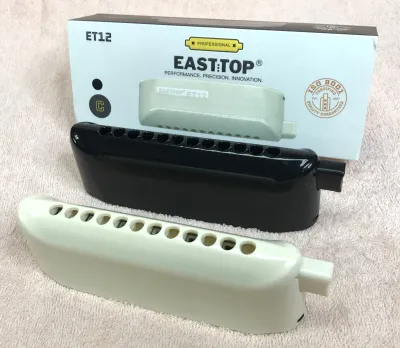
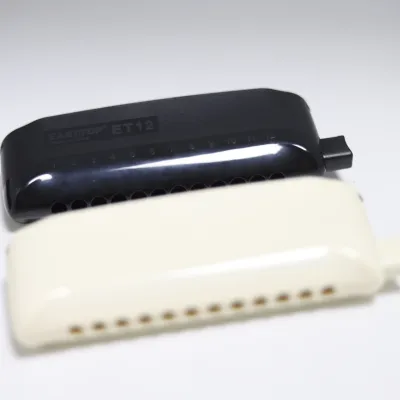
The Easttop ET12 is a 12-hole chromatic harmonica, which means it contains a slide button on the side that alters the path of the air. When the slide is out, blowing and drawing into the holes produces a specific set of notes, typically the C major scale. When you depress the slide, the airflow is redirected to a different set of reeds that are tuned a semitone higher, representing the C# major scale. This design means that each of the 12 holes contains four distinct reeds: a blow reed and a draw reed with the slide out, and a blow reed and a draw reed with the slide in. In total, your ET12 relies on 48 individual reeds to deliver its full three-octave chromatic range.
To measure the pitch of these reeds accurately, you must use a chromatic tuner rather than a basic instrument tuner. A chromatic tuner detects all twelve notes of the chromatic scale and measures pitch deviations in cents. A cent is a logarithmic unit of measure where one semitone is divided into 100 cents. If a note is perfectly in tune, the tuner will register 0 cents of deviation. If it is sharp, it will show a positive value, and if it is flat, it will show a negative value.
Products mentioned in this guide
Prices are valid at publication and may change. Please refer to the product page for the latest price.
Before you begin testing, you must configure your tuner to the correct reference pitch. The standard reference pitch for modern Western music is A4 = 440 Hz. However, many harmonica manufacturers tune their instruments slightly sharp at the factory, often around A4 = 442 Hz or 443 Hz. This slight sharpening compensates for the natural flattening effect that occurs when a player’s breath vibrates the reeds during normal performance. You should check your tuner’s settings and decide whether you want to measure against standard 440 Hz or a slightly higher reference pitch to match the factory setup.
Preparing Your Harmonica and Tuner for Checking
Before placing your Easttop ET12 in front of a tuner, you must ensure the instrument is clean and dry. Saliva, moisture, and tiny debris particles can accumulate on the reeds over time, adding physical weight to the metal. This extra weight slows down the reed’s vibration, causing it to sound flat or unresponsive. Gently tap the mouthpiece of the harmonica against your palm to dislodge any excess moisture, and allow the instrument to sit in a warm, dry room for a short period before testing.

Next, consider the physical placement of your tuner. If you are using a standalone chromatic tuner or a mobile tuning application, you will rely on an acoustic microphone. This setup requires a completely quiet room, as ambient noises like air conditioning, traffic, or computer fans can interfere with the tuner’s ability to lock onto a steady pitch. Alternatively, you can use a clip-on contact microphone attached directly to the cover plate of the ET12. A contact microphone detects the physical vibrations of the instrument’s body rather than the sound waves in the air, making it less sensitive to background noise.
Isolating a single reed is the most critical step in obtaining a clean reading. If you blow or draw into multiple holes simultaneously, the tuner will become confused by the competing frequencies and display erratic results. You can achieve isolation through careful playing technique, using a precise pucker or tongue-block embouchure to direct air into exactly one hole at a time. If you find it difficult to maintain a perfectly isolated note with your mouth, you can use a temporary reed isolation tool, such as a small piece of clean painter’s tape or a cardstock card, to block the adjacent holes while you test.
Step-by-Step Guide to Checking Each Reed's Pitch
To build an accurate tuning map of your Easttop ET12, you must use a highly consistent, moderate breath pressure. Harmonicas are highly sensitive to breath force; blowing or drawing too hard will naturally bend the pitch downward, leading to a false flat reading on your tuner. Imagine you are breathing gently through the instrument rather than blowing into it. Keep your throat open and your embouchure relaxed to ensure the air flows smoothly and evenly across the reed.
Begin your testing sequence systematically, starting with the first hole and working your way up to the twelfth. It is best to test all the blow reeds first with the slide out, followed by all the draw reeds with the slide out. Once you have completed the slide-out notes, repeat the entire process with the slide fully depressed. This logical progression ensures you do not lose your place and helps you maintain a consistent physical posture throughout the test.
As you play each note, hold it steady for at least three to four seconds to allow the tuner to stabilize. Note the exact cent deviation displayed on the screen. It is highly recommended to write these numbers down in a simple grid or spreadsheet. Create columns for the hole number, the action (blow or draw), the slide position (in or out), the target note, and the measured cent deviation. This written record provides a clear visual map of your harmonica’s overall health and highlights any specific reeds that deviate significantly from the rest of the instrument.
Interpreting Tuner Readings and Identifying Problem Notes
Once you have completed your tuning map, you must interpret the data to determine if any action is necessary. In the world of harmonicas, absolute perfection is rarely achieved or even desired. Because of the way the human ear perceives chords and intervals, harmonicas are often tuned using specific temperament systems that intentionally leave certain notes slightly sharp or flat. Generally, a deviation of within plus or minus 5 to 10 cents is considered acceptable for standard playing and will not sound noticeably out of tune to most listeners.
However, if your map reveals a reed that is significantly flat, such as 20 to 50 cents below its target pitch, this is a clear sign of a problem. A severely flat reed often indicates reed fatigue, which occurs when the metal of the reed begins to develop microscopic fractures near its rivet end. As the structural integrity of the metal weakens, the reed loses its springiness and vibrates at a much lower frequency.
You can differentiate between a slightly out-of-tune reed and a structurally failing reed by observing how it responds to your breath. A healthy reed that is simply out of tune will still speak quickly and clearly, maintaining a stable pitch. A fatigued or cracked reed, on the other hand, will often sound dull, require much more breath pressure to initiate a sound, or produce a buzzing, metallic rattle. If a reed exhibits these physical symptoms alongside a dramatic drop in pitch, it is reaching the end of its lifespan.
What to Do When Your ET12 Needs Adjustment
Before concluding that your Easttop ET12 requires physical adjustment, rule out environmental factors. Metal reeds are highly sensitive to temperature. A cold harmonica will naturally play flatter than a warm one. Always warm the harmonica in your hands or inside your pocket for a few minutes before conducting a tuning check. If a reed still reads outside the acceptable tolerance range after warming up, you may need to consider your options for adjustment.
Physically adjusting harmonica reeds is an extremely delicate, high-risk process. To raise the pitch of a reed, a technician must carefully scrape a tiny amount of metal from the free tip of the reed. To lower the pitch, they must scrape metal from the base of the reed near the rivet. Because the reeds on the ET12 are incredibly thin and precisely engineered, even a fraction of a millimeter of over-scraping can permanently ruin the reed’s pitch or destroy its structural integrity. Furthermore, the ET12 features windsavers on many of its reed slots to prevent air loss; attempting to access and scrape the reeds without damaging these delicate plastic flaps is exceptionally difficult for beginners.
Because of these risks, you should establish clear stop conditions for any DIY maintenance. If you discover that a reed is only slightly out of tune and it does not affect your enjoyment of the instrument, it is often best to leave it alone. If a reed is severely flat, cracked, or completely unresponsive, do not attempt to scrape or file it yourself unless you have specialized tools and practice reed plates to work on. Instead, consult a professional harmonica technician or contact the manufacturer to purchase a replacement reed plate. Replacing the entire reed plate is a safe, reversible procedure that restores your ET12 to factory-new performance without the risk of ruining individual reeds.
Frequently Asked Questions (FAQ)
Can I use a standard guitar tuner for my Easttop ET12?
Standard guitar tuners are often designed specifically to recognize the six notes of a guitar’s open strings and may struggle to register the rapid transients and high-frequency overtones produced by a harmonica. A dedicated chromatic tuner or a high-quality chromatic tuning application is highly recommended for the Easttop ET12. Chromatic tuners are designed to detect all twelve semitones across a wide octave range, providing the precise cent-level accuracy you need to evaluate individual reeds.
Why do my draw reeds read flat when I blow or draw harder?
When you increase your breath pressure, you alter the physics of the airflow around the reed. This increased force pulls the reed deeper into its slot, a phenomenon known as pitch bending. Bending naturally lowers the pitch of the reed. To get a true baseline reading of your harmonica’s tuning, you must maintain a relaxed, consistent, and gentle airflow. Avoid forcing the air, and let the reed vibrate naturally without extra physical tension in your embouchure.
How often should I check the tuning of my harmonica?
You do not need to check the tuning of your Easttop ET12 on a rigid schedule. Instead, perform a tuning check when you notice a specific note sounding sour, when playing alongside fixed-pitch instruments like pianos, or after several months of heavy use. For daily maintenance, focusing on proper hygiene, tapping out moisture after every session, and storing the instrument in its protective case will do far more to preserve the tuning than frequent physical testing.
Community discussion
Share your experience or ask a question. Comments are reviewed before publication.