
Keeping your guitar in tune is the single most important factor in making your early practice sessions sound good and feel rewarding. When notes ring out clearly and chords resolve correctly, your muscle memory develops faster, and your ears adjust to proper pitch intervals. Fortunately, you do not need to spend a fortune to achieve this level of accuracy.
For beginners in Singapore, a budget of S$50 is more than sufficient to secure a highly reliable, durable, and precise guitar tuner. By focusing on essential tuning mechanics and avoiding unnecessary aesthetic add-ons, you can easily find a tool that will serve you well for years to come.
Defining Your S$50 Budget: Core Needs for Beginners
Setting a budget of S$50 is a highly practical decision for anyone starting their musical journey in Singapore. At this price point, you are safely out of the range of ultra-cheap, unreliable novelty items, yet you avoid overpaying for advanced studio-grade features that are unnecessary for daily home practice. Your primary goal as a beginner is to find a tuner that allows you to get in tune quickly and accurately so you can focus on playing.
Products mentioned in this guide
![[SG 🚚] Electronic Tuner for Guitar Violin Ukulele & Bass | Stringed Instrument Accessory with Accurate](https://img.lazcdn.com/g/p/b3c88a9afe4c63c1057dda7e61f5d1ed.jpg_400x400q80.jpg_.webp)
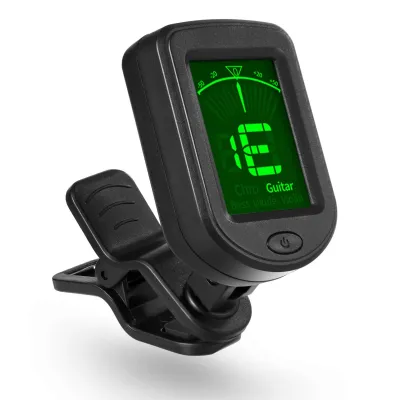
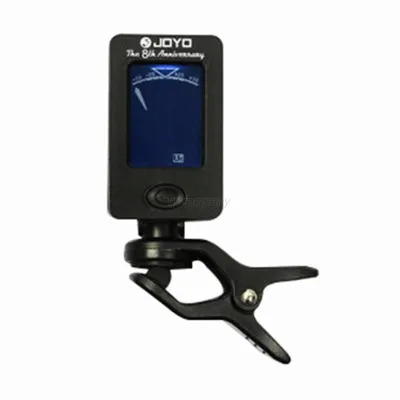


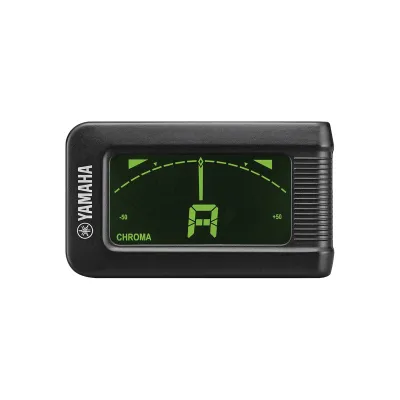
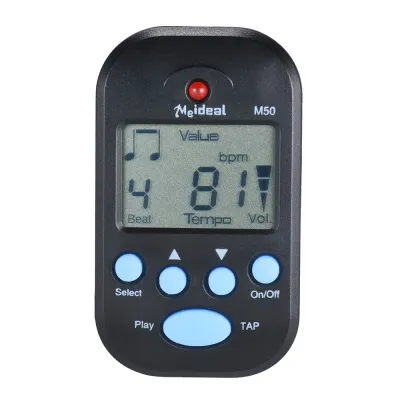
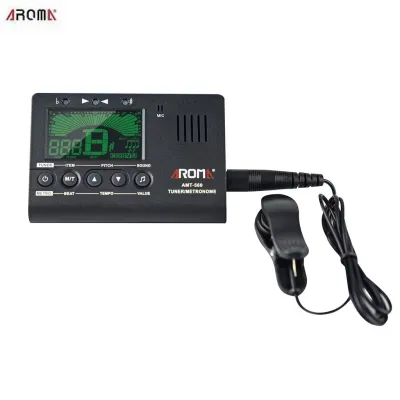
Prices are valid at publication and may change. Please refer to the product page for the latest price.
At this price level, you should prioritize everyday reliability, structural durability, and a clear user interface. A beginner does not need complex features like multi-temperament tuning, microtonal adjustments, or ultra-precise strobe displays that measure pitch to a thousandth of a cent. Instead, you need a device that clearly indicates whether a string is flat, sharp, or in tune, without lagging or displaying erratic readings. Sticking to this budget keeps your initial investment low while ensuring your gear does not become a source of frustration.
Prioritizing Features: What to Look for Under S$50
When evaluating budget guitar tuners, understanding how to read manufacturer specification sheets will help you separate marketing hype from genuine utility. The most critical specification to check is the tuning accuracy margin, which is typically measured in “cents” (hundredths of a semitone). For beginner purposes, an accuracy rating of +/- 1 cent is the industry standard and is more than precise enough for standard tuning. Avoid paying a premium for tuners claiming +/- 0.1 cent accuracy unless you plan to do your own professional instrument setups and intonation work.

Another essential element is screen readability. A good budget tuner must have a high-contrast display that is easy to read from various angles and under different lighting conditions. Look for bright, color-coded LED or LCD screens that turn green when the pitch is correct and red or yellow when it is out of tune. This instant visual feedback is incredibly helpful when you are still learning to coordinate your hands on the tuning pegs.
Additionally, pay attention to the tuning modes offered. A basic tuner should offer both a dedicated “guitar” mode and a “chromatic” mode. While guitar mode is helpful for absolute beginners because it restricts the display to the six standard string notes (E, A, D, G, B, E), chromatic mode is highly recommended as you progress. Chromatic tuning detects any of the twelve semitones in an octave, allowing you to experiment with alternate tunings or tune other instruments.
To decide whether to spend closer to the S$50 ceiling or save money on a basic S$15 model, consider these optional features:
- Power Source: Standard models use CR2032 coin cell batteries, which are cheap and easy to replace. Models closer to S$50 often feature built-in lithium-ion batteries rechargeable via USB-C. If you practice daily, a rechargeable model can save you money on replacement batteries over time.
- A4 Calibration: Standard concert pitch is calibrated to A4 = 440 Hz. Most budget tuners are fixed at this frequency, which is perfect for beginners. Some models allow you to calibrate the pitch between 430 Hz and 450 Hz. Unless you are playing in an orchestra or a specialized ensemble that uses alternative pitch standards, a fixed 440 Hz tuner is perfectly adequate.
- Display Adjustability: Cheaper models may have rigid plastic joints that limit how much you can tilt the screen. Spending slightly more often gets you a multi-axis swivel joint, which is highly beneficial for finding a comfortable viewing angle on different headstock shapes.
Choosing the Right Form Factor for Your Instrument
Selecting the right physical format for your tuner depends entirely on the type of guitar you play and where you plan to practice. The two most common form factors available under S$50 serve very different playing setups.
Clip-On Tuners for Acoustic and Classical Guitars
Clip-on tuners are the most popular and affordable option for acoustic and classical guitarists. These devices clip directly onto the headstock of your instrument and utilize a small piezoelectric sensor. Instead of relying on a microphone to pick up sound waves traveling through the air, a piezo sensor detects the physical vibrations passing through the wood of the guitar.
This vibration-based technology makes clip-on tuners exceptionally useful in noisy environments. Whether you are practicing in a busy household, a classroom, or a lively local community center, a clip-on tuner will ignore ambient noise and focus solely on the vibrations of your strings.
When shopping for a clip-on tuner in Singapore’s tropical climate, pay close attention to the physical build. Look for sturdy plastic hinges and, most importantly, high-quality silicone or soft rubberized grips on the clamp. Cheap, low-grade rubber padding can degrade and become sticky over time due to high humidity, potentially damaging your guitar’s headstock finish. A compact, low-profile design is also preferable, as it remains unobtrusive and is less likely to get knocked off or damaged when you pack your guitar into a gig bag.
Pedal Tuners for Electric Guitar Rigs
If you play an electric guitar and plan to practice using an amplifier or a multi-effects pedalboard, a pedal tuner is a highly practical choice. Unlike clip-on tuners, pedal tuners connect directly to your guitar via a standard quarter-inch instrument cable. They read the electromagnetic signal directly from your guitar’s pickups, completely eliminating any interference from room noise.
When looking for a pedal tuner under S$50, you will primarily find entry-level models from established budget-friendly brands. A key specification to check is the bypass style. Look for a pedal that features “true bypass” circuitry. When the tuner is turned off, true bypass ensures that your guitar’s signal passes directly to your amplifier without any coloration, preserving your natural tone.
Additionally, you must factor in the power requirements of a pedal tuner. Most pedal tuners run on either a standard 9V battery or an external 9V DC power adapter (usually center-negative). Because budget pedals rarely include a power adapter in the box, you must verify if you already own a compatible power supply. Buying a separate power adapter can easily push your total cost past the S$50 mark if you are not careful, so check the product specifications before completing your purchase.
Quality Traps and Safe Compromises on a Tight Budget
When shopping at the lower end of the price spectrum, it is easy to fall into common quality traps. One of the most frequent mistakes is buying unbranded, generic clones from online marketplaces. While these devices often cost less than S$10, they frequently suffer from slow pitch detection lag, poor screen refresh rates, and weak plastic clips that snap under minimal tension. A tuner that takes several seconds to recognize a note will quickly make your tuning routine tedious and frustrating.
Another common trap is the “multi-function” budget device. Many cheap products attempt to combine a tuner, a metronome, and a microphone into a single plastic housing. At a sub-S$50 price point, manufacturers must cut corners to fit all these features into one device, which often results in poor performance across all functions. The tuner may lack accuracy, the metronome speaker may sound harsh or quiet, and the overall build quality is usually highly fragile. It is always wiser to choose a dedicated, single-purpose tuner that does one job reliably rather than a poorly executed multi-tool.
To stay safely under your S$50 budget, you can make several practical compromises that do not affect tuning accuracy:
- Chassis Material: You do not need a heavy-duty metal chassis for a clip-on tuner. A lightweight, simple plastic body is perfectly fine, provided the clamp spring is strong and the hinge pin is secure.
- Battery Type: Opting for a model that runs on standard CR2032 coin batteries instead of a USB-rechargeable battery is a great way to save money upfront. These batteries are widely available in local Singapore supermarkets and convenience stores, and they typically last for months of daily use.
- Basic Tuning Modes: You can safely skip tuners that offer specialized modes for instruments you do not play (such as banjo or violin). A simple chromatic and guitar tuner is all you need.
Buying in Singapore: Where to Shop and What to Verify
To ensure you are getting an authentic product with reliable performance, it is best to purchase your tuner from established local music retailers or their authorized digital storefronts on major online marketplaces. Buying from reputable local sellers guarantees that you are getting genuine merchandise rather than counterfeit goods that fail basic accuracy standards.
When purchasing electronic music accessories, always verify the local warranty coverage and return policies. Buying from international sellers on global platforms might save you a few dollars upfront, but it often voids local warranty support. If your tuner arrives with a defective screen or a faulty sensor, returning the item to an overseas address can be costly and time-consuming. A local warranty ensures you can quickly get a replacement or a refund if any issues arise.
If you prefer to buy online, remember to factor in shipping costs or minimum spend requirements for free delivery. A tuner priced at S$45 might seem like a great deal, but if it incurs a S$6 shipping fee, it will push your total expenditure over your strict S$50 budget.
Whenever possible, consider visiting physical music stores in retail hubs like Bras Basah Complex or Peninsula Shopping Centre. Testing a tuner in person allows you to evaluate the physical clamp tension, feel the build quality, and check the screen visibility under bright store lights before spending your money.
Frequently Asked Questions (FAQ)
Can I just use a free smartphone app instead of buying a physical tuner?
While free smartphone tuning apps are excellent emergency backups, they have major practical limitations for regular practice. Phone apps rely entirely on your phone’s built-in microphone to detect pitch. This means they perform poorly in noisy environments, as they will pick up background chatter, television sounds, or air conditioning hum alongside your guitar notes.
Furthermore, a phone app requires you to prop your phone up near your guitar, which can be awkward and increases the risk of dropping your device. A dedicated clip-on or pedal tuner uses physical vibrations or direct cable signals, offering far superior accuracy, speed, and convenience during daily practice sessions.
Do I need a chromatic tuner or is a standard guitar tuner enough?
Standard guitar tuners are programmed to only recognize the six specific pitches of standard guitar tuning (E2, A2, D3, G3, B3, E4). If your guitar string is severely out of tune—for example, if your low E string has slipped down to a D—a standard guitar tuner may not display anything at all, leaving you confused about which way to turn the peg.
A chromatic tuner, however, detects all twelve notes in the musical scale. It will show you exactly what note your string is currently vibrating at, making it much easier to guide the string back to the correct pitch. Because almost all high-quality budget tuners under S$50 include a chromatic mode by default, you should always choose a chromatic-capable model for its superior flexibility and ease of use.
Community discussion
Share your experience or ask a question. Comments are reviewed before publication.