
Selecting the right Chinese dictionary for Primary School Leaving Examination (PSLE) preparation is a vital decision that directly impacts a student’s confidence and performance. To support a Primary 6 student effectively, a suitable dictionary must align closely with the Ministry of Education (MOE) syllabus, offer highly efficient search mechanisms, provide rich contextual support for sentence construction, and suit the student’s specific revision habits. While many general-purpose dictionaries exist, exam preparation demands a specialized tool designed to help students master vocabulary, avoid common character traps, and express themselves precisely in writing.
Understanding the specific features to look for ensures that parents do not purchase an overly academic or outdated reference book that frustrates the learner. By focusing on syllabus coverage, layout usability, and contextual features like collocations and synonym comparisons, you can select a learning companion that transforms passive look-ups into active language acquisition.
Clarify the Dictionary's Role: Exam Rules vs. Prep Tool
Before evaluating specific features, it is essential to distinguish between how a dictionary is used during daily study and how it is restricted under formal examination conditions. A dictionary serves primarily as a foundational learning tool during the months of preparation leading up to the PSLE. It is during this daily study phase that students build their core vocabulary, clarify character structures, and learn how to apply words in context.
Products mentioned in this guide
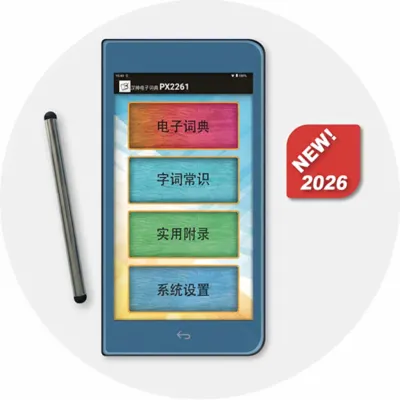
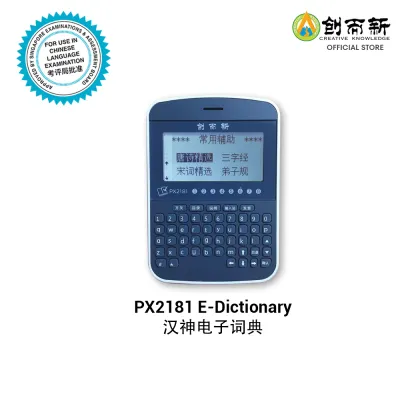
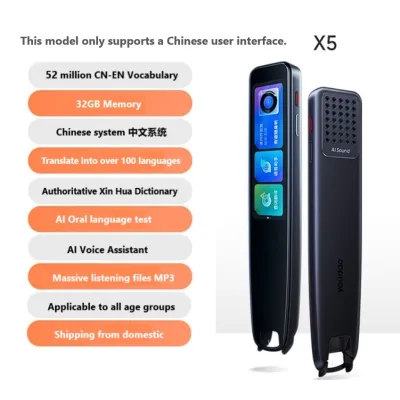

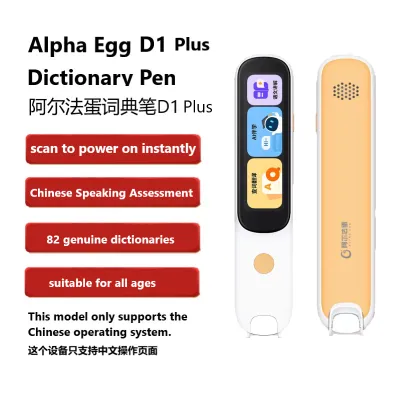
Prices are valid at publication and may change. Please refer to the product page for the latest price.
Parents must carefully verify the latest Singapore Examinations and Assessment Board (SEAB) regulations regarding dictionary usage. While SEAB permits specific approved models of printed and electronic dictionaries for use during Paper 1 (Chinese Composition), these tools are strictly prohibited during Paper 2 (Language Use and Comprehension). This means that a student cannot rely on a dictionary to solve vocabulary or comprehension questions during the main written paper.
Because of these strict limitations, a dictionary’s ultimate value lies in how effectively it helps a student internalize language concepts during home revision and homework. Relying too heavily on a dictionary during the exam itself can waste precious writing time. Therefore, the goal of a preparation dictionary is to make vocabulary so familiar and easy to understand during practice sessions that the student does not even need to look up those words on exam day.
Check Syllabus Alignment: Does It Cover the PSLE Vocabulary List?
The most critical factor in choosing a Chinese dictionary is its alignment with the official MOE Primary Chinese syllabus. A dictionary that contains thousands of archaic characters or advanced adult vocabulary will only overwhelm a Primary 6 student, while one that is too simple will fail to cover the necessary exam vocabulary.

Core Vocabulary Inclusion
The dictionary should explicitly align with the primary school character list (识字表) and vocabulary list (识写表) prescribed by the MOE. This ensures that when a student encounters a word in their school textbooks, practice papers, or homework, they can easily find it in their dictionary. High-frequency words tested in the PSLE must be fully represented with definitions tailored to the primary school level.
Idioms (Chengyu) and Proverbs
Idioms are a major component of the PSLE Chinese curriculum, frequently appearing in cloze passages and serving as excellent tools to elevate composition scores. A suitable dictionary should feature a robust selection of standard primary-level idioms. Rather than just offering brief definitions, it should explain the literal meaning, the figurative meaning, and provide clear examples of how the idiom is applied in modern sentences.
Polyphonic Characters and Similar Characters
PSLE questions often include traps involving multi-pronunciation characters (多音多义字) and visually similar characters (形近字). A dictionary designed for exam preparation should highlight these variations. For instance, when looking up a character like “便” (which can be pronounced biàn or pián), the dictionary should clearly separate the different pronunciations, meanings, and common word pairings for each sound.
Actionable Verification Check
To verify if a dictionary is suitable, parents can perform a quick test by looking up three to five standard PSLE focus words, such as “鼓励” (encourage), “遵守” (comply with), or “恰好” (coincidentally). Check if the definitions are written in clear, age-appropriate language that a 12-year-old can comprehend independently without needing constant translation or explanation from a tutor.
Evaluate Search Efficiency: Is It Designed for Primary 6 Students?
An excellent dictionary is useless if a student finds it too tedious or confusing to navigate. During intense revision sessions, search efficiency is paramount to maintaining study momentum and preventing frustration.
Indexing Methods
A student-friendly dictionary must offer multiple, highly intuitive indexing paths. Look for clear sections dedicated to Hanyu Pinyin, radicals (部首), and stroke counts (笔画). The index pages should be clean, with large, legible page numbers. Some printed dictionaries feature color-coded margins or physical thumb indexes that allow students to flip to the correct alphabetical or radical section in a matter of seconds.
Visual Layout and Typography
The physical layout of the pages significantly affects a student’s focus and eye health. Avoid dictionaries with cramped, tiny text and thin paper that allows ink from the reverse side to bleed through. Opt for editions that use clear, high-contrast fonts, generous line spacing, and anti-glare paper. A clean layout helps students isolate the information they need without getting distracted by surrounding text.
Character Breakdown and Writing Aids
For Primary 6 students, writing characters accurately is crucial for avoiding spelling penalties in both composition and comprehension papers. A great prep dictionary should include visual aids such as stroke order diagrams (笔顺) for key characters, clear radical highlighting, and structural breakdowns. These visual cues reinforce correct writing habits and help students memorize complex characters more effectively.
Diagnostic Signal
Pay close attention to how your child interacts with the dictionary. If they take more than a minute to locate a single word due to confusing index tables or microscopic print, the layout is a bottleneck to their learning. A dictionary should streamline their study flow, not interrupt it with unnecessary complexity.
Assess Contextual Help: Can It Guide Sentence Construction?
The ultimate goal of learning vocabulary for the PSLE is application. Students must not only know what a word means, but they must also know how to use it correctly in their writing and oral exams.
Quality of Example Sentences
Review the example sentences provided for each word. They should reflect modern, realistic scenarios that a primary school student in Singapore can relate to, such as school activities, family interactions, community life, or common ethical dilemmas. Avoid dictionaries that rely on classical literature or overly formal, archaic phrasing, as these do not translate well into contemporary primary-level compositions.
Collocations and Word Pairing
In the PSLE, students are heavily tested on their ability to pair words correctly (词语搭配). A dictionary that lists common collocations is incredibly valuable. For example, under the word “培养” (cultivate/foster), the dictionary should list common pairings like “培养习惯” (cultivate habits), “培养兴趣” (foster interests), or “培养人才” (train talents). This teaches students the natural flow of the language and prevents awkward, direct translations from English.
Synonyms and Antonyms
To score well in the writing paper, students need to vary their vocabulary and use precise terms. A dictionary that includes comparisons of near-synonyms (近义词辨析) is highly beneficial. For instance, it should explain the subtle differences between similar words like “看望” (visit a person) and “探望” (visit someone who is ill or far away). Understanding these emotional and contextual nuances prevents embarrassing vocabulary errors in essays.
Actionable Verification Check
Have your child look up a commonly confused word pair, such as “珍惜” (cherish) and “爱惜” (treasure/care for). If the dictionary’s explanation and example sentences make the distinction immediately clear to the student without requiring external explanation, the book is highly effective for independent study.
Decide on the Format: Print vs. Digital for Home Study
Both printed and electronic formats offer distinct advantages for home study. Choosing the right format depends on your child’s learning style, self-discipline, and specific study goals.
Print Dictionaries
Printed dictionaries are excellent for fostering deep focus and spatial memory. When students physically flip through pages, they often remember where a word was located on the page, which aids long-term retention. Furthermore, printed books carry zero risk of digital distractions, ensuring that students remain entirely focused on their revision rather than being tempted by internet browsing, games, or social notifications.
Digital Dictionaries and Apps
Electronic dictionaries and approved digital apps excel in speed and convenience. They allow students to look up words instantly using handwriting recognition or optical character scanning, which is incredibly useful when reading dense texts. Many digital tools also feature high-quality audio pronunciations, helping students prepare for the oral examination by hearing the correct tones and pronunciation of unfamiliar words.
Hybrid Strategy
A highly practical approach for many Primary 6 students is to adopt a hybrid strategy. You can provide a comprehensive, high-quality printed dictionary for structured weekly vocabulary reviews, essay planning, and mock writing sessions to build deep focus and spatial memory. Alongside this, a reliable, ad-free digital tool or approved electronic dictionary can be used for quick look-ups during daily homework and casual reading, ensuring that search lag never discourages their reading habits.
Frequently Asked Questions (FAQ)
Are electronic dictionaries or apps allowed in the PSLE Chinese examination hall?
Students must strictly adhere to the official guidelines set by the Singapore Examinations and Assessment Board (SEAB). Only specific approved models of electronic and printed dictionaries are permitted for use during Paper 1 (Composition). All other digital devices, including smartphones, tablets, unapproved electronic dictionaries, and mobile applications, are strictly prohibited in the examination hall. Furthermore, no dictionaries of any kind are allowed during Paper 2.
How often should a Primary 6 student use a dictionary during PSLE practice papers?
During timed practice sessions, students should simulate actual exam conditions by completing Paper 2 without any dictionary assistance, and Paper 1 using only the SEAB-approved models if necessary. The primary dictionary should be kept aside during the test itself. Its most effective use occurs during the post-paper review phase, where students use it to analyze their mistakes, look up unfamiliar words from comprehension passages, and find better collocations to improve their essay drafts.
Community discussion
Share your experience or ask a question. Comments are reviewed before publication.