
Living in a compact apartment, such as a typical Housing & Development Board (HDB) flat in Singapore, often requires making smart compromises with space. For percussionists, storing a traditional, full-sized box drum can quickly turn a living room or bedroom into a cluttered environment. Transporting a bulky wooden instrument on public transport or during a daily commute to a jam session adds another layer of logistical difficulty.
The collapsible cajon offers a practical solution to these spatial and mobility challenges, allowing musicians to enjoy the tactile feedback of acoustic percussion without sacrificing valuable floor space. By folding down into a flat, highly portable profile, these instruments slide easily into tight storage spots and travel with minimal effort.
To find the right model for your home and lifestyle, you need to evaluate how different folding mechanisms, portability features, and acoustic trade-offs align with your specific needs. This guide provides a clear framework to help you build a shortlist of reliable, space-saving instruments that deliver satisfying sound quality without cluttering your living space.
Products mentioned in this guide
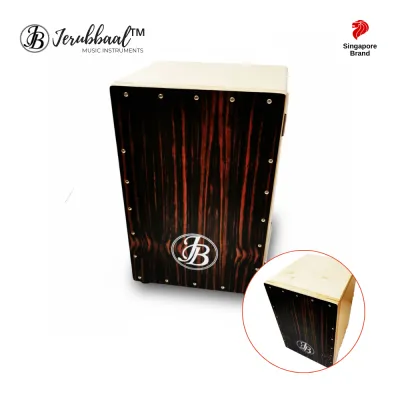
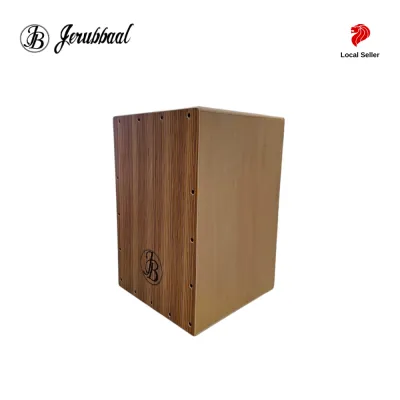
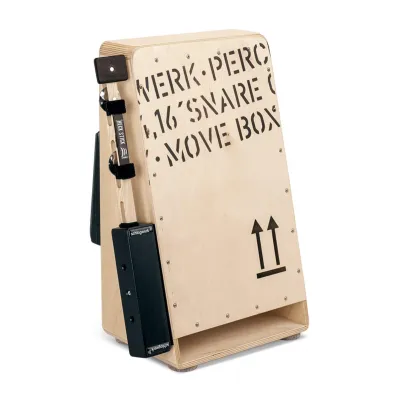
Prices are valid at publication and may change. Please refer to the product page for the latest price.
Evaluating Folding Mechanisms for Compact Apartments
When selecting a collapsible cajon, the design of the folding mechanism dictates both how easily you can store the instrument and how stable it feels when you sit on it. The two primary designs available on the market are flat-pack assembly systems and hinged panel designs. Flat-pack models typically consist of separate panels that slot together using interlocking joints or quick-release fasteners, offering excellent rigidity once fully assembled. On the other hand, hinged panel designs feature permanently connected walls that unfold and lock into place, which significantly reduces setup time but relies heavily on the quality of the hinges for structural integrity.
For those living in space-constrained apartments, the primary goal is to minimize the instrument’s storage footprint. You should measure the available clearance under your bed, inside narrow closets, or in the gap behind your wardrobe before making a purchase. Many collapsible models fold down to a thickness of under ten centimeters, allowing them to slip into spaces that would otherwise go unused. If you plan to store the instrument vertically behind a door or furniture, look for designs that lie completely flat without protruding latches or knobs that could scratch your walls or floors.
However, reducing the physical footprint of a cajon introduces a clear acoustic trade-off. The depth and warmth of a cajon’s bass tone depend directly on the internal air volume of the assembled box. Ultra-compact models that prioritize a very thin profile when collapsed often have smaller overall dimensions when fully assembled, resulting in a higher-pitched bass note and less acoustic projection. When evaluating different folding styles, consider whether your primary use case requires a deep, resonant bass for acoustic performances or if a more compact, higher-pitched tone is acceptable for quiet home practice and casual gatherings.
Selecting Portable Features for Travel and Jam Sessions
A collapsible cajon is only as useful as its transport options, especially if you frequently carry it to rehearsals, outdoor parks, or community jam sessions. Carrying solutions vary widely, ranging from simple built-in handle cutouts to detachable shoulder straps that allow for hands-free transport. For maximum protection during transit, look for models that include or are compatible with a dedicated, heavily padded gig bag. A good gig bag not only shields the delicate wooden striking surface, or tapa, from scratches but also keeps all disassembled panels or folded components securely organized in one place.

The overall weight of the assembled instrument is another critical factor for mobile musicians who rely on public transport or walk long distances to venues. Lightweight woods and composite materials make the instrument easier to carry, but they must be balanced against structural durability. The cajon must support your full body weight while you play, meaning the frame must be robust enough to handle repeated downward pressure without flexing or shifting. Inspect the material specifications to ensure the load-bearing panels are constructed from high-quality plywood or durable synthetic materials designed for structural applications.
Hardware security is the final piece of the portability puzzle. Because a collapsible cajon relies on moving parts to fold, any loose latches, weak hinges, or insecure locking pins can lead to structural failure or distracting mechanical rattles while playing. Prioritize models that feature heavy-duty, recessed locking latches or reinforced metal hinges that snap firmly into place. These components must remain secure under the vibration of playing and the physical movement of travel, preventing the instrument from accidentally unfolding or loosening during a performance.
Cross-Scenario Compatibility: Balancing Size, Weight, and Sound
Finding the right balance between portability and acoustic performance requires a systematic approach to comparing specifications. A helpful decision framework involves weighing the collapsed dimensions against the assembled weight and the expected acoustic projection. For instance, if your primary constraint is a lack of storage space in a shared apartment, you should prioritize a flat-pack model with the smallest possible collapsed thickness, even if it takes a few extra minutes to assemble. Conversely, if you are a frequent traveler who needs to set up quickly between sets, a hinged design with a slightly larger collapsed footprint but faster assembly time may be the better choice.
Another critical specification to verify is the design of the internal snare system. Traditional cajons use guitar strings or metal snare wires pressed against the back of the tapa to produce the characteristic sharp, buzzing snare sound. In a collapsible model, these snare systems must be engineered to fold away safely without bending, tangling, or losing tension. Check the manufacturer’s product specifications to confirm how the snare system is secured during folding and whether it features an adjustable tension knob that remains accessible when the instrument is fully assembled.
Because moving parts are inherently more susceptible to wear and tear than solid wooden joints, you should carefully review the warranty terms provided by the manufacturer or authorized distributor. Look for warranties that explicitly cover structural components, including hinges, latches, and joint fasteners, rather than just the wooden panels. A robust warranty on mechanical parts offers peace of mind that the instrument is built to withstand the physical demands of frequent folding and unfolding over several years of active use.
Maintenance and Storage for Folding Hardware
Proper handling and routine maintenance are essential to preserve the structural integrity and sound quality of a collapsible cajon over time. When assembling or disassembling the instrument, always follow the manufacturer’s recommended sequence to prevent uneven pressure on the joints. Forcing a panel into place or overtightening a latch can strip the screw threads in the wood, warp the alignment of the panels, or pinch your fingers. Take your time during setup, ensuring that every interlocking joint is fully seated before applying weight or sitting on the instrument.
Singapore’s high-humidity climate presents unique challenges for wooden musical instruments. Excessive moisture in the air can cause natural wood panels to swell, warp, or develop mold, which can ruin the tight tolerances required for a collapsible cajon to fold smoothly. To mitigate this risk, perform routine checks on the tension of all hinge screws and the alignment of locking latches. If you notice any resistance when folding the panels, do not force them; instead, inspect the joints for dirt, debris, or slight wood swelling that may need to dry out in a climate-controlled room.
When storing the cajon in its collapsed state for extended periods, protect it from dust, moisture, and direct sunlight. Keep the folded panels inside a sealed gig bag or a dedicated storage case, and consider placing a silica gel packet or a small dehumidifier bag inside the case to absorb excess moisture. Store the collapsed instrument flat rather than leaning it against a wall at an angle, as uneven pressure over time can cause the thin wooden panels to warp, preventing them from sealing tightly when assembled and compromising the instrument’s bass response.
Frequently Asked Questions (FAQ)
Do collapsible cajons sound as good as standard box drums?
While collapsible cajons are highly convenient, they generally do not match the deep bass resonance and seamless projection of a high-quality, fixed-body box drum. The seams, hinges, and joints required for folding can allow small amounts of air to escape, slightly reducing the overall bass punch and sustain. However, many modern folding designs minimize this loss by using tight-fitting rubber seals and precision-cut joints. For casual jam sessions, acoustic practices, and street performances, a well-designed collapsible model provides more than enough volume, snare sensitivity, and tonal contrast to satisfy both the player and the audience.
Can I take a collapsible cajon as carry-on luggage on a flight?
Yes, many collapsible cajons are designed specifically to meet standard airline carry-on dimensions when folded flat. However, because carry-on limits vary significantly between airlines and aircraft types, you must always verify the exact collapsed measurements of your instrument against your airline’s specific cabin baggage allowance before traveling. If your cajon exceeds these limits or if cabin space is restricted, you will need to check the instrument into the cargo hold. In such cases, pack the folded cajon inside a heavily padded gig bag, and place that bag inside a rigid, hard-shell suitcase to protect the wooden panels from rough handling.
Community discussion
Share your experience or ask a question. Comments are reviewed before publication.