
Choosing a colorful ukulele as a beginner in Singapore is an exciting entry point into the world of music. A vibrant instrument can spark creativity and make daily practice sessions feel more inviting. However, the market is filled with instruments that prioritize visual appeal over musical functionality. Many brightly painted ukuleles sold online are closer to toys than actual instruments, featuring poor intonation, high action, and materials that fail to hold a tune. To ensure your musical journey starts on the right note, you must learn how to balance eye-catching aesthetics with structural integrity and playability.
In Singapore’s unique tropical climate, this decision involves more than just picking a favorite shade. High humidity levels can warp wood, crack finishes, and alter the playability of budget instruments over time. By understanding how colorful finishes are applied, which materials withstand local environmental conditions, and how to inspect an instrument’s build quality, you can confidently select a colorful ukulele that looks excellent and sounds beautiful.
What to Look for in a Colorful Beginner Ukulele
When evaluating a colorful ukulele, the primary goal is to ensure that the aesthetic modifications do not interfere with the instrument’s basic acoustic properties and playability.
Products mentioned in this guide



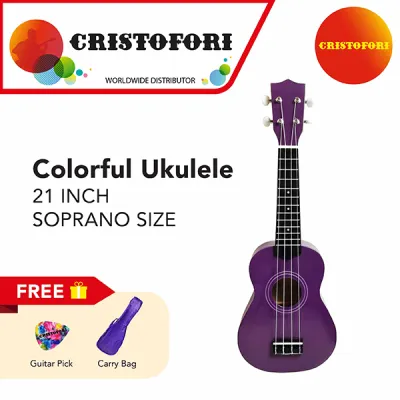
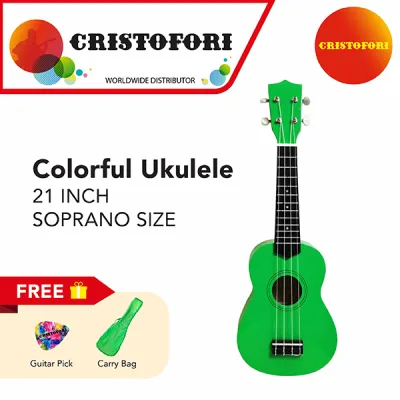
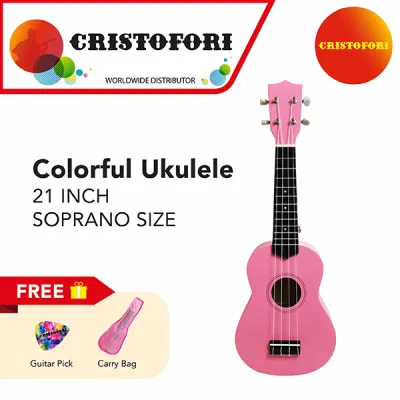
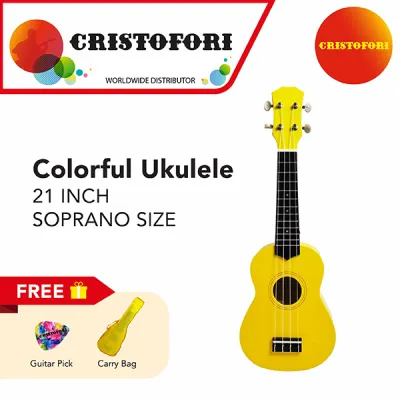
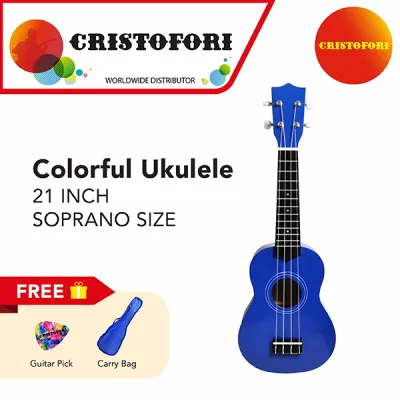
Prices are valid at publication and may change. Please refer to the product page for the latest price.
The first decision point is the size and scale of the instrument. Ukuleles primarily come in four sizes, but beginners should focus on Soprano and Concert models. Soprano ukuleles are the traditional, smallest size, offering a bright, plucky sound. However, their short scale length means the frets are very close together, which can feel cramped for adult fingers. Concert ukuleles are slightly larger, featuring a longer neck and wider fret spacing. This extra physical space makes it much easier to press down clean chords without accidentally muting adjacent strings. Additionally, the larger body cavity of a Concert ukulele produces a fuller, warmer tone with better projection, making it a highly recommended starting point for most beginners.
The material and finish of the body play a massive role in how the instrument projects sound. Traditional ukuleles are made of wood, which relies on the vibration of the top soundboard to produce volume and tone. When a manufacturer applies a thick layer of opaque paint to achieve a bright color, it adds significant weight and stiffness to the wood. This dampening effect can make the ukulele sound quiet, boxy, and dull. To avoid this, look for instruments that use thin, transparent stains that color the wood while leaving the natural grain visible, or high-quality laminate woods with thin graphic prints. Alternatively, modern composite materials like ABS plastic or polycarbonate offer vibrant, molded colors without the acoustic dampening associated with heavy paint on wood.
Hardware and setup are equally critical to your success as a learner. No matter how beautiful the finish, an instrument that cannot stay in tune is unusable. Ensure the ukulele is equipped with geared tuning pegs rather than friction pegs. Geared tuners use a mechanical gear ratio to allow for precise adjustments and to prevent the strings from slipping. Furthermore, the height of the strings at the nut and the saddle must be properly adjusted. If the strings are too high, pressing them down will hurt your fingers and pull the notes out of tune. If they are too low, the strings will buzz against the frets.
How Brands Achieve Colorful Ukulele Designs
Manufacturers utilize several distinct manufacturing methods to create colorful ukuleles, each presenting unique trade-offs in terms of durability, sound quality, and maintenance requirements.

ABS and composite bodies represent a modern approach to colorful instrument design. Instead of traditional wood, these ukuleles are constructed from high-grade plastics or carbon fiber composites. Because the color is mixed directly into the raw material before molding, these instruments feature vibrant, solid colors that will never chip, peel, or fade. From a practical standpoint, composite ukuleles are incredibly durable and completely waterproof. In Singapore, where relative humidity levels regularly exceed 80 percent, a composite instrument is highly stable. It will not warp, swell, or crack when exposed to moisture or temperature fluctuations. While composite bodies lack the complex, warm resonance of aged wood, modern engineering allows them to produce a surprisingly bright, clear, and loud sound that is perfect for casual practice and outdoor gatherings.
Laminate wood with printed or painted finishes is the most common construction method for entry-level colorful ukuleles. Laminate consists of thin layers of wood glued together, topped with a decorative outer veneer. Because laminate is structurally stronger and less sensitive to humidity than solid wood, it serves as an excellent canvas for vibrant paints and intricate graphic designs. However, buyers must inspect these instruments closely. Some budget manufacturers use thick, heavy polyurethane paints to cover up low-grade wood. This heavy coating restricts the soundboard’s ability to vibrate, resulting in a muted tone. High-quality laminate brands apply very thin, satin-finish paints or high-definition graphic wraps that minimize acoustic dampening while delivering striking visuals.
Stained or tinted wood offers a middle ground for players who want color but prefer a traditional acoustic sound. Instead of covering the wood with opaque paint, manufacturers apply transparent or semi-transparent dyes directly to woods like mahogany, sapele, or maple. This technique colors the wood fibers while preserving the natural grain patterns and keeping the surface finish incredibly thin. Because the wood pores remain relatively open and the soundboard remains lightweight, the instrument retains its natural resonance, warmth, and dynamic range. Stained wood ukuleles provide a sophisticated, colorful aesthetic without compromising the acoustic performance of the wood.
Limited editions and artist collaborations are another avenue for finding unique designs. Established acoustic instrument brands occasionally release special runs featuring custom artwork, seasonal colorways, or designs created in partnership with visual artists. These models are typically built on the brand’s standard, proven production lines, ensuring that the internal bracing, neck joint, and hardware meet professional standards. While these limited-edition models offer exceptional build quality and collectible appeal, they often carry a price premium compared to standard production models.
How to Inspect Build Quality and Playability
Before purchasing a colorful ukulele, performing a thorough physical inspection is essential to ensure you are buying a playable musical instrument rather than a decorative novelty.
Begin with a detailed visual inspection of the exterior. Examine the finish under direct light to check for uneven paint application, runs, drips, or bubbles, which indicate poor quality control. Pay close attention to the areas around the soundhole and the fretboard joint; these spots should be clean and free of excess glue or rough, unfinished wood. Next, inspect the bridge, which is the wooden piece glued to the body that holds the strings. There should be absolutely no visible gaps between the bridge and the body. Even a tiny gap suggests the bridge is lifting under string tension, which will eventually lead to structural failure.
Next, evaluate the neck and the fretboard. Hold the ukulele at eye level and look down the edge of the neck from the headstock to the body, similar to sighting a pool cue. The neck should be straight or have a very slight, almost imperceptible upward curve. If the neck is visibly bowed or twisted, the instrument will be difficult or impossible to play. Run your index finger and thumb gently along both sides of the fretboard. The metal fret wires should feel smooth and flush with the wood. If you feel sharp metal edges sticking out, this is known as “fret sprout.” It occurs when the wood of the fretboard shrinks, and it can make playing painful and uncomfortable.
Finally, check the action and intonation. The “action” refers to the distance between the strings and the fretboard. At the 12th fret, the gap should be comfortable—typically around 2.5mm to 3mm. If the action is too high, pressing the strings down requires excessive force, which quickly fatigues beginner hands. To check the intonation, pluck an open string, then press down at the 12th fret and pluck it again. The note at the 12th fret should sound exactly one octave higher and register as perfectly in tune on a digital tuner. If the fretted note is significantly sharp or flat compared to the open note, the instrument’s scale length is incorrect, and it will sound out of tune when you play chords up the neck.
Where to Buy and What to Verify in Singapore
Navigating the purchasing process in Singapore requires choosing the right retail channel and understanding how the local environment affects your new instrument.
While generic online marketplaces offer a vast array of cheap, colorful ukuleles, buying from these platforms carries significant risks. Many of these unbranded instruments are shipped directly from overseas warehouses without any quality control, setup, or warranty support. Instead, prioritize purchasing from established local music stores or their authorized online flagship stores. Buying locally ensures you receive an authentic product backed by a manufacturer’s warranty. More importantly, physical music showrooms allow you to hold the instrument, feel its weight, test its neck profile, and hear its actual tone before spending your money.
Singapore’s tropical climate is a critical factor to keep in mind. The high relative humidity can cause wooden ukuleles to absorb moisture, leading to wood swelling, glue failure, and a dulling of the acoustic tone. When shopping at a local retailer, observe how they store their instruments. Reputable shops keep their acoustic instrument rooms air-conditioned and dehumidified to maintain stable conditions. If you decide to purchase a solid wood or high-quality laminate model, ask the staff for advice on local maintenance. You may need to invest in a padded gig bag and a few silica gel packs to absorb excess moisture when the instrument is stored at home.
Before finalizing your purchase, always ask the retailer about their pre-purchase setup services. A professional setup involves adjusting the height of the nut slots, filing the saddle, and ensuring the strings are properly stretched and settled. Many dedicated local music shops perform this setup automatically for every instrument they sell, which dramatically improves playability for a beginner. If you are buying online from an authorized local dealer, send a message to request a quick inspection and setup before they pack and ship the ukulele to your home.
Frequently Asked Questions (FAQ)
Do colorful painted ukuleles sound worse than natural wood ones?
Yes, ukuleles covered in thick, opaque paints generally have a more muted and quiet sound compared to natural wood instruments. The heavy paint layer adds weight to the soundboard and restricts its ability to vibrate freely when the strings are plucked. If sound quality is your priority, look for colorful ukuleles that use thin, transparent wood stains, high-quality laminate with thin graphic finishes, or modern composite materials like ABS plastic, which are engineered to project sound efficiently without relying on traditional wood resonance.
What size colorful ukulele is best for a beginner?
The Concert size is widely considered the best option for most beginners, regardless of the color or design. While Soprano ukuleles are highly portable and classic, their small size and narrow fret spacing can make forming chords difficult for beginners. A Concert ukulele offers a longer neck, wider frets, and a larger body, providing a more comfortable playing experience and a richer, louder tone that makes practicing much more rewarding.
How do I maintain a colorful ukulele in a humid climate?
To maintain a colorful ukulele in Singapore’s humid climate, wipe down the body, neck, and strings with a dry microfiber cloth after every practice session to remove sweat and skin oils, which can degrade certain painted finishes over time. Store the instrument inside a padded gig bag or a hard case when not in use, and place a reusable silica gel pack inside the case to help regulate moisture levels. Avoid leaving the ukulele in direct sunlight or inside a hot car, as extreme heat can soften the glues holding the instrument together.
Community discussion
Share your experience or ask a question. Comments are reviewed before publication.