
For a beginner guitarist in Singapore, choosing the right digital guitar tuner is one of the most important early decisions you will make. Tuning by ear is a skill that takes time to develop, making a reliable digital tuner essential for keeping your instrument sounding harmonious and ensuring your practice sessions are productive. The ideal tuner for a beginner is one that matches your specific playing environment, instrument type, and daily practice routine without introducing unnecessary technical complexity.
While advanced players often seek high-end strobe units with extreme precision, beginners benefit most from a highly visible, fast-tracking, and physically compatible tuner. A clip-on chromatic tuner is generally the most practical and cost-effective starting point for both acoustic and electric players, while electric guitarists planning to play with others may eventually transition to a robust pedal tuner.
Quick Selection Guide for Beginners
Choosing your first digital guitar tuner does not require a deep understanding of music theory or complex audio engineering. Instead, you should focus on where you plan to practice and how easily you can read the device’s screen during a session.
Products mentioned in this guide
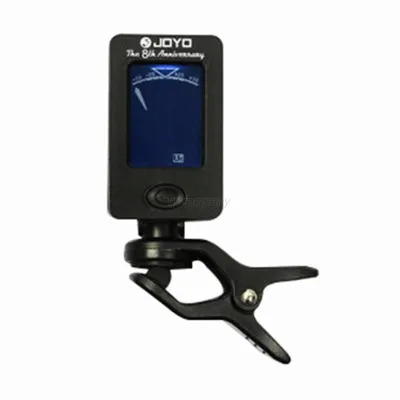
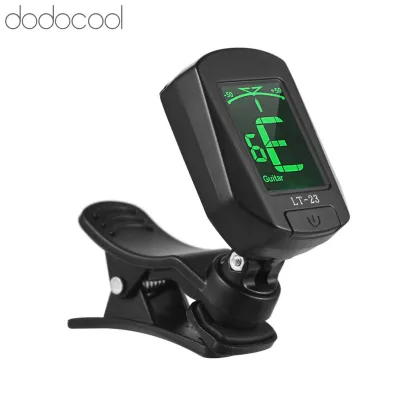


![[SG 🚚] Electronic Tuner for Guitar Violin Ukulele & Bass | Stringed Instrument Accessory with Accurate](https://img.lazcdn.com/g/p/b3c88a9afe4c63c1057dda7e61f5d1ed.jpg_400x400q80.jpg_.webp)
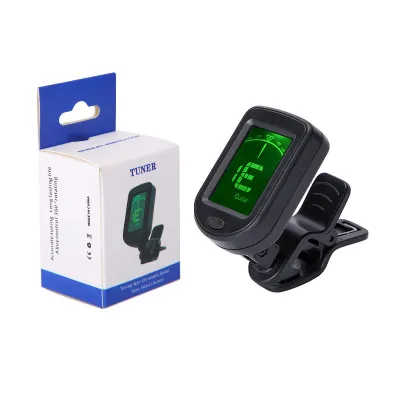

Prices are valid at publication and may change. Please refer to the product page for the latest price.
If you primarily practice in a quiet bedroom at home, a simple clip-on tuner or a basic desktop tuner will serve you well. However, if you plan to join a school club, jam with friends in a noisy studio, or perform at local community events in Singapore, background noise becomes a major obstacle. In these louder environments, a tuner that relies on physical vibrations rather than an internal microphone is essential for accurate tuning.
Beginners should prioritize display clarity and intuitive interfaces over advanced features like polyphonic tuning or ultra-precise strobe modes. A clear needle display or a color-changing screen that clearly indicates when a string is flat, sharp, or in tune is far more valuable when you are still training your ears. Fast note detection is also crucial, as a laggy tuner can lead to over-tightening and broken strings.
Physical compatibility with your instrument is another vital check. Classical guitars with thick headstocks, acoustic guitars with delicate finishes, and electric guitars with unique, asymmetrical headstock shapes all require different physical considerations. Ensure the tuner’s clamp or mounting mechanism can securely grip your instrument without causing cosmetic damage or slipping off during use.
Understanding Digital Tuner Formats
Digital guitar tuners come in several distinct physical designs, each tailored to different playing habits, setups, and environments. Understanding these formats helps you select a device that integrates seamlessly into your daily practice routine without adding unnecessary setup time.

The primary distinction lies in how the tuner captures the pitch of your guitar strings. Some tuners use an internal microphone to capture sound waves traveling through the air, while others use a piezo sensor to detect physical vibrations directly from the wood of the instrument. Electric guitarists also have the option of plugging a cable directly into the tuner, bypassing acoustic interference entirely.
Power requirements also vary across formats. Most compact clip-on tuners rely on small coin-cell batteries, which are highly portable but require regular replacement. Larger pedal and desktop units typically use standard 9V batteries or external power adapters, offering longer operational life at the expense of portability.
Clip-On Tuners
Clip-on tuners are the most popular choice for beginners due to their compact size, affordability, and ease of use. These devices clip directly onto the headstock of your guitar and utilize a built-in piezo sensor to detect the vibrations of the wood as you pluck each string.
Because they measure physical vibrations rather than airborne sound, clip-on tuners are highly effective at filtering out ambient room noise. This makes them incredibly useful in busy households or group practice settings where other instruments are playing simultaneously.
However, you must consider headstock clearance and weight distribution. A heavy tuner can alter the balance of a lightweight instrument, while a poorly designed clip might obstruct your view of the tuning pegs. Additionally, check the durability of the hinge and swivel mechanism, as cheap plastic joints can wear out or snap under the stress of frequent attachment and removal.
Pedal Tuners
Pedal tuners are floor-based units designed primarily for electric, bass, and acoustic-electric guitarists. They are built into rugged metal enclosures and are operated via a foot-activated switch, making them the standard choice for live performances and pedalboard setups.
These tuners require a direct cable connection from your guitar, which completely eliminates any interference from background noise. They are typically powered by a standard 9V battery or a dedicated multi-pedal power supply, ensuring they are always ready to use without worrying about small coin-cell batteries dying mid-session.
When choosing a pedal tuner, consider its placement in your signal chain and whether it features true bypass or buffered bypass circuitry. True bypass ensures your guitar’s tone remains completely unaltered when the tuner is switched off, while a high-quality buffer can help preserve your signal strength over long cable runs. Display visibility is also critical, as the screen must be bright enough to read while standing up under bright stage lights or outdoor glare.
Soundhole and Rack Tuners
Soundhole tuners are specialized devices designed specifically for acoustic guitars. They mount discreetly inside the soundhole, keeping the tuner hidden from the audience while remaining easily visible to the player. Before purchasing, verify that your acoustic guitar’s soundhole dimensions and bracing structure can accommodate the specific tuner model without obstructing the vibrating top board.
Rack tuners, on the other hand, are wide, rack-mountable units designed for professional touring rigs and permanent recording studio installations. They offer large, highly visible displays and extensive input/output routing options. While highly accurate and durable, they are generally too bulky, expensive, and complex for a beginner’s home practice setup.
Essential Features to Evaluate
When comparing digital guitar tuners, looking past the marketing jargon and focusing on core technical specifications will help you find a reliable tool that lasts for years. The right combination of display technology, tuning modes, and power management can significantly improve your daily tuning experience.
- Display Technology and Readability: The screen is your primary interface with the tuner, so readability is paramount. Traditional liquid crystal displays (LCD) are energy-efficient but can be difficult to read in low-light environments or at sharp viewing angles. Light-emitting diode (LED) and organic light-emitting diode (OLED) screens offer much higher contrast, vibrant colors, and wider viewing angles, making them much easier to read in dimly lit bedrooms or bright outdoor spaces.
- Tuning Modes and Versatility: Most digital tuners offer multiple tuning modes. A dedicated "guitar mode" simplifies the process for beginners by displaying string numbers (1 through 6) instead of note names. However, a "chromatic mode" is highly recommended for long-term usability. Chromatic tuners detect all twelve semitones in the octave, allowing you to explore alternate tunings like Drop D, Open G, or half-step down tunings as your playing skills progress.
- Calibration Range: The standard reference pitch for modern music is A4 = 440Hz. Most basic tuners are locked to this frequency, which is perfectly fine for the vast majority of beginners. However, if you plan to play alongside fixed-pitch instruments like acoustic pianos, classical pipe organs, or historical orchestral instruments, you may need a tuner with an adjustable calibration range (typically from 430Hz to 450Hz) to ensure you can match their pitch perfectly.
- Power Management and Auto-Off: Because beginners often forget to turn off their gear after a practice session, power-saving features are incredibly valuable. Look for tuners equipped with an automatic power-off function that shuts the device down after a few minutes of inactivity. This simple feature can save you from constantly buying replacement batteries and ensure your tuner is ready to go whenever inspiration strikes.
Building Your Condition-Based Shortlist
To make a confident purchase, it helps to categorize your options by budget and intended use while keeping local purchasing conditions in mind. Singapore’s retail market offers a wide range of options, from budget-friendly entry-level devices to professional-grade gear.
- Entry-Level Budget Tier (Under S$20 to S$40): For casual home practice on an acoustic or electric guitar, a budget-friendly clip-on tuner is highly sufficient. In this price range, you should expect a simple plastic construction, a basic LCD or low-resolution LED display, and standard chromatic or guitar-specific tuning modes. These devices are highly portable and perfect for learning the basics of tuning without a significant financial commitment.
- Mid-Tier and Performance Gear (S$50 to S$150+): If you are an electric guitarist planning to join a band, perform live, or simply want a highly durable tool, investing in a mid-tier pedal tuner or a premium clip-on tuner is a wise choice. These units offer rugged metal or reinforced plastic enclosures, high-contrast OLED displays, faster note tracking, and advanced bypass options to preserve your guitar's natural tone.
- Pre-Purchase Verification in Singapore: Before finalizing your purchase, verify the authorized dealer status of the local music store or online retailer. Buying from an authorized distributor ensures you receive a genuine product rather than a counterfeit, and grants you access to valid local warranty coverage. This is particularly important for electronic devices like pedal tuners, which may require repair or replacement if a component fails.
- Checking Included Accessories: Always check what accessories are included in the box before completing your purchase. Some tuners include the necessary batteries (such as a CR2032 coin cell or a 9V battery), while others require you to purchase them separately. For pedal tuners, verify if a power adapter is included or if you need to source a compatible center-negative 9V power supply. Additionally, look for packages that include protective carrying pouches or mounting hardware to keep your gear safe from Singapore's high humidity when not in use.
Frequently Asked Questions (FAQ)
Do I need a chromatic tuner or a standard guitar tuner?
While a standard guitar tuner is highly intuitive for absolute beginners because it only displays the six notes of standard tuning (E, A, D, G, B, E), a chromatic tuner is a much better long-term investment. Chromatic tuners can detect all twelve notes of the chromatic scale, meaning they can identify any pitch you play. This capability is essential as you progress and begin experimenting with alternate tunings, using a capo, or tuning other stringed instruments like ukuleles or basses. Choosing a tuner with both standard and chromatic modes offers the perfect balance of beginner-friendly simplicity and future-proof versatility.
Can I use my smartphone app instead of a dedicated digital tuner?
Smartphone tuning apps are highly convenient and often free, making them a tempting option for beginners. However, they rely entirely on your phone’s built-in microphone, which makes them highly susceptible to background noise. If you are trying to tune in a room with an air conditioner running, family members talking, or other instruments playing, a phone app will struggle to register your guitar’s pitch accurately. A dedicated digital tuner—especially a clip-on model that senses physical vibrations or a pedal tuner with a direct cable connection—provides a much more reliable, distraction-free, and accurate tuning experience while preserving your phone’s battery life.
Community discussion
Share your experience or ask a question. Comments are reviewed before publication.