
Finding the right foldable guitar stand in Singapore is a balancing act between protecting your instrument and managing your living space. For beginners practicing in compact apartments or commuting to music lessons, a collapsible stand offers the perfect blend of convenience and storage. However, because these stands are designed to fold down, they require closer inspection of their joints, materials, and overall stability than their fixed counterparts. By focusing on structural integrity and material safety, you can confidently select a stand that keeps your guitar secure and ready to play.
Why Portability and Stability Matter for Beginners
In Singapore, where residential spaces like HDB flats and condominiums often require smart space-saving solutions, a bulky, permanent guitar stand can quickly become an obstacle. A foldable guitar stand addresses this challenge by collapsing into a compact profile that easily slides under a bed, fits into a wardrobe, or tucks away in a corner when not in use. This flexibility is especially valuable for beginners who share practice spaces or need to keep their living areas tidy and clutter-free. Having a stand that can be easily tucked away also means you can keep your room organized without sacrificing the accessibility of your instrument.
Beyond home storage, portability is a major asset for those taking their first steps in music education. If you are traveling to weekly guitar lessons, attending school band practices, or meeting up with friends for casual jam sessions, a lightweight, collapsible stand fits easily into a gig bag pocket or backpack. This ensures you always have a dedicated, safe spot to rest your instrument, rather than leaning it against unstable chairs, tables, or walls where it is highly vulnerable to falling. Furthermore, having your guitar visible and easily accessible on a stand—rather than packed away in a case—acts as a visual cue that encourages more frequent practice sessions.
Products mentioned in this guide
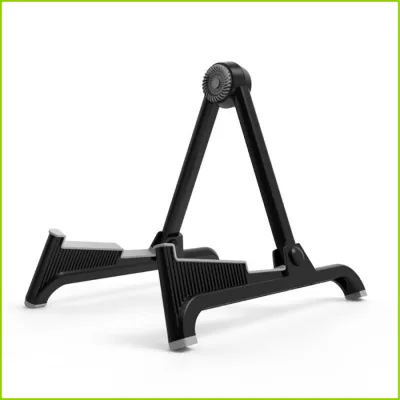
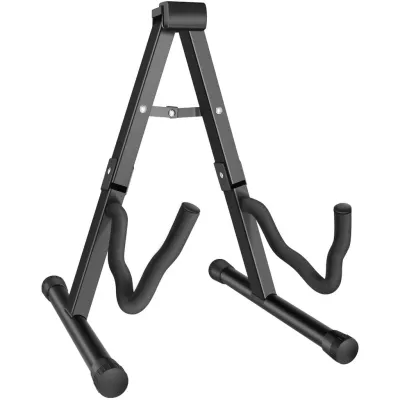
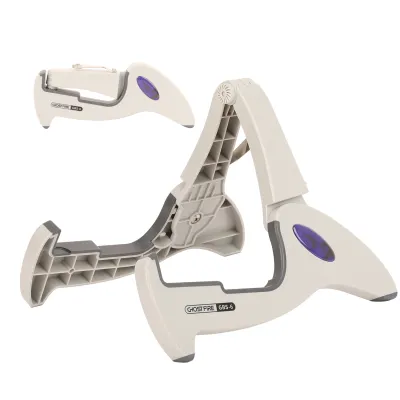
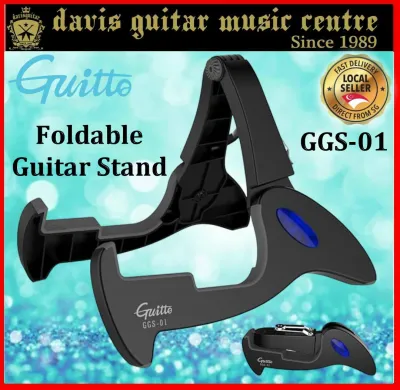
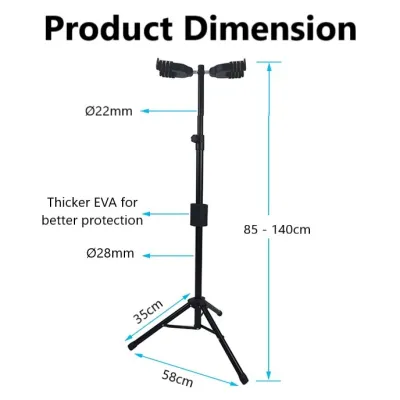

Prices are valid at publication and may change. Please refer to the product page for the latest price.
However, choosing a highly portable stand introduces a physical trade-off that every beginner must understand. To make a stand foldable and lightweight, manufacturers often use thinner tubing and multiple mechanical joints. This can result in a higher center of gravity and a narrower base footprint compared to heavy, non-collapsible studio stands. Consequently, foldable stands require more mindful placement and a clear understanding of how weight is distributed across the frame to prevent accidental tipping. Beginners must learn to balance the desire for a lightweight, easy-to-carry stand with the physical necessity of a stable, grounded base.
Key Features to Evaluate Before Buying
When evaluating foldable guitar stands, the first and most critical checkpoint is the material used at the contact points where the stand touches your instrument. Most stands utilize either high-density foam or vulcanized rubber padding to cushion the neck and body. While these materials work well for standard polyurethane or polyester finishes, they can cause a chemical reaction with sensitive nitrocellulose lacquers, which are often found on premium or vintage guitars. This reaction can soften, discolor, or permanently damage the finish. Beginners should carefully check product specifications for “lacquer-safe” or “non-reactive” material labels, or plan to drape a soft cotton cloth over the contact points as a protective barrier.

The second feature to inspect is the locking mechanism of the folding joints. A high-quality foldable stand must feature secure, reliable locking points that prevent the frame from collapsing under the weight of the guitar or when accidentally nudged. Look for stands that use spring-loaded locking pins, heavy-duty friction knobs, or physical safety latches rather than simple tension joints. These mechanisms ensure that once the stand is deployed, the legs and neck support remain locked rigidly in place, providing a stable foundation. Avoid stands that rely solely on plastic hinges or loose rivets, as these components can wear down quickly with repeated folding and unfolding.
Finally, pay close attention to the base footprint and weight distribution of the deployed stand. A wider base footprint naturally offers greater resistance to tipping, especially when placed on carpeted floors or uneven surfaces. Look for designs where the legs extend outward at a wide angle and are capped with non-slip, heavy-duty rubber feet. The thickness of the metal tubing also plays a role; slightly thicker steel or aluminum tubing adds beneficial weight to the bottom of the stand, lowering the overall center of gravity and significantly improving stability against accidental bumps. The rubber feet should also provide sufficient grip on common Singaporean flooring materials, such as polished tiles, vinyl, or parquet, to prevent the stand from sliding when you place or retrieve your guitar.
Comparing Common Foldable Stand Designs
Beginners will generally encounter three primary styles of foldable guitar stands, each offering distinct advantages depending on your instrument type and space requirements.
A-Frame stands are highly popular for their minimalist design and exceptionally compact folded profile. These stands feature a simple, low-profile frame shaped like the letter “A” that supports the bottom and back of the guitar body without a neck yoke. Because they lack a tall neck support, they fold down into a flat, highly packable shape that fits easily into most backpacks. However, because they do not secure the neck, they are best suited for stable environments where there is minimal foot traffic. They are also highly effective for electric guitars, which have a lower center of gravity, but may feel slightly less secure for top-heavy acoustic guitars.
Tripod stands, on the other hand, feature a three-legged base combined with a vertical neck support shaft and a cradling yoke at the top. This design provides excellent stability because the neck is physically supported and often secured with a safety strap or self-locking gate. The three-legged base adapts well to slightly uneven floors, making it a reliable choice for live settings or busy rooms. The trade-off is that tripod stands are taller and slightly more cumbersome to fold down, though they still collapse into a manageable cylindrical shape. They are highly recommended for beginners who want maximum physical security for their instrument.
For beginners who find themselves quickly acquiring more than one instrument—such as adding an acoustic guitar to an existing electric setup—multi-guitar foldable racks are an excellent alternative. These racks hold three to five guitars side-by-side in a single, collapsible frame. While they have a larger footprint than single stands, they are highly efficient at consolidating multiple instruments into a single, organized space, and the entire frame can still be folded flat for transport or storage. This design is incredibly stable because the weight of multiple instruments is distributed across a wide, rectangular base.
| Stand Design | Folded Footprint | Deployed Stability | Ideal User Scenario |
|---|---|---|---|
| A-Frame | Extremely compact, flat profile | Moderate (no neck support) | Commuting students, small bedrooms, low-traffic areas |
| Tripod | Medium, cylindrical shape | High (includes neck yoke and strap) | Multi-purpose rooms, stage use, heavier instruments |
| Multi-Guitar Rack | Large, flat frame when folded | Very High (low center of gravity) | Beginners with multiple instruments, dedicated practice rooms |
Building Your Shortlist: What to Check on the Product Page
When browsing online marketplaces or local music store catalogs in Singapore, you must look beyond marketing photos to verify physical compatibility. Not all stands are universal; for example, offset electric guitar bodies (like Jazzmasters or Jaguars) have asymmetrical bottoms that may sit crookedly or slide off a standard symmetrical A-frame cradle. Similarly, thick acoustic dreadnoughts require a much deeper lower cradle than slim electric guitars. Check the product dimensions to ensure the cradle depth matches your guitar’s body thickness. Some stands feature adjustable cradle arms that can be widened or narrowed to accommodate different body shapes, which is a highly desirable feature for beginners.
User reviews are an invaluable resource for identifying potential long-term issues that are not visible on a pristine product page. When reading reviews, filter for feedback from users who have owned the stand for several months. Look specifically for recurring complaints regarding joint looseness, stripping threads on locking knobs, or foam padding that degrades and becomes sticky over time. If multiple reviews mention that the stand tips easily when holding a heavier instrument, it is a clear sign to look for a more robust design. Pay attention to comments about the ease of folding, as some stands can be stiff or difficult to operate.
Additionally, always verify the manufacturer’s stated weight capacity and yoke width. Electric guitars, particularly solid-body models, can be surprisingly heavy, sometimes weighing between 3.5 to 4.5 kilograms. Ensure the stand is rated to hold this weight comfortably without flexing. For classical guitars or seven-string electrics, which feature wider necks, verify that the upper neck yoke of a tripod stand is wide enough to accommodate the nut width without pinching the sides of the neck. Finally, check whether the stand comes fully assembled or requires tools for initial setup, as pre-assembled models are generally more convenient for beginners.
Safe Setup and Maintenance for Longevity
Once you have selected and purchased your foldable guitar stand, proper placement and routine maintenance are essential to protect both your instrument and your investment. Position your stand away from high-traffic walkways, doorways, and areas where children or pets play. In Singapore’s tropical climate, it is also crucial to keep the stand and guitar away from direct sunlight streaming through windows, as well as direct drafts from air conditioning units, which can cause rapid temperature and humidity fluctuations that affect the wood of your guitar. Placing the stand in a stable, climate-consistent corner of the room is the best way to prevent environmental damage.
When setting up or packing away your stand, always follow the manufacturer’s intended folding and unfolding sequences. Forcing a joint in the wrong direction or over-tightening friction knobs can strip the threads and weaken the structural integrity of the stand over time. Additionally, be mindful of any instrument cables or straps; ensure they are completely detached and cleared from the stand before folding to prevent them from getting pinched or damaged in the hinges. Taking a few extra seconds to fold the stand carefully will significantly extend its operational lifespan.
Finally, establish a habit of routinely inspecting the protective padding on your stand. Over time, exposure to dust, sweat, and environmental humidity can cause rubber or foam pads to harden, crack, or develop a sticky residue. If you notice any signs of degradation, clean the pads gently or consider wrapping them in a soft, non-reactive material like cotton flannel. Replacing worn padding promptly ensures your guitar’s finish remains pristine and scratch-free for years to come. Regularly checking the tightness of any screws or bolts on the folding joints will also ensure the stand remains structurally sound.
Frequently Asked Questions (FAQ)
Can a foldable stand hold an acoustic and an electric guitar equally well?
Most standard foldable stands can accommodate both, but you must check the cradle depth and weight distribution. Acoustic guitars have deep bodies but are relatively lightweight, requiring a wider lower cradle to sit securely without resting on the back edge. Electric guitars are much thinner but significantly heavier, which shifts the center of gravity. If you plan to use one stand for both types, look for an adjustable design where the lower cradle depth can be modified, or choose a tripod stand with an adjustable neck height to ensure both instruments are supported at their optimal balance points.
Is it safe to leave my guitar on a foldable stand for long periods?
While foldable stands are highly convenient for daily practice, they are not recommended for long-term, unattended storage. Leaving a guitar on a stand exposes it to environmental dust, humidity fluctuations, and the constant risk of accidental knocks from household activity. For long-term storage, keeping your guitar in a high-quality gig bag or a hard case is much safer, as it provides a controlled environment and physical protection. Use your foldable stand primarily during active practice seasons to keep your instrument easily accessible.
How do I clean the rubber padding on my guitar stand?
To clean the rubber or foam padding, use a soft microfiber cloth slightly dampened with plain water. Gently wipe away dust, sweat, and oils that may have transferred from your hands or the guitar. Avoid using harsh chemical solvents, alcohol-based cleaners, or household detergents, as these substances can rapidly degrade the rubber, causing it to become brittle, crack, or turn sticky. If the padding has developed a persistent sticky residue that cannot be wiped away with water, it is a sign that the material is breaking down and the padding should be replaced or covered to protect your guitar’s finish.

Community discussion
Share your experience or ask a question. Comments are reviewed before publication.