
Finding the right guitar book stand is a subtle but critical step in building an ergonomic and productive practice space. Unlike other musicians, guitarists face unique physical constraints when reading music or chord charts. The neck of the guitar, the angle of the instrument’s body, and the movement of the fretting hand all require a clear line of sight that does not interfere with the guitar itself. A poorly chosen stand can lead to hunched shoulders, neck strain, and a cluttered practice area, ultimately discouraging longer practice sessions.
To select the ideal stand, you must evaluate how and where you play. A classical guitarist sitting on a low stool requires a completely different setup than an electric guitarist standing up with a heavy instrument strapped over their shoulder. By analyzing the physical build, adjustability, and environment-specific features of different stands, you can find a solution that keeps your sheet music, songbooks, or digital devices perfectly positioned, allowing you to focus entirely on your playing technique.
Core Specifications to Evaluate Before Buying
When comparing different guitar book stands, the fundamental build quality and mechanical design determine how well the stand performs over years of daily use. The first major design choice is the base configuration. Tripod bases are the most common, utilizing three legs that spread outward to distribute weight. These are highly stable on uneven surfaces, such as thick carpets or outdoor ground, because the three contact points can adapt to minor floor variations. However, tripod legs require a relatively large floor footprint, which can crowd smaller rooms. In contrast, flat or round weighted bases offer a much smaller footprint, allowing you to position the stand closer to your chair or slide the base under low-profile furniture, though they are generally heavier to transport.
Products mentioned in this guide

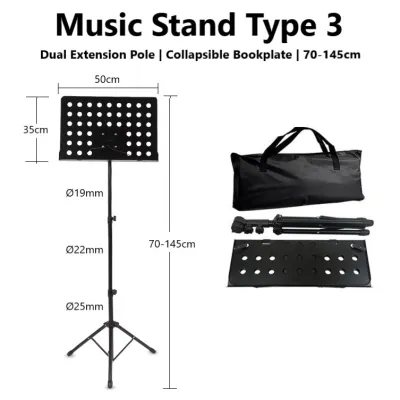
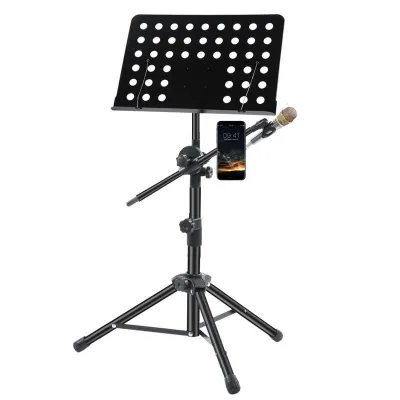
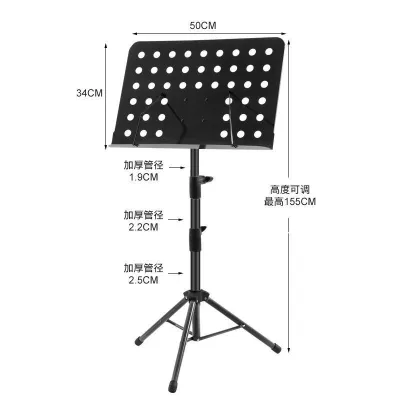
Prices are valid at publication and may change. Please refer to the product page for the latest price.
Material durability and the quality of the joint mechanisms are equally critical. Most budget-friendly stands utilize thin-walled steel or aluminum tubing paired with plastic adjustment collars. While lightweight, these plastic components can crack under tension or strip their threads over time. For long-term durability, look for stands featuring reinforced nylon or solid metal joints, and heavy-duty locking knobs with metal threads. Friction clutch systems, which allow you to adjust height simply by pulling or pushing the shaft without turning a knob, offer incredible convenience but must be engineered to high standards to prevent gradual slipping under heavy loads.
Adjustability is another key pillar of a functional stand. You must verify the minimum and maximum height ranges to ensure the stand accommodates your preferred playing posture. A stand that cannot lower sufficiently will force a seated guitarist to look upward, straining the neck, while a stand that cannot extend high enough will cause a standing guitarist to slouch. Additionally, the tilt angle of the desk—the plate that holds the music—must be fully adjustable. This allows you to angle your reading material to catch the light perfectly, minimizing glare from overhead fixtures or windows. The depth of the page holder lip is also vital; a shallow lip of 2 to 3 centimeters is sufficient for single sheets or thin booklets, but thick songbooks or heavy binders require a lip depth of 5 centimeters or more to prevent the pages from spilling forward.
Finally, portability features dictate how easily you can move your stand between practice spaces. If your guitar book stand will remain permanently in one corner of your room, a heavy, solid-plate steel stand is an excellent choice for maximum stability. However, if you regularly travel to lessons, rehearsals, or gigs, you will want a stand that folds down into a compact shape. Lightweight wire stands fold into a highly portable, baton-like form, but they sacrifice stability and cannot support heavy books. Hybrid designs feature a detachable solid plate and a folding tripod base, offering a balanced compromise between structural rigidity and ease of transport, often coming with a dedicated carry bag to protect the components during transit.
Choosing the Right Stand for Your Practice Environment
Your primary practice environment plays a decisive role in determining which stand profile will serve you best. For home and bedroom setups, space efficiency and aesthetics are usually the top priorities. Residential spaces, such as apartments or compact bedrooms in Singapore, often require furniture that can be easily tucked away. In these settings, a stand with a flat, low-profile base is highly advantageous, as it can slide directly under a bed, sofa, or desk, keeping the stand close to your body without taking up valuable floor space. Additionally, look for stands with quiet adjustment mechanisms. Smooth friction clutches or rubber-padded knobs prevent loud metallic clicks or squeaks, allowing you to adjust your stand during late-night practice sessions without disturbing others in your household.

Rehearsal spaces and live performance stages demand a completely different set of features. These environments are high-traffic areas where gear is frequently bumped, moved, and subjected to rough handling. Here, a heavy-duty tripod stand with a wide leg spread is essential to prevent accidental tipping. The stand must also feature a high weight capacity to securely hold thick binders containing extensive setlists, lyric sheets, or comprehensive reference books. Quick-release clamps and rapid folding mechanisms are invaluable in these scenarios, allowing you to set up and tear down your gear in a matter of seconds, ensuring you do not hold up the rest of the band or the stage crew.
For travel and outdoor practice, portability and environmental resilience are the primary concerns. If you frequently practice in parks, backyards, or on the go, you need an ultra-lightweight stand made from high-grade aluminum, which resists rust and keeps your gear bag light. However, outdoor environments introduce the challenge of wind, which can easily blow sheet music away or tip over a lightweight stand. To combat this, look for travel stands equipped with built-in, spring-loaded page clips or elastic bands that hold your pages firmly against the desk. Additionally, ensure the stand features secure locking collars on the vertical shaft to prevent the stand from collapsing if a sudden gust of wind catches a heavy book.
Supporting Digital Devices and Practice Accessories
Modern guitar practice often involves a mix of traditional paper sheet music and digital tools. If you use a tablet or smartphone to display chord charts, interactive tabs, or backing tracks, your guitar book stand must be compatible with these devices. When placing a tablet on a standard music stand, check the lip depth and the angle of the desk. A lip that is too shallow or lacks a non-slip rubber lining can allow a sleek digital tablet to slide off and fall. Furthermore, ensure the solid plate of the stand does not block access to your device’s charging ports, headphone jacks, or physical buttons. Some stands feature open-frame designs or specialized cutouts specifically to accommodate charging cables while the device is in use.
Beyond holding your reading material, a well-designed stand can serve as a central hub for your practice accessories. Guitarists frequently use clip-on tuners, metronomes, capos, picks, and pencils during a single practice session. Constantly reaching down to the floor or a nearby table to grab these items disrupts your practice flow. Many stands allow you to attach secondary clamp-on accessories, such as small utility trays, cup holders, or dedicated smartphone clamps, directly to the vertical shaft. This keeps all your essential tools within arm’s reach and organized, allowing you to maintain your playing posture and focus.
For musicians who manage extensive scores, classical arrangements, or multi-instrumental setups, a standard single-page width may not provide enough viewing area. In these cases, look for stands that offer expandable side wings or multi-tier extensions. These features allow you to lay out three or four pages of sheet music side-by-side, eliminating the need for frequent, disruptive page turns mid-song. Alternatively, a multi-tier setup can hold a physical songbook on the main desk while supporting a tablet or smartphone on an auxiliary arm, giving you simultaneous access to your sheet music and a digital metronome or backing track.
Final Pre-Purchase Verification Checklist
Before finalizing your purchase on any online marketplace or at a local music shop, run through this practical checklist to ensure the stand meets all your physical and functional requirements:
- Verify the Maximum Load Capacity: Check the manufacturer's specifications to confirm the stand can support the weight of your heaviest songbooks, binders, or digital devices. A standard lightweight folding stand might support only 1 to 1.5 kilograms, whereas heavy-duty orchestral stands can easily hold 4 kilograms or more without slipping or bending.
- Check the Height Range Against Your Posture: Measure your eye level while sitting on your preferred practice chair or standing with your guitar strapped on. Ensure the stand's maximum and minimum height adjustments align with these measurements to maintain proper neck and back posture.
- Examine the Page Holder Lip Depth: Ensure the lip is deep enough to accommodate your thickest physical books. If you primarily use loose sheets or a tablet, look for built-in page clips or a non-slip surface to keep your materials secure.
- Assess Portability and Storage Needs: If you need to transport the stand, verify its folded dimensions and weight. Confirm whether a carry bag is included or if you need to purchase one separately.
- Confirm the Return Policy and Warranty Terms: Focus on the mechanical joints, locking knobs, and collar clamps, as these are the most common failure points on any music stand. A reliable warranty or a flexible return policy from the retailer provides peace of mind in case of manufacturing defects.
Frequently Asked Questions (FAQ)
Can a standard music stand hold a heavy tablet and a thick songbook simultaneously?
It depends heavily on the stand’s construction and balance. Placing a heavy tablet and a thick book together can exceed the load capacity of lightweight wire stands, causing the desk to tilt forward or the entire stand to tip over. If you must use both, ensure you use a heavy-duty solid-plate stand with a wide tripod base, and position the heavier item directly over the center vertical shaft to maintain balance.
How do I prevent a lightweight stand from tipping over during practice?
To improve the stability of a lightweight stand, ensure the tripod legs are fully extended to their widest angle. Position one of the three legs pointing directly toward you; this counteracts the forward-leaning weight of books or tablets. Avoid overloading the desk, and place the stand on a flat, even surface away from high-traffic areas or drafty windows.
Community discussion
Share your experience or ask a question. Comments are reviewed before publication.