
Learning to play the guitar is an exciting journey, but it comes with physical hurdles that extend beyond sore fingertips. As a beginner trying to decipher chord diagrams or follow scrolling tablature, you will quickly realize how awkward it is to balance your smartphone on your knee, a nearby sofa, or a cluttered desk. Constantly tilting your head down to look at a screen while trying to keep your wrist straight and your fingers properly arched on the fretboard is a recipe for neck strain and poor playing posture.
To build good habits from day one, you need a reliable way to keep your learning materials directly in your line of sight. A dedicated guitar phone holder solves this issue by positioning your device at eye level, allowing you to focus on your hand placement and strumming rhythm. However, choosing the wrong mount can lead to dropped phones, scratched headstocks, or a setup that wobbles every time you strike a chord.
In Singapore, where many players practice in compact bedrooms or shared living spaces, finding a space-efficient and stable mounting solution is essential. High humidity levels can also affect the longevity of certain materials, making it crucial to select a holder with durable components. This guide will help you evaluate the different types of phone holders available, ensuring you find a secure, adjustable option that fits your instrument, your practice space, and your learning style.
Products mentioned in this guide
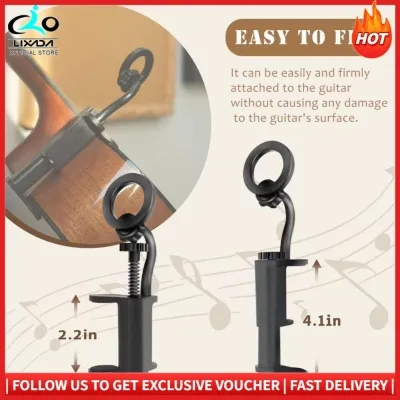
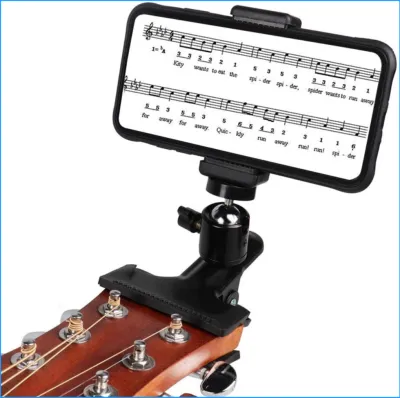
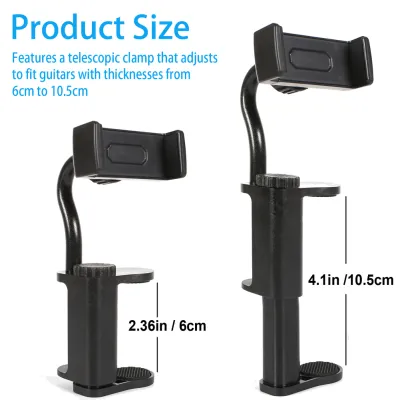
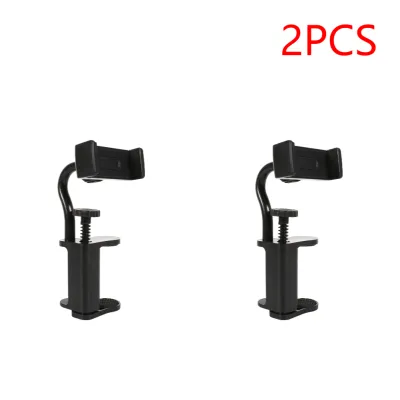
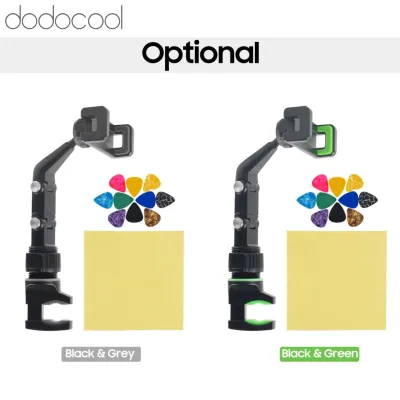
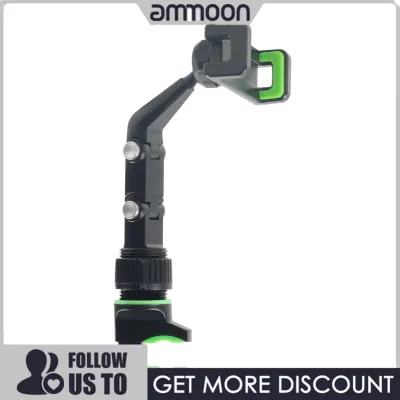
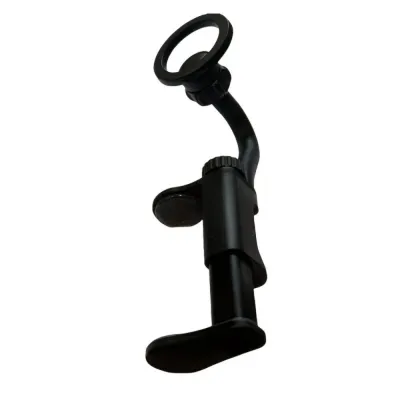
Prices are valid at publication and may change. Please refer to the product page for the latest price.
Key Features to Evaluate for Chord and Tab Viewing
When you are in the middle of a practice session, the last thing you want to do is pause your momentum to adjust a slipping phone or squint at a poorly angled screen. Evaluating the physical specifications of a phone holder before buying ensures that your learning materials remain stable and readable throughout your practice.
Adjustability and Joint Mechanics
The primary feature to look for is multi-axis adjustability. A high-quality holder should feature a ball-and-socket joint or a multi-angle tilt mechanism that allows for 360-degree rotation. This flexibility is vital because chord charts are often easiest to read in portrait mode, whereas wide tablature layouts or video tutorials usually require landscape orientation. Look for joints that can be locked securely with a tightening collar or thumb screw, which prevents the phone from slowly drooping under its own weight.
Grip, Tension, and Protective Padding
The contact points of the holder must protect both your smartphone and your musical instrument. Look for clamps lined with thick, high-density silicone or textured rubber padding. Avoid bare plastic or cheap foam, which can wear down quickly and expose hard edges that scratch delicate wood finishes or phone screens. The gripping mechanism should use a reliable spring-loaded jaw or a screw-tightened clamp that provides firm, even pressure without applying excessive crushing force.
Device and Case Compatibility
Many beginners forget to account for the thickness of their phone cases. A mount might claim to support a six-inch screen, but if the jaw depth is shallow, it will not securely hold a phone housed in a rugged protective case, a wallet cover, or one fitted with a rear finger ring. Measure the total thickness of your phone with its case on, and compare this to the maximum jaw depth specified by the manufacturer. A secure fit means the holder’s arms wrap completely around the edges of your device.
Stability versus Weight Distribution
A phone holder must be sturdy enough to resist the natural vibrations of your playing. If you are strumming vigorously, a flimsy mount will wobble, making it incredibly difficult to read fast-moving tabs. However, if you choose a mount that attaches directly to your guitar, you must also consider its weight. Adding too much mass to the headstock can alter the balance of your instrument, causing neck dive and making long practice sessions physically tiring.
Headstock and Body Clip-On Holders
Clip-on holders attach directly to your guitar, typically clamping onto the headstock or the upper bout of the body. This style is highly popular among beginners who appreciate a self-contained setup that moves wherever the instrument goes.

Ideal Scenarios for Clip-On Mounts
If you frequently move around your home, practice in different rooms, or have limited floor space in a cozy apartment, a clip-on holder is incredibly convenient. Because the screen is physically attached to the guitar, the display remains at a constant distance from your eyes, even if you shift your seating position, stand up, or lean back. It eliminates the need for bulky floor stands, making it easy to pack into a gig bag for lessons or casual jam sessions.
Limitations and Ergonomic Trade-offs
While convenient, headstock mounts do have distinct drawbacks. Placing a smartphone at the end of your guitar neck adds noticeable weight to the headstock, which can make the instrument feel unbalanced, especially for lightweight electric guitars or acoustic models. Additionally, having a bright, glowing screen attached directly to your headstock can be visually distracting, and it may partially block your view of the lower frets, which can hinder beginners who still need to look at their hand placement.
Essential Verification Checks
Before clipping a holder to your headstock, inspect the clamp design carefully. Ensure the clamp jaws are wide enough to clear your guitar’s nut and tuning pegs without pressing against them, as this can knock your instrument out of tune. For acoustic guitars, check that the clamp does not put pressure on the delicate headstock veneer or the truss rod cover. The clamping force should be distributed evenly across a padded surface to prevent denting the wood.
Clamp-On Holders for Music Stands and Desks
If you prefer to keep your guitar free of extra weight, a clamp-on holder designed to attach to external structures is an excellent alternative. These mounts typically feature a heavy-duty C-clamp or a spring clamp that attaches to poles, desk edges, or music stands.
Ideal Scenarios for Stationary Practice
This style is highly suitable for players who have a dedicated practice corner with a traditional wire or solid sheet music stand, or those who sit at a study desk while learning. By clamping the phone holder to a stand pole or the edge of your desk, you keep your guitar completely unencumbered. This setup allows you to maintain a classic, ergonomic playing posture, as you can position the screen directly in front of you at eye level, mimicking the placement of sheet music.
Limitations of External Clamps
The main limitation of this design is its reliance on a stable secondary structure. If you do not own a sturdy music stand or do not practice near a suitable desk or shelf, this holder is impractical. Furthermore, lightweight wire music stands can become top-heavy and prone to tipping if you clamp a heavy smartphone to the upper section of the pole.
Verification and Measurement Checks
Before purchasing a clamp-on mount, measure the diameter of the pole or the thickness of the desk edge you plan to attach it to. Compare these measurements with the clamp’s minimum and maximum opening capacity. Look for clamps that feature a rubberized interior lining; this not only prevents the mount from sliding down a smooth metal pole but also protects your furniture or music stand from scratches and paint chips.
Freestanding and Floor Stands for Practice
For maximum flexibility without attaching anything to your instrument or furniture, freestanding phone holders or dedicated floor stands are highly effective solutions. These are standalone units that rest on the floor or a tabletop, featuring adjustable necks to hold your device.
Ideal Scenarios for Posture and Versatility
Freestanding floor stands are excellent for maintaining proper classical or standing guitar posture. They allow you to position your phone exactly where you need it, completely independent of your guitar or seating arrangement. This is particularly beneficial for beginners, as it encourages you to keep your chest open, shoulders relaxed, and head up. It also completely eliminates the risk of scratching your guitar’s finish or putting physical stress on the neck.
Space and Portability Limitations
The primary drawback of freestanding floor stands is their physical footprint. In smaller living spaces, a tripod or weighted base stand can take up valuable floor area and create a tripping hazard. They are also significantly less portable than clip-on or clamp-on models, making them less suitable if you regularly travel to guitar lessons or practice in different locations.
Base Verification
When evaluating a freestanding stand, pay close attention to the base design. A stand with a lightweight or narrow base is highly susceptible to tipping over, especially when you reach out to tap the screen to pause a video or scroll through a chord chart. Look for models that feature a heavy, cast-iron or weighted base, or a wide, lockable tripod design. The vertical pole should be rigid enough to resist swaying when you interact with your phone.
Pre-Purchase Compatibility and Safety Checks
Before finalizing your purchase, performing a few quick compatibility and safety checks will protect your investment and your musical instrument from accidental damage.
Guitar Finish Sensitivity
One of the most critical considerations for any guitarist is the type of finish on their instrument. Many high-end, vintage, or traditional guitars are finished with nitrocellulose lacquer. This material is highly sensitive and can react chemically with certain plastics, synthetic rubbers, and vinyls used in cheap phone holder pads. This chemical reaction can cause the lacquer to soften, turn cloudy, or melt permanently. If your guitar has a nitrocellulose finish, look for holders specifically labeled as safe for lacquer, or place a small microfiber cloth between the clamp pad and the wood as a protective barrier. Modern polyurethane or polyester finishes are much more durable and generally do not react with standard rubber pads, but caution is still advised.
Weight Limits and Joint Tension
Smartphones have become increasingly heavy, particularly larger models with multi-camera arrays and heavy-duty protective cases. Always check the manufacturer’s specified maximum weight capacity for the phone holder. If your phone exceeds this limit, the adjustable joints will slowly droop during your practice sessions, forcing you to constantly readjust the angle. Look for holders that feature mechanical locking knobs rather than simple friction-based joints, as they offer superior long-term hold.
Case and Cable Interference
Ensure the holder’s design does not block essential ports or buttons on your phone. If you practice while charging your device or use a wired headphone adapter, the bottom bracket of the holder must have an open slot to accommodate the cable connector. Additionally, check that the side clamps do not press directly against your phone’s volume or power buttons, which can cause the device to restart or adjust settings unexpectedly during use.
Frequently Asked Questions (FAQ)
Can a phone holder damage my guitar's finish?
Yes, certain phone holders can damage your guitar’s finish if they use incompatible materials. Guitars finished with nitrocellulose lacquer are particularly vulnerable to chemical reactions with synthetic rubbers, plastics, and vinyl pads, which can lead to permanent discoloration or softening of the lacquer. To prevent this, verify your guitar’s finish type before purchasing. If you have a lacquer-finished instrument, choose a holder with silicone padding, or wrap a thin, clean microfiber cloth around the contact points of the clamp to act as a safe barrier between the rubber and the wood.
Will the phone screen be visible under bright practice lights?
Screen visibility can be a challenge when practicing under direct overhead lights or near bright windows, as glare can obscure complex chord charts and tabs. To ensure clear visibility, choose a phone holder with a highly adjustable ball joint that allows you to tilt the screen away from direct light reflections. Additionally, you can use a matte, anti-glare screen protector on your phone, or position your practice chair so that light sources are to your side rather than directly behind or above you.

Community discussion
Share your experience or ask a question. Comments are reviewed before publication.