
Choosing the right guitar stand holder is one of the most important decisions you will make after purchasing your first instrument. A high-quality stand does more than simply keep your guitar off the floor; it serves as a dedicated, secure home that encourages regular practice while protecting your investment from accidental damage. For beginners, the temptation is often to purchase the most affordable or generic stand available online. However, because entry-level guitars vary significantly in body shape, neck width, headstock geometry, and finish materials, a mismatched stand can easily lead to structural damage, finish degradation, or catastrophic falls.
In Singapore, where living spaces like HDB flats often require smart space utilization, choosing a stand that fits your specific environment is crucial. Furthermore, the local tropical climate introduces unique environmental factors, such as high relative humidity, which can interact with the materials used in both your guitar and its stand. By understanding the physical and chemical compatibility between your instrument and its support system, you can ensure your guitar remains safe, accessible, and in perfect playing condition.
Whether you are playing a traditional dreadnought acoustic, a slim solid-body electric, or a compact short-scale instrument, verifying compatibility before you buy is essential. This guide will walk you through the critical physical checks, the various stand designs available, and the safety features you must look for to find the ideal support system for your beginner guitar.
Products mentioned in this guide

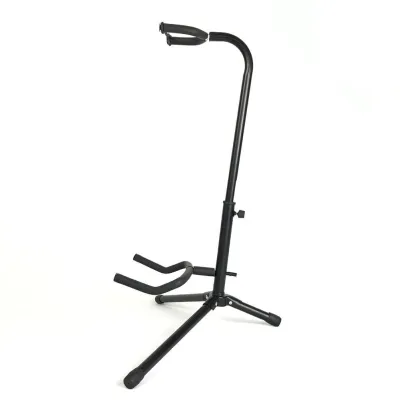
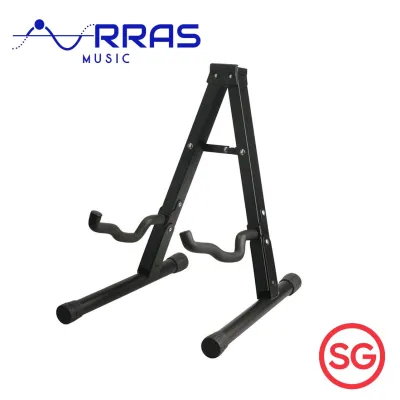
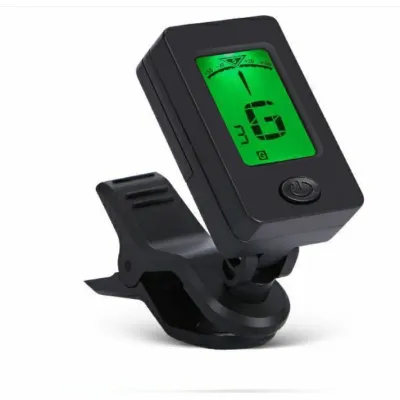

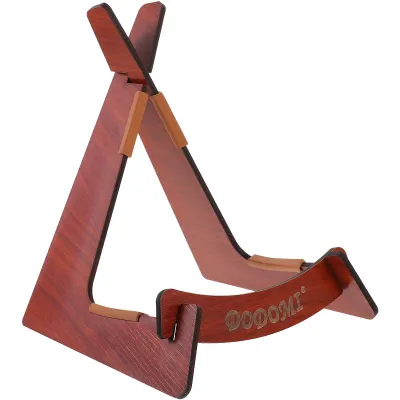
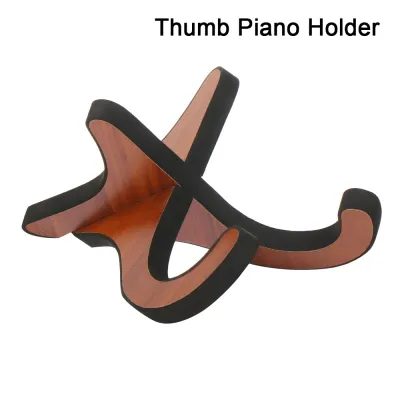
Prices are valid at publication and may change. Please refer to the product page for the latest price.
Key Compatibility Checks for Beginner Guitars
Before selecting a guitar stand holder, you must carefully evaluate the physical dimensions and design characteristics of your specific instrument. Beginner guitars are not standardized; they are built to various specifications depending on their style and brand. Symmetrical headstocks, which feature three tuners on each side, distribute weight evenly when placed in a neck-hanging stand. However, many popular beginner electric guitars feature asymmetrical, inline headstocks where all tuners are on one side. If the cradle of a neck-hanging stand is too wide or lacks an adjustable angle, an asymmetrical headstock can slip through, causing the guitar to fall. Always measure the width of your guitar’s neck just below the headstock and compare it to the inner dimensions of the stand’s yoke.
Body depth is another major factor that determines how securely a guitar sits in a floor stand. Dreadnought acoustic guitars have deep, resonant bodies that require a wide lower cradle to sit flat against the backrest. If you attempt to place a deep acoustic guitar into a stand designed primarily for thin electric guitars, the instrument will sit precariously on the outer edges of the cradle, making it highly susceptible to tipping forward. Conversely, placing a slim solid-body electric guitar into a deep acoustic stand can cause the instrument to lean backward at an extreme, unstable angle, placing unnecessary stress on the neck joint.
The chemical composition of your guitar’s finish is equally important, yet it is often overlooked by beginners. Most modern entry-level guitars are finished with polyurethane or polyester coatings, which are highly durable and resistant to chemical reactions. However, some premium beginner models or vintage-style reissues feature a delicate nitrocellulose lacquer finish. Nitrocellulose is highly reactive to certain synthetic rubbers and plastics commonly used on cheap stand padding. Over time, contact with incompatible padding can cause a chemical reaction that melts, discolors, or softens the lacquer, leaving permanent scars on your guitar’s neck and body. If your guitar has a nitrocellulose finish, you must verify that the stand’s padding is explicitly labeled as safe for such finishes, or use soft cotton cloths to cover the contact points.
In Singapore’s warm and humid environment, chemical reactions between finishes and synthetic materials can occur more rapidly. High humidity can soften certain low-grade foam paddings, making them sticky and more likely to adhere to your guitar’s finish. Ensuring that your stand features high-quality, chemically inert padding—such as medical-grade silicone or specially formulated non-reactive foam—is a vital step in preserving the aesthetic and structural integrity of your instrument over the long term.
Types of Guitar Stand Holders and Their Use Cases
Understanding the different styles of guitar stands will help you choose the best option for your practice space and lifestyle. The most common designs include A-frame stands, tripod stands, and multi-guitar racks, each offering distinct advantages and trade-offs.

A-frame and folding stands are highly popular among beginners due to their compact size and portability. These stands feature a simple, low-profile design that supports the guitar from the bottom while resting the back of the body against a small padded bar. Because they lack an upright neck column, they are incredibly easy to fold flat and store in a closet or transport in a gig bag. This makes them an excellent choice for players with limited space in small bedrooms or study rooms. However, because they do not secure the neck of the guitar, they offer less protection against forward tipping. If you have active pets, young children, or high foot traffic in your practice area, an A-frame stand may not provide sufficient security.
Tubular and tripod designs offer a much higher level of stability by incorporating an upright neck support column. These stands feature a three-legged base that creates a wide, stable footprint on the floor. The guitar’s body rests in a lower cradle, while the neck is supported by a yoke at the top of the column. Tripod stands are highly effective at preventing the guitar from tipping in any direction, making them much safer for busy households. Many tripod stands also feature adjustable height columns, allowing you to customize the fit for different guitar lengths. The primary trade-off is their larger physical footprint, which requires more dedicated floor space than a compact A-frame.
For players who plan to expand their collection or already own both an acoustic and an electric guitar, a multi-stand rack is an excellent investment. These racks hold multiple instruments side-by-side in a single, organized frame. They are incredibly space-efficient, allowing you to store three, five, or more guitars in a footprint only slightly larger than that of a single tripod stand. When choosing a multi-guitar rack, it is vital to check the spacing between the slots. Ensure there is enough clearance so that the bodies of adjacent guitars do not knock against each other when you are placing or removing an instrument, which could lead to accidental scratches or dings.
Essential Features to Prevent Damage and Tipping
When evaluating a guitar stand holder, several key design features dictate how well it will protect your instrument from physical accidents. The most critical safety feature is the neck support mechanism. A high-quality stand should feature some form of barrier to prevent the guitar from falling forward if it is bumped. Basic stands use a simple rubber strap that you manually stretch across the front of the yoke. While effective, many players find these tedious and eventually stop using them. A more reliable option is a gravity-activated locking system. These mechanisms feature small gates that automatically swing shut across the front of the yoke when the weight of the guitar rests in the cradle, unlocking automatically when you lift the instrument. This ensures your guitar is always secured without requiring any extra steps.
The base footprint and weight distribution of the stand are equally vital for stability. A stand with a narrow base is easily tipped over by a minor bump. Look for tripod stands with a wide, low-slung leg span that lowers the overall center of gravity. The legs should be constructed from heavy-duty steel or thick-walled aluminum tubing rather than thin, flexible plastics. Additionally, the feet of the stand should be capped with high-friction, non-slip rubber. This prevents the stand from sliding on smooth flooring surfaces, such as polished wood, laminate, or ceramic tiles, which are common in local homes.
The quality and coverage of the padding at all contact points cannot be overstated. Every part of the stand that touches your guitar—including the lower cradle, the backrest, and the neck yoke—must be generously cushioned. Cheap stands often use thin foam sleeves that quickly wear through, exposing the raw metal or plastic underneath. Look for stands that utilize thick, high-density foam or durable rubber tubing that retains its shape over time. Inspect the construction of the stand to ensure there are no exposed screws, bolts, or sharp plastic edges near the contact zones that could scratch your guitar’s finish during daily use.
Building Your Shortlist: What to Verify Before Buying
To ensure you select the perfect guitar stand holder for your beginner instrument, you should follow a systematic verification process before making your final purchase. First, cross-reference the physical specifications of your guitar with the stand’s rated capacities. Visit the manufacturer’s website for your guitar to find its exact weight, body depth, and neck width. Compare these figures with the stand’s maximum weight limit and cradle dimensions. If you own a heavy electric guitar, ensure the stand is rated to support that weight comfortably without flexing or wobbling.
Next, leverage the experiences of other musicians by thoroughly researching user reviews on online marketplaces and music forums. Search specifically for reviews that mention your guitar’s brand or model. Other players will often share valuable insights, such as whether a specific stand’s neck yoke is too wide for a particular beginner electric guitar, or if the lower cradle is too shallow for a specific acoustic model. This real-world feedback can help you avoid compatibility issues that are not apparent from the manufacturer’s product descriptions.
It is also highly recommended to check the retailer’s return and exchange policies before completing your purchase. Even with careful research, you may find that the stand does not fit your guitar as securely as expected once you set it up at home. Purchasing from a retailer that offers a hassle-free return policy ensures you can exchange the stand for a more suitable model without incurring extra costs. If you are shopping at a physical music store, consider bringing your guitar with you to test the fit in person before buying.
Frequently Asked Questions (FAQ)
Is it safe to leave an acoustic guitar on a stand long-term?
Leaving an acoustic guitar on a stand long-term is highly convenient for daily practice, but it exposes the instrument to environmental hazards. In Singapore’s tropical climate, the primary concern is relative humidity. Acoustic guitars are constructed from thin sheets of wood that are highly sensitive to moisture. High humidity can cause the wood to swell, leading to warped tops, high string action, and loose internal braces. Conversely, constant exposure to dry air conditioning can cause the wood to shrink and crack.
While a stand is excellent for keeping your guitar accessible, storing your acoustic guitar in a high-quality hard case with humidity-control packets is the safest option for long-term preservation. If you prefer to keep your guitar on a stand, ensure it is placed in a room with stable humidity levels, away from direct sunlight, air conditioning vents, and open windows. Regular maintenance, such as wiping down the strings and body after each session, will also help prevent dust buildup and sweat-induced corrosion.
Do I need a special stand for a 3/4 size beginner guitar?
A 3/4 size beginner guitar, whether acoustic or electric, features a shorter body and a shorter neck scale than a full-sized instrument. Because of these scaled-down dimensions, a standard, non-adjustable tripod stand may not provide a secure fit. The neck yoke on a standard stand may sit too high, resting against the tuning pegs or headstock rather than the neck itself, which can cause instability and tuning issues.
To ensure a secure fit for a 3/4 size guitar, you should look for a highly adjustable tripod stand where the neck column can be lowered significantly to match the shorter length of the instrument. Alternatively, a compact A-frame stand with an adjustable base width can be an excellent choice, as it supports the guitar entirely from the bottom and back, bypassing the need for a neck yoke. Always verify the minimum height adjustment of the stand before purchasing to ensure it accommodates your smaller instrument safely.

Community discussion
Share your experience or ask a question. Comments are reviewed before publication.