
Selecting your first guitar wall mount is a crucial decision that directly impacts the safety of your new instrument and the layout of your living space. Elevating your guitar off the floor protects it from accidental bumps, curious pets, and household foot traffic. It also keeps your instrument highly visible, which naturally encourages more frequent practice sessions.
For a beginner, the ideal wall mount balances mechanical security, ease of use, and compatibility with your specific guitar. Rather than choosing the cheapest option on an online marketplace, taking the time to understand how different mounts function will prevent costly accidents. By evaluating a few key design features, you can find a reliable solution that keeps your guitar safe and ready to play.
Understanding Common Guitar Wall Mount Designs
Guitar wall mounts come in several distinct mechanical designs, each offering a different method of supporting your instrument. The most common type is the fixed U-shaped yoke mount. This design features a static cradle that holds the guitar’s headstock just below the tuning pegs, relying entirely on gravity to keep the instrument in place. These mounts are highly popular due to their simplicity, affordability, and ease of installation, making them a standard choice for many beginners.
Products mentioned in this guide
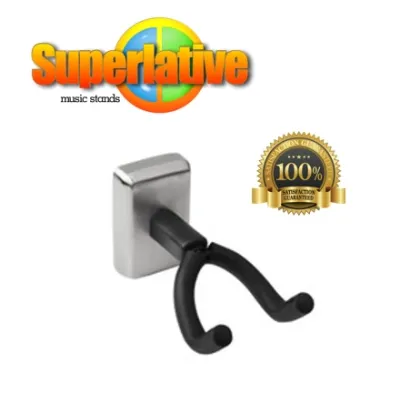
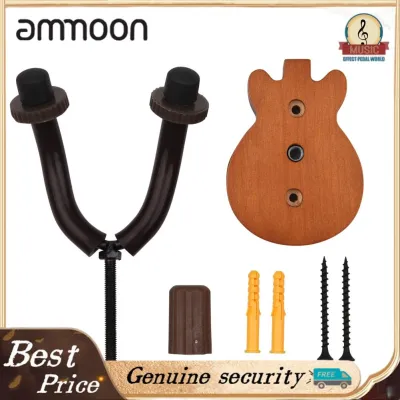
![[SG] Hercules GSP39WB PLUS Guitar Banjos Mandolin Wall Mount Hanger Save Space Innovative Steel Base Small Arm](https://img.lazcdn.com/g/p/3046c40d5bf00cef3e5cebeda64bfdd4.jpg_400x400q80.jpg_.webp)
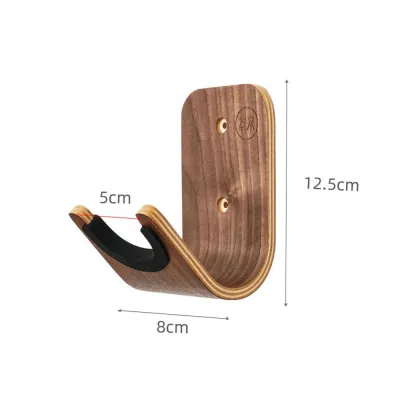
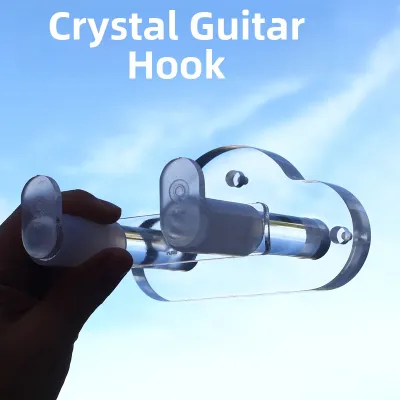

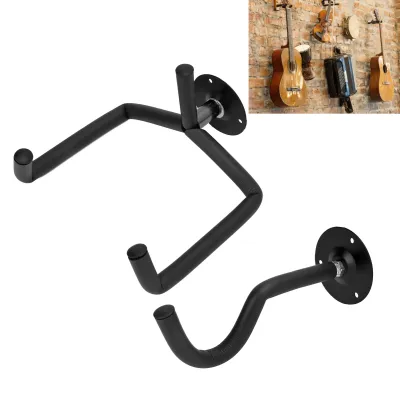
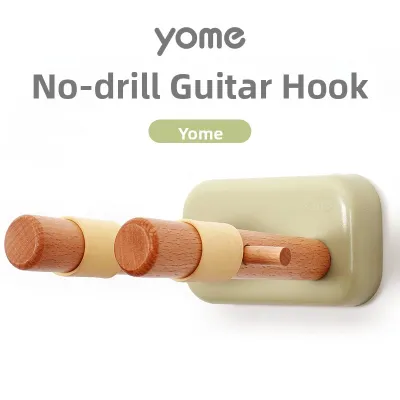
Prices are valid at publication and may change. Please refer to the product page for the latest price.
Another option is the hook-style or single-point mount, which is often designed for specific aesthetic preferences or space-saving layouts. Some of these mounts allow the guitar to hang at an angle, displaying the body of the instrument more prominently. While visually appealing, angled mounts require precise balance and are often less forgiving if the guitar is placed in the cradle incorrectly. For a first guitar, a standard vertical mount is generally more straightforward and secure.
For households with high foot traffic, active pets, or young children, locking or security-focused mounts offer an extra layer of protection. These mounts feature active gates or barriers that automatically close across the front of the yoke when the weight of the guitar is placed in the cradle. This auto-grip mechanism physically locks the guitar in place, preventing it from being accidentally knocked out of the mount. The gates release automatically when you lift the instrument upward, combining high security with quick access. While basic fixed mounts are highly affordable, often costing under S$15, investing slightly more in a secure locking system can provide invaluable peace of mind.
Finally, some mounts feature a swiveling yoke that rotates on its base. This design is highly beneficial because it automatically adjusts to the specific angle of your guitar’s headstock. If your instrument has an asymmetrical headstock, a swiveling yoke ensures that both sides of the cradle support the weight evenly, preventing the guitar from slipping or hanging crookedly.
Matching the Mount to Your First Guitar
Before purchasing a wall mount, you must ensure it is physically compatible with the specific design of your first guitar. Standard acoustic and electric guitars with symmetrical headstocks are the easiest to accommodate. Because the tuning pegs are distributed evenly on both sides of the headstock, the weight of the instrument is balanced perfectly across a standard, fixed U-shaped yoke.

If your first guitar features an asymmetrical or pointed headstock—common on many modern electric guitars—a standard fixed yoke may not provide a secure fit. On these instruments, the bottom of the headstock is angled, which can cause the guitar to slide or hang unevenly in a rigid mount. To prevent this, you should look for a mount with a self-adjusting swiveling yoke that automatically conforms to the shape of your headstock, ensuring stable, dual-sided support.
Classical guitars present a different challenge due to their slotted headstocks and wider necks. The tuning rollers on a classical guitar run through slots in the wood, and the neck is typically wider at the nut than that of a standard steel-string acoustic or electric guitar. You must measure the width of your guitar’s neck and compare it to the inner dimensions of the mount’s yoke to ensure the neck fits comfortably without being pinched or wedged too tightly.
Heavier instruments, such as electric bass guitars, require extra consideration. Bass guitars are significantly heavier and longer than standard guitars, which places greater mechanical stress on the wall mount and the wall itself. If you are mounting a bass, you must select a heavy-duty mount with a wide, reinforced cradle and a robust mounting plate. Always verify that the mount’s rated weight capacity comfortably exceeds the weight of your bass, including the strap and any attached accessories.
Essential Features and Material Checks
Beyond the basic design, the materials used in the construction of the wall mount are critical for the long-term protection of your instrument. One of the most important factors to check is the padding material on the yoke arms. Many budget-friendly mounts use cheap foam or synthetic rubber padding, which can chemically react with certain guitar finishes over time.
This chemical reaction is a particular concern for guitars finished with nitrocellulose lacquer, a traditional finish used on many premium, vintage-reissue, or high-end instruments. When nitrocellulose comes into contact with certain plastics or rubbers, the finish can soften, discolor, or even peel away, leaving permanent damage on the neck. If your guitar has a nitrocellulose finish, you must verify that the mount is explicitly labeled as finish-safe or nitro-compatible. For standard polyurethane or polyester finishes, standard foam padding is generally safe, but wrapping the yoke in a soft cotton cloth offers an easy way to provide absolute protection.
The overall build quality of the mount is another essential check. Avoid mounts constructed entirely of thin, brittle plastic, as these can degrade and crack over time under the constant weight of the instrument. Look for mounts that feature a solid metal core—such as steel or reinforced aluminum—covered by protective padding. The mounting plate, which attaches directly to the wall, should be made of thick metal or solid hardwood to ensure a rigid, durable connection.
If you choose a mount with an auto-grip or locking mechanism, inspect the moving parts for smooth operation. The locking gates should glide open and closed without sticking or requiring excessive force. Ensure there are no sharp plastic edges or exposed metal components on the moving parts that could scratch your guitar’s neck or headstock during daily use.
Wall Selection and Safe Installation Steps
A high-quality wall mount is only as secure as the wall it is attached to. Before beginning the installation, you must identify the structural material of your wall. In many modern residential buildings, walls are constructed of drywall or plasterboard over wooden or metal studs. In other homes, particularly concrete high-rise apartments or older brick buildings, the walls are solid masonry.
If you are installing the mount on a drywall partition, you should never rely solely on plastic drywall anchors. The constant leverage and vibration of placing the guitar on the mount and lifting it off can loosen drywall anchors over time, eventually causing the wall material to crumble and the mount to fail. Instead, use a stud finder to locate a solid wooden stud behind the drywall, and screw the mounting plate directly into the center of the stud. This provides a highly secure, wood-to-metal connection that can easily support the weight of your instrument.
For solid concrete, brick, or masonry walls, you must use appropriate masonry anchors, such as expansion plugs, along with a hammer drill to create the mounting holes. If your walls use metal studs, specialized toggle bolts are required to secure the mount safely. Always use the heavy-duty screws provided by the manufacturer, and ensure they penetrate deep enough into the structural stud or masonry—typically at least 50 mm—to provide adequate holding power.
Always adhere strictly to the manufacturer’s weight ratings and installation instructions printed on the packaging. Before hanging your guitar, test the stability of the installed mount by applying gentle downward pressure with your hands to ensure there is no flexing or movement in the wall plate. If you encounter any difficulties, cannot locate a stud, or do not have the necessary tools, stop the installation immediately and consult a qualified handyman or professional installer to prevent damage to your wall and instrument.
Frequently Asked Questions (FAQ)
Is it safe to hang a guitar by its headstock?
Yes, hanging a guitar by its headstock is a structurally safe and widely accepted practice. Guitars are built to withstand immense tension from their strings, which exerts a constant pulling force of 50 to 80 kilograms on the neck and headstock joint. The physical weight of a standard guitar—typically between 2 and 5 kilograms—is minimal by comparison, meaning the neck can easily support the instrument’s weight without warping, stretching, or suffering structural damage.
However, there are specific scenarios where hanging a guitar may carry some risk. If your instrument has a pre-existing neck crack, a poorly repaired headstock joint, or is subjected to extreme environmental fluctuations, hanging it can put unnecessary stress on the compromised areas. In tropical climates with high humidity, environmental stability is especially important for wood preservation. To minimize risk, ensure your room maintains a stable temperature and humidity level, and avoid hanging instruments with known structural damage without first consulting a professional luthier.
Will a wall mount damage my guitar's neck or finish?
A properly selected wall mount will not damage your guitar’s neck, but the padding material can cause severe cosmetic damage to the finish if they are chemically incompatible. Nitrocellulose lacquer finishes, common on premium and vintage-style guitars, are highly sensitive to chemical reactions with synthetic rubbers, plastics, and low-grade foams. This reaction can cause the finish to melt, discolor, or become sticky where the neck rests on the yoke.
To prevent finish damage, always check your guitar’s user manual to identify its finish type, and verify that the wall mount’s padding is rated as finish-safe. If you are unsure of the finish or want to take extra precautions, you can wrap the padded arms of the yoke in a clean, soft cotton cloth or a piece of natural leather. This creates a safe physical barrier that prevents any direct contact between the synthetic padding and your guitar’s finish.

Community discussion
Share your experience or ask a question. Comments are reviewed before publication.