
To master A-Level Chemistry independently, you must select reference books that target your specific conceptual gaps rather than relying on generic study guides. The vast syllabus demands a precise alignment between your chosen materials, your examination board, and your personal learning style. By focusing on books that offer clear step-by-step explanations, structured practice, and detailed marking schemes, you can systematically address weak topics and build exam confidence without relying solely on external tuition.
Choosing the right resources requires a methodical approach. A book that works perfectly for one student might be too dense or too superficial for another. To make an informed decision, you must evaluate how a book presents complex chemical theories, how it structures its practice questions, and how well it matches the exact requirements of your syllabus.
Identify Your Weak Areas and Syllabus Requirements
Before browsing online marketplaces or visiting local bookstores, you must diagnose where your understanding falters. A-Level Chemistry is traditionally divided into three distinct branches: Physical, Organic, and Inorganic Chemistry. Each branch demands a different cognitive approach, and your reference books should reflect these differences.
Products mentioned in this guide
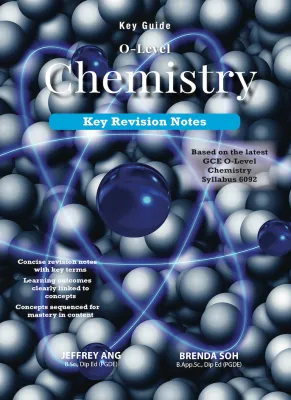
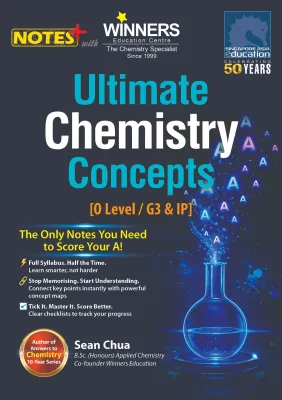
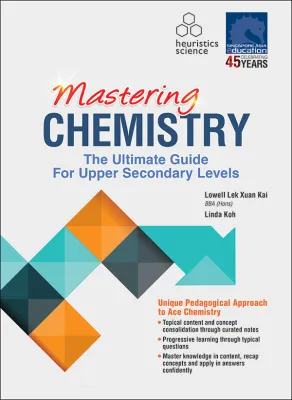
Prices are valid at publication and may change. Please refer to the product page for the latest price.
Physical Chemistry relies heavily on mathematical models, thermodynamic principles, and quantitative problem-solving. If you struggle with topics like chemical energetics, kinetics, or electrochemistry, you need a book that prioritizes mathematical derivations, step-by-step calculations, and clear graphical representations. A guide that only offers qualitative summaries will not suffice for these calculation-heavy topics.
Organic Chemistry, on the other hand, is highly visual and systematic, requiring you to understand reaction mechanisms, functional groups, and synthetic pathways. Weaknesses here demand reference materials that feature clear, high-resolution skeletal structures and explicit curly-arrow mechanisms. You need to see exactly how electrons move during a reaction, rather than just memorizing the final products.
Inorganic Chemistry focuses on trends across the periodic table, transition metals, and qualitative analysis. Success in this area requires a strong grasp of periodicity, electronic configurations, and complex-ion formations. If this is your weak spot, look for books that organize information into comparative tables and highlight the underlying physical principles behind periodic trends.
Beyond identifying your conceptual weaknesses, you must verify your exact examination board and syllabus code. In Singapore, for instance, students typically sit for the Cambridge-administered examinations, which have unique syllabus codes and specific assessment objectives. Using a textbook designed for a different domestic board, such as AQA or Edexcel, can lead to significant discrepancies in content depth and practical requirements.
Always check the syllabus update cycle and the specific examination year for which the book is written. Examination boards periodically revise their curricula to introduce new topics or phase out older ones. Purchasing a secondhand book or an older edition might save money initially, but it risks leaving you unprepared for recent curriculum changes or newly introduced practical assessment criteria.
Key Criteria for Evaluating Chemistry Reference Books
When evaluating potential reference books, the clarity of explanations should be your primary benchmark. A high-quality self-study book must translate abstract chemical concepts into accessible language without sacrificing academic rigor. Look for chapters that introduce complex terminology with clear, contextual definitions before moving into advanced applications.

The presence of worked examples is crucial for independent learners. A good reference book does not simply state a formula or a mechanism; it walks you through the thinking process required to solve a related problem. These worked examples should feature annotated steps that explain why a particular path was taken, helping you build a reliable problem-solving framework.
Practice and feedback mechanisms are equally vital when studying without a tutor. A reference book is only as good as its answer key. Ensure the books you select include detailed, step-by-step solutions rather than just final numerical answers or brief true-or-false keys. The best resources provide full marking schemes that show you exactly where marks are awarded and highlight common student misconceptions to avoid.
Visual aids play a significant role in how easily you digest complex chemistry concepts. High-quality diagrams of molecular orbitals, three-dimensional representations of stereoisomers, and clear reaction pathway flowcharts are indispensable. If a book uses cluttered, low-contrast, or poorly labeled diagrams, it will likely increase your cognitive load and make self-study more frustrating.
You must also consider the format of your reference materials, weighing the pros and cons of physical books versus digital formats like PDFs or ePubs. Physical books are excellent for tactile learners, allowing you to easily flip between the text, periodic table, and data booklets. They also minimize digital distractions and make it easier to write handwritten annotations directly on the pages.
Digital formats, however, offer unparalleled portability and searchability. If you study on the go or prefer a paperless setup, a digital reference book allows you to search for specific keywords instantly and carry an entire library on a single tablet. Many digital platforms also allow you to zoom in on complex molecular structures and hyperlink directly to relevant practice questions or external video explanations.
Matching Book Types to Specific Study Needs
Different stages of your self-study journey require different types of reference materials. Understanding the distinction between comprehensive textbooks and revision guides is essential for building an effective study library. Textbooks are designed for deep conceptual exploration, offering historical context, detailed theoretical derivations, and comprehensive background information.
If you are encountering a topic for the first time or realize you have a fundamental misunderstanding of a concept, a comprehensive textbook is necessary. It provides the depth required to build a strong foundation. However, if you already understand the core concepts and simply need to consolidate your knowledge before an exam, a concise revision guide is more appropriate. Revision guides strip away the background detail to focus purely on high-yield facts, definitions, and exam tips.
For active recall and skill application, you will need dedicated practice workbooks. These books are structured around targeted drills for specific weak areas, such as stoichiometry calculations, chemical equilibrium problems, or organic synthesis pathways. Rather than reading passive summaries, workbooks force you to apply your knowledge to novel scenarios, which is a critical skill for achieving top grades in A-Level Chemistry.
When choosing a practice workbook, look for those that categorize questions by difficulty level. This allows you to start with basic recall questions to build confidence before progressing to complex, multi-step application problems. Some workbooks also include dedicated sections for synoptic questions, which require you to connect concepts from different parts of the syllabus, mimicking the style of actual exam papers.
Do not overlook the importance of practical and data analysis guides. A-Level Chemistry assessments heavily emphasize experimental design, error analysis, and the evaluation of experimental data. Many students lose marks not because they lack theoretical knowledge, but because they struggle with the practical paper requirements.
A focused practical guide will help you understand the underlying theory behind standard laboratory procedures, such as titrations, gravimetric analysis, and organic preparation techniques. It should teach you how to identify systematic and random errors, calculate uncertainties, and write precise experimental procedures. Having a dedicated resource for these skills is invaluable for securing high marks in both practical exams and data-based theory questions.
How to Verify Book Quality Before Purchasing
Before committing your budget to a new reference book, you must perform a thorough quality check. Start by examining the Table of Contents in detail. Compare the listed chapters against your official syllabus document to ensure complete coverage of all required topics, including specific sub-topics and practical components.
If you are purchasing online, make use of “look inside” preview features, or visit a physical bookstore to inspect the layout. Read a few pages of a topic you currently find challenging. If the explanation feels overly convoluted or, conversely, too brief to be helpful, that book may not align with your learning style. The layout should feel clean, organized, and easy to navigate.
Verify the publisher’s official endorsement status for your specific examination board. Books that carry an official endorsement logo have undergone rigorous quality assurance checks by the exam board itself. This ensures that the terminology, depth of content, and question styles align closely with what you will encounter on exam day. While non-endorsed books can still be excellent references, endorsed materials provide an extra layer of syllabus security.
Always cross-check the International Standard Book Number (ISBN) before finalizing your purchase. Publishers often release multiple versions of a textbook for different regional markets or curriculum variants. A simple search of the ISBN on the publisher’s official website will confirm whether you are buying the correct, up-to-date edition intended for your specific examination series.
Be cautious of unauthorized reprints or low-quality digital copies sold on unregulated online platforms. These materials often suffer from missing pages, low-resolution diagrams that render molecular structures unreadable, or critical printing errors in chemical formulas. Purchasing from reputable educational bookstores or authorized online distributors ensures you receive a complete, accurate, and high-quality product.
Building a Self-Study Routine with Your Selected Books
Acquiring the right reference books is only half the battle; you must integrate them into a structured, daily study routine to see genuine improvement. A common mistake is reading a reference book passively, highlighting text without actively processing the information. To maximize retention, you must pair your reading with active study techniques.
After reading a section on a weak topic, close the book and attempt to summarize the core concepts from memory. You can do this by creating a concept map or writing a brief summary in your own words. Once you have done this, open the book again to check for any omissions or inaccuracies, correcting your notes in a different color ink to highlight your personal learning gaps.
Immediately follow your reading sessions with targeted past paper practice. Applying a newly clarified concept to actual exam questions helps solidify the neural pathways associated with that knowledge. If you make a mistake during practice, do not simply look at the correct answer and move on. Use your reference book to trace the error back to its conceptual root.
Maintain a dedicated error log to track your progress over time. For every mistake you make in your practice papers or workbooks, record the question, the correct answer, the specific concept involved, and the page number of the reference book that explains it. Periodically reviewing this log allows you to identify recurring patterns in your mistakes and focus your revision where it is needed most.
Finally, allocate realistic time blocks for your study sessions, balancing theory reading with active practice. A balanced approach might involve spending 30% of your study block reading and understanding the theory, and the remaining 70% completing practice questions and analyzing the marking schemes. This ratio ensures you do not fall into the trap of passive reading, keeping your study sessions highly active and exam-focused.
Frequently Asked Questions (FAQ)
Do I need multiple reference books for A-Level Chemistry?
You do not need a vast library of reference books, but relying on a single book is rarely sufficient for comprehensive preparation. A highly effective setup typically consists of one core, comprehensive textbook for deep conceptual understanding and one dedicated practice workbook or revision guide for exam technique. This combination ensures you have access to both detailed explanations and ample practice opportunities without overwhelming yourself with redundant material.
Avoid purchasing multiple books that serve the same primary purpose, such as buying three different revision guides. Overlapping content can lead to confusion, as different authors may use slightly different terminology or structures to explain the same concept. Focus on quality and targeted use; select one excellent resource for theory and one for practice, and master them thoroughly before considering additional materials.
Are free online resources enough to replace paid reference books?
While free online resources, such as educational videos and student-shared notes, can be valuable supplementary tools, they rarely provide a complete replacement for structured, paid reference books. Online content is often fragmented, meaning you may have to search multiple platforms to cover a single syllabus topic. Furthermore, the accuracy of free online notes is not always verified, which introduces the risk of learning incorrect or outdated information.
Officially published reference books offer a systematic structure, verified syllabus alignment, and professional editorial oversight. They are designed to guide you logically through the curriculum, ensuring no topics or practical requirements are missed. Investing in high-quality, verified reference materials provides a reliable academic foundation, allowing you to use free online resources as targeted supplements rather than your primary source of truth.

Community discussion
Share your experience or ask a question. Comments are reviewed before publication.