
Listening to classical music on physical media like CD and vinyl is a deliberate, tactile ritual. Unlike the ephemeral nature of digital streaming, where algorithms often dictate the next track, physical formats demand your full attention. You slide a vinyl record from its sleeve, place it on the platter, and lower the needle, or you insert a CD and let the pristine digital transfer wash over you. To truly appreciate the architectural genius of a Beethoven symphony, the mathematical precision of a Bach fugue, or the emotional sweep of a Mahler adagio spinning in your living room, a solid understanding of music theory is a powerful key. The right music theory book acts as a bridge, transforming your listening experience from passive enjoyment into an active, deeply rewarding intellectual journey.
By learning to decode the structural blueprint of the music, you begin to anticipate harmonic shifts, recognize thematic transformations, and understand the deliberate choices made by the composer. This guide will help you navigate the process of selecting a music theory book tailored specifically for physical media listeners, ensuring that your reading material seamlessly complements the high-fidelity, linear experience of your CD and vinyl collection.
Assess Your Current Music Theory Foundation
Before embarking on your search for a music theory book, it is essential to honestly evaluate your current level of musical knowledge. Music theory is a vast discipline, ranging from basic literacy to highly abstract academic analysis. If you are new to the technical side of music, starting with a book that assumes you can instantly read complex orchestral scores will only lead to frustration. Conversely, if you already understand key signatures, intervals, and basic chord progressions, a book that spends half its pages explaining the treble clef will feel redundant.
Products mentioned in this guide

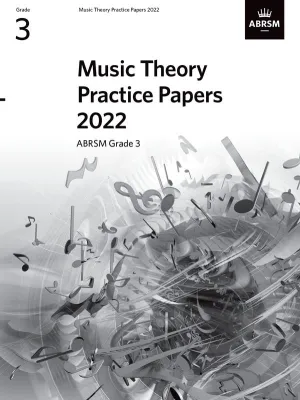
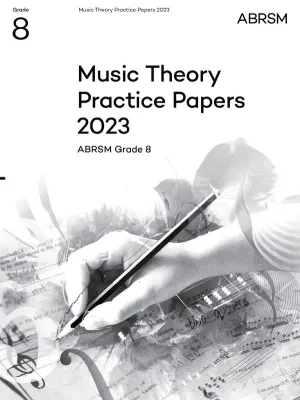
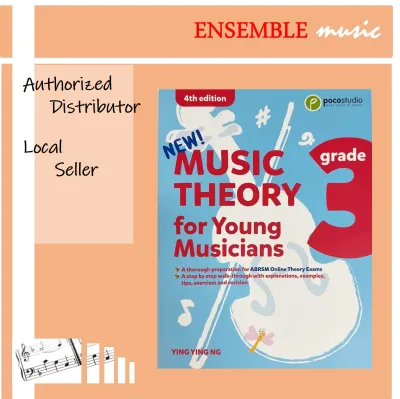
Prices are valid at publication and may change. Please refer to the product page for the latest price.
Begin by identifying where you stand on the spectrum of musical literacy. Beginner-level books focus primarily on notation, teaching you how to read notes, understand rhythms, and identify basic scales. Intermediate books delve into harmonic analysis, explaining how chords relate to one another, how tension and resolution are created, and how modulation functions within a piece. Advanced books shift the focus to structural and formal analysis, examining how entire movements are constructed, how themes are developed over time, and how complex contrapuntal textures are woven together.
Next, consider the specific classical eras and forms that dominate your physical media collection. If your shelves are lined with Baroque vinyl, you might want a book that explains figured bass and counterpoint. If you are a devotee of the Classical and Romantic eras, understanding sonata-allegro form, rondo form, and theme and variations is crucial. Pinpointing these areas of interest will help you filter out books that do not align with your listening habits.
Finally, set realistic expectations regarding the type of book you choose. Self-study guides are written with the independent learner in mind, offering clear explanations, practical listening exercises, and accessible language. Academic textbooks, on the other hand, are designed for university classrooms; they are incredibly thorough but often require a teacher’s guidance, a separate workbook, or access to external answer keys to fully utilize. For most physical media listeners, a well-structured self-study guide or a listener-focused analysis book is the most rewarding path.
Core Dimensions for Evaluating Classical Theory Books
When evaluating music theory books to accompany your CD and vinyl listening, you must look beyond standard instrumental method books. Your goal is not to learn how to play an instrument, but to analyze and appreciate what you are hearing. Therefore, the first and most important dimension to evaluate is score integration. A high-quality theory book for listeners should include printed musical examples, ranging from short melodic fragments to full-page score excerpts. Look for books that utilize reduced scores—simplified versions of orchestral sheets that condense multiple instrumental parts into a readable two- or four-staff format. This allows you to visually track the music’s progress without getting lost in a sea of instrumental staves.

Another critical dimension is a strong focus on form and analysis. While understanding individual chords is helpful, a listener benefits far more from grasping the macro-structure of a piece. A suitable book will guide you through the architecture of major classical forms, showing you how a composer introduces a theme, develops it through various keys, and ultimately resolves it. Understanding these structural landmarks allows you to follow the narrative arc of a symphony or concerto as it plays out across the sides of a vinyl record.
Historical context is equally vital. Music theory is not a rigid, unchanging set of rules; it is a historical record of how compositional practices evolved over centuries. A book that connects theoretical concepts to their historical eras will greatly enrich your listening. For example, understanding why a particular harmonic progression in a Wagner opera was considered revolutionary requires knowing the strict classical rules that preceded it. Look for books that explain the historical context behind the theory, linking technical rules to the cultural and artistic movements of the Baroque, Classical, Romantic, and Modern eras.
Additionally, pay attention to the visual layout of the musical examples. The notation should be clean, sharp, and large enough to read comfortably in moderate lighting. Books that use color-coded analysis or clear annotations directly on the musical staff are particularly helpful for visual learners who want to quickly match what their eyes see with what their ears hear from the speakers.
Matching Book Formats to Physical Media Listening
The physical act of listening to CDs and vinyl records introduces unique practical considerations when choosing a companion book. Unlike digital streaming, where you can easily pause, rewind, or skip to a precise millisecond with a click, physical media encourages a continuous, linear listening experience. Therefore, your theory book should support this flow rather than disrupt it.
First, investigate the book’s audio companions. Many modern music theory books include access to companion websites, digital downloads, or curated playlists. Check if these audio examples reference specific, widely available recordings. If the book references a famous recording of a Beethoven symphony, there is a high probability you can find that exact performance on CD or vinyl, allowing you to match the book’s analysis with the high-fidelity sound of your home audio system.
Second, consider the availability of the scores referenced in the text. If a book analyzes a complete work but only prints short excerpts, you may want to follow along with the full score. Fortunately, vast digital archives offer free access to public-domain classical scores. Having a tablet or a physical score anthology nearby while your record spins allows you to conduct your own visual analysis alongside the book’s commentary.
Third, weigh the pros and cons of physical versus digital book formats. A physical book has a tactile appeal that complements the vinyl experience. A well-bound, lay-flat paperback or a spiral-bound book can sit open on your lap or a music stand, leaving your hands free to handle records, clean styluses, or adjust volume levels. On the other hand, a digital book offers searchability, allowing you to instantly find terms, and the ability to zoom in on intricate musical examples. If you frequently read vinyl liner notes and gatefold jackets, a digital book on a tablet can be easier to manage alongside your physical album art.
Building Your Shortlist and Pre-Purchase Checks
Once you have narrowed down your options, it is time to perform some essential pre-purchase checks to ensure you are making a wise investment. Start by verifying the specific edition and publication year of the book. Music theory pedagogy and musicological research have advanced significantly over the decades. Newer editions often feature corrected musical errata, more diverse musical examples, and better-integrated digital resources.
If you are considering a book that was originally written in a language other than English—such as classic German or French theoretical texts—carefully evaluate the translation quality. Classical music theory is notorious for its dense, highly technical terminology. A poor translation can render complex analytical concepts completely incomprehensible. Look for editions translated by respected musicologists who have provided explanatory footnotes for terms that do not translate directly into English.
Next, confirm that the book includes a comprehensive index and a detailed glossary. As you listen to your CDs and vinyl, you will inevitably encounter unfamiliar terms in the liner notes, such as “durchführung,” “stretto,” or “pizzicato.” A robust index and glossary allow you to use your theory book as a quick-reference dictionary, saving you from having to search through chapters to find a single definition.
Finally, cross-reference the publisher’s descriptions with independent reader reviews. Pay close attention to reviews written by adult self-learners, hobbyists, and classical music enthusiasts. These reviews are often far more revealing than academic endorsements, as they will tell you whether the book’s tone is engaging, whether the explanations are clear, and whether the pacing is manageable for someone studying independently without the aid of a classroom instructor.
Frequently Asked Questions (FAQ)
Do I need to read sheet music to benefit from a classical theory book?
While the ability to read sheet music certainly unlocks the deepest levels of classical analysis, it is not a strict requirement for learning from a music theory book. Many books are written specifically for active listeners rather than performing musicians. These guides often use structural diagrams, timelines, and descriptive language to explain how classical pieces are organized. If you do not read music, look for books categorized under music appreciation or listening guides. These texts focus on the macro-structure of symphonies, concertos, and operas, helping you identify themes and structural shifts purely by ear, without requiring you to decode individual notes on a staff.
Are older, out-of-print theory books still relevant for classical analysis?
Yes, older and out-of-print music theory books can be excellent resources, as the fundamental principles of tonal harmony and classical form have remained unchanged for centuries. You can often find high-quality, rigorous textbooks in secondhand bookstores or libraries at a fraction of the cost of modern editions. The primary trade-off is that vintage books lack modern digital audio companions or QR codes, meaning you will have to manually locate the referenced recordings in your physical CD or vinyl collection. Additionally, older books may employ a drier, more academic writing style, so it is wise to preview a few pages to ensure the tone suits your learning style before purchasing.
Community discussion
Share your experience or ask a question. Comments are reviewed before publication.