
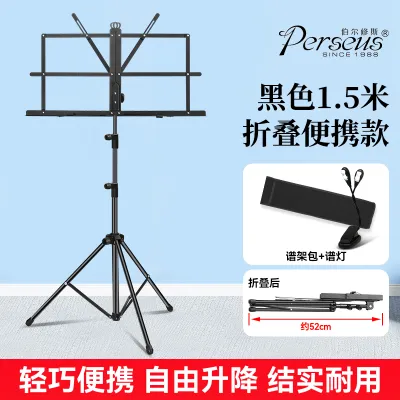
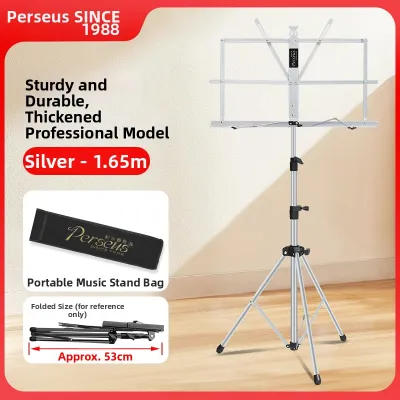
When choosing a portable music stand, the ideal balance depends on three core specifications: folded dimensions, total weight, and tray load capacity. Traveling students often prioritize a lightweight, compact frame that fits easily inside a backpack, while gigging musicians require a robust tray capacity to support heavy binders or digital tablets. To ensure a stand meets your specific performance needs without collapsing, always verify the manufacturer’s rated limits rather than assuming universal stability.
Decoding Weight, Folded Size, and Portability
A common mistake when shopping for a portable music stand is conflating the net weight of the stand itself with its maximum load capacity. The net weight determines how heavy the stand will feel in your gig bag during transit, while the load capacity dictates how much weight the tray can safely support. Before purchasing, check the product specifications to ensure the stand is light enough for your daily commute but strong enough to hold your music.
Folded dimensions are equally critical for transport. A stand that is too long when collapsed will not fit into standard instrument cases or compact backpacks, forcing you to carry it separately. Measure your primary gear bag or vehicle trunk space first, then compare those measurements against the folded length and width listed by the manufacturer.
Products mentioned in this guide
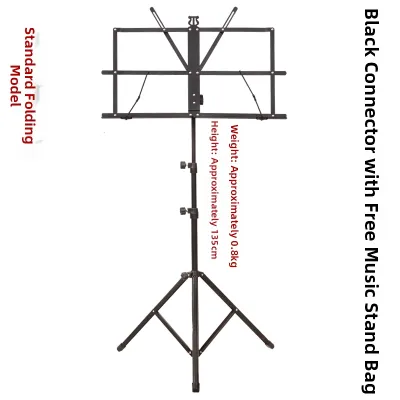
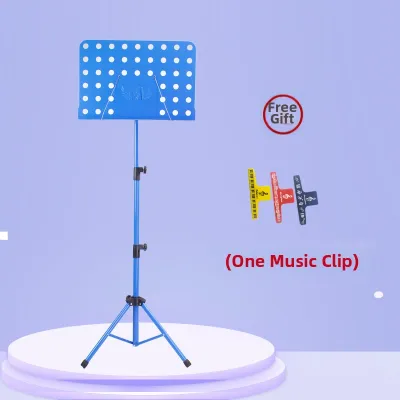
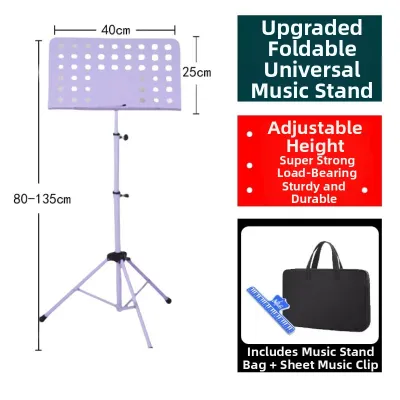
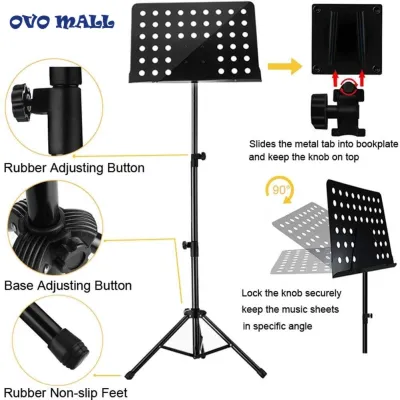
Prices are valid at publication and may change. Please refer to the product page for the latest price.
Many portable models include a dedicated carrying bag, which helps protect both the stand and your other gear from scratches. However, do not assume the included bag is a perfect fit for your transport setup; verify its external dimensions and strap configuration to ensure it can be comfortably carried alongside your instrument.
Tray Dimensions and Lip Depth for Your Sheet Music
The physical dimensions of the tray, or bookplate, directly impact how well your sheet music or digital device sits during a performance. A tray that is too narrow or short can cause loose sheets to droop or allow a large tablet to overhang precariously, increasing the risk of a fall. If you regularly perform from oversized scores or use a large-format tablet, look for a tray that offers sufficient surface area to support the outer edges of your media.

Equally important is the lip depth, which is the width of the ledge at the bottom of the tray. A shallow lip may suffice for single sheets of paper, but thick method books, heavy three-ring binders, or tablets in protective cases require a deeper ledge to prevent them from sliding forward. Measure the thickness of your thickest binder or tablet case and compare it to the specified lip depth before making a decision.
For musicians who frequently read from multi-page spreads, some portable stands feature extendable arms or dual-page trays that slide outward. While these designs provide excellent support for wide layouts, they also add complexity and weight; a standard single-page tray is usually more than adequate for those who primarily use digital tablets or standard-sized books.
Stability, Base Design, and Material Trade-offs
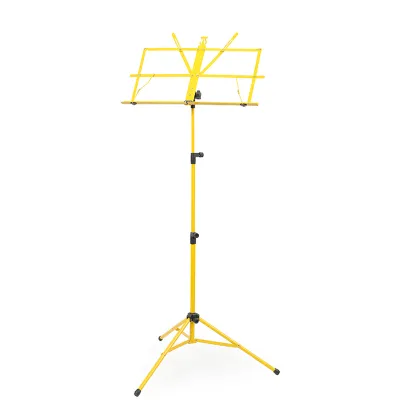
A portable music stand must remain upright under the weight of your music, which makes base design and material selection crucial. Most portable models utilize a tripod base, where a wider leg span lowers the center of gravity and significantly improves stability against accidental bumps or wind. However, a wider footprint also requires more floor space, which can be a challenge on cramped stages or in tight rehearsal rooms.
The choice of materials involves a direct trade-off between durability and weight. Aluminum and steel alloys offer excellent structural integrity and resistance to bending, though steel is heavier to transport. High-density plastics are often used for joints and adjustment collars to save weight, but they can wear down or crack over time under heavy use; look for reinforced metal joints at high-stress points if you plan to fold and unfold the stand daily.
Additionally, inspect the locking mechanisms at the base and shaft joints. High-quality portable stands feature ergonomic knobs or lever-style clamps that allow you to secure the sections tightly without needing specialized tools. Avoid designs with flimsy plastic threads that strip easily, as a failing joint can cause the stand to collapse unexpectedly during a performance.
Height Adjustment Range for Sitting and Standing
An ergonomic setup requires positioning your sheet music at a comfortable eye level, whether you are seated on a cello stool or standing to play the violin. Before buying, check the manufacturer’s minimum and maximum height specifications to ensure the stand can adjust to your specific playing posture. For younger students who practice while seated, a low minimum height is essential, whereas tall wind players will need a stand that extends significantly higher.
For musicians practicing in compact spaces, such as a typical HDB flat, a stand with a highly adjustable footprint is particularly valuable. The mechanism used to adjust this height also affects daily usability. Telescoping friction clutches allow for rapid, smooth height adjustments simply by pulling or pushing the shaft, which is highly convenient during fast-paced rehearsals. In contrast, traditional twist-knob adjustments take slightly longer to secure but often provide a more positive, slip-free lock for heavier loads.
Keep in mind that extending any lightweight portable stand to its absolute maximum height will naturally raise its center of gravity, making it more susceptible to tipping. If you must use the stand at its maximum extension, try to position the tripod legs at their widest setting and avoid overloading the tray to maintain a safe balance.
Minor Features You Can Safely Ignore
When comparing options, it is easy to get distracted by secondary features that add little to the stand’s actual performance. For instance, aesthetic choices like custom colors or decorative finishes do not affect structural integrity or usability, and standard black or silver finishes remain the most professional choice for ensemble settings. Focus your budget on material quality and joint stability rather than cosmetic variations.
Similarly, built-in accessory holders designed for pencils, guitar picks, or mutes are often too small or awkwardly positioned to be practical. These add-ons can clutter the stand and are easily replaced by separate, clip-on accessories that you can position exactly where you need them.
Finally, be cautious of over-engineered, multi-step folding mechanisms that promise ultra-compact storage. While they may look impressive, these complex designs introduce numerous tiny joints and hinges, which increase the overall weight and create more potential points of mechanical failure without offering a meaningful improvement in portability.
Frequently Asked Questions (FAQ)
Can a lightweight portable stand hold a thick binder?
Yes, but it depends heavily on the stand’s structural design and rated load capacity rather than its net weight alone. A lightweight aluminum stand with a wide tripod base and secure locking joints can easily support a thick binder, provided the binder’s weight does not exceed the manufacturer’s specified limit. Always check the lip depth of the tray as well, as a shallow ledge may not hold a thick binder securely even if the stand can support its weight.
Do I need a solid back tray or a wire frame design?
The choice depends on your primary performance environment and the media you use. Solid back trays offer continuous support, making them ideal for digital tablets, loose sheets of paper, and outdoor performances where wind is a factor. Wire frame designs are significantly lighter and fold down into a much smaller package, making them excellent for travel, though they require page clips or wind clips to keep loose sheets from blowing away.
Community discussion
Share your experience or ask a question. Comments are reviewed before publication.