
Fitting a drum set into a compact Singapore HDB flat is a common challenge for local musicians. Standard bedrooms and study rooms must often serve multiple purposes, leaving limited floor area for bulky musical instruments. Finding the right small drum set requires balancing physical footprint, playability, and daily storage needs. By focusing on compact designs and smart spatial planning, you can practice comfortably without overcrowding your living space.
Assessing Your Available Space in an HDB Flat
Before browsing online marketplaces or visiting local music showrooms, you must accurately measure your designated practice area. Use a measuring tape to map out the length and width of the floor space where the kit will sit. Do not forget to check the ceiling height, especially if you plan to install overhead cymbal booms or if your room features low-hanging light fixtures or ceiling fans.
Physical access is another critical factor that is easily overlooked. Measure the width of your bedroom door, hallway clearances, and even the dimensions of your HDB block’s elevator. If you choose a non-folding kit, you must ensure that the fully assembled frame or its individual transport cases can easily pass through these tight spaces without damaging your walls or the instrument.
Products mentioned in this guide

![[SG] Portable Electronic Drum Set USB Roll-Up Silicon Drums Pad w Drumsticks Compact Size Kit Hand Practice With Pedals](https://img.lazcdn.com/g/p/73aace46fc1f8c7268623b73f5d18efb.jpg_400x400q80.jpg_.webp)
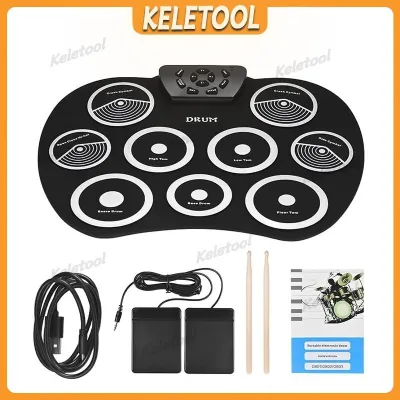
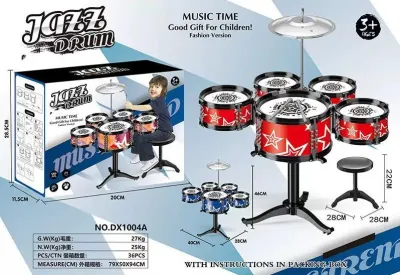
Prices are valid at publication and may change. Please refer to the product page for the latest price.
Ergonomic clearance is just as important as the physical footprint of the drum set itself. When you sit on a drum throne, your elbows, arms, and drumsticks require a wide range of motion. Ensure there is at least 30 to 50 centimeters of clear space around the perimeter of the kit so you do not strike nearby wardrobes, desks, or walls during an energetic practice session.
Consider the placement of power outlets if you opt for an electronic setup. Running long extension cords across a small room creates tripping hazards and clutter. Positioning your kit near an existing wall outlet keeps the cables organized and preserves the clean look of your room.
Types of Compact Drum Sets for Small Rooms
When shopping for a small drum set, you will generally choose between three main categories, each offering distinct advantages and trade-offs regarding footprint, volume, and feel.

Electronic drum kits with mesh pads and compact racks are highly popular for HDB living. These kits feature a minimal physical footprint, and many models use foldable racks that can be collapsed against a wall when not in use. The primary benefit of an electronic kit is volume control; playing with headphones keeps the noise level low, which is essential for maintaining good relations with your neighbors. However, you must still manage the physical vibration of the bass drum pedal, which can travel through the concrete floor.
Portable or “cocktail” acoustic kits offer a vertical setup that dramatically reduces the required floor space. In a cocktail kit, the bass drum is positioned vertically, and the snare and tom pads are mounted directly to the same stand. This design allows you to play standing up or sitting on a high stool, making it an excellent choice for extremely tight corners. The trade-off is a different playing posture and a more focused, less traditional acoustic sound.
Foldable or travel acoustic kits utilize shallow drum shells and collapsible hardware designed for quick breakdown. These kits maintain the organic feel and rebound of real drumheads while reducing the depth of the bass drum and toms. While they take up slightly more floor space than a vertical cocktail kit, they can be packed down into compact cases. Keep in mind that even a small acoustic kit produces significant volume, so you may need to invest in mesh heads or mute pads to practice comfortably in an HDB flat.
Weighing these options requires prioritizing your personal goals. If silent practice is your absolute priority, an electronic kit is the most practical choice. If you demand the physical rebound of a real drumhead and have the freedom to make some noise during approved hours, a travel acoustic kit with dampening accessories may suit your needs.
Key Space-Saving Features to Look For
To maximize your available room, look for specific hardware features designed to minimize the physical footprint of the drum set.
Prioritize collapsible or foldable racks over traditional multi-stand setups. Traditional acoustic kits rely on individual tripod stands for every cymbal and drum, which quickly clutter the floor with metal legs. A single, integrated rack system allows you to mount multiple pads and cymbals on a shared frame, drastically reducing the number of legs touching the ground.
Identify nested drum designs if you prefer an acoustic setup. Some travel kits are engineered so that the smaller rack toms and floor tom can fit directly inside the hollow body of the bass drum during storage. This nesting capability turns a multi-piece drum kit into a single, easily transportable shell, saving massive amounts of wardrobe or closet space.
Check for integrated hardware and multi-clamps. Multi-clamps allow you to attach auxiliary percussion, splash cymbals, or drum modules directly to existing stands. By eliminating the need for dedicated stands, you keep the floor area clear and make the entire setup much easier to sweep or vacuum around.
Look for quick-release mechanisms and lightweight materials. If you must tear down and store your kit daily, heavy double-braced hardware will quickly become a chore to move. Lightweight, single-braced stands or aluminum racks with quick-release clamps allow you to assemble and disassemble the kit in minutes without straining your back.
Managing Setup Clearance and Daily Storage
Once you have selected your small drum set, careful arrangement is key to maintaining a functional multi-purpose room. Position the kit ergonomically within your measured boundaries, ensuring that the bass drum pedal and hi-hat stand do not overlap with walkways or block access to wardrobe doors.
Always use a properly sized drum rug or utility mat that matches the exact footprint of your kit. A dedicated mat serves multiple purposes: it prevents the bass drum and pedals from sliding forward during play, protects your HDB flooring from scratches, and visually defines the musical zone in your room. Additionally, a thick mat helps absorb some of the low-frequency vibrations caused by pedal impact.
If your room must be completely cleared of musical gear daily, plan for vertical storage solutions. Heavy-duty padded gig bags or hard plastic cases allow you to stack drum shells safely in a corner or inside a wardrobe.
For those considering wall-mounted hangers or shelving to store cymbals and hardware off the floor, always verify the weight limits and anchoring requirements first. HDB internal walls can be made of lightweight concrete or drywall, which require specific wall plugs and anchors to support heavy metal hardware safely. Never mount heavy equipment without confirming your wall type and using the correct hardware.
Frequently Asked Questions (FAQ)
How do I store a drum set daily in a small bedroom?
To store your drum set daily, utilize padded gig bags or soft cases designed specifically for compact kits. These cases protect the shells and pads from dust and scratches while allowing you to slide them under a standard bed frame or stack them vertically in a wardrobe. If you use an electronic kit, loosen the rack clamps to fold the left and right wings inward, flattening the entire structure so it can stand flush against a wall or behind a door.
Does a smaller drum set mean I have to compromise on playability?
A smaller drum set does not mean you must sacrifice your drumming technique. While compact kits feature smaller pads or shallower shells, the rebound and stick response remain highly realistic, especially on modern mesh heads. You can adapt to a tighter layout by adjusting your drum throne height, pedal angles, and stick angles to maintain ergonomic posture. This ensures you can practice complex rudiments and maintain musical expression without needing a massive, full-sized setup.
Community discussion
Share your experience or ask a question. Comments are reviewed before publication.