
Choosing a violin hygrometer in Singapore requires prioritizing compact size, rapid sensor response, and a clear digital display to safeguard your instrument against extreme tropical humidity. Because stringed instruments are highly sensitive to environmental shifts, keeping a precise eye on the microclimate inside your case is the most effective way to prevent costly structural damage. By selecting a device tailored to the tight confines of an instrument case, you can make informed decisions about when to use dehumidifying packets or when to seek professional maintenance.
Why Singapore's Climate Demands a Reliable Violin Hygrometer
Singapore’s tropical climate presents a continuous challenge for string players. With outdoor relative humidity levels frequently exceeding 80 percent, the ambient air is saturated with moisture. Violin wood, typically seasoned spruce and maple, is highly hygroscopic, meaning it naturally absorbs and releases moisture to stay in equilibrium with its environment. When exposed to excessive humidity, the wood fibers swell, which can lead to warped plates, open seams where the water-soluble hide glue softens, and shifts in the soundpost that alter the instrument’s tonal qualities.
The air inside a closed violin case does not automatically remain safe just because the lid is shut. While a high-quality suspension case provides a temporary barrier, moisture gradually seeps through the zippers, seams, and outer fabric, creating a humid microclimate inside. Without a reliable hygrometer, you are essentially guessing the moisture levels surrounding your instrument. In a region where a short walk from an air-conditioned MRT station to a humid outdoor street can cause rapid environmental swings, real-time monitoring is essential for preventive care.
Products mentioned in this guide
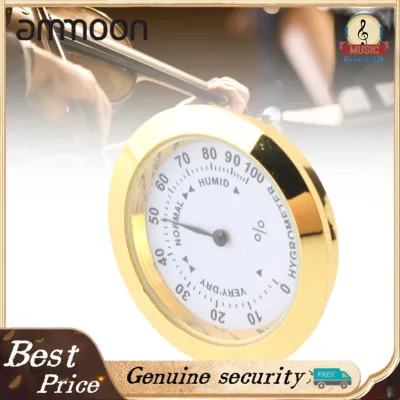
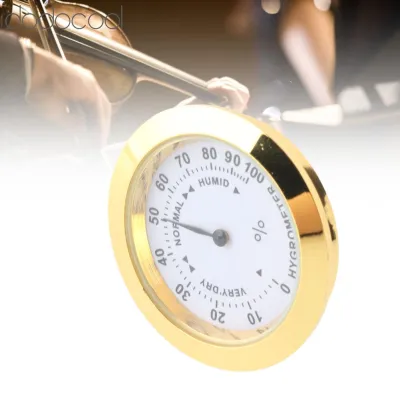
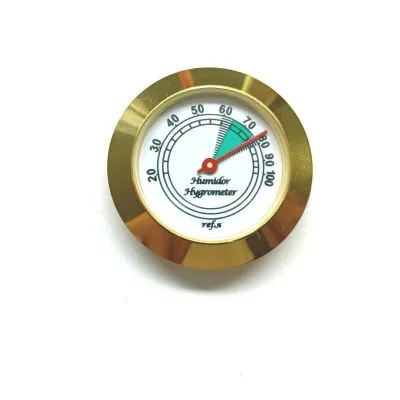


Prices are valid at publication and may change. Please refer to the product page for the latest price.
Key Features to Look for in a Violin Hygrometer
When selecting a hygrometer specifically for a violin case, physical dimensions are your primary constraint. The interior of a violin case is carefully molded to support the instrument while keeping the bow and accessories secure. A bulky or poorly designed hygrometer can press against the delicate spruce top, scratch the varnish, or interfere with the bow spins. Look for low-profile, slim designs that can easily fit into designated slots without putting physical pressure on any part of the instrument.

Mounting options also play a critical role in instrument safety. Many modern hygrometers use hook-and-loop fasteners, magnetic mounts, or specialized adhesive brackets to secure the device to the interior lid or accessory pocket. It is vital to ensure that the mounting mechanism is robust; a loose hygrometer sliding around inside a case during transit can cause severe cosmetic and structural damage. Additionally, choose a display that is easy to read in low-light environments, such as backstage areas or dim rehearsal rooms, so you can check the humidity at a glance.
Accuracy and Sensor Response Time
A reliable instrument hygrometer must offer high precision, ideally within a margin of error of plus or minus three to five percent relative humidity. When evaluating devices, check the manufacturer’s specifications for these tolerance limits. Because Singaporean musicians frequently transition between heavily air-conditioned indoor spaces and hot, humid outdoor environments, sensor response time is incredibly important. A slow sensor might take an hour to register a change, leaving you unaware that your instrument is experiencing a rapid humidity spike.
To combat this, look for digital sensors that refresh their readings every 10 to 15 seconds. Another highly beneficial feature is a minimum and maximum memory function. This tracking capability allows you to see the highest and lowest humidity levels reached while the case was closed, giving you a clear picture of how well your case maintains its microclimate overnight or during long periods of storage.
Power Source and Maintenance
Digital hygrometers require a reliable power source, typically button cell batteries or small alkaline batteries. In Singapore’s warm and humid conditions, battery compartments are highly susceptible to corrosion and chemical leakage. Acid leaks can ruin the sensor and, worse, release corrosive vapors inside the sealed case, damaging metal parts like tuning pegs, fine tuners, and strings. Inspect the battery compartment every few months for any signs of white powder or rust.
To minimize maintenance, choose models with clear low-battery indicators so you can replace cells before they fail completely. Some devices feature auto-shutoff displays that turn off the screen after a few minutes while continuing to log data in the background, preserving battery life without losing historical minimum and maximum readings. Avoid leaving dead batteries inside the device for extended periods.
Digital vs. Analog Hygrometers for Humid Environments
Deciding between a digital and an analog hygrometer depends on your maintenance habits and how you travel with your instrument. Digital models are highly favored for their ease of reading, precise numerical displays, and ability to track historical humidity trends. They rely on electronic sensors that respond quickly to environmental changes, making them highly effective for monitoring the rapid transitions typical of a Singaporean commute. However, they are entirely dependent on battery power and must be replaced or serviced if the electronics fail.
Analog hygrometers, which often feature a classic dial design, operate mechanically using a hair or synthetic coil element that expands and contracts with moisture. They require no batteries, giving them a timeless aesthetic that matches traditional wooden cases. The trade-off is that analog units generally have a slower response time and can drift out of calibration over time due to physical shocks during travel. They require regular manual calibration to remain accurate, which can be inconvenient for busy musicians.
For most players in humid environments, a digital hygrometer provides the rapid, actionable data needed to manage humidity actively. If you prefer the classic look of an analog dial built into your case, consider supplementing it with a small, portable digital sensor placed in the accessory compartment to verify the dial’s accuracy.
How to Position and Read Your Hygrometer Correctly
Proper placement of your hygrometer inside the violin case is just as important as the device’s accuracy. Never place a loose hygrometer in the main body cavity where it can slide around and dent the violin. The safest location is securely mounted to the interior lid, positioned away from the violin’s bridge and upper bouts, or inside a dedicated accessory compartment if the compartment lid has a breathable mesh or slotted cover that allows air to circulate freely.
When you first place a hygrometer in a case, allow at least 24 hours for the sensor to acclimate to the microclimate before trusting the baseline reading. The dense velvet, foam, or suspension padding inside the case holds its own moisture reservoir, which takes time to stabilize. Avoid opening the case repeatedly during this calibration period, as each opening introduces ambient room air and resets the stabilization process.
To understand your environment better, compare the case reading with a separate room hygrometer. If your room is kept at a comfortable 55 percent relative humidity but your case consistently reads 75 percent, it indicates that moisture is trapped inside the case lining. In this scenario, you may need to air out the empty case in an air-conditioned room to dry out the fabric before replacing the violin.
Next Steps: Managing Humidity When Readings Are Too High
Once your hygrometer is installed, you must know how to interpret its readings and take action. Most luthiers recommend keeping a violin in a stable relative humidity range of 45 to 55 percent, though up to 60 percent is acceptable in tropical regions to avoid extreme dry-out cycles. If your hygrometer consistently reads above 65 percent inside the case, you must take steps to lower the moisture levels.
Using passive dehumidification products is the most common solution. Specialized silica gel packs or clay-based humidity control packets designed for musical instruments can be placed inside the case to absorb excess moisture. Be sure to monitor these packets regularly; in Singapore’s high humidity, they can quickly become saturated and lose their effectiveness, requiring replacement or reactivation according to the manufacturer’s instructions.
If the readings remain stubbornly high despite using dehumidifiers, or if you notice physical warning signs—such as stiff tuning pegs, a high action where the strings sit too far from the fingerboard, or buzzing sounds—stop attempting DIY adjustments. Take the instrument to a professional luthier in Singapore who understands how to stabilize tropicalized instruments and can check for structural issues like shifting soundposts or opening seams.
Frequently Asked Questions (FAQ)
Do I need to calibrate my violin hygrometer before use?
Yes, especially analog models, which can drift significantly during shipping and handling. You can verify accuracy using a standard salt test: place the hygrometer inside a sealed, airtight container alongside a small bottle cap filled with wet table salt (creating a paste, not a liquid solution). After 8 to 12 hours, the air inside the container will stabilize at exactly 75 percent relative humidity. If your hygrometer reads higher or lower, adjust the calibration screw on an analog model, or note the variance on a digital model so you can calculate the true humidity during daily use.
Can I use a standard room hygrometer instead of a case-specific one?
It is highly discouraged. Room hygrometers are typically too bulky and heavy, posing a physical hazard to the violin if they shift inside the case. Furthermore, they are designed to measure open-air circulation, whereas a violin case creates a highly localized microclimate. A room sensor will not accurately reflect the moisture levels trapped within the dense velvet or suspension padding of your instrument case, leading to inaccurate monitoring and potential damage.
Community discussion
Share your experience or ask a question. Comments are reviewed before publication.