
Choosing the right violin shoulder rest requires matching the accessory to your instrument’s fractional size, adjusting its height and width to align with your neck length and shoulder structure, and selecting materials that provide stable grip and comfort. A well-fitted shoulder rest prevents long-term physical strain and allows for a relaxed, natural playing posture.
Understand How a Shoulder Rest Supports Your Posture
The violin is a relatively flat instrument that must be held horizontally between the jaw and the collarbone. For most players, the natural anatomical gap between the mandible resting on the chinrest and the collarbone is too wide to bridge without assistance. A shoulder rest acts as a physical bridge, filling this space so the instrument can sit securely without requiring extreme physical compensation.
Playing without proper support often forces musicians to instinctively raise their left shoulder or clamp down hard with their jaw to keep the violin from slipping. Over time, this constant muscular tension can lead to chronic neck strain, shoulder fatigue, restricted breathing, and even tension headaches. It also severely limits the mobility of the left hand, making smooth shifting and vibrato much more difficult to execute.
Products mentioned in this guide
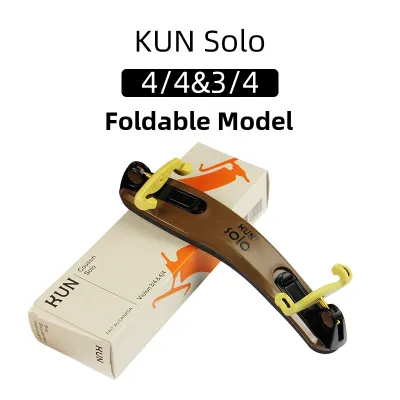

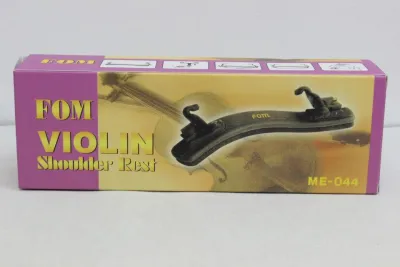

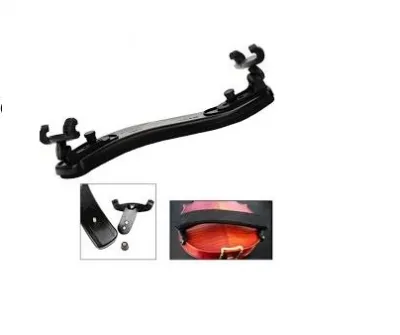

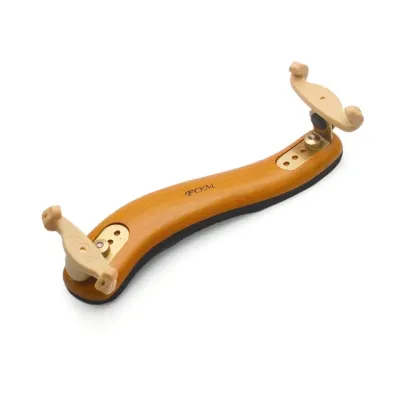
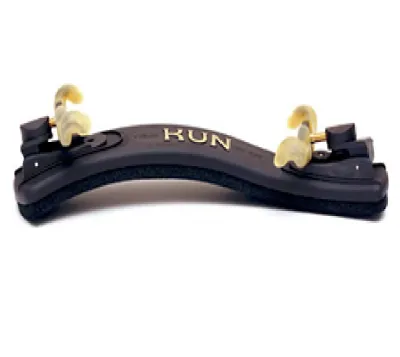
Prices are valid at publication and may change. Please refer to the product page for the latest price.
A properly fitted shoulder rest stabilizes the instrument by distributing its weight evenly across the collarbone and shoulder area. This allows the weight of the head to hold the violin in place naturally, freeing up the left hand to navigate the fingerboard without having to support the weight of the neck. By eliminating the need to grip the instrument tightly, you can maintain a relaxed, ergonomic posture during long practice sessions.
Match the Shoulder Rest to Your Instrument Size
Violins are manufactured in standard fractional sizes to accommodate players of different ages and arm lengths, ranging from full-size (4/4) down to 3/4, 1/2, 1/4, and even smaller. Because the width of the violin’s lower bout varies significantly between these sizes, a shoulder rest must be selected to match the specific dimensions of your instrument. A standard 4/4 shoulder rest will be too wide to grip a 3/4 or 1/2 violin securely.

It is also important to distinguish between violin and viola shoulder rests. Violas have wider, deeper bodies, meaning their corresponding shoulder rests generally feature wider bases and different curves to accommodate the extra instrument depth. While some highly adjustable models are marketed as compatible with both instruments, you must verify the exact model specifications to ensure a secure fit.
Before making a purchase, always consult the manufacturer’s sizing chart on the packaging or product page. Many modern shoulder rests feature adjustable mounting brackets that allow a single model to span a couple of fractional sizes, such as a combined 4/4 and 3/4 model. Checking these specifications ensures the feet will clamp securely onto the violin’s ribs without slipping off or scratching the varnish.
Adjust the Height and Width for Your Body Proportions
Every violinist has a unique skeletal structure, meaning there is no single setup that works for everyone. To find your ideal configuration, start by estimating the distance from your collarbone to your jaw while standing with relaxed shoulders. Players with longer necks will naturally require taller shoulder rest feet, while those with shorter necks or broader shoulders will need a much lower profile.
Most standard shoulder rests feature screw-in feet that can be adjusted by turning them clockwise or counterclockwise. Adjusting the height of these feet allows you to keep the violin relatively parallel to the floor, preventing the scroll from drooping downward. You can also adjust the angle of the feet to ensure the rest sits flat against your chest, distributing the instrument’s weight evenly rather than digging in at a single point.
Adjusting the width of the rest is equally critical for stability. The base of the shoulder rest typically features multiple mounting holes or a sliding track that allows you to widen or narrow the distance between the feet. The feet must grip the widest part of the violin’s lower bout securely, while the body of the rest should sit comfortably across your collarbone without sliding off the edge of your shoulder.
Some players may require highly adjustable or asymmetrical models to achieve a comfortable fit. If you have sloped shoulders, a prominent collarbone, or an asymmetrical posture, standard curved rests may feel unstable. In these situations, look for models with bendable metal cores, articulated joints, or extra-long replacement feet that can be customized to match your specific physical contours.
Evaluate Materials and Design for Comfort and Grip
Shoulder rests are constructed from a variety of materials, each offering different characteristics regarding weight, flexibility, and rigidity. Wood bases, often crafted from maple or walnut, offer excellent rigidity and a classic aesthetic that matches the violin’s natural varnish, though they tend to be heavier. Plastic bases are highly flexible, lightweight, and cost-effective, making them popular for beginners, though they can bend under heavy pressure. Carbon fiber bases provide an exceptional strength-to-weight ratio, remaining incredibly rigid while keeping the instrument as light as possible.
The padding on top of the base directly contacts your collarbone and plays a major role in comfort and grip. Dense foam padding provides soft cushioning but can compress or degrade over time, especially in warm, humid climates like Singapore’s, where humidity can affect adhesives and foam integrity. Rubber or neoprene padding offers excellent grip against clothing, preventing the violin from sliding, but it may feel firmer against the collarbone.
The ergonomic shape of the base also influences how weight is distributed. Curved rests follow the natural slope of the shoulder, while contoured or hook-style rests feature a pronounced curve that wraps slightly around the shoulder joint for extra stability. If you have sensitive skin or contact allergies, inspect product labels carefully to ensure the padding and rubber feet are made from hypoallergenic materials.
Test the Fit and Check for Warning Signs
Once you have adjusted your shoulder rest, perform a practical test to verify the setup. Place the violin on your shoulder and gently rest your jaw on the chinrest. You should be able to support the instrument horizontally for a few seconds without using your left hand and without clamping down hard with your jaw. This “hands-free” hold indicates that the rest is successfully bridging the physical gap.
Next, try shifting your left hand up and down the fingerboard as if playing in higher positions. The shoulder rest should remain firmly in place against your body without shifting, and your left shoulder should remain completely relaxed. If you feel the need to hunch your shoulder upward to keep the rest from slipping, the height or angle needs further adjustment.
Pay close attention to physical warning signs during and after your practice sessions. Red marks, bruising, or localized pain on your neck or collarbone indicate that the rest is digging in or that the padding is insufficient. Persistent muscle fatigue in your upper back, neck, or shoulders after short playing sessions is a clear sign of a poor fit that could lead to repetitive strain injuries.
If you have adjusted the height, angle, and width of your shoulder rest but still experience discomfort, stop playing to avoid injury. Consult your music teacher or a professional luthier. They can observe your posture in real-time, check the alignment of both your chinrest and shoulder rest, and recommend specific adjustments or alternative models tailored to your body.
Maintain and Inspect Your Shoulder Rest
Regular upkeep ensures your shoulder rest remains secure and functional while protecting your violin from accidental damage. The feet of the shoulder rest are typically coated in soft rubber or surgical tubing to grip the instrument’s ribs without scratching the delicate varnish. Over time, especially in humid environments, this rubber can dry out, crack, harden, or wear through to the metal or plastic core. Inspect the feet regularly and replace the rubber tubing immediately if you notice any wear.
Keep the shoulder rest clean by wiping the base and padding with a dry or slightly damp microfiber cloth after use. Avoid using harsh chemical solvents, alcohol, or violin polish on the shoulder rest, as these can dissolve adhesives, degrade foam padding, or damage the finish of the rest. Allow any damp components to air dry completely before storing the rest in your violin case.
Periodically check and tighten all adjustable screws, brackets, and joints. The vibrations from playing and the constant motion of packing and unpacking the rest can cause these components to loosen over time. Ensuring all hardware is secure prevents the shoulder rest from suddenly collapsing or slipping off the instrument during a performance.
Frequently Asked Questions (FAQ)
Can I play the violin without a shoulder rest?
Yes, playing without a shoulder rest is a viable option and is the traditional method used by many historical and classical players. Musicians with shorter necks or square shoulders often find they do not need the extra height to fill the gap between the jaw and the collarbone.
Some players who prefer a minimal setup use alternative padding, such as a folded chamois leather cloth, a cosmetic sponge, or a gel pad secured to the back of the violin with a rubber band. This provides slip resistance and mild cushioning without raising the instrument significantly.
If you choose to play without a structured rest, you must monitor your posture closely. Ensure you are not raising your left shoulder or clamping your jaw tightly to hold the violin, as this can lead to chronic tension and long-term physical strain.
Do shoulder rests affect the sound of the violin?
Yes, any accessory attached to the body of a violin can potentially affect its acoustic properties. In theory, clamping a shoulder rest to the lower bouts can slightly dampen the natural vibrations of the back plate, which may subtly alter the instrument’s resonance and projection.
Rigid materials like wood or carbon fiber are often marketed as preserving acoustic resonance better than soft, flexible plastics because they absorb less vibrational energy. Some premium models are designed with minimal contact points to reduce dampening.
However, physical comfort should always be your primary consideration. A tense player with a stiff neck and shoulder will produce a much more restricted, choked tone than a relaxed player, meaning the ergonomic benefits of a comfortable shoulder rest far outweigh minor acoustic differences.
How often should I replace my shoulder rest?
There is no fixed timeline for replacing a shoulder rest; instead, you should rely on observable physical signs of wear and tear. Inspect the frame, padding, and feet regularly to determine if a replacement or repair is necessary.
You should replace the rest if you notice visible damage such as cracked plastic or wood frames, stripped adjustment threads that no longer hold their position, or permanently compressed, crumbling foam padding. Worn rubber feet that no longer grip the instrument securely or leave marks on the varnish also indicate it is time for a replacement.
Additionally, growing children will need their shoulder rests upgraded as they transition to larger fractional violins. Always ensure the size of the shoulder rest matches the current size of the instrument to maintain proper posture and prevent damage.
Community discussion
Share your experience or ask a question. Comments are reviewed before publication.