
When looking for the perfect guitar bag acoustic instruments require a careful balance of protective padding, secure fit, and comfortable transport options. For beginners, choosing a bag isn’t just about finding a way to carry your instrument; it is about protecting your investment from physical damage, dust, and environmental wear. A well-chosen bag ensures your guitar remains safe whether it is resting in your bedroom, traveling to a weekly lesson, or navigating public transport.
Measure Your Guitar for a Secure Fit
A common mistake among beginners is assuming that all acoustic guitars are of a standard size. In reality, acoustic guitars come in a wide variety of body shapes and dimensions, meaning a “one-size-fits-all” approach is highly likely to fail. A bag designed for a compact Concert or Classical guitar will be far too small for a broad-shouldered Dreadnought, while placing a smaller guitar into an oversized Jumbo bag will allow the instrument to slide around, risking structural damage during transport.
To find a bag that offers a snug and secure fit, you must measure your guitar accurately. Start by measuring the total length from the top of the headstock to the bottom edge of the body, including the strap button. Next, measure the width of the lower bout, which is the widest part of the guitar’s lower body. You should also measure the upper bout width and the waist, as well as the maximum body depth along the side ribs. Acoustic guitars are significantly deeper than electric guitars, typically ranging from 9 to 13 centimetres, making depth a critical factor in your selection.
Products mentioned in this guide
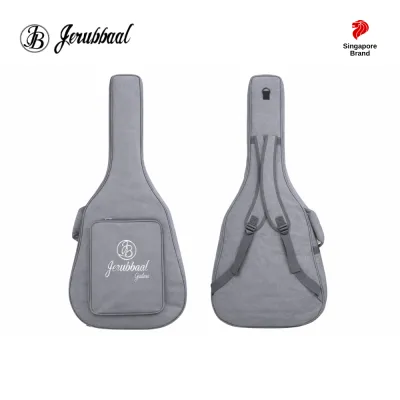

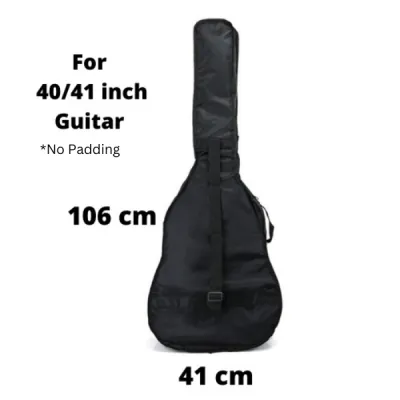


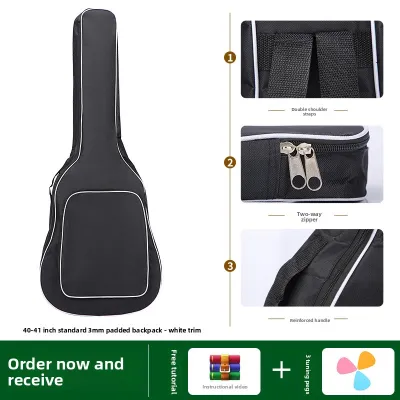
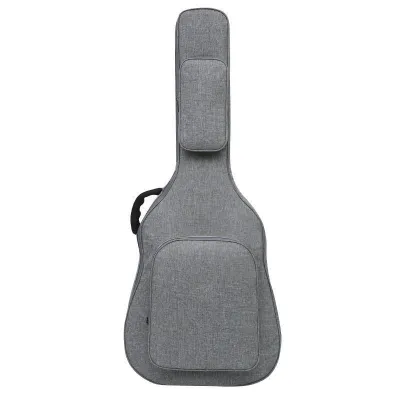
Prices are valid at publication and may change. Please refer to the product page for the latest price.
Once you have these measurements, compare them directly against the manufacturer’s specified internal dimensions of the bag. Never rely solely on external dimensions or generic size labels like “standard acoustic.” External measurements include the thickness of the padding and outer pockets, which can easily mislead you into buying a bag that is too small on the inside. A good fit should be snug but not so tight that you have to stretch the zippers over the edges of the guitar.
Choose the Right Padding and Protection Level for Your Guitar Bag Acoustic
Understanding Padding Thickness and Zones
The primary line of defense against drops, bumps, and pressure is the internal padding of the bag. Not all padding is created equal; bags generally use either cheap open-cell foam or dense closed-cell foam. Open-cell foam is soft and highly compressible, providing decent protection against minor scratches and dust but very little impact absorption. Closed-cell or high-density foam is much firmer and absorbs impact energy far more effectively, keeping its shape even under pressure.

Padding thickness typically ranges from 5mm to over 25mm. For basic home storage or very short car trips where the guitar is handled with extreme care, a thin 5mm to 10mm foam bag is usually sufficient. However, if you plan to carry your guitar outside the house regularly, look for a bag with at least 15mm to 20mm of high-density padding. For maximum protection, premium hybrid bags offer 25mm or more of rigid foam, providing structural support that rivals a hard-shell case while remaining lightweight.
Beyond overall thickness, pay close attention to high-risk zones. The bottom edge of the guitar is particularly vulnerable to impact when you set the bag down on the floor. A quality bag should feature reinforced rubber bumpers on the exterior bottom and extra-thick foam inserts on the inside. Many high-quality bags include a dedicated cutout or recess for the bottom strap button, preventing this metal piece from acting as a pressure point that could crack the wood during a vertical drop.
Neck and Headstock Support
The neck is the most fragile part of an acoustic guitar. Because it is under constant tension from the steel or nylon strings, a sudden impact can easily cause a fracture, especially near the nut or headstock joint. To prevent this, look for a bag that includes an internal neck support system. This is typically a contoured foam block or cradle that elevates the neck and secures it in place with a Velcro strap, preventing the guitar from shifting laterally or vertically inside the bag.
The headstock area requires special design considerations. The tuning pegs project outward and can easily be knocked out of alignment or bent if they press against the sides of the bag. A good bag will have a spacious, heavily padded headstock compartment. Additionally, the sharp ends of cut strings at the tuning posts can easily snag and tear the interior fabric over time. Look for a bag that features a reinforced, wear-resistant inner lining—such as heavy-duty polyester or scratch-resistant nylon—specifically in the headstock and bridge areas to prolong the life of the bag.
Evaluate Strap Comfort and Portability
Carrying an acoustic guitar can quickly become uncomfortable if the bag lacks ergonomic transport options. While a guitar itself might only weigh between 2 and 3.5 kilograms, carrying that weight over long distances or during a daily commute requires proper weight distribution. When evaluating a bag, look closely at the strap configurations, shoulder padding, and handle designs.
Most modern guitar bags offer either a single shoulder strap or dual backpack-style straps. Single straps are suitable for quick trips from the house to a car boot, but they place the entire load on one side of your body, leading to muscle strain and poor posture. For beginners who commute to weekly lessons or practice sessions, dual backpack straps are highly recommended. They distribute the weight evenly across both shoulders, keeping your hands free to carry music stands, books, or personal items.
The quality of the shoulder straps is just as important as their configuration. Look for wide, contoured straps with thick, breathable padding. Narrow, unpadded nylon straps will dig into your shoulders and cause discomfort within minutes. Adjustable buckles are essential, allowing you to position the bag high and tight against your back. This prevents the bag from swaying side to side or bumping against the back of your legs as you walk.
In addition to shoulder straps, high-quality handles are vital for daily maneuverability. A heavily padded side handle allows you to carry the bag like a traditional suitcase over short distances. Another highly practical feature is a front or rear “subway handle.” This is a vertical grab handle located on the upper portion of the bag, allowing you to hold the guitar upright and close to your body when standing on a crowded train, bus, or escalator, or when lifting the bag out of tight spaces.
Assess Storage Capacity and Material Durability
Organizing Accessories with Pocket Layouts
As a beginner, you will need to carry several essential accessories alongside your guitar. This includes sheet music, method books, clip-on tuners, capos, picks, spare strings, cleaning cloths, and perhaps a tablet or metronome. A bag with well-designed storage pockets makes keeping these items organized and accessible much easier.
Look for a bag with a large, flat exterior compartment on the front. This pocket should ideally be large enough to hold standard A4-sized music books or sheet music folders without bending them. Smaller zippered pouches or internal mesh organizers are perfect for securing tiny items like picks, capos, and tuners, preventing them from rattling around and getting lost.
While ample storage is highly convenient, you must be careful not to overstuff the pockets. Packing hard, bulky items—such as a heavy power adapter, a metal folding stand, or a thick bundle of cables—directly against the body of the guitar can be risky. If the bag is compressed or bumped, these hard objects can press through the internal padding and leave deep scratches, dents, or pressure marks on the guitar’s delicate wooden top. Always place flatter, softer items closest to the instrument and keep bulky gear in outer compartments.
Exterior Fabrics and Weather Resistance
The exterior fabric of your guitar bag is its first line of defense against abrasion, dirt, and weather. Look for high-denier fabrics, which are rated by a “D” number indicating thread thickness. Materials like 600D or 1200D polyester or nylon are industry standards, offering excellent resistance to tears and punctures. The seams should be double-stitched, and the zippers should be heavy-duty, self-repairing nylon coil zippers (ideally size #8 or #10) with large, robust metal pulls that won’t snap under tension.
In Singapore’s tropical climate, weather resistance is a crucial consideration. High humidity, sudden tropical downpours, and rapid temperature shifts from outdoor heat to air-conditioned rooms can severely affect acoustic guitars, causing the wood to swell, warp, or crack. A water-resistant exterior coating, such as a polyurethane backing, helps shed rainwater and prevents moisture from seeping through the fabric. Additionally, a rubberized or waterproof bottom panel protects the bag when you set it down on wet pavements, damp grass, or public transport floors. For maximum protection during the monsoon season, look for bags that include a dedicated, stowaway rain cover.
Match the Bag Features to Your Transport Needs
To make the best purchasing decision, you must match the bag’s features to your specific lifestyle and how you plan to transport your instrument. There is no need to spend a fortune on a heavy-duty, semi-rigid hybrid bag if your guitar will rarely leave your bedroom. Conversely, buying a cheap, unpadded dust cover for a guitar that you take on daily train rides is a recipe for a broken instrument.
If you are primarily a home hobbyist who only needs a bag for dust protection and occasional car trips to a friend’s house, a lightweight bag with 10mm of padding and basic straps will suit your needs perfectly. If you are a student or a regular commuter relying on public transit, prioritize a bag with 15mm to 20mm of high-density foam, comfortable backpack straps, and solid weatherproofing. For those who travel frequently, load gear into vans, or play outdoor gigs, investing in a heavy-duty hybrid bag with 25mm+ padding and a rigid internal frame is highly recommended.
Keep in mind that highly protective bags with thick foam, internal neck supports, and heavy-duty exterior fabrics can weigh significantly more than basic gig bags. An empty hybrid bag can weigh anywhere from 2 to 3 kilograms on its own. When combined with the weight of your acoustic guitar and accessories, the total load can become quite heavy. Ensure you are comfortable carrying this combined weight, especially if you have a long walk to your destination.
Before finalizing your purchase, run through a quick quality checklist. Test all the zippers by sliding them back and forth to ensure they run smoothly without catching on the inner lining. Inspect the stitching around the strap attachment points and handles, looking for any loose threads or weak seams. Finally, always verify the retailer’s return and exchange policy. This ensures that if you get the bag home and find that your guitar’s body shape doesn’t fit quite right, you can easily exchange it for a more suitable model.
Frequently Asked Questions (FAQ)
Can I use an electric guitar bag for an acoustic guitar?
No, you should avoid using an electric guitar bag for an acoustic guitar. Electric guitars are much thinner, narrower, and have different body contours compared to acoustic guitars. A standard electric guitar bag is typically only 5 to 6 centimetres deep, whereas an acoustic guitar requires a depth of 9 to 13 centimetres. Attempting to force an acoustic guitar into an electric bag will put extreme pressure on the top soundboard, bridge, and tuning pegs. This pressure can cause structural damage to the guitar or split the bag’s zippers. Always purchase a bag specifically labeled for acoustic guitars.
Do I need a humidifier inside my acoustic guitar bag?
In Singapore’s humid climate, the primary concern is usually high humidity rather than dryness, but the ultimate goal is maintaining stability. Acoustic guitars made of solid wood are highly sensitive to rapid fluctuations in humidity—such as moving from a hot, humid outdoor environment into a dry, air-conditioned room. While a standard fabric guitar bag does not regulate humidity on its own, you can use specialized two-way humidity control packs inside the bag. These packs absorb excess moisture when it is too humid and release it when it is too dry, keeping the relative humidity around a stable 45% to 55% to prevent the wood from swelling or warping.
How should I clean and maintain my guitar bag?
Regular maintenance will extend the life of both your guitar bag and the instrument inside. For the interior, use a vacuum cleaner with a brush attachment to remove dust, wood shavings, and lint, which can act as mild abrasives and scratch your guitar’s finish. For the exterior, wipe down the fabric with a damp cloth and a mild soap solution to remove sweat, dirt, and grime. Avoid machine washing or using harsh chemical solvents unless the manufacturer’s care label explicitly permits it. Finally, keep the zippers running smoothly by clearing away dirt with an old toothbrush and occasionally applying a small amount of zipper lubricant or beeswax.
Community discussion
Share your experience or ask a question. Comments are reviewed before publication.