
When buying your first acoustic guitar gig bag, you must prioritize three core elements: a precise physical fit, adequate shock-absorbing padding, and durable, weather-resistant materials. Commuting with a musical instrument presents unique challenges, especially when navigating crowded public transit or walking through unpredictable weather. A well-chosen gig bag acts as a shield against physical impacts and environmental hazards, ensuring your instrument remains safe and in tune. This guide breaks down the essential specifications and evaluation criteria to help you build a reliable shortlist before visiting a local music shop or purchasing online.
Sizing and Fit: Matching the Bag to Your Guitar
Acoustic guitars come in a wide variety of shapes and sizes, meaning a generic “one-size-fits-all” label is rarely accurate. A bag designed for a massive dreadnought will be far too spacious for a compact parlor or concert guitar, while a dreadnought will not fit into a bag tailored for a classical or travel instrument. Understanding your guitar’s specific body shape is the first step toward finding a secure fit.
To ensure a perfect match, you must measure your guitar manually rather than relying on the model name alone. Use a flexible measuring tape to record four key dimensions: the overall length from the tip of the headstock to the bottom edge of the body, the lower bout width at the widest part of the lower body, the upper bout width, and the body depth.
Products mentioned in this guide
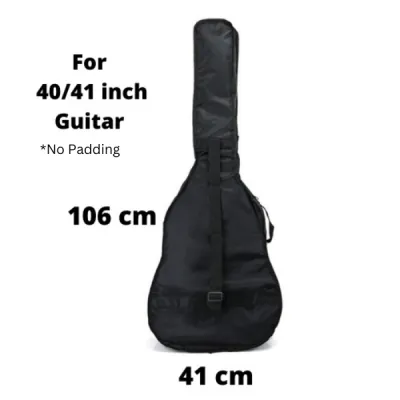
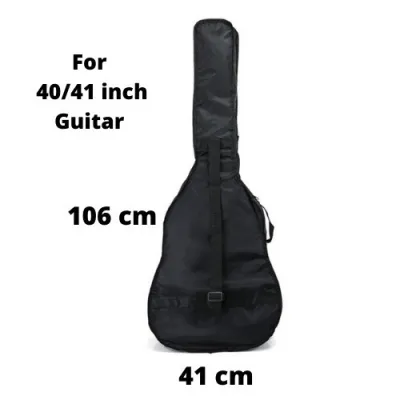
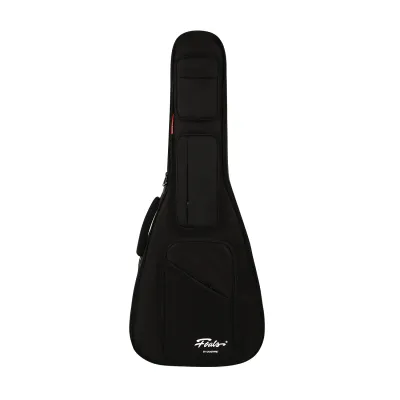
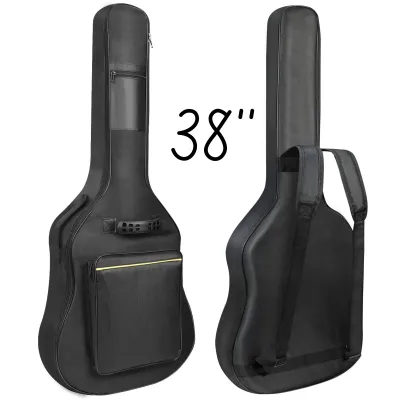


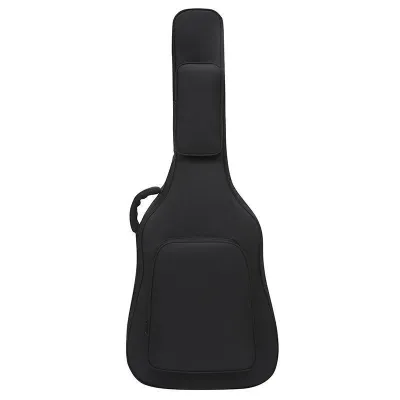
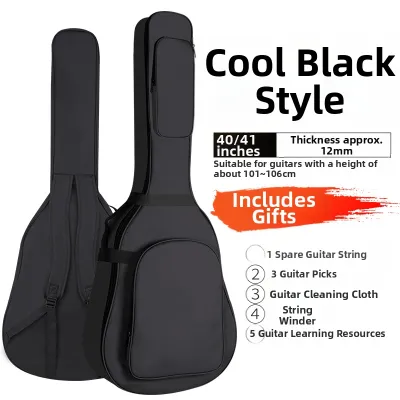
Prices are valid at publication and may change. Please refer to the product page for the latest price.
Once you have these measurements, cross-reference them directly with the internal dimensions listed on the gig bag’s specification sheet. Never rely on the external dimensions of the bag, as thick padding and structural panels can significantly reduce the actual space available inside. A proper fit should feel snug but not overly tight; you should be able to zip the bag easily without forcing the fabric or putting stress on the seams.
An ill-fitting gig bag introduces serious risks to your instrument. If the bag is too tight, the constant tension on the zippers can cause them to burst open unexpectedly, or the zipper teeth may rub against the guitar’s finish, causing permanent scratches. Conversely, if the bag is too loose, the guitar will slide around during transit. This movement can lead to neck whip, where a sudden stop or bump causes the heavy headstock to whip forward, potentially cracking or snapping the neck joint.
Padding and Protection: How Much is Enough?
When evaluating protection, it is important to distinguish between basic dust covers and structured, padded gig bags. Dust covers are typically made of thin, unpadded nylon and are designed solely to keep dust and light scratches off your guitar while it sits on a stand at home. They offer virtually zero protection against drops, bumps, or pressure. For any travel outside your home, a padded gig bag is an absolute necessity.

Padding is measured in millimeters of thickness, typically ranging from 5mm to over 30mm. However, thickness alone does not guarantee superior shock absorption; you must also consider foam density. Low-density open-cell foam is soft and compresses easily under light finger pressure, offering minimal protection against sharp impacts. High-density closed-cell foam, or multi-layer foam systems, remains firm under pressure and absorbs the energy of a drop much more effectively. When reviewing product specifications, look for bags that explicitly mention high-density or dual-layer foam construction.
A high-quality gig bag must also feature reinforced protection zones at critical vulnerability points. The most important of these is the neck support cradle, which is a padded block, often secured with a Velcro strap, that immobilizes the neck and absorbs shock during a forward fall. Additionally, look for headstock suspension systems that prevent the tuning pegs from contacting the top of the bag, and a heavy-duty rubber bumper or extra-thick foam pad at the bottom to protect the guitar’s endpin from vertical impacts.
While a premium gig bag offers excellent protection for daily commuting, there are specific scenarios where a beginner should bypass a soft bag entirely and invest in a molded hard case. If you plan to travel by air where the instrument must be checked into the cargo hold, or if you frequently transport your guitar in the back of a vehicle stacked under heavy amplifiers and PA speakers, a hard case is mandatory. Gig bags lack the structural crush resistance required to protect an instrument from heavy, sustained downward pressure.
Essential Features for Everyday Comfort and Utility
Carrying comfort is a major factor in how often you will actually take your guitar out. For most players, dual backpack-style straps are far superior to a single shoulder strap. Dual straps distribute the weight of the guitar evenly across both shoulders, reducing muscle strain and fatigue during long walks. Look for straps that are wide, heavily padded, and fully adjustable so you can position the bag high on your back, which prevents it from bouncing against your legs as you walk.
The handles on your gig bag are equally important for short-distance maneuvering. The primary side handle should be thick, padded, and securely stitched into the main frame of the bag, ideally reinforced with metal rivets or heavy-duty cross-stitching. A secondary grab handle located on the front or back of the bag is incredibly useful for holding the guitar upright while standing in crowded spaces, such as on an MRT train or a busy bus.
Exterior pockets provide essential storage for accessories like tuners, spare strings, capos, picks, and sheet music. When evaluating pocket configurations, ensure that the pockets are designed to expand outward. If a pocket is too tight, packing it with bulky items can push inward against the guitar’s wooden top, creating a pressure point that could crack the delicate wood if the bag is bumped.
Inside the main compartment, look for internal neck restraints. These are typically Velcro straps that wrap around the neck of the guitar, securing it firmly to the internal support cradle. This immobilization is crucial because it prevents the guitar from shifting laterally inside the bag, ensuring that the instrument remains centered and fully protected by the surrounding foam padding.
Materials and Weather Resistance
The exterior fabric of your gig bag determines its durability and resistance to wear and tear. Most gig bags are constructed from woven synthetic fabrics like nylon or polyester. To assess the strength of these fabrics, look for the denier rating on the specification sheet. A higher denier rating indicates thicker, stronger threads. For example, a 600D polyester bag offers decent everyday durability, while a 1200D or 1680D nylon bag provides exceptional resistance to tears, abrasions, and punctures.
Weatherproofing is another critical consideration, especially in tropical climates prone to sudden, heavy downpours. It is important to understand that water-resistant is not the same as waterproof. Most gig bags feature water-resistant exterior coatings that allow light rain to bead up and roll off, but water can still seep through the seams and zipper teeth during a heavy shower. To combat this, look for bags with water-repellent zippers, which feature rubberized seals, or those that include a dedicated, pull-out waterproof rain cover that wraps entirely around the bag.
Singapore’s high-humidity tropical climate presents unique challenges for instrument care. When you commute between air-conditioned indoor spaces and hot, humid outdoor environments, condensation can form inside the bag. If this moisture is trapped, it can lead to mold growth on the guitar’s wooden body or accelerate the rusting of your strings and frets. To prevent this, choose a gig bag with a breathable interior lining, such as soft microfiber or a moisture-wicking knit fabric, and always allow your bag to air out completely if it gets damp.
Building Your Shortlist: A Beginner's Evaluation Checklist
When shopping in a physical music store, you have the advantage of performing a hands-on inspection. Start by testing the zippers: they should glide smoothly along the tracks without catching or splitting. Look for heavy-duty, oversized zippers, as small zippers are prone to breaking under tension. Next, examine the stitching at high-stress areas, such as where the backpack straps and handles attach to the bag. Look for double-stitching or reinforced box-X stitch patterns, which indicate high-quality construction.
If you are purchasing your gig bag from an online marketplace or specialized music retailer, you must take extra precautions. Always verify the seller’s return and exchange policy before checking out. Since minor measurement discrepancies can prevent a perfect fit, you need the assurance that you can return the bag if your guitar does not fit securely. Additionally, read the product specifications carefully to confirm the internal dimensions, and look for customer feedback regarding the accuracy of those measurements.
Before making your final decision, review the manufacturer’s care and maintenance instructions. Some high-end materials require specialized cleaning products, while standard nylon and polyester bags can be easily wiped down with a damp cloth and mild soap. Ensuring that the cleaning requirements align with your lifestyle will help keep your bag looking and smelling fresh over years of use.
Ultimately, choosing the right gig bag is about balancing your budget against your specific protection needs. For a beginner, a well-fitted bag with moderate, high-density padding (around 15mm to 20mm) is far superior to an oversized, poorly fitted bag with 30mm of soft, low-density padding. By focusing on fit, foam quality, and essential comfort features, you can find a reliable gig bag that protects your investment and makes your musical journey much more enjoyable.
Frequently Asked Questions (FAQ)
Can I use a classical guitar bag for a steel-string acoustic?
No, you should avoid using a classical guitar bag for a standard steel-string acoustic guitar. Classical guitars typically have wider, flatter necks and smaller, more rounded body proportions compared to steel-string acoustics, which are generally longer, wider, and significantly deeper. Attempting to force a steel-string acoustic into a classical bag can put excessive pressure on the bridge and seams, potentially damaging both the instrument and the bag. Conversely, placing a classical guitar in a steel-string bag will leave too much empty space, allowing the instrument to slide around and risk damage. Always check the specific internal dimensions of the bag against your guitar’s measurements before purchasing.
Is a gig bag sufficient for checking a guitar on a flight?
No, a standard gig bag is not sufficient for checking a guitar into the cargo hold of an airplane. Checked luggage is subjected to heavy impacts, stacking, and extreme pressure changes, none of which a soft gig bag can withstand. If you must check your guitar, you should invest in a flight-rated hard case with a TSA-approved locking system. However, if you are traveling with a gig bag, you should check your airline’s specific cabin baggage policies beforehand. Many airlines allow passengers to bring a guitar in a gig bag on board as a carry-on item, provided it can fit safely in the overhead compartment or a designated coat closet, though this is often subject to space availability.

Community discussion
Share your experience or ask a question. Comments are reviewed before publication.