
Finding the right adjustable piano chair is essential for maintaining proper playing posture, preventing physical strain, and ensuring comfort during long practice sessions. To choose the ideal chair, you must evaluate its height adjustment range, the stability of its mechanism, the durability of its seat materials, and its overall build quality. Matching these features to your specific physical measurements and practice environment ensures a stable foundation for your musical development.
Assess Your Practice Needs and Posture Requirements
Before browsing online marketplaces or music stores, you need to establish your baseline physical requirements. The relationship between your body, the piano keys, and the floor dictates the exact specifications your chair must meet.
Start by measuring the distance from the floor to the top of your piano’s white keys. Standard piano keyboards typically sit around 72 to 75 centimeters from the floor, but variations exist depending on the instrument type, such as acoustic uprights, grands, or digital stage pianos on custom stands. Knowing this exact height helps you calculate the necessary seat height range to keep your elbows level with the keys.
Products mentioned in this guide
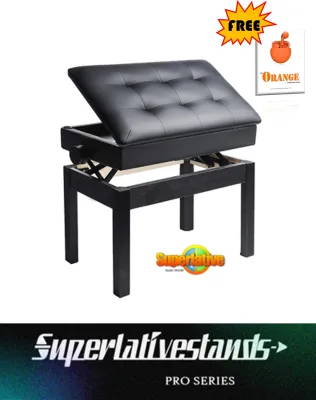
Prices are valid at publication and may change. Please refer to the product page for the latest price.
Next, consider how long you typically practice in a single session. If you are a casual player spending twenty minutes at the keys, a basic wooden bench might suffice. However, if you are preparing for exams or teaching, sessions extending past an hour require a chair with high-density padding and ergonomic support to prevent muscle fatigue and lower back strain.
Finally, evaluate the physical space surrounding your piano. In compact living spaces, such as apartments in Singapore, a bulky, non-foldable chair can obstruct walkways or crowd the room. You must determine whether you need a compact stool with a small footprint or a model that can be easily folded and stored away when not in use.
Evaluate the Adjustment Mechanism and Height Range
The core of any adjustable piano chair is its lifting mechanism. This system determines how easily you can alter the seat height and how stable the chair remains once locked into position.

Manual knob mechanisms, often found on traditional wooden duet benches, use a dual-knob scissor lift system. While highly durable and capable of fine adjustments, they require manual turning, which can be slow if multiple players of different heights share the same instrument.
Hydraulic or pneumatic pump systems offer rapid, effortless adjustments via a simple lever, similar to modern office chairs. This type is highly convenient for teaching studios or households with multiple students, though you should verify the gas lift’s quality to ensure it does not slowly sink over time.
Spindle adjustments, common on round piano stools, involve rotating the entire seat on a threaded metal rod. While simple and robust, they can sometimes develop a slight wobble as the threads wear down, which can be distracting during expressive playing.
When evaluating any mechanism, check the manufacturer’s specifications for the minimum and maximum height limits. Ensure the range accommodates the tallest and shortest players in your home, allowing everyone to achieve a position where their forearms are parallel to the floor.
Look for micro-adjustment capabilities rather than fixed preset slots. Fine-tuning the height by even a single centimeter can make a significant difference in relieving tension in your shoulders and wrists, provided the locking mechanism keeps the seat completely rigid without any lateral play.
Compare Seat Materials and Padding for Long Sessions
The comfort of your piano chair depends heavily on the quality of its padding and the material used for its upholstery. A seat that is too soft may feel comfortable initially but can cause your posture to collapse during extended practice.
High-density foam padding is crucial for maintaining proper pelvic alignment and preventing you from bottoming out against the hard wooden or metal base of the seat. Look for resilient, firm foam that regains its shape quickly when you stand up, as this indicates it will support your weight evenly over years of use.
Upholstery materials present distinct trade-offs in terms of durability, maintenance, and comfort. Genuine leather offers excellent longevity and a classic aesthetic, but it requires periodic conditioning to prevent cracking and can feel warm during long sessions.
Synthetic leather, such as polyurethane (PU) or polyvinyl chloride (PVC), provides excellent spill resistance and is easy to wipe clean with a damp cloth. However, in warm, humid climates like Singapore, lower-quality synthetic leathers are highly prone to peeling, cracking, and sticky discomfort if the room is not constantly air-conditioned.
Fabric upholstery offers superior breathability, making it a comfortable choice for humid environments. The main trade-offs are its susceptibility to staining from spills and its tendency to accumulate dust, which requires regular vacuuming to maintain a clean practice space.
Check Weight Capacity, Base Stability, and Build Quality
A piano chair must provide an absolutely stable, wobble-free foundation. Active playing styles involve significant lateral body movement, shifting weight from side to side as you reach for the upper and lower registers of the keyboard.
Always review the manufacturer’s stated weight capacity before purchasing. Selecting a chair with a generous safety margin above your actual weight ensures that the frame and adjustment mechanism are not operating under maximum stress, which extends the lifespan of the product.
Examine the design of the base and the feet. A wide, heavy base lowers the center of gravity, reducing the risk of tipping during energetic performances. Look for non-slip rubber or felt foot caps that protect delicate flooring, such as polished hardwood or vinyl, while providing excellent grip to prevent the chair from sliding backward.
Inspect the construction materials and joint designs. Solid hardwood frames or heavy-duty steel tubing offer the best resistance to structural flexing. Check for reinforced metal brackets and heavy-duty bolts at key stress points, as cheap plastic components or loose joints will eventually lead to annoying squeaks that ruin the quiet ambiance of your practice room.
Decide on Optional Features: Backrests, Armrests, and Portability
Beyond the basic seat and adjustment mechanism, several optional features can influence your comfort and the chair’s utility in your home. Deciding on these options depends on your physical needs and how you manage your living space.
A backrest can offer valuable ergonomic support, allowing you to lean back and rest your spine during pauses in your practice or while listening to a teacher’s instructions. However, during active playing, you should sit on the front half of the seat without leaning back, meaning a backrest is primarily for resting rather than active support. Ensure any backrest is positioned so it does not restrict your shoulder or elbow movement.
Armrests should generally be avoided on piano chairs. They frequently interfere with proper elbow positioning, restrict your lateral movement along the keyboard, and can bump against the piano casing, preventing you from pulling the chair close enough to the keys.
If your practice area serves multiple purposes, portability becomes a key factor. Foldable or stackable designs allow you to clear the room quickly when hosting guests. If you choose a portable model, verify that the folding joints lock securely to prevent any instability or wobbling when the chair is unfolded for play.
Pre-Purchase Verification Checklist
Before finalizing your purchase on an online marketplace or at a local music retailer, run through a final diagnostic check to ensure the chair fits your setup perfectly.
First, cross-reference the chair’s minimum and maximum height specifications with your keyboard height and your own torso length. Ensure that the midpoint of the chair’s adjustment range aligns with your ideal playing height, giving you room to adjust both upward and downward.
Second, confirm the retailer’s warranty terms and return policies, especially regarding the height adjustment mechanism. Check if the manufacturer offers replacement parts, such as replacement hydraulic cylinders or adjustment knobs, so you do not have to discard the entire chair if a single component fails.
Finally, calculate your total budget in S$, keeping in mind that the cheapest option may incur high shipping fees due to the weight of stable metal or wooden frames. Factor in any potential assembly fees if the chair arrives flat-packed, and choose a model that balances structural integrity with your financial limits.
Frequently Asked Questions (FAQ)
How do I know if my piano chair is at the correct height?
To check your height, sit on the chair with your feet flat on the floor or on a stable footrest, keeping your shoulders relaxed. Place your hands on the piano keys in a playing position; your forearms should rest parallel to the floor, and your elbows should be at the same height as, or slightly higher than, the keys. If your elbows drop below the keyboard level, you need to raise the chair to prevent wrist strain.
Can I use a regular adjustable office chair instead of a dedicated piano chair?
While an office chair is adjustable, it is generally unsuitable for serious piano practice. Office chairs often feature armrests that restrict your arm movement and prevent you from sitting close to the keyboard. Additionally, the wheels and swiveling bases of office chairs introduce unwanted movement and instability, whereas a dedicated piano chair remains completely stationary to support your core posture.
How should I maintain the adjustment mechanism to prevent squeaking?
To keep the adjustment mechanism operating quietly, periodically inspect and tighten all visible screws, bolts, and brackets. Refer to the manufacturer’s instructions to see if they recommend applying a small amount of silicone-based lubricant or machine oil to the moving metal spindles or scissor joints. Avoid using harsh chemical cleaners on these parts, as they can strip away factory lubricants and accelerate wear.
Community discussion
Share your experience or ask a question. Comments are reviewed before publication.