
Selecting the right adjustable piano stool is a critical decision for beginner pianists, yet it is often overlooked. A proper seat serves as the foundation for your playing posture, directly influencing hand positioning, arm weight, and comfort. For beginners in Singapore, where practice spaces are often compact and the tropical climate affects material durability, finding a stool that balances adjustability, stability, and robust materials is essential. By prioritizing a seat tailored to your physical dimensions, you establish healthy habits that prevent fatigue and support technical progress from your very first scale.
Why Proper Seating Matters for Beginner Pianists
Ergonomics play a defining role in musical education, particularly during the formative stages of learning. When a beginner sits at the keyboard, the relationship between seat height and the keybed determines the angle of the elbows, wrists, and hands. Ideally, your forearms should rest parallel to the floor, with elbows slightly higher than the keys and wrists remaining flexible. If the stool is too low, the player is forced to raise their shoulders and drop their wrists, creating tension that restricts finger agility and leads to rapid fatigue. Conversely, sitting too high causes the player to slouch forward, putting unnecessary strain on the lower back and neck.
Preventing physical discomfort is a matter of long-term physical health. Repetitive strain injuries, wrist tendonitis, and chronic back pain are common among musicians who practice with poor posture. For young children whose bodies are still growing, the risks of developing bad postural habits are even higher. A fixed-height bench rarely suits a child, as they will constantly need to adjust their position as they grow. Furthermore, in households where multiple family members share the same piano, a single fixed bench cannot accommodate the diverse physical needs of both a young child and an adult. An adjustable stool allows every user to quickly find their optimal ergonomic setup, ensuring that practice sessions remain productive and pain-free.
Products mentioned in this guide
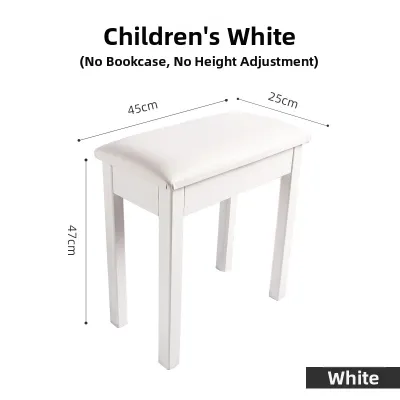
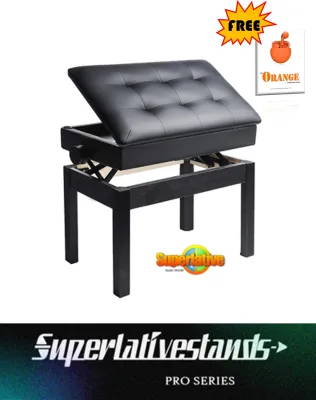
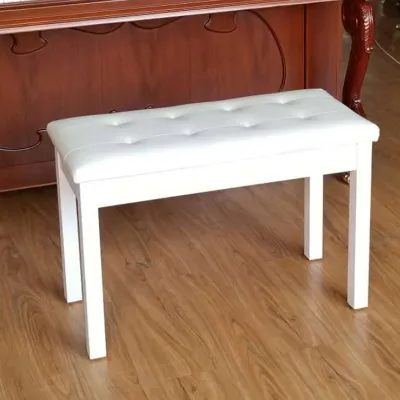
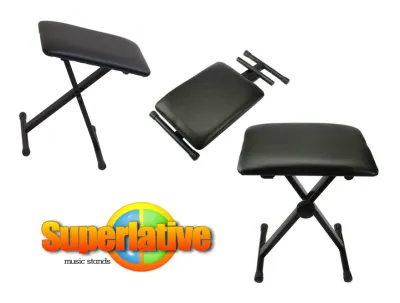
Prices are valid at publication and may change. Please refer to the product page for the latest price.
Key Features to Evaluate in Adjustable Piano Stools
When shopping for an adjustable piano stool, the quality of the seat padding and the upholstery material should be among your primary considerations. The padding must offer a balance between comfort and firm support. Extremely soft foam may feel comfortable initially, but it quickly bottoms out under your body weight, leaving you sitting on the hard wooden or metal base beneath. High-density foam, on the other hand, distributes weight evenly, retains its shape over years of use, and provides the stable foundation necessary for maintaining balance while reaching for the upper or lower registers of the keyboard.

The choice of upholstery material is particularly important in Singapore’s warm and humid environment. Genuine leather is highly durable and offers a classic aesthetic, but it requires regular conditioning to prevent drying and cracking, and it can feel warm during long practice sessions. Synthetic alternatives, such as high-grade polyurethane (PU) leather, offer excellent durability, are easy to wipe clean after a sweaty practice session, and resist moisture absorption. Fabric upholstery provides superior breathability and prevents slipping, but it is highly susceptible to trapping dust and moisture, which can lead to mold or allergen buildup in humid conditions. Beginners should weigh these material characteristics against their household environment and maintenance preferences.
Structural stability and base construction are equally vital for safety and performance. A piano stool must support not only your static weight but also the dynamic shifts in balance that occur as you lean into the keys or use the pedals. Look for stools with solid wood frames or heavy-duty steel legs that feature reinforced joints. Any wobbling or creaking during play is a sign of poor construction, which can distract you from your practice and compromise your balance. Additionally, check the manufacturer’s specified maximum weight capacity to ensure the stool is built to handle the physical demands of daily use over several years.
Finally, consider the stool’s physical footprint and portability, especially if your practice space is integrated into a multi-purpose room or a compact apartment. A traditional duet bench offers ample seating and often includes sheet music storage, but its large footprint can overwhelm a small room. A single, compact adjustable stool or a folding model is much easier to tuck away when not in use. If you plan to move the stool between rooms or take it to lessons and performances, a lightweight design with a smaller footprint will prove far more practical than a heavy, solid-wood cabinet bench.
Comparing Common Adjustment Mechanisms
The mechanism used to adjust the height of your piano stool determines how easy it is to change positions, how precisely you can fine-tune the height, and how much maintenance the stool will require over its lifespan. Different systems cater to different usage patterns, such as a single dedicated player versus a busy household with multiple students. Understanding the mechanical trade-offs of each system will help you select the most practical option for your specific setup.
Knob and Spindle Systems
The traditional knob and spindle system is a classic mechanical design found on many high-quality wooden benches and round stools. This mechanism utilizes a threaded metal rod or spindle in the center of the stool, which is raised or lowered by turning the seat itself or by rotating dual adjustment knobs located on the sides of the bench. Because it relies on simple, heavy-duty mechanical threads, this system is incredibly robust and virtually immune to the pressure leaks or mechanical failures that can plague gas-lift systems. It provides a highly stable, wobble-free seating experience that can last for decades with minimal maintenance.
However, the primary drawback of the knob and spindle system is the time and physical effort required to make significant height adjustments. If you need to raise the seat by several centimeters, you must manually turn the knobs or spin the seat dozens of times. This makes it less than ideal for shared households where a parent and child are constantly swapping places at the piano. For a single player who rarely needs to alter their seating height once the initial setup is established, the stability and longevity of a spindle system make it an outstanding investment.
Hydraulic and Pneumatic Lifts
For households where multiple pianists of varying heights share the same instrument, hydraulic or pneumatic gas-lift mechanisms offer unmatched convenience. Similar to the adjustment systems found on modern office chairs, these stools feature a lever beneath the seat that allows you to raise or lower the bench instantly. To lower the stool, you simply pull the lever while sitting on it, using your body weight to compress the gas strut. To raise it, you stand up slightly and pull the lever, allowing the pressurized gas to lift the seat to your desired height. This effortless, continuous adjustment allows users to find their perfect height in a matter of seconds.
While highly convenient, pneumatic lifts do have specific limitations. Over years of constant use, the rubber seals inside the gas cylinder can slowly degrade, leading to a gradual loss of pressure. This can cause the stool to slowly sink while you are playing, requiring eventual replacement of the gas strut. Additionally, budget-friendly pneumatic stools may exhibit a slight vertical bounce or lateral play, which can feel unsettling to some pianists who prefer a completely rigid seating surface. When choosing a hydraulic stool, it is essential to verify that the mechanism operates smoothly and locks securely into place without any noticeable slipping.
Pin and Slot or X-Style Folding Mechanisms
Pin and slot systems, most commonly found on X-style folding keyboard benches, are designed with portability and budget in mind. These stools feature metal legs that cross in an “X” shape, with a central bolt or pin that slots into pre-drilled holes to lock the bench at various heights. This design allows the stool to be folded completely flat, making it incredibly easy to store in a closet, slide under a bed, or transport in the trunk of a car for gigs and rehearsals.
The trade-off for this high level of portability is a compromise in both stability and adjustment precision. Unlike spindle or hydraulic systems, which offer continuous height adjustment down to the millimeter, X-style benches are limited to the specific intervals of the pre-drilled pin slots. This means you may not be able to achieve the absolute perfect ergonomic height for your keyboard setup. Furthermore, because the structure relies on folding joints and a single locking pin, these benches are more prone to developing lateral wobble over time as the joints wear down. They are best suited for temporary setups, digital keyboard players with limited space, or musicians who require a highly portable secondary seating option.
Pre-Purchase and Setup Checklist for Your Practice Space
Before finalizing your purchase, it is crucial to take precise measurements of your practice environment to ensure your new adjustable stool fits seamlessly. Start by measuring the height of your piano’s keyboard from the floor to the top of the white keys. Next, measure the clearance space underneath the keyboard or stand. Some digital piano stands have low-hanging crossbars, diagonal braces, or pedal units that can obstruct the legs of wider benches or prevent the stool from being pushed fully underneath the keyboard when not in use. Ensuring that the stool’s minimum and maximum height range aligns with your keyboard height is essential for achieving proper playing ergonomics.
You must also consider the type of flooring in your practice room. Heavy wooden or metal stools can easily scratch delicate hardwood, parquet, or vinyl floors if they are dragged across the room. Inspect the bottom of the stool’s legs to verify that they are equipped with non-marking rubber caps or high-density felt pads. If the stool does not come with protective feet, you should plan to purchase aftermarket felt pads or place a small, low-pile rug underneath the piano setup to protect your floors and provide additional slip resistance.
Finally, pay close attention to the retailer’s return and exchange policies. Because physical comfort and ergonomic alignment are highly subjective, a stool that looks perfect online may not feel right once you sit on it for an extended practice session. A flexible return policy allows you to assemble the stool, set it up at your piano, and test it in your actual practice environment. This hands-on trial is the only way to guarantee that the padding density, adjustment mechanism, and overall stability meet your personal comfort standards and support your learning journey.
Frequently Asked Questions (FAQ)
How do I know the correct height for my piano stool?
To find your ideal seating height, sit comfortably on the front half of the stool with your spine straight and your shoulders relaxed. Place your hands on the piano keys in a playing position. Your elbows should be slightly higher than or level with the top of the keys, allowing your forearms to rest roughly parallel to the floor. Your wrists should remain neutral, not bent excessively upward or downward. Additionally, your feet must rest flat on the floor to provide a stable anchor for your body; if your feet dangle, as is often the case with young children, you should use a dedicated footrest or pedal extender to maintain proper balance and posture.
Can a standard adjustable stool be used with digital keyboards?
Yes, standard adjustable piano stools are fully compatible with digital keyboards, provided you verify the physical clearance of your keyboard stand. Many digital pianos are mounted on X-stands, Z-stands, or proprietary wooden furniture stands. X-stands, in particular, can restrict legroom and prevent wider duet benches from sliding close enough to the keys. Before purchasing, measure the width between the stand’s legs at your desired playing height and compare it to the footprint of the stool to ensure a comfortable fit that allows you to sit close enough to the keyboard without obstruction.
What maintenance is required for hydraulic piano stools?
Hydraulic and pneumatic piano stools require minimal but regular maintenance to ensure their longevity and smooth operation. Periodically wipe down the exposed metal shaft of the gas lift with a clean, dry microfiber cloth to remove dust, pet hair, and debris, which can damage the internal rubber seals over time. Avoid using harsh chemical cleaners or heavy lubricants on the shaft unless specified by the manufacturer. Always operate the adjustment lever gently, and avoid dropping heavily onto the seat, as sudden high-impact forces can damage the pressurized cylinder. If you notice the stool slowly sinking while you play, or if oil begins to leak from the cylinder, the gas strut has likely reached the end of its lifespan and should be replaced to maintain safety and stability.
Community discussion
Share your experience or ask a question. Comments are reviewed before publication.