
Buying your first guitar is an exciting milestone, but protecting that investment is just as important as learning your first chords. A reliable guitar stand keeps your instrument off the floor, out of harm’s way, and always within arm’s reach, which naturally encourages more frequent practice. However, navigating the budget-friendly market requires a careful eye. While it is tempting to purchase the cheapest option available on an online marketplace, a poorly constructed stand can easily tip over or chemically react with your guitar’s finish, leading to expensive repairs. Choosing the right budget-friendly guitar rack stand is about finding the sweet spot between affordability and structural security, ensuring your instrument remains safe without draining your wallet.
What to Prioritize When Buying on a Budget
When shopping for an affordable guitar rack stand in Singapore, your primary goal is to allocate your budget toward non-negotiable safety features while identifying areas where you can safely compromise. The most critical, non-negotiable aspect of any stand is its structural integrity. A budget stand must have a stable base footprint that prevents tipping, secure neck support or a deep cradle, and robust locking mechanisms if it is a folding design. These features directly prevent physical damage from accidental bumps, which are common in busy households or tight bedroom setups.
Fortunately, you can easily find cost savings by compromising on secondary features that do not affect the safety of your instrument. For instance, premium branding, elaborate aesthetic finishes, and extra-thick luxury padding are areas where manufacturers charge a premium but offer little functional advantage for a beginner. A simple, utilitarian black metal stand with standard foam padding will protect your guitar just as effectively as a high-end designer stand. Similarly, features like built-in accessory hooks, integrated pick holders, or decorative wood accents are convenient but entirely optional.
Products mentioned in this guide

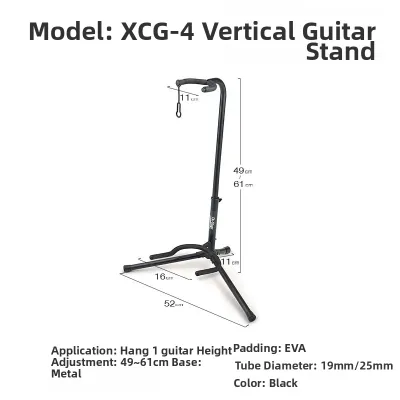
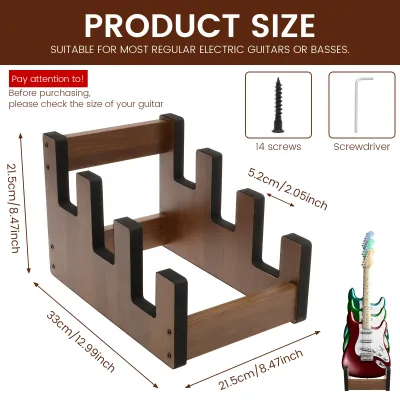

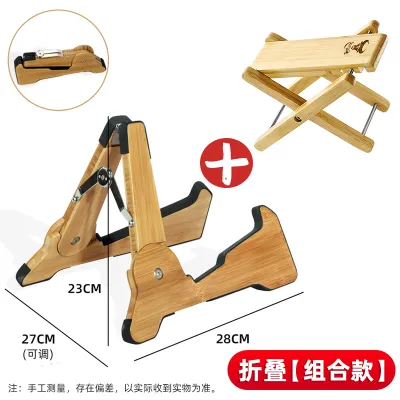


Prices are valid at publication and may change. Please refer to the product page for the latest price.
To evaluate the true value of a budget stand, focus entirely on its primary job: holding the instrument securely. When browsing options on ecommerce platforms or in local music shops, look past the marketing buzzwords and examine the physical design. A stand that prioritizes thick metal tubing, tight joints, and a low center of gravity offers far more value than one that boasts flashy colors or unnecessary accessories but uses thin, flimsy plastic connectors. By keeping your focus on stability and basic protection, you can secure a highly reliable stand for a very reasonable price.
Essential Features for Stability and Protection
To ensure your budget guitar stand performs its job safely, you must know how to inspect and verify its protective features using manufacturer specifications and visual checks. The first areas to examine are the contact points where the stand touches your guitar. Look for soft foam, rubber, or silicone padding on both the neck cradle and the lower body supports. This padding is essential for preventing scratches on the body and neck. However, you must also verify the material type; standard foam is generally safe for modern polyurethane finishes, but if your guitar has a delicate nitrocellulose lacquer, you must check the product manual to ensure the padding material will not cause a chemical reaction that melts the finish.

Next, evaluate the base design of the stand to determine its tipping resistance. A wider base footprint naturally provides a lower center of gravity and greater stability. Tripod configurations with three wide-spreading legs generally offer excellent resistance to tipping forward or backward, making them highly suitable for households with pets, children, or high foot traffic. Conversely, narrow two-legged designs or ultra-compact stands require much more careful placement because they are easily destabilized by a side impact. If you choose a folding stand, verify that the hinge mechanisms lock securely into place so the legs cannot accidentally collapse under the weight of the instrument.
Finally, always verify the weight capacity of the stand before making a purchase. This information is typically listed on the product label, packaging, or the manufacturer’s official specification sheet. Compare this limit against the actual weight of your specific guitar. For example, a lightweight acoustic guitar might only weigh around 1.5 to 2 kilograms, which almost any budget stand can easily support. However, a solid-body electric guitar or a bass can easily weigh 4 to 5 kilograms or more. Placing a heavy electric guitar on a flimsy stand rated only for light acoustic instruments can cause the metal to bend or the stand to tip, risking severe damage to your headstock or neck joint.
Types of Budget Guitar Stands and Their Trade-offs
Understanding the different types of budget-friendly stands allows you to choose a design that matches your living space and daily usage habits. The three most common entry-level designs are A-frame stands, tubular single stands, and multi-guitar racks, each offering distinct advantages and trade-offs.
A-frame stands are highly popular among beginners due to their compact size and portability. These stands feature a simple, low-profile design that folds completely flat, making them incredibly easy to store in a closet or pack into a gig bag for lessons. However, because they lack a neck support arm, they rely entirely on the lower body cradle to keep the guitar upright. This design requires careful placement; because the stand sits low to the ground and has a wider leg spread, it can easily be kicked or tripped over in a small room, which may cause the guitar to slide out of the cradle.
Tubular single stands, often referred to as tripod neck-support stands, offer a more traditional and highly stable alternative. These stands feature a three-legged base, a lower body cradle, and an extended vertical neck support arm with a safety strap or gate. While they take up slightly more floor space than an A-frame stand, they provide superior upright stability because the neck is held securely at a higher point. This design is highly recommended for beginners because the physical neck strap prevents the guitar from falling forward if the stand is accidentally bumped. The main trade-off is that they are bulkier to transport and take up more visual space in a room.
Multi-guitar racks are an exceptionally cost-effective solution if you plan to expand your collection or share space with other musicians. Instead of buying multiple individual stands, a single multi-guitar rack can hold three, five, or seven instruments side by side. This design keeps your guitars organized in a neat row, saving significant floor space. However, when buying a budget multi-guitar rack, you must carefully check the individual slot widths to ensure your acoustic guitars will fit alongside thinner electric guitars. Additionally, you must verify the total weight limit of the rack to ensure it can safely support the combined weight of all your instruments without bowing in the center.
How to Verify Compatibility and Safety Before Checkout
Before you finalize your purchase, performing a few quick compatibility and safety checks can save you from the hassle of returns or unsafe setups. First, measure your guitar’s physical dimensions, specifically the width of the lower bout and the thickness of the neck profile. Compare these measurements with the dimensions of the stand’s cradles. Some budget stands have narrow cradles designed strictly for electric guitars, which will not accommodate the deep body of an acoustic guitar. Similarly, if your guitar has an unconventional body shape, such as a V-shape or an asymmetrical design, a standard symmetrical stand may not hold it securely, and you may need to look for a self-adjusting cradle.
When purchasing online from ecommerce platforms, always factor in shipping fees and return policies. Metal guitar stands are relatively heavy and bulky items, meaning delivery costs can sometimes add a significant amount to the total price, occasionally making a “budget” option less economical than buying from a local music shop in Singapore. Furthermore, check the retailer’s return policy; if the stand arrives with loose joints or does not fit your guitar, you want to ensure you can exchange or return it without incurring high return shipping fees that eat into your budget.
Finally, plan the exact placement of your stand at home before it arrives. To keep your instrument safe, avoid placing the stand in high-traffic areas where people or pets are likely to bump into it. You should also keep the stand away from direct sunlight, air conditioning vents, and damp spots, such as near open windows during Singapore’s rainy seasons. Extreme fluctuations in temperature and humidity can warp the wood, crack the finish, and rust the metal hardware of your guitar, regardless of how expensive or secure your stand is. Placing your stand in a stable, dry, and low-traffic corner of your room is the simplest way to ensure your instrument remains in pristine condition.
Frequently Asked Questions (FAQ)
Is it safe to leave my guitar on a budget stand long-term?
Leaving your guitar on a budget stand long-term is generally safe, provided you take a few precautions regarding the padding material and the surrounding environment. The primary risk with budget stands is that the cheap foam or rubber padding can react chemically with certain guitar finishes over time. This is especially true for vintage or high-end guitars finished with nitrocellulose lacquer, which can soften, discolor, or melt when in contact with standard plastics and rubbers. If your guitar has a polyurethane finish, which is standard on most beginner instruments, this reaction is highly unlikely. Regardless of the finish, managing your room’s humidity and temperature is far more critical for long-term storage than the stand itself, as excessive moisture can cause wood warping and mold growth.
Can I use a standard guitar stand for a bass guitar?
You should not use a standard guitar stand for a bass guitar unless the manufacturer explicitly states that the stand is rated for the extra weight and length. Bass guitars are significantly heavier than standard electric or acoustic guitars, often weighing between 4 and 6 kilograms. They also feature much longer necks, which shifts the center of gravity upward. Placing a bass on a standard budget stand can cause the metal frame to bend or cause the entire setup to tip forward easily. Before placing a bass on any stand, verify the manufacturer’s weight capacity and ensure the neck cradle is tall enough to support the bass neck securely without allowing the body to slip out of the lower supports.

Community discussion
Share your experience or ask a question. Comments are reviewed before publication.