
Embarking on your personal finance journey in Singapore is one of the most empowering decisions you can make for your long-term security. However, finding the right financial literacy book requires a careful balance between universal wealth-building principles and the highly specific regulatory landscape of Singapore. While global bestsellers offer invaluable lessons on the psychology of money and the power of compound interest, they often fall short when it comes to practical execution in a local context. To build a truly effective financial foundation, you need resources that bridge the gap between broad financial theories and the unique systems you interact with daily, such as the Central Provident Fund (CPF) and local housing policies. This guide will help you navigate the essential criteria for selecting the best financial literacy books, ensuring your reading list delivers both foundational wisdom and actionable local relevance.
Why Local Context Matters for Singapore Readers
Relying solely on international personal finance literature can lead to confusion and misaligned strategies. Most global bestsellers are written from an American or British perspective, focusing heavily on financial instruments, tax laws, and retirement accounts that do not exist in Singapore. For instance, foreign chapters on 401(k) plans, Roth IRAs, or tax-loss harvesting do not apply in Singapore, and attempting to replicate them can lead to inefficient capital allocation.
The Central Provident Fund (CPF) is the cornerstone of social security and retirement planning in Singapore. Any financial strategy that ignores the CPF system is incomplete. A comprehensive local financial literacy book must explain how to optimize your Ordinary Account (OA), Special Account (SA), and Medisave Account (MA). It should guide you on how to balance using your CPF funds for housing versus leaving them to accumulate risk-free interest, a decision that significantly impacts your long-term net worth.
Products mentioned in this guide
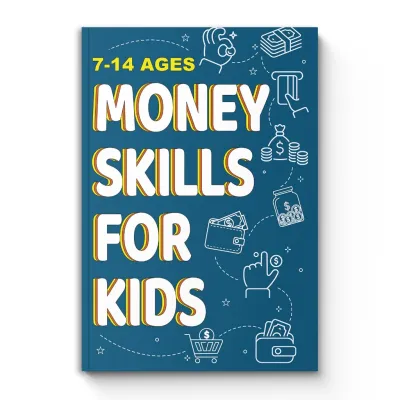
![[SG In Stock]Children Financial Literacy Book for Kids Ages 6-12|Money Skills Saving Spending & Earning Comic Learning](https://img.lazcdn.com/g/p/a8e5853a6216b5da9fa5047ec2a131da.png_400x400q80.png_.webp)
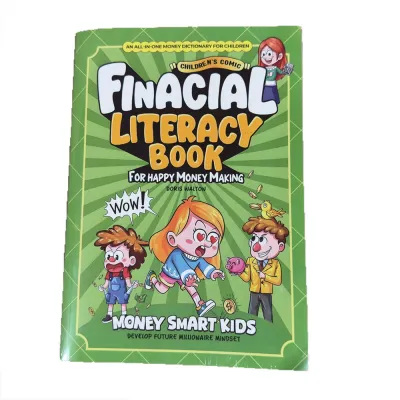
![[SG Stock]Childrens Comic Financial Literacy Book | Money Smart Kids Money Management Guide | Kids Early Financial Education Storybook Learn Saving & Smart Spending Perfect Parent-child Reading Gift](https://img.lazcdn.com/g/p/8d253e87a247687e2f3b3acca7b5d5da.png_400x400q80.png_.webp)

Prices are valid at publication and may change. Please refer to the product page for the latest price.
Furthermore, Singapore’s tax structure is vastly different from Western economies. The absence of capital gains tax and dividend tax fundamentally alters how you should approach investing. While a foreign author might advise avoiding dividend-paying stocks due to heavy tax implications, a Singapore-focused guide will often highlight local Real Estate Investment Trusts (REITs) and blue-chip dividend stocks as highly efficient vehicles for generating passive income.
Housing is another critical area where global advice fails local readers. In Singapore, purchasing a home is deeply intertwined with public policy, specifically through the Housing & Development Board (HDB). Understanding the eligibility criteria for Build-To-Order (BTO) flats, resale levies, housing grants, and the choice between an HDB concessionary loan and a bank loan requires localized knowledge that international authors simply cannot provide. Therefore, incorporating local financial literature is essential to making informed decisions about your largest lifetime purchases.
Core Topics to Look for in a Beginner Financial Literacy Book
When evaluating a financial literacy book as a beginner, you should look for a structured curriculum that covers both basic money management and local financial systems. A well-rounded book should begin with budgeting, cash flow management, and debt reduction. It should teach you how to track expenses, establish an emergency fund—typically three to six months of expenses—and eliminate high-interest debt. These foundational habits are universal, but the book should present them in a way that reflects the local cost of living in Singapore.

The next crucial pillar is CPF optimization. A beginner-friendly book should demystify the various CPF accounts and explain the retirement sums, including the Basic Retirement Sum (BRS), Full Retirement Sum (FRS), and Enhanced Retirement Sum (ERS). Look for chapters that discuss the pros and cons of transferring funds from your Ordinary Account to your Special Account to earn higher interest, or making voluntary cash contributions to top up your accounts. Understanding these mechanisms early in your career can dramatically accelerate your retirement savings.
Investing is often the most intimidating topic for beginners, so the book you choose should introduce local investment vehicles in an accessible manner. It should cover the basics of the Singapore Exchange (SGX), exchange-traded funds (ETFs) tracking the Straits Times Index (STI), and Singapore Savings Bonds (SSBs). Additionally, it should explain the role of modern digital investment platforms, such as robo-advisors, which offer low-cost entry points for retail investors. The explanation should focus on long-term, passive investing strategies rather than speculative trading.
Finally, a solid beginner book must address risk management and insurance planning. Singapore’s healthcare system relies on a co-payment model, making adequate insurance coverage vital. The book should guide you through national schemes like MediShield Life and CareShield Life, and explain how to evaluate private supplements like Integrated Shield Plans (IPs). It should help you understand the difference between term life and whole life insurance, ensuring you do not overpay for coverage you do not need.
How to Evaluate and Select the Right Book for Your Needs
With numerous personal finance books available, selecting the ones that deserve your time and attention requires a systematic evaluation. The first criterion to examine is the author’s background and expertise. Verify whether the author has a deep understanding of Singapore’s financial ecosystem. Authors who are local financial planners, consumer advocates, or established personal finance bloggers often provide the most practical, real-world advice because they actively navigate the same system you do.
The publication date is another critical factor. Singapore’s financial regulations, tax brackets, housing policies, and CPF interest rates are subject to regular updates. A book published a decade ago may contain outdated information regarding HDB grant structures, CPF contribution caps, or retirement ages. While core principles remain constant, technical details must be accurate, so look for revised editions reflecting the current economic landscape.
Readability is essential for beginners. Avoid books that rely heavily on dense academic jargon or complex mathematical formulas. The ideal book should use clear, conversational language and relatable local examples—such as planning for a wedding, saving for a first home, or managing daily food and transport costs in Singapore. Look for books that break down complex concepts into visual aids, such as charts, tables, and infographics, which can make the learning process much more engaging.
Lastly, assess the actionability of the content. A great financial literacy book does not just tell you what to do; it shows you how to do it. Look for chapters that include practical worksheets, step-by-step checklists, or links to online calculators. The book should empower you to take immediate action, whether that means setting up a new savings account, reviewing your insurance policies, or opening a brokerage account to start your investment journey.
Building Your Starter Reading List: Categories to Explore
To build a comprehensive understanding, diversify your reading list across three distinct categories to master both behavioral finance and local execution.
The first category consists of foundational mindset books. These are typically global classics that focus on behavioral finance, the psychology of saving, and the long-term power of compounding. These books are invaluable for reshaping your relationship with money, helping you overcome consumerist habits, and understanding the difference between being rich and being wealthy. Because these principles are universal, foreign authors are excellent resources for this category.
The second category focuses on Singapore-specific CPF and retirement guides. These books are highly technical but essential. They drill down into the mechanics of the CPF system, explaining how to maximize your accounts, navigate housing loans, and prepare for CPF LIFE, the national lifelong annuity scheme. Reading at least one dedicated local guide will ensure you are fully leveraging the statutory benefits available to you as a Singapore citizen or permanent resident.
The third category covers local investing primers. These texts are designed to transition you from a saver to an investor. They should introduce you to the local stock market, explain how to open a Central Depository (CDP) account versus a custodian account, and teach you how to analyze local assets like REITs. By exploring these three categories, you will develop a balanced perspective that combines a strong financial mindset with the practical tools needed to build wealth locally.
What to Check Before Purchasing a Finance Book
Before you purchase any financial literacy book, there are several practical checks you should perform to ensure you are getting the most relevant and compatible version. First, double-check the edition and publication year. As established, local financial policies change frequently. If you are buying a physical book from a local bookstore or an online marketplace, look for the most recent print run or a revised edition. This is especially important for local guides, where a difference of a few years can mean relying on outdated CPF rules or housing loan regulations.
Second, consider the format compatibility of the book. If you prefer e-books, verify that the file format is compatible with your specific e-reader or reading application. Some digital formats may not render tables, charts, or worksheets correctly on smaller screens, which can hinder your ability to use the book’s practical tools. If you prefer audiobooks, ensure that the narrator’s pace and style are suitable for learning educational content, as complex financial concepts can sometimes be difficult to absorb through audio alone.
Third, be aware of language and regional restrictions, particularly when purchasing digital versions. Some e-book platforms restrict access to certain titles based on your geographical location or the country associated with your account. Ensure your digital storefront allows full access in Singapore without requiring a foreign billing address.
Finally, review the table of contents and any available sample chapters before committing to a purchase. This allows you to confirm that the book covers the specific topics you need to learn, such as basic budgeting or local stock market investing. Checking the table of contents also helps you gauge the author’s writing style and ensure that the level of detail matches your current knowledge level, preventing you from buying a book that is either too basic or overly advanced.
Frequently Asked Questions (FAQ)
Do I need to read Singapore-specific books if I already know basic finance?
Yes, reading Singapore-specific books is highly recommended even if you understand basic financial principles. While universal concepts like compound interest, asset allocation, and budgeting apply everywhere, the actual execution of these concepts is highly dependent on local regulations. Singapore has a unique financial ecosystem dominated by the CPF system, specific public housing policies, and a distinct tax structure. A global book cannot teach you how to allocate your CPF funds for a home purchase, how to qualify for local housing grants, or how to utilize tax-efficient local investment vehicles like REITs. Local books are essential for translating general financial theory into compliant, optimized actions within Singapore.
How often should I update my financial literacy reading list?
You should review and update your financial literacy reading list every one to two years, or whenever there are major national policy shifts. While the core psychological principles of money management rarely change, the regulatory environment in Singapore is dynamic. Changes to CPF contribution rates, retirement sums, housing grant frameworks, and tax laws can render older strategies less effective. To stay updated, supplement your reading list with real-time resources, such as official government portals, licensed financial advisory publications, and reputable local personal finance platforms that publish updated guides following annual national budget announcements.
Community discussion
Share your experience or ask a question. Comments are reviewed before publication.