
Choosing your first bass guitar amplifier is just as important as selecting the instrument itself. The amplifier does not simply make your bass louder; it shapes your tone, dictates how clearly you can hear your mistakes, and determines where and when you can practice. Unlike standard electric guitars, bass guitars produce low-frequency sound waves that require significantly more power and specialized speaker designs to reproduce accurately. For a beginner, the ideal amplifier is one that delivers a clear, undistorted low-end at manageable volumes, fits comfortably within your living space, and offers practical features that make daily practice convenient and engaging.
Key Features to Look for in a Beginner Bass Amplifier
To make an informed decision, it is essential to understand the technical specifications that directly impact how your bass guitar will sound. Unlike higher-frequency instruments, reproducing deep bass notes requires a substantial amount of physical energy. This energy demand influences everything from the wattage of the amplifier to the physical size of the speaker cabinet.
Wattage and Speaker Size
Wattage in a bass amplifier represents headroom, which is the amplifier’s ability to produce clean, undistorted sound. Low frequencies require the speaker cone to move a large volume of air, which demands more electrical power. For a beginner practicing at home, an amplifier rated between 15 and 40 watts is generally sufficient.
Products mentioned in this guide
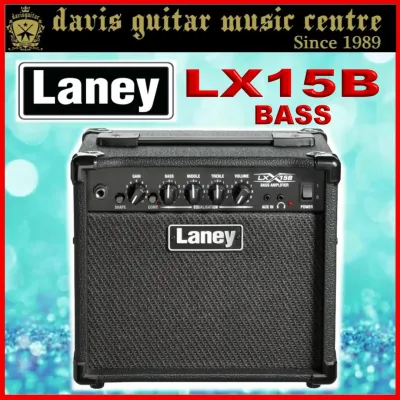
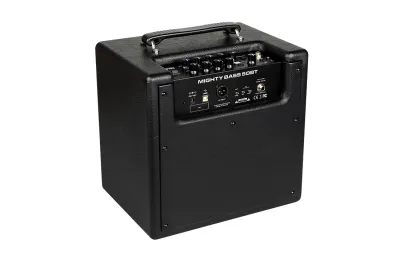
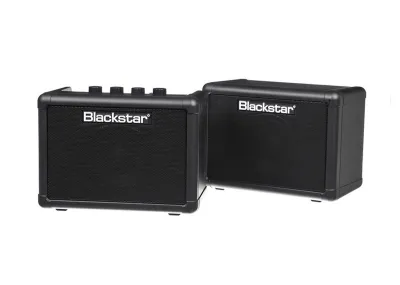
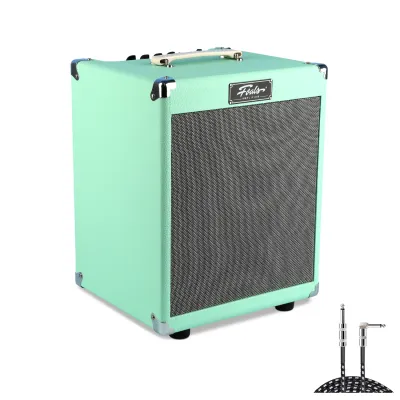
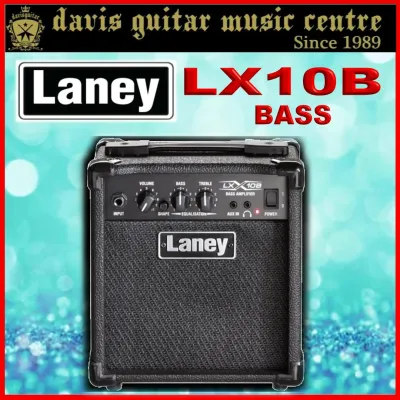
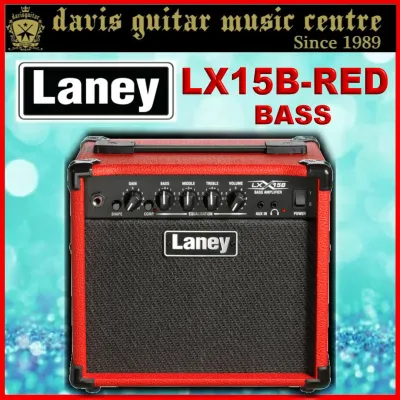
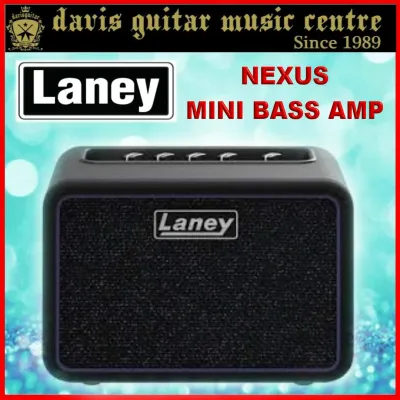
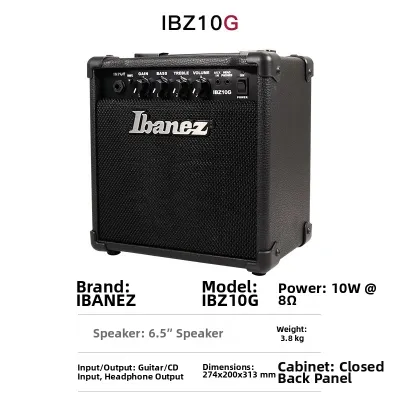
Prices are valid at publication and may change. Please refer to the product page for the latest price.
The speaker size is equally critical for clear low-end reproduction. Smaller speakers, such as those under 8 inches, often struggle to reproduce the lowest notes of a bass guitar, resulting in a thin, buzzy sound. A speaker size of 8 to 10 inches is typically the sweet spot for a beginner practice amplifier, offering a balanced combination of compact physical size and satisfying bass response.
Practice-Friendly Features
When learning the bass, certain built-in features can significantly accelerate your progress. A headphone output is perhaps the most critical feature for beginners, allowing for silent practice at any hour without disturbing others. Look for amplifiers that automatically mute the main speaker when headphones are plugged in.
An auxiliary input (often labeled as Aux In) or wireless connectivity is another invaluable tool. This feature allows you to connect a smartphone, tablet, or computer directly to the amplifier, enabling you to play along with backing tracks, metronomes, or online instructional videos. Additionally, a built-in tuner simplifies the setup process, ensuring your instrument is always in pitch before you begin playing.
Tone-Shaping Controls and Onboard Effects
Most beginner bass amplifiers feature a basic equalizer (EQ) section, typically consisting of three knobs: Bass, Middle, and Treble. These controls allow you to shape your sound by boosting or cutting specific frequency ranges. Adjusting the Bass control alters the deep warmth of your tone, the Middle control affects the clarity and definition of your notes, and the Treble control adjusts the brightness and finger-noise level.
Some modern entry-level amplifiers also include onboard effects, such as compression, overdrive, or chorus. While these effects can be highly entertaining to experiment with, they are not strictly necessary for a beginner. A simple, clean tone is actually preferable when starting out, as it allows you to hear your finger placement and articulation clearly, helping you develop proper playing technique.
Matching the Amplifier to Your Playing Context
The physical environment where you plan to play most often should dictate the size, power, and design of the amplifier you choose. An amplifier that is perfect for a quiet bedroom may be completely inadequate for a band rehearsal, while a gig-ready rig will likely be too bulky and loud for a small living space.

Home Practice and Quiet Environments
For those living in high-density housing, such as apartments or HDB flats in Singapore, managing volume and physical vibration is a primary concern. Low-frequency sounds travel easily through concrete walls and floors, meaning a large, powerful amplifier can quickly cause noise disturbances for family members and neighbors.
In these environments, a compact combo amplifier rated between 15 and 30 watts with an 8-inch speaker is highly practical. These smaller units provide a full, rich tone at low volumes without generating the intense physical vibrations that shake floors and walls.
Furthermore, the physical footprint of the amplifier is an important consideration for smaller living areas. A compact amplifier can easily sit on a shelf, under a desk, or in the corner of a room, making it easy to integrate into your home. Lightweight designs also allow you to move the amplifier easily between rooms or store it away when not in use.
Jamming with a Band or Small Gigs
If your goal is to play with other musicians, particularly an acoustic drummer, your power and speaker requirements change dramatically. Acoustic drums are naturally loud, and a bass guitar needs to compete with the physical volume of snare hits and cymbal crashes.
To be heard clearly in a band mix without pushing your equipment to its absolute limit, you will generally need an amplifier rated at 100 watts or more. Pushing a low-wattage amplifier too hard can cause the signal to clip, resulting in a harsh, distorted sound that can permanently damage the speaker cone.
In addition to higher wattage, jamming with a band requires a larger speaker configuration, such as a single 12-inch or 15-inch speaker, or a cabinet with multiple 10-inch speakers. These larger configurations move a significantly greater volume of air, allowing your bass lines to project clearly across a rehearsal room or small venue. However, keep in mind that these larger amplifiers are heavier and bulkier, so you must consider how you will transport the gear to practice sessions.
Reputable Brands and Entry-Level Series to Explore
When shopping for a beginner bass amplifier, focusing on established musical instrument brands is a reliable way to ensure build quality, safety, and consistent performance. Many heritage manufacturers offer dedicated entry-level product lines that inherit the tone-shaping technology of their professional-grade touring rigs.
Heritage Brands and Classic Tones
Several long-standing brands are famous for defining the sound of modern bass music. For example, Fender’s Rumble series is highly regarded for its lightweight design, straightforward controls, and warm, classic tones. These amplifiers are exceptionally user-friendly, making them an excellent starting point for beginners who want a traditional plug-and-play experience.
Ampeg is another legendary name in bass amplification, known for its distinct, punchy midrange and rock-ready growl. Their Rocket Bass series offers vintage styling paired with modern features like headphone outputs and auxiliary inputs, providing a classic aesthetic without sacrificing practical functionality. Similarly, Orange’s Crush Bass series is known for its robust analog circuitry and warm, responsive tone-shaping capabilities.
Modern Brands and Digital Versatility
If you prefer a highly versatile setup with a wide variety of sounds, modern brands that incorporate digital modeling technology are worth exploring. Boss, with its Katana-Bass series, offers amplifiers that allow beginners to access multiple amplifier voicings and a vast library of built-in effects via digital signal processing. This versatility is excellent for players who want to explore different musical genres without purchasing separate effects pedals.
Blackstar is another brand known for innovative, compact designs. Their Unity series and ultra-portable fly-weight amplifiers offer flexible tone-shaping options in highly compact enclosures, making them ideal for space-conscious beginners who still want a wide range of sonic options.
Local Support and Warranties in Singapore
Regardless of the brand you choose, it is highly recommended to purchase your amplifier from an authorized local dealer in Singapore. Buying locally ensures that the product is fully compliant with local electrical safety standards and comes with a valid manufacturer’s warranty.
Should your amplifier develop a technical fault or require maintenance, having access to an authorized local service center simplifies the repair process. Authorized dealers can also provide valuable advice on setup, compatibility, and troubleshooting, ensuring you get the most out of your investment.
Pre-Purchase Checklist and Compatibility Checks
Before finalizing your purchase, taking the time to perform a few essential compatibility and physical checks will prevent safety hazards and ensure your new gear works perfectly from the moment you plug it in.
Electrical Safety and Power Specifications
In Singapore, the standard mains electricity supply operates at 230 volts and a frequency of 50Hz, utilizing the three-pin Type G electrical plug. When purchasing an amplifier, especially if ordering online, you must verify that the unit is designed for this voltage standard.
Using an amplifier designed for a different voltage, such as a 120V model from North America, without a proper step-down transformer can cause catastrophic damage to the internal electronics and poses a serious fire hazard. Avoid using cheap, uncertified travel adapters for high-draw musical equipment, as they can introduce unwanted electrical hum into your signal or fail under load.
Cable Quality and Input Impedance
To connect your bass guitar to the amplifier, you will need a standard 1/4-inch (6.35mm) mono instrument cable. It is highly recommended to invest in a high-quality, shielded cable rather than the cheapest option available. Poorly shielded cables act like antennas, picking up electromagnetic interference from household appliances, Wi-Fi routers, and mobile phones, which manifests as an annoying buzz or hum through your speaker.
Additionally, ensure you understand the difference between an instrument cable and a speaker cable. Instrument cables are shielded and designed to carry low-voltage signals from your guitar to the amplifier. Speaker cables are unshielded and designed to carry high-voltage signals from an amplifier head to a speaker cabinet. Using an instrument cable in place of a speaker cable on a separate head-and-cabinet rig can cause the cable to overheat and damage your amplifier.
Physical Inspection and Testing
If you are purchasing your amplifier from a physical store, or when inspecting a home delivery, perform a thorough physical check of the unit. Ensure that all control knobs turn smoothly without any physical resistance or grinding sensations.
Plug in a bass guitar and turn the volume up slightly; rotate each knob while playing to ensure there is no static or crackling noise coming from the speaker, which can indicate dirty or faulty potentiometers. Finally, inspect the speaker grille and the cabinet corners for any signs of impact damage, and verify that both the headphone jack and the auxiliary input function correctly.
Frequently Asked Questions (FAQ)
Can I use a standard electric guitar amplifier for my bass guitar?
No, you should avoid playing a bass guitar through a standard electric guitar amplifier, especially at moderate to high volumes. Electric guitar amplifiers and their speakers are designed to handle mid-to-high frequencies and have limited physical cone movement. The deep, low-frequency signals produced by a bass guitar require the speaker cone to move back and forth significantly more. Forcing a guitar speaker to reproduce these low frequencies can easily overextend the speaker cone, tear the paper suspension, or overheat the voice coil, resulting in permanent physical damage to the speaker.
Do I need an amplifier with built-in effects as a beginner?
An amplifier with built-in effects is not necessary when you are first starting out. As a beginner, your primary focus should be on developing proper finger technique, timing, and fretboard accuracy, all of which are easiest to hear and correct when playing with a clean, undistorted tone. While effects like chorus, delay, or overdrive can be fun to experiment with later on, they can sometimes mask technical mistakes. A simple amplifier with a reliable three-band equalizer is more than sufficient for your first year of learning.
Is it better to buy a combo amplifier or a separate head and cabinet?
For almost all beginners, a combo amplifier is the superior choice. A combo amplifier houses both the preamplifier, power amplifier, and the speaker within a single wooden cabinet, making it highly portable, cost-effective, and incredibly simple to set up. Separate heads and cabinets are generally designed for professional, high-volume stage use. They require matching the electrical impedance (measured in ohms) and power handling (measured in watts) between the two units, which adds unnecessary complexity and expense for someone who is just beginning their musical journey.
Community discussion
Share your experience or ask a question. Comments are reviewed before publication.