
Passing the CFA Level 2 exam is widely considered the most significant hurdle in the Chartered Financial Analyst journey. Unlike the first level, which focuses on broad recall and foundational definitions, the second level demands a deep, practical application of complex valuation models across asset classes. For independent self-study candidates, navigating this massive volume of material without classroom instruction requires a highly structured, reliable study ecosystem.
Choosing the right third-party preparation bundle can make the difference between passing and failing. The ideal prep bundle acts as a personal tutor, translating dense academic theory into clear, actionable study segments. The best choice depends entirely on your personal learning style, professional schedule, and existing academic baseline. While some candidates thrive with highly condensed summaries, others require meticulous, step-by-step mathematical derivations or high-definition video lectures to master the concepts.
Key Criteria for Choosing a Self-Study CFA Level 2 Bundle
To select the right prep bundle for your self-study journey, you must evaluate how well a provider’s ecosystem aligns with your daily habits and the specific demands of the exam. The following four criteria serve as a framework for your decision:
Products mentioned in this guide
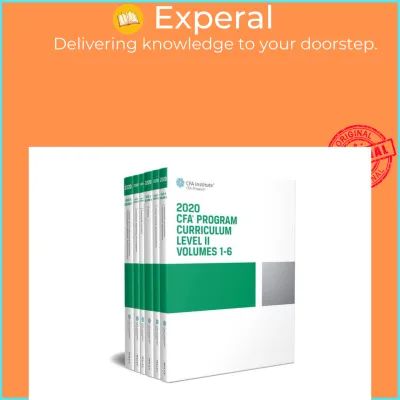
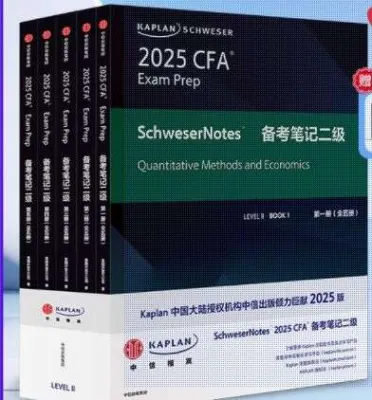
![[Kaplan] 2025 CFA Level II Schweser Notes physical book set 【 reprinted version】](https://img.lazcdn.com/g/p/7051e38b1e35646c578cd7f07aafa587.png_400x400q80.png_.webp)
Prices are valid at publication and may change. Please refer to the product page for the latest price.
Content Depth vs. Conciseness The CFA Level 2 curriculum is vast, covering complex areas such as Financial Statement Analysis, Corporate Issuers, and Derivatives. You must decide whether you learn best from highly condensed notes that summarize key formulas or from comprehensive textbooks that explain the theoretical reasoning behind every concept. If you have a strong academic background in finance, a condensed format may suffice. If you are transitioning from a non-finance background, detailed explanations are essential to prevent conceptual gaps.
Question Bank (Qbank) Quality Active learning is the cornerstone of effective self-study. A robust Qbank must do more than just provide practice questions; it must offer highly detailed answer explanations that break down why a specific option is correct and why the alternatives are incorrect. The explanations should map directly back to the CFA Institute’s Learning Outcome Statements (LOS), allowing you to quickly review weak areas without searching through entire chapters.
Mock Exam Realism The CFA Level 2 exam is unique in its use of item sets, which are mini-case studies or vignettes followed by four or six multiple-choice questions. Your prep bundle’s mock exams must accurately replicate this vignette format, simulating the exact level of reading comprehension and analytical speed required on exam day. Furthermore, mock exams should be delivered via a computer-based testing (CBT) platform that mirrors the actual testing interface to reduce anxiety during the real session.
Logistics for Singapore Candidates If you are preparing for the exam in Singapore, you must factor in specific local logistics. Most major prep bundles are priced in US Dollars (USD), meaning you must account for USD to SGD exchange rates and potential credit card foreign transaction fees. If you prefer physical books, international shipping fees can add a significant premium to the total cost. Additionally, international shipping can take several weeks and may be subject to customs delays or local Goods and Services Tax (GST) processing at the border. Ensure you order physical bundles well in advance of your planned study start date, or opt for digital-only packages to eliminate shipping lead times entirely.
Recommended CFA Level 2 Prep Bundles for Independent Learners
With these criteria in mind, three primary third-party prep providers stand out for self-study candidates. Each has developed a distinct pedagogical approach tailored to different learning preferences, time constraints, and study environments.

Kaplan Schweser: Best for Condensed Review and Time-Constrained Candidates
Kaplan Schweser is the most established name in CFA prep, known primarily for its ability to streamline the massive curriculum into manageable study blocks.
Core Components The standard Kaplan Schweser study bundle typically includes the famous SchweserNotes (a multi-volume set of condensed study guides), the SchweserPro Qbank, multiple full-length mock exams, and the quick-reference QuickSheet containing key formulas and concepts.
Self-Study Strengths The primary benefit of Schweser is its efficiency. It strips away the dense academic prose of the official curriculum, presenting formulas, concepts, and definitions in bullet points and simplified, practical examples. For working professionals in Singapore’s fast-paced financial hubs like Raffles Place or Marina Bay, finding 300 hours to study is a monumental challenge. Schweser allows you to cover the essential material quickly, leaving more time for practice questions and mock exams.
Limitations Because Schweser focuses heavily on conciseness, it occasionally glosses over complex theoretical derivations or highly specific niche topics. If you encounter a particularly challenging concept—such as binomial interest rate trees or complex currency swaps—you may find the condensed notes insufficient, requiring you to consult the official curriculum for a deeper explanation.
Pre-Purchase Check Before buying, verify that the bundle edition matches your exact exam registration year and testing window, as the CFA curriculum undergoes annual changes. Additionally, confirm whether your purchase includes access to their online student portal, as digital updates and supplemental practice questions are frequently pushed to the online platform.
Wiley: Best for Detailed Explanations and Bite-Sized Learning
Wiley takes a highly structured, thorough approach to the curriculum, making it an excellent alternative for candidates who prefer written detail over extreme summarization.
Core Components The Wiley study bundle is centered around the comprehensive Wiley Study Guides, paired with an extensive online test bank, detailed performance metrics, and realistic mock exams.
Self-Study Strengths Wiley’s standout feature is its “bite-sized” lesson design. The provider breaks down the massive curriculum into short, digestible modules that can be completed in 30 to 45 minutes. This is incredibly useful for self-study candidates who must fit their preparation into short windows, such as during a daily MRT commute or a lunch break. Furthermore, Wiley’s explanations are highly detailed, providing step-by-step mathematical breakdowns of complex valuation models, which is particularly helpful for mastering difficult sections like Financial Statement Analysis (FSA) and Fixed Income.
Limitations The sheer volume of material in the Wiley bundle can be overwhelming. If you start your study journey late or have a very limited number of weeks before the exam, navigating Wiley’s exhaustive texts can create a bottleneck, making it difficult to complete a full pass of the syllabus before starting mock exams.
Pre-Purchase Check Ensure you verify the digital platform’s device compatibility. Log into any available trial versions to check how the online test bank and study planner perform on your primary study devices, such as a tablet or laptop, to ensure a seamless digital learning experience.
Mark Meldrum (MM): Best for Deep Conceptual Understanding and Video Integration
Dr. Mark Meldrum has built a massive following among self-study candidates by offering an exceptionally detailed, video-centric learning experience that focuses on true comprehension over rote memorization.
Core Components The Mark Meldrum package consists of hundreds of hours of high-definition video lectures, detailed review videos, downloadable PDF study notes, section-level quizzes, and full-length mock exams.
Self-Study Strengths For independent learners, Mark Meldrum acts as a highly engaging virtual professor. Rather than simply reading from slides, he walks through complex calculations, vignette structures, and theoretical concepts step-by-step on an electronic whiteboard. He explains the economic intuition behind every formula, which is crucial for Level 2, where the exam questions are designed to test your ability to adapt formulas to unique scenarios. Additionally, his section-level mock exams are widely regarded as some of the most challenging and educational practice tools available.
Limitations This is a video-first ecosystem, which requires a significant amount of screen time. If you learn best by reading physical textbooks and highlighting key passages, you may find the heavy reliance on video lectures fatiguing. Additionally, watching detailed lectures and taking comprehensive notes demands a significant time commitment, which can be difficult to manage if you are on a highly compressed study schedule.
Pre-Purchase Check Because the core of this bundle is video-based, you must verify your local internet bandwidth and data limits, especially if you plan to stream lectures while commuting. Check the provider’s platform rules regarding offline video downloads and device authorization limits to ensure you can study where and when you need to.
Feature Comparison of Top CFA Level 2 Study Packages
To help you quickly contrast these options, the table below outlines the core attributes of each prep bundle based on learning style, target profile, and practice focus.
| Prep Provider | Primary Teaching Style | Ideal Candidate Profile | Qbank Focus | Mock Exam Format |
|---|---|---|---|---|
| Kaplan Schweser | Condensed Text & Summary | Time-constrained working professionals needing rapid curriculum coverage. | High volume, focused on rapid concept reinforcement. | Online CBT interface mimicking the actual exam environment. |
| Wiley | Detailed, Modular Text | Candidates who prefer comprehensive, step-by-step written explanations. | Modular practice questions tied directly to bite-sized lessons. | Comprehensive mock exams with deep analytical breakdowns. |
| Mark Meldrum | Video-Led Conceptual Lectures | Visual and auditory learners who want to understand the deep theory behind formulas. | Highly challenging questions designed to test conceptual limits. | Rigorous, high-difficulty mocks that expose subtle knowledge gaps. |
The “best” bundle is highly subjective and depends entirely on your personal learning habits. If you prefer reading concise summaries on your commute, Schweser is highly effective. If you need step-by-step written guides, Wiley is an excellent fit. If you prefer having a virtual tutor explain complex financial theory on screen, Mark Meldrum is the superior choice.
How to Integrate Third-Party Bundles with the Official CFA Curriculum
While third-party prep bundles are exceptional tools for simplifying and practicing the material, they should never be used in complete isolation. To maximize your chances of passing the CFA Level 2 exam, you must strategically integrate your chosen bundle with the official CFA Institute (CFAI) curriculum.
The Role of the Official Curriculum The official CFAI curriculum is the ultimate source of truth. The actual exam questions are written and vetted by the CFA Institute, meaning the specific terminology, notation, and definitions used on exam day will align precisely with the official text. Third-party providers sometimes use slightly different symbols or simplified definitions to make the material easier to digest. During your self-study journey, always treat the official curriculum as the final authority if you encounter any discrepancies or confusing explanations.
End-of-Chapter (EOC) Questions One of the most critical steps in your preparation is completing the official End-of-Chapter (EOC) questions provided by the CFA Institute, which are accessible through their online learning ecosystem. These questions are written by the same organization that drafts the actual exam. While third-party Qbanks are excellent for drilling formulas and testing basic comprehension, the official EOC questions are the closest representation of the actual exam’s vignette style and difficulty. You should complete these questions for every single reading, regardless of which prep bundle you use.
Active Recall and Spaced Repetition A highly effective self-study workflow involves using your prep bundle for the initial learning phase, followed by immediate active recall practice. For example, after reading a Schweser chapter or watching a Mark Meldrum video, immediately complete 10 to 15 questions from their respective Qbanks. This solidifies the information in your short-term memory. To transition this knowledge into long-term memory, use spaced repetition. Review your quick-study sheets or formula sheets weekly, and systematically re-attempt difficult Qbank questions every few weeks.
Handling Discrepancies If you notice a minor difference in a formula or a rounding convention between your prep notes and the official curriculum, do not panic. This is relatively common due to different editing cycles. Always default to the official CFA Institute material. Memorize the formula as presented in the official curriculum, and apply their rounding conventions during practice to ensure you do not lose marks on exam day due to minor technicalities.
Frequently Asked Questions (FAQ)
Do I still need the official CFA Institute curriculum alongside a prep bundle?
Yes. The official curriculum is included in your exam registration fee and is accessible digitally through the CFA Institute learning ecosystem. While a prep bundle is excellent for streamlining your study time and explaining complex concepts, you must use the official curriculum to complete the official End-of-Chapter (EOC) questions and verify precise definitions or specific Learning Outcome Statement (LOS) boundaries.
Should I choose a digital-only bundle or one with physical books?
This decision depends on your study environment and timeline. Digital-only bundles offer instant access, lower overall costs, and high portability, making them ideal for studying on a tablet during MRT commutes in Singapore. Physical books are excellent for reducing screen fatigue and allowing manual annotations, but you must factor in international shipping costs and potential customs delays. If your exam is less than four months away, a digital-only or hybrid option is highly recommended to avoid delivery bottlenecks.
Community discussion
Share your experience or ask a question. Comments are reviewed before publication.