
To choose the best czerny 849 recordings for piano practice, intermediate students should look for pedagogical albums that prioritize strict tempo consistency, dry acoustic environments, and transparent voicing over dramatic concert-style interpretations. The most effective options are publisher-backed companion audio (such as those bundled with Alfred or Peters editions) and complete etude cycles recorded by educational labels like Naxos, which present the 30 studies of The School of Velocity at moderate, achievable tempos. These recordings allow students to clearly hear every individual note, articulation, and dynamic shift, making them indispensable tools for building finger dexterity and rhythmic discipline.
The transition from beginner piano methods to intermediate classical repertoire is a defining phase in a student’s musical journey. Among the most critical milestones in this transition is Carl Czerny’s Opus 849, widely known as The School of Velocity (Etudes de Mécanisme). Consisting of 30 progressive studies, this collection is specifically designed to develop finger independence, evenness of touch, rapid passagework, and overall dexterity. However, practicing these technical exercises in isolation without a clear auditory model can easily lead to mechanical playing, uneven rhythm, and physical tension. Utilizing a high-quality reference recording of czerny 849 is one of the most effective ways to accelerate your progress, helping you internalize the correct tempo, articulation, and phrasing before your fingers even touch the keys.
Why the Right Reference Recording Accelerates Learning
For intermediate students, a reference recording serves as a vital bridge between the abstract symbols on the sheet music and the physical coordination required at the keyboard. Hearing a professional execute a rapid scale run or a crisp staccato pattern gives the brain a concrete target to emulate. It helps you understand how the music should flow, where the natural breathing points are, and how to balance the melody against the accompaniment. Without this guide, students often fall into the trap of practicing mistakes, reinforcing uneven rhythms, or misinterpreting articulation markings that are crucial to the pedagogical value of each etude.
Products mentioned in this guide
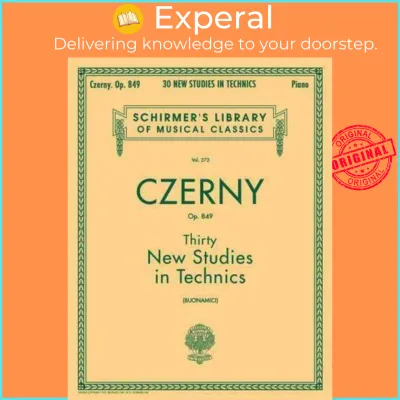
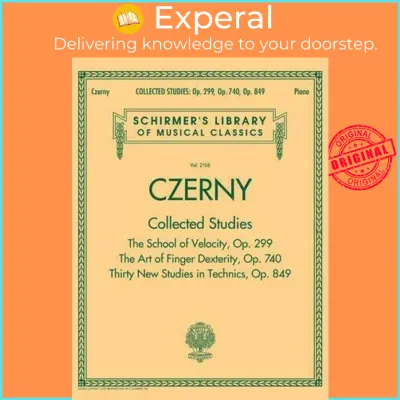
Prices are valid at publication and may change. Please refer to the product page for the latest price.
It is important to recognize, however, that not all classical recordings are created equal when it comes to active practice. A performance that is thrilling to listen to on a concert stage may actually be highly counterproductive as a learning tool. Concert recordings often feature dramatic tempo fluctuations, heavy sustaining pedal, and highly individualized interpretations that blur the technical details. For a student, the ideal recording is one that prioritizes pedagogical clarity, rhythmic stability, and transparent voicing. Choosing the right audio reference ensures that your practice sessions remain focused, efficient, and technically sound.
Furthermore, the transition from beginner-level pieces to the demanding technical requirements of Czerny Op. 849 introduces complex hand-coordination challenges. At this stage, students are expected to maintain steady left-hand accompaniment patterns while executing rapid, fluid sixteenth-note runs in the right hand, or vice versa. A reliable reference recording acts as an auditory map, demonstrating how to maintain rhythmic equilibrium between both hands. By regularly listening to a well-executed performance, students can prevent the common habit of rushing through difficult passages and dragging during simpler ones, leading to a much more polished and even performance.
What to Listen For: Evaluating Practice-Friendly Audio
When searching for a practice-friendly recording of Czerny Op. 849, you must evaluate the audio through a pedagogical lens rather than a purely aesthetic one. The primary goal of using a reference track is to demystify the technical hurdles of the sheet music, meaning that clarity and precision must take precedence over expressive liberties. A recording that is highly reverberant, overly dramatic, or played at a breakneck speed will obscure the very details you need to study.

To determine whether a specific album or track is suitable for your daily practice, you should pay close attention to several key acoustic and musical markers. These markers will help you verify if the recording will support your technical development or if it will introduce confusion and bad habits. By focusing on the structural elements of the performance, you can select an audio reference that serves as an excellent teacher in its own right.
Tempo Consistency vs. Musical Rubato
A steady, predictable pulse is the absolute foundation of successful practice when working through The School of Velocity. Czerny designed these etudes to build evenness and control across all fingers, which can only be achieved by maintaining a strict rhythmic grid. When a recording employs heavy rubato—the elastic stretching and compressing of time for emotional effect—it disrupts this grid. For an intermediate student trying to coordinate rapid finger movements, sudden tempo shifts make it incredibly difficult to map fingerings and maintain a steady internal beat.
While rubato is essential for romantic repertoire, it has a very limited place in the technical drilling of Czerny’s early-to-mid intermediate etudes. You should actively avoid recordings that feature extreme tempo fluctuations or those where the pianist rushes through demanding runs only to slow down at the cadences. Instead, look for recordings that maintain a highly consistent, metronomic underlying pulse. The performance should still sound musical and fluid, but the pulse must remain predictable enough that you could easily clap or play along with it without being caught off guard by sudden shifts.
Additionally, the absolute speed of the recording is a critical factor. Many professional concert pianists record these etudes at blistering tempos that represent the absolute limit of human velocity. While impressive, these speeds are often discouraging and practically useless for a student who is currently practicing the piece at a slow or moderate pace. Seek out recordings that are explicitly labeled with “moderate,” “practice,” or “student” tempos, or those performed by educational specialists who understand the developmental needs of intermediate players. A slower, perfectly controlled performance is infinitely more valuable than a fast, blurred one.
Clear Articulation and Voicing
In the context of Czerny Op. 849, articulation is the key to developing a refined touch. Each etude focuses on specific techniques, such as crisp staccatos, smooth and connected legatos, two-note slurs, or sharp accents. A high-quality reference recording must capture these nuances with absolute clarity. If the pianist’s staccatos sound heavy or sluggish, or if their legatos are uneven and clumpy, the recording fails to provide a proper model for your own physical execution.
Equally important is the concept of voicing, which refers to the relative volume levels of different musical lines played simultaneously. In almost every Czerny etude, there is a clear distinction between the primary melody (which requires a singing, prominent tone) and the accompanying figures (which must remain soft and supportive). A good practice recording will demonstrate excellent voicing, allowing you to hear the melody singing out clearly above the accompaniment. If the accompaniment is too loud or if the voices are blended into a flat, undifferentiated wall of sound, you will struggle to understand how to balance your own hands at the keyboard.
To ensure you can hear these details, pay close attention to the recording’s acoustic environment and microphone placement. You should avoid albums that suffer from heavy room reverberation or excessive use of the sustaining pedal, both of which muddy the fast sixteenth-note passagework. A dry, close-miked recording style is highly preferable for practice purposes, as it exposes the exact start and end of every note. This level of transparency allows you to verify your own note accuracy and touch against the recording with complete confidence.
Which Types of Czerny 849 Albums to Look For
Because specific commercial CD releases frequently go out of print, undergo regional distribution changes, or vary significantly by digital platform, it is best to search for recordings by category rather than relying on a single, static product recommendation. Understanding the different types of albums available allows you to make an informed decision based on your specific learning goals and the media formats available to you.
When browsing online music stores, streaming platforms, or physical music shops, you will generally find three primary categories of recordings that feature Czerny Op. 849. Each category has its own unique strengths and trade-offs, and many students find that combining elements from different formats yields the most comprehensive results for their daily practice routines.
Publisher-Backed Teaching Editions
One of the most reliable ways to secure high-quality, practice-oriented audio is to purchase sheet music editions that include companion recordings. Historically, these were sold as book-and-CD packages, but modern editions typically provide digital download codes or access to dedicated streaming portals. Renowned educational publishers—such as Alfred Music, G. Schirmer, Peters, or G. Henle Verlag—frequently produce these companion audios to support their pedagogical publications.
These recordings are typically performed by experienced piano pedagogues and university professors who specialize in piano education. Because the primary intent is educational, the performances are characterized by exceptional rhythmic stability, moderate and achievable tempos, and highly pronounced articulation. Some advanced publisher packages even offer separate tracks for hands-alone practice, allowing you to play the right-hand melody along with a recorded left-hand accompaniment. The main trade-off is that these recordings may lack the grand, dramatic acoustic warmth of a major-label concert album, but their didactic utility is unmatched.
Before purchasing a publisher-backed edition, always verify the exact contents of the package. Check whether the audio is included on a physical CD, via an online download code, or through a proprietary companion app. Additionally, ensure that the edition matches your regional requirements; for instance, piano students in Singapore preparing for specific examinations should verify that the edition aligns with the syllabus requirements of boards like the ABRSM or Trinity College London.
Complete Etude Cycles from Classical Labels
If you prefer high-fidelity audio and professional mastering, you should look for complete Czerny etude cycles released by established classical music labels, such as Naxos. These labels often hire highly accomplished professional pianists to record comprehensive surveys of pedagogical repertoire. These complete cycles are widely available on both physical CD formats and major digital streaming platforms, making them highly accessible.
The primary benefit of these professional releases is the exceptional quality of the instrument, the recording equipment, and the editing. You will hear a pristine, beautifully voiced grand piano played with a high level of musicality, which can serve as a wonderful source of artistic inspiration. However, because these are commercial classical releases, the tempos are often quite brisk, and the pianists may take slight interpretive liberties that can be difficult for an early intermediate student to follow.
To use these albums effectively, you must exercise discipline. Before buying or streaming a complete cycle, read the album liner notes or online reviews to check for mentions of a “pedagogical focus” or “clean, clear execution.” Look for releases where the pianist deliberately adopts a straightforward, clear approach to the music rather than a highly romanticized, virtuosic interpretation. These albums are excellent for helping you conceptualize the final, polished version of the etude you are studying.
Slow-Tempo and Play-Along Accompaniments
For students who find it challenging to transition directly from slow practice to the full tempo of a professional recording, specialized “play-along” or “slow-tempo” practice albums are an invaluable resource. These are often produced by specialized educational music companies or independent piano teachers who create multi-tempo versions of standard classical etudes.
A typical play-along album might feature three distinct tracks for each Czerny etude: a slow practice tempo, a moderate intermediate tempo, and a target performance tempo. Some of these releases utilize synthesized MIDI backings or a second piano accompaniment to help guide your rhythm. Playing along with a steady, slow-tempo track acts as an interactive metronome, forcing you to maintain rhythmic integrity while allowing you to focus on your finger placement and physical relaxation.
The primary limitation of these specialized practice tracks is that they can sometimes sound mechanical, especially if they rely on synthesized MIDI instruments rather than an acoustic grand piano. However, for the specific task of building rhythmic stability and preventing rushing, the benefits of having a reliable, slow-paced guide far outweigh any aesthetic shortcomings. They are highly recommended for students who struggle with keeping a steady beat during complex sixteenth-note passages.
Practical Ways to Use Recordings During Practice
Simply playing a reference recording in the background while you browse your phone or wash the dishes will do very little to improve your piano technique. To truly benefit from a high-quality audio reference, you must integrate it actively and systematically into your daily practice routine. This requires transitioning from passive listening to purposeful, analytical study.
By treating the recording as a dynamic learning tool rather than passive entertainment, you can dramatically accelerate your mastery of Czerny Op. 849. Consider incorporating the following step-by-step methodology into your practice sessions:
- Active Listening and Score-Following: Before you even sit down at the piano or place your hands on the keys, open your sheet music and play the reference track. Follow along with your eyes, tracking every single note. As you listen, use a pencil to mark important details in your score: highlight sudden dynamic changes, circle tricky articulation shifts (such as a sudden transition from legato to staccato), and note where the performer seems to take a breath or shift hand positions. This mental mapping prepares your brain for the physical challenges ahead.
- Shadowing and Play-Along: Once you have learned the notes at a slow pace, play the reference recording at a low volume and attempt to "shadow" the performance. You can do this by gently tapping your fingers on a flat desk or directly on the piano keys without depressing them fully. This exercise helps you internalize the physical choreography and rhythmic flow of the piece without the added stress of tone production. As you gain confidence, you can play along softly on the keyboard, using the recording as a guide to test your rhythmic alignment.
- Sectional Looping: If you are using a digital media player, computer software, or a dedicated practice app, utilize the "A-B repeat" or looping function to isolate difficult measures. Rather than playing through an entire etude from start to finish, loop a single, challenging four-measure phrase. Listen to the professional execute the passage, immediately attempt to play it yourself, and then listen to the loop again. This rapid feedback loop is incredibly effective for correcting uneven finger work and localizing technical errors.
- Recording Yourself for A/B Testing: One of the most honest mirrors in piano practice is self-recording. Use a smartphone, tablet, or portable audio recorder to capture your own playing of a specific Czerny etude. Once recorded, play your track immediately followed by the professional reference recording. Listen closely to the differences: Is your tempo as steady as the reference? Are your staccatos as crisp? Is your left hand overpowering the right-hand melody? This objective comparison will highlight the exact areas that require further refinement.
Where to Find and Verify Classical Practice Audio
In today’s diverse media landscape, piano students have access to a vast array of audio formats, ranging from traditional physical CDs to digital downloads and subscription-based streaming platforms. Each medium offers distinct advantages depending on your learning environment, budget, and personal preferences.
Physical CDs remain highly valued by serious music collectors and dedicated educators. One of the greatest benefits of purchasing a physical CD, especially a publisher-backed edition, is the inclusion of a comprehensive booklet. These booklets often contain invaluable pedagogical notes, historical context, performance suggestions, and detailed analysis of each etude written by prominent piano teachers. Furthermore, physical CDs do not require an active internet connection, making them ideal for distraction-free practice in studios or home environments where digital devices might prove to be a source of interruption.
Conversely, digital streaming platforms and high-resolution downloads offer unparalleled convenience and flexibility. Modern music applications allow you to easily create custom practice playlists, quickly skip between tracks, and utilize third-party tools to slow down the playback speed without altering the pitch of the piano. This speed-adjustment feature is particularly revolutionary for intermediate students, as it essentially transforms any standard-tempo professional recording into a customizable slow-practice track.
Regardless of the format you choose, it is vital to verify the quality, completeness, and authorized source of the audio before making a purchase. When browsing digital platforms, always listen to the provided audio samples to ensure the recording quality is clear and free of excessive background hiss or room echo. Check the tracklist carefully to confirm that the album contains all 30 etudes of Czerny Op. 849, as some budget compilations may only feature a partial selection. Additionally, be mindful of regional restrictions and device compatibility; ensure that digital downloads are in a standard, high-quality file format (such as MP3 or FLAC) that is fully compatible with your preferred media player or practice device.
For piano students in Singapore, local music schools, specialized classical music retailers, and conservatories are excellent resources for finding high-quality materials. If you are preparing for local music examinations, such as those conducted by the ABRSM or Trinity College London, it is highly recommended to consult with your piano teacher before purchasing. They can often recommend specific digital bundles, localized educational CDs, or curated playlists that directly align with the technical standards and syllabus requirements of these prestigious examination boards.
Frequently Asked Questions (FAQ)
Is it better to practice Czerny 849 with a metronome or a reference recording?
Both tools serve distinct and complementary purposes in your practice routine, and you should ideally use both. A metronome is the ultimate tool for developing raw rhythmic precision, evenness, and speed. It provides a strict, unyielding beat that forces you to identify exactly where your fingers are dragging or rushing. However, a metronome cannot teach you how to shape a musical phrase, balance the volume between your hands, or execute beautiful dynamics. A reference recording provides the essential musical context, showing you how to turn a mechanical exercise into a beautiful piece of music. Use the metronome to build your technical foundation, and use the reference recording to guide your musicality.
Do I need to buy physical CDs, or are streaming versions sufficient for practice?
For the vast majority of modern piano students, streaming versions are highly sufficient and offer incredible convenience. Popular streaming platforms allow you to access complete Czerny Op. 849 cycles instantly and integrate them with digital practice tools that can loop sections or adjust playback speeds. However, physical CDs or dedicated digital downloads remain the superior choice if you need to practice in an environment without reliable internet access, or if you wish to avoid the digital distractions of a smartphone or tablet. Additionally, physical CD releases often come with exclusive pedagogical booklets and liner notes that are not available on standard streaming platforms.
Community discussion
Share your experience or ask a question. Comments are reviewed before publication.