
Starting your electric guitar journey is an exciting milestone, but the sheer variety of accessories can quickly feel overwhelming. Among these, your choice of strings is the single most influential factor shaping how easy the instrument is to play and how it responds to your fingers. For beginners in Singapore, the ideal starting point is a set of light-gauge (typically .009–.042) nickel-plated steel strings. This configuration minimizes finger soreness while offering a balanced, bright tone suitable for various musical genres. Because Singapore’s tropical climate brings high humidity that can rapidly rust bare metal, understanding how to select, verify, and maintain your strings is essential to keeping your guitar sounding its best.
Understanding String Gauges for Playability
String gauge refers to the physical thickness of the guitar strings, measured in thousandths of an inch. When you hear guitarists talk about playing “nines” or “tens,” they are referring to the thickness of the thinnest high E string in the set—specifically, 0.009 inches or 0.010 inches. For a beginner, this number is highly important because it directly dictates how much physical tension is required to bring the string up to pitch.
Lighter string sets require significantly less tension, making them much easier to press down against the frets. When you are first starting out, your fingertips will be tender, and your hand muscles will not yet have developed the strength or endurance needed for extended practice sessions. Choosing a light gauge, such as a .009–.042 set, minimizes finger fatigue and helps prevent the painful blistering that can discourage new players from practicing consistently.
Products mentioned in this guide
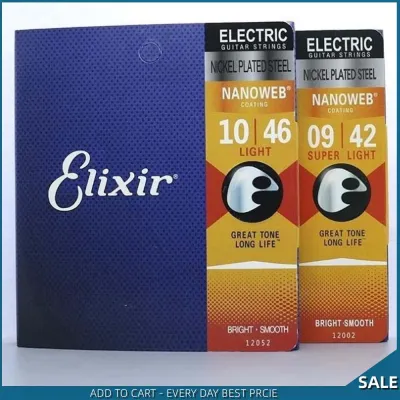
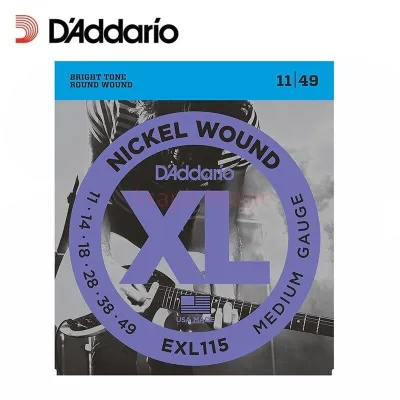
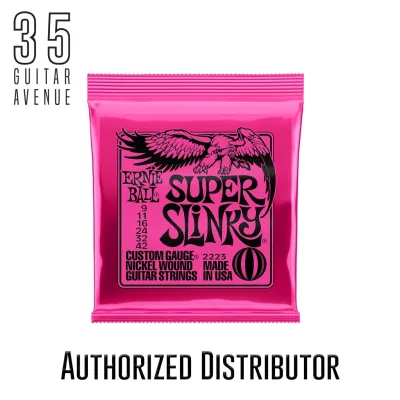

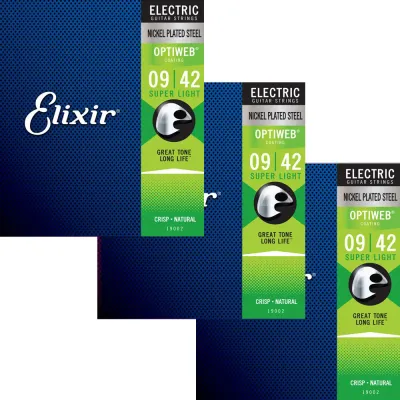


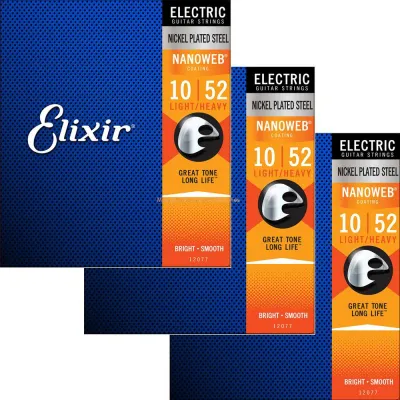
Prices are valid at publication and may change. Please refer to the product page for the latest price.
However, choosing a string gauge involves a clear trade-off between playability, tuning stability, and tone. Lighter strings are highly responsive and easy to bend, but they can feel somewhat loose or “floppy” if you have a heavy strumming hand. They are also more sensitive to fretting pressure; pressing too hard can accidentally push the notes sharp. Heavier strings, such as .010–.046 or .011–.052 sets, offer greater tuning stability and a slightly fuller, warmer acoustic resonance, but they demand much more finger strength to fret and bend.
To find the right balance, you should match the string gauge to your guitar’s scale length and your current finger strength. The scale length is the distance between the nut and the bridge of your guitar. Guitars with a longer scale length, such as 25.5 inches, naturally require higher string tension to reach standard tuning, making light .009 sets the ideal choice for beginners. Guitars with a shorter scale length, such as 24.75 inches, have lower natural tension, meaning a beginner can comfortably choose either .009 or .010 sets without experiencing excessive finger strain.
Evaluating String Materials and Coatings
The core of almost all electric guitar strings is made of high-carbon steel, but the outer winding material used on the lower, thicker strings has a profound impact on both the tone and the physical lifespan of the set. Understanding these material differences allows you to look past marketing hype and select strings that match your musical preferences and maintenance habits.

Nickel-plated steel is the most common winding material used today, offering a bright, balanced tone with a strong mid-range punch. This material provides excellent magnetic response for your guitar’s pickups, making it highly versatile for everything from clean pop melodies to heavy rock riffs. Pure nickel wraps, by contrast, deliver a much warmer, vintage-style tone with a softer high-end response. While pure nickel is excellent for classic blues and jazz, it may lack the modern brightness that many beginners prefer. Stainless steel wraps are exceptionally bright and highly resistant to corrosion, but their physical hardness can accelerate wear on your guitar’s frets over time.
For players living in Singapore, the ambient humidity is a critical factor when evaluating string materials. Standard uncoated steel strings are highly susceptible to oxidation when exposed to moisture and sweat, often turning dark, rough, and dull-sounding within just a few weeks of regular use. Coated strings address this issue by applying an ultra-thin polymer barrier over the wound strings. This micro-thin layer prevents sweat, skin oils, and humidity from settling into the gaps of the winding, significantly extending the life of the strings and maintaining their bright tone for months.
When shopping for strings, always check the manufacturer’s label on the back of the packaging to verify the exact material composition. Look for clear indications of “nickel-plated steel,” “pure nickel,” or “stainless steel,” and check whether the set features a protective coating. Avoid relying on vague promotional terms on the front of the box, and instead focus on these verifiable material specifications to make an informed decision.
Core Selection Criteria for Beginner Strings
When you are learning to play, your primary focus should be on practicing, not troubleshooting your equipment. Therefore, the strings you select must meet strict standards of reliability, durability, and value so that your practice sessions remain productive and frustration-free.
Durability and corrosion resistance are paramount, especially in Singapore’s tropical climate where relative humidity often exceeds 80 percent. If you practice in a room without constant air conditioning, standard strings will degrade rapidly. Choosing strings that offer enhanced corrosion resistance—either through advanced polymer coatings or rust-resistant treatments on the plain steel strings—ensures that your guitar remains comfortable to play and sounds fresh, even if you do not have time to change your strings every few weeks.
Manufacturing consistency is another critical criterion. High-quality strings are manufactured to incredibly tight tolerances, ensuring that the diameter of each string is perfectly uniform from end to end. This consistency is vital for proper intonation, which determines whether a note played at the twelfth fret is perfectly in tune with the open string. Poorly manufactured strings can suffer from uneven thickness, leading to frustrating tuning issues that can make your guitar sound bad even when your finger placement is correct.
Finally, consider the overall value for money rather than just the initial purchase price. While a set of coated strings might cost twice as much as a standard uncoated set, they often last three to five times longer in humid conditions. For a beginner, this represents a significant cost saving over time and spares you the hassle of performing frequent, tedious string changes when you should be focusing on mastering your first chords.
Building Your Starter String Shortlist
To avoid decision paralysis, you can use a simple, structured filtering process to build a shortlist of string sets to test on your guitar. By systematically narrowing down your options, you can find a reliable baseline set that suits your playing style and environment.
First, start with a standard light gauge, such as .009–.042, which offers the best balance of low finger tension and clear tone for most beginners. Second, select nickel-plated steel as your baseline material, as its versatile tonal profile works well across almost all musical genres. Third, decide on whether to invest in a coated set based on your environment; if you have sweaty hands or practice in a humid, non-air-conditioned room, prioritizing a coated set is highly recommended to prevent rapid rust.
Once you install your chosen set, keep a simple practice journal to document how the strings feel and sound over time. Write down the installation date, the exact gauge and material, and your initial impressions of the tension under your fingers. Note how many hours you practice each week, and keep track of when the strings begin to lose their bright, ringing sustain or start to feel rough and stiff to the touch.
This documentation will help you decide when it is time to experiment with a different setup. If you find that your fingers continue to hurt after several weeks of regular practice, or if you struggle to press the strings down cleanly, consider switching to an extra-light set (.008–.038) on your next string change. Conversely, if you find that you are constantly bending the strings out of tune when playing basic chords, or if the strings feel too loose and floppy under your pick, it is a clear sign that you should step up to a slightly heavier set, such as .010–.046.
Purchasing and Pre-Installation Checks
Before you install your new strings, performing a few quick quality and compatibility checks can save you from potential headaches and ensure that your instrument performs optimally.
Begin by inspecting the packaging of your new strings. Reputable manufacturers package their strings in airtight, moisture-barrier foil packs to protect them from oxidation during transit and storage. Ensure that this outer seal is completely intact and shows no signs of punctures or tears. Verify that the gauge labels on the individual string envelopes match the outer packaging, and look for printed batch codes or serial numbers, which are standard indicators of authentic manufacturing.
Next, verify that the strings are fully compatible with your guitar’s hardware. Most electric guitars require standard “ball-end” strings, which feature a small brass bead anchored at one end to secure the string in the bridge. However, some specific guitar models, such as certain tremolo-equipped instruments, may require specialized ends or specific string lengths. Check your guitar’s bridge type and tuning pegs to ensure a proper fit before you begin removing your old strings.
To protect yourself from counterfeit products, which are highly prevalent on generic online marketplaces and ecommerce platforms, always purchase your strings from reputable sources. Buying directly from established physical music shops in Singapore—such as those located around the Peninsula Shopping Centre or Bras Basah areas—or from authorized online specialty music retailers ensures that you receive genuine, high-quality strings that will perform reliably and last as expected.
Frequently Asked Questions (FAQ)
How often should a beginner change electric guitar strings?
Instead of relying on a strict calendar schedule, you should learn to recognize the physical and tonal signs of string degradation. Visually, inspect your strings regularly for dark spots, discoloration, or actual rust, particularly on the undersides of the strings where they make contact with the frets. If the strings feel rough, gritty, or stiff under your fingertips, they have accumulated dirt and oxidation and should be replaced immediately.
Tonally, fresh strings have a bright, ringing sustain that gradually decays as they age. When strings become packed with skin oils, sweat, and dust, they begin to sound dull, muddy, and flat, and the guitar will struggle to stay in tune. If you practice for thirty minutes to an hour every day in Singapore’s humid climate, expect to change standard uncoated strings every three to four weeks, while high-quality coated strings can easily last two to three months under the same playing conditions.
Do I need to adjust my guitar setup when changing string gauges?
Yes, changing to a different string gauge alters the physical tension exerted on your guitar’s neck, which can significantly affect the instrument’s playability. For example, moving from a light .009 set to a heavier .010 set increases the total pull on the neck by several kilograms, which can pull the neck forward and raise the action, making the strings harder to press down.
If you make a minor adjustment, such as moving up or down by a single gauge size, your guitar may require slight adjustments to the truss rod, bridge height, and intonation to maintain optimal playability. While some players eventually learn to perform these basic adjustments themselves, beginners should consider taking their instrument to a qualified guitar technician in Singapore for a professional setup. To minimize these mechanical variables and focus entirely on your playing technique, it is highly recommended to stick to one specific string gauge during your first year of learning.

Community discussion
Share your experience or ask a question. Comments are reviewed before publication.