
Starting your financial literacy journey from scratch can feel overwhelming, especially when confronted with dense economic jargon and complex mathematical formulas. The best financial literacy books for beginners are those that strip away this complexity, offering clear, actionable frameworks that require absolutely no prior knowledge of accounting or economics. Rather than focusing on speculative trading or advanced market analysis, these foundational guides prioritize behavioral changes, practical budgeting, and the mechanics of compound interest. By selecting books that match your current learning style and local financial landscape, you can build a sustainable roadmap to financial independence.
Quick Guide to Selecting Beginner Finance Books
When you are starting from absolute zero, the primary hazard is cognitive overload. A suitable beginner’s book must establish a baseline that assumes no prior familiarity with financial terms. If a book immediately dives into debt-to-equity ratios or complex derivative markets without defining basic terms, it is not designed for a beginner. Look for authors who explain concepts using everyday analogies and step-by-step instructions.
Actionable frameworks should always take precedence over abstract economic theories. While understanding macroeconomics is intellectually stimulating, it does not help you manage your monthly cash flow or negotiate a debt repayment plan. The best introductory texts focus on immediate, high-impact actions you can take today, such as setting up an automated savings transfer or categorizing your variable expenses.
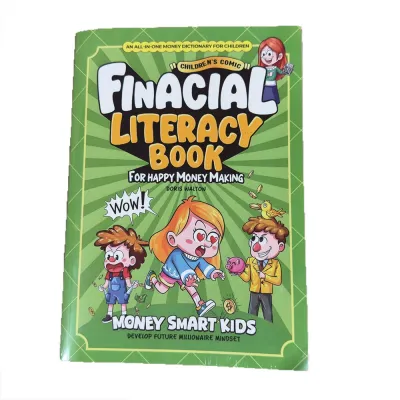
Products mentioned in this guide
![[SG Stock]Financial Literacy Book For Kids Comic Version | Develop Millionaire Mindset Children Money Education Book Learn Budgeting & Wealth Values Fun Story-Based Learning For Young Readers](https://img.lazcdn.com/g/p/8d253e87a247687e2f3b3acca7b5d5da.png_400x400q80.png_.webp)
![[READY STOCK]English Educational Book RICH DAD POOR DAD Robert Toru Kiyosaki Personal Finance Childrens Books Financial Inligence Enlightenment Book Economic Investment Enterprise Management.AutoMaxion](https://img.lazcdn.com/g/p/d86375ec25856e95b52d3add4c52cde3.jpg_webp_400x400q80.jpg_.webp)



Prices are valid at publication and may change. Please refer to the product page for the latest price.
Clarity and tone are equally critical. A dry, textbook-style manual can quickly extinguish your motivation to learn. Seek out books that utilize relatable, real-life case studies and conversational language. When an author shares stories of ordinary individuals overcoming common financial hurdles—such as managing unexpected medical bills or recovering from credit card debt—the advice becomes far more digestible and memorable.
Core Topics to Look for in Beginner Finance Books
A comprehensive introductory guide to financial literacy should cover several non-negotiable subject areas. The first of these is budgeting and cash flow management. You cannot grow your wealth if you do not know where your money is going. A foundational book must teach you how to track daily expenses, distinguish between needs and wants, and establish a realistic spending plan that does not feel overly restrictive.

Debt reduction strategies represent another critical pillar. Beginners need to understand the mechanics of interest rates, the difference between good debt and bad debt, and how credit scores are calculated. Look for books that explain structured repayment methodologies, such as the debt snowball or debt avalanche methods, which provide clear psychological or mathematical paths to becoming debt-free.
Building an emergency fund is a fundamental risk-management concept that every beginner must master. Your first finance books should emphasize the importance of setting aside a dedicated pool of liquid capital—for example, a starter fund of S$1,000 to S$5,000, eventually building up to three to six months of living expenses—to buffer against unexpected life events like job loss or medical emergencies. This section should guide you on where to keep these funds so they remain accessible yet separate from your daily spending accounts.
Finally, the book must introduce basic investing concepts without overwhelming you with technical details. It should demystify how compound interest works over time, explain the relationship between risk and return, and introduce the concept of asset allocation. Rather than teaching you how to pick individual stocks, a beginner-friendly guide should focus on broad-market index funds, exchange-traded funds (ETFs), and the importance of long-term, passive investing.
How to Evaluate a Finance Book Before You Buy
Before purchasing any personal finance book, it is essential to evaluate the author’s credentials and background. Authors generally fall into two categories: academic economists and practical wealth builders. While academics offer valuable theoretical insights, practical wealth builders or financial educators often provide more relatable, tactical advice. Look for authors who have a proven track record of teaching financial concepts to laypeople or who have successfully navigated their own financial recovery journeys.
Publication dates and edition updates are critical indicators of a book’s current utility. While fundamental behavioral principles remain constant, tax laws, investment vehicles, and regulatory frameworks change frequently. A book written two decades ago might recommend outdated savings accounts or obsolete investment platforms. Always check the copyright page to see if the book has been recently revised or updated to reflect modern market conditions.
To gauge the complexity and tone of a book, take advantage of online previews or browse a few pages in a physical bookstore. Read the introduction and the first chapter to assess the jargon density. If you find yourself constantly looking up terms or re-reading paragraphs to grasp the basic meaning, the book may be too advanced for your current stage. The writing should feel encouraging, clear, and easy to follow.
It is also important to distinguish between motivational mindset books and tactical operational guides. Mindset books focus on your psychological relationship with money, helping you overcome limiting beliefs and build confidence. Operational guides, on the other hand, provide specific spreadsheets, formulas, and step-by-step instructions. As a beginner, you will likely benefit from a balance of both, but you must identify which type of book you need most at your current stage of learning.
Checking Formats, Editions, and Local Relevance
One of the most common pitfalls for readers in Singapore is purchasing highly acclaimed personal finance books written for the American or British markets. While the psychological principles of saving and investing are universal, the structural details are highly regional. A foreign book will frequently reference retirement accounts like the 401(k) or Roth IRA, which do not exist in Singapore.
To ensure maximum practical value, verify whether the book addresses local financial frameworks. For instance, a relevant guide for a Singapore-based reader should ideally touch upon the Central Provident Fund (CPF), local housing policies such as purchasing a Housing & Development Board (HDB) flat, and local tax structures. If you are reading a global bestseller, you must complement it with local articles or supplementary guides that translate those foreign concepts into their local equivalents, such as comparing a Roth IRA to the Supplementary Retirement Scheme (SRS).
Your choice of format should align with your study habits and daily routine. Physical books are excellent for active study, allowing you to highlight key passages, write notes in the margins, and easily flip back to reference charts or tables. E-books offer convenience and portability, making it easy to carry an entire library on your daily commute via the MRT. Audiobooks are ideal for auditory learners who want to absorb financial concepts during their daily workouts or household chores, though they make it harder to study complex tables or worksheets.
Always check if the book includes or links to supplementary materials. Many modern financial authors provide downloadable worksheets, budget templates, or online calculators that help you apply the book’s concepts directly to your own life. These practical tools bridge the gap between reading theory and taking real-world action, making your learning process far more interactive and effective.
Building a Step-by-Step Financial Reading Plan
To avoid feeling overwhelmed, do not try to learn everything at once. Instead, structure your reading journey into logical phases that mirror your financial progress. Phase one should focus entirely on building a healthy money mindset and mastering basic cash flow. During this phase, read books that help you understand your spending habits, track your daily expenses, and establish a simple budgeting system.
Once you have a clear grasp of your cash flow, transition to phase two, which focuses on tactical debt clearance and automated savings. Look for books that provide concrete strategies for paying off high-interest debt and setting up automated systems to transfer a portion of your income directly into savings and emergency funds before you have a chance to spend it. This phase is about building consistency and financial security.
Phase three introduces long-term wealth building and basic investing principles. Only after you have cleared your bad debt and established a solid emergency fund should you begin reading about index funds, exchange-traded funds, and retirement planning. This step-by-step progression ensures that you build a stable foundation before taking on any investment risks.
To get the most out of your reading plan, actively apply the concepts to your personal financial tracking tools. As you finish a chapter on budgeting, immediately open a spreadsheet or a local budgeting app and input your own numbers. If a chapter discusses calculating your net worth, take an hour to list your assets and liabilities. Transforming passive reading into active implementation is the key to turning financial literacy into lifelong financial security.
Frequently Asked Questions (FAQ)
Do I need to read multiple books to understand personal finance?
You do not need to read dozens of books to gain a solid grasp of personal finance, but relying on a single text can limit your perspective. Start with one comprehensive, highly rated foundational book to build your confidence and establish a baseline vocabulary. Once you understand the core principles, you can branch out into specialized books that focus deeply on specific areas of interest, such as tax optimization, real estate, or passive index investing. Reading two or three well-chosen books will expose you to different philosophies and help you develop a balanced approach that works best for your personal goals.
Are older financial books still relevant for beginners today?
Many older financial books remain highly relevant because the fundamental psychology of human behavior, saving, and compound interest does not change over time. Classic texts often provide the best explanations of timeless principles like living below your means and avoiding lifestyle inflation. However, the specific tactical advice in older books—such as interest rates, tax laws, and recommended investment platforms—is often outdated. When reading an older classic, focus on the overarching behavioral principles and seek out modern, updated editions or local supplementary resources to guide your actual financial transactions.
Community discussion
Share your experience or ask a question. Comments are reviewed before publication.