
Starting your musical journey with the guitar is an incredibly rewarding endeavor, but it comes with immediate practical challenges. Among the very first hurdles you will face is keeping your instrument in pitch. A guitar that is even slightly out of tune will make your chords sound dissonant, which can easily lead you to believe you are making finger placement mistakes when your technique is actually correct. To prevent this frustration, finding a reliable guitar tuner is the most important step you can take as a beginner.
For the vast majority of new players in Singapore, a physical, clip-on chromatic tuner offers the ideal balance of accuracy, convenience, and affordability. It allows you to quickly align your strings to the correct pitches, ensuring that every practice session is productive and musically satisfying. By choosing a dedicated tool early on, you bypass the common pitfalls of tuning by ear or relying on inconsistent software, setting yourself up for rapid progress.
Why an Easy-to-Read Tuner is Crucial for Beginners
When you first begin learning the guitar, your brain is actively mapping the physical sensations of your fingers on the fretboard to the sounds coming from the instrument. Developing a reliable musical ear requires consistent reinforcement of correct pitches. If you practice on a guitar that is out of tune, you will inadvertently train your brain to accept incorrect intervals and dissonant notes as normal, which can severely hinder your long-term musical development.
Products mentioned in this guide
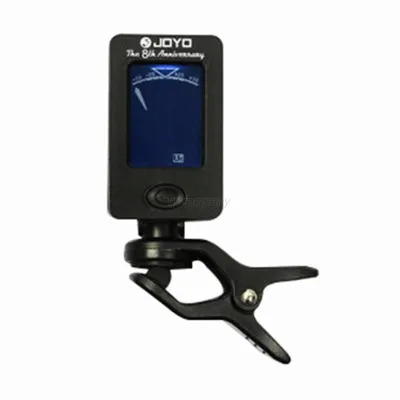
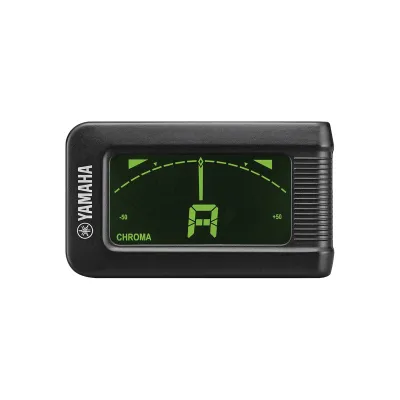
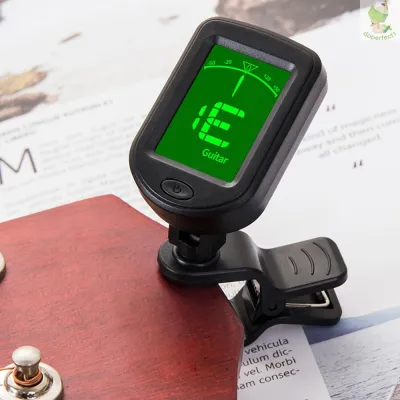





Prices are valid at publication and may change. Please refer to the product page for the latest price.
An easy-to-read display is vital because it removes the guesswork from the tuning process. As a beginner, you do not want to spend precious practice time deciphering complex frequency numbers or navigating confusing menus. You need a device that provides instantaneous, clear visual feedback so you can make quick adjustments and get straight to playing. A clear visual guide helps you understand exactly how your physical adjustments to the tuning pegs affect the pitch of the string.
Furthermore, a frustrating tuning experience is one of the most common reasons new players lose motivation. If a tuner is difficult to read, slow to respond, or highly sensitive to minor ambient sounds, a simple five-minute tuning routine can turn into an exhausting chore. A straightforward, highly visible tuner keeps the barrier to practice as low as possible, helping you maintain your enthusiasm and build a consistent daily practice habit.
Key Features to Look for in Your First Guitar Tuner
Selecting your first tuner does not require a deep understanding of audio engineering, but focusing on a few essential design elements will ensure you choose a device that serves you well for years. Prioritizing these features will help you avoid low-quality models that cause more frustration than they resolve.

- Simple Interface and Auto-Detection: Your tuner should automatically recognize which string you are plucking without requiring you to press buttons to select the string manually. This hands-free operation lets you keep both hands on the instrument.
- High-Contrast, Color-Changing Display: Look for a screen that changes color dramatically when you hit the correct pitch. Many beginner-friendly tuners use a bright red or orange background to indicate a flat or sharp note, which instantly flashes green when the string is perfectly in tune.
- Chromatic Tuning Capabilities: While standard guitar tuners only recognize the six notes of standard tuning (E, A, D, G, B, E), a chromatic tuner detects all twelve half-steps in the musical scale. This is highly recommended because it allows you to explore alternate tunings later on and helps you identify notes when a string is so far out of tune that a standard tuner cannot recognize it.
- Measurement Accuracy: Tuner accuracy is measured in "cents," which are hundredths of a semitone. For beginner purposes, a tuner with an accuracy of plus-or-minus 1 cent is excellent. Avoid ultra-cheap, unbranded options that fluctuate wildly, as they make it difficult to settle on a stable pitch.
- Build Quality and Battery Efficiency: Look for a device with a sturdy casing and, if applicable, a strong spring mechanism. An auto-power-off feature is also incredibly useful, as it automatically shuts down the device after a few minutes of inactivity to preserve battery life.
Types of Guitar Tuners: Which Format Fits Your Practice Setup?
Guitar tuners come in several distinct formats, each designed to suit different playing environments and instrument types. Understanding these categories will help you match the right tool to your specific practice space and goals.
Clip-On Tuners: The Most Convenient Choice for Acoustic and Electric Guitars
Clip-on tuners are the absolute standard for beginner guitarists due to their sheer practicality. These compact devices clip directly onto your guitar’s headstock and utilize a built-in piezoelectric sensor. Instead of listening to the acoustic sound traveling through the air, the piezo sensor detects the physical vibrations of the wood as you pluck a string.
This vibration-based technology offers a massive advantage: it is entirely unaffected by background noise. Whether you are practicing in a living room with a television playing, or tuning in a busy classroom, a clip-on tuner will isolate your guitar’s pitch perfectly. They are also incredibly compact, fitting easily into any gig bag accessory pocket, and are highly affordable, typically ranging from S$15 to S$40 in Singapore.
When choosing a clip-on model, pay close attention to the hinge design and the screen swivel capability. A dual-axis or 360-degree rotating screen allows you to angle the display so that it is directly in your line of sight, regardless of how you hold the guitar. Additionally, ensure the clip features thick, soft rubber padding to protect your guitar’s headstock finish from scratches or pressure marks.
Pedal Tuners: Best for Electric Guitarists Planning to Play Live
If you are learning on an electric guitar and have plans to play with a band, perform at local open mics, or build a physical pedalboard, a pedal tuner is an exceptional investment. Unlike clip-on models, a pedal tuner sits on the floor and connects directly to your guitar using standard quarter-inch instrument cables, placing it at the very beginning of your signal chain.
Pedal tuners are housed in rugged metal enclosures designed to withstand being stepped on repeatedly. They offer unmatched display visibility, featuring large, incredibly bright LED arrays that are easy to read on dark stages or under direct sunlight. One of their greatest practical benefits is the automatic mute function: when you step on the pedal to tune, it cuts the audio signal to your amplifier, allowing you to tune in complete silence without subjecting your audience to open-string plucking.
When evaluating pedal tuners, you will often encounter the terms “true bypass” and “buffered bypass.” A true bypass pedal completely disconnects its internal tuning circuitry from your signal chain when switched off, ensuring your guitar’s natural tone remains completely unaltered. A buffered bypass, on the other hand, actively boosts your signal to prevent high-frequency loss when using very long cables. For beginners, either option is perfectly fine, though true bypass is highly favored for simple setups. Keep in mind that pedal tuners require a dedicated 9V power adapter or a battery, making them less practical for casual acoustic players.
Smartphone Apps and Soundhole Tuners: When to Use Alternatives
While dedicated physical tuners are highly recommended, you may occasionally need to rely on alternative methods. Smartphone tuning apps are incredibly common and often free, making them highly convenient emergency backups. However, they rely entirely on your phone’s built-in microphone, which means they struggle to register pitches accurately in noisy environments and can drain your phone’s battery quickly during long sessions.
Soundhole tuners are another alternative, designed specifically for acoustic guitars. These small devices clip discreetly inside the guitar’s soundhole, keeping them hidden from view to preserve the instrument’s clean aesthetic. While they are highly accurate and convenient for acoustic players, they can be awkward to read while actively adjusting your tuning pegs because they require you to look down into the body of the guitar, which can disrupt your playing posture.
Ultimately, while apps and soundhole tuners have their place, they are best viewed as secondary tools. A dedicated clip-on or pedal tuner remains the most reliable option for consistent, daily practice.
Step-by-Step: How to Tune Your Guitar Without Breaking Strings
Tuning your guitar for the first time can feel intimidating, and many beginners worry about accidentally snapping a string. Following a systematic, careful process will help you tune safely and keep your strings intact.
- Attach and Position Your Tuner: If you are using a clip-on tuner, attach it securely to the tip of your headstock and angle the screen so you can see it clearly while sitting in your normal playing position. Turn the device on and ensure it is set to "G" (for guitar) or "C" (for chromatic) mode.
- Isolate the String: Pluck a single string cleanly with a plectrum or your thumb. Let the note ring out clearly at a moderate volume. Avoid double-plucking rapidly, as constant striking creates transient noise that confuses the tuner's sensor.
- Mute the Other Strings: Use your fretting hand or the palm of your picking hand to gently rest on the other five strings. This prevents them from vibrating sympathetically, which can cause the tuner to display fluctuating readings.
- Identify the Pitch: Look at the screen to see what note is registered. Standard guitar tuning, from the thickest string (6th) to the thinnest string (1st), is E – A – D – G – B – E.
- Adjust the Tuning Peg Slowly: Locate the specific tuning peg connected to the string you are plucking. Follow the string physically with your eyes to ensure you are turning the correct peg. Turn the peg in small, gradual increments—never make sudden, massive turns.
- Always Tune "Up" to the Pitch: If your string is flat (too low in pitch), slowly tighten the peg until the display centers and turns green. If the string is sharp (too high), do not simply loosen it to the correct note. Loosening a peg leaves mechanical slack in the tuning gear, which will cause the string to slip flat the moment you start playing. Instead, loosen the peg until the note is clearly flat, and then tune up (tighten) into the target pitch.
- Avoid the Wrong Octave: If you are tuning a string and the tension feels incredibly tight, but the tuner still says you are flat, stop immediately. You may be trying to tune to the correct letter note but an octave too high. If the string feels stiff or difficult to turn, loosen it completely and start over, or use an online reference pitch to verify that you are in the correct general frequency range.
Where to Buy and How to Maintain Your Tuner in Singapore
When you are ready to purchase your guitar tuner, visiting an established local music retailer in Singapore is highly recommended. Physical music shops—such as those located in Peninsula Plaza, Bras Basah Complex, or major shopping districts—allow you to handle the devices directly. Testing a tuner in person lets you evaluate the spring tension of a clip-on, check the brightness of the screen under store lighting, and feel the overall build quality before making a decision. Buying from an authorized local dealer also ensures you receive local warranty support, giving you peace of mind if the device encounters any hardware issues.
Once you have your tuner, proper maintenance will extend its lifespan and keep it functioning accurately:
- Remove Clip-Ons After Practice: Never leave a clip-on tuner attached to your guitar when packing it into a gig bag or hard case. The pressure from the bag can easily snap the plastic hinges or crack the screen.
- Protect Against Humidity: Singapore’s tropical climate features high relative humidity, which can accelerate the oxidation of metal battery contacts. Store your tuner in a dry drawer or inside your guitar case alongside silica gel packets to absorb excess moisture.
- Prevent Battery Corrosion: If you plan to store your tuner without using it for more than a few weeks, remove the batteries. Alkaline and lithium batteries can leak over time when left unused, causing permanent damage to the tuner's internal circuitry.
- Clean Gently: Wipe the screen and rubber pads with a dry, lint-free microfiber cloth. Avoid using harsh chemical cleaners or water, which can seep into the casing and damage the sensor.
Frequently Asked Questions (FAQ)
Do I need a chromatic tuner or a standard guitar tuner?
You should always opt for a chromatic tuner. While a standard guitar tuner only registers the six specific notes of standard tuning (E, A, D, G, B, E), a chromatic tuner detects all twelve notes of the chromatic scale. This makes it far more versatile, allowing you to easily explore alternate tunings like Drop D or half-step down tunings as you progress. It also helps you identify exactly how far off your pitch is when a string is severely detuned.
Can I just use my phone instead of buying a physical guitar tuner?
While mobile tuning apps are highly convenient as an emergency backup, they are not ideal for daily practice. Apps rely on your smartphone’s built-in microphone, which easily picks up background noises like fans, air conditioning units, or television chatter, leading to unstable readings. A physical clip-on tuner uses a piezo sensor to detect physical vibrations directly from the wood of your guitar, providing highly accurate, noise-isolated tuning in any environment.
How often should I tune my guitar?
You should tune your guitar every single time you pick it up to play. Guitar strings are highly sensitive to physical tension, active playing, and environmental factors. In Singapore’s humid climate, moving your guitar between air-conditioned rooms and warm, humid spaces causes the wood to expand and contract, which rapidly pulls the strings out of pitch. Making tuning a mandatory pre-practice habit ensures your ears are always training to hear correct intervals.
Community discussion
Share your experience or ask a question. Comments are reviewed before publication.