
Finding the right music theory book for classical music requires matching the text to your current musical literacy and long-term goals. Unlike general music theory books that often focus on modern chord charts or jazz lead sheets, classical-specific theory books emphasize traditional notation, voice leading, and structural analysis. The ideal book for a beginner should bridge the gap between abstract symbols on a page and the actual sounds of classical masterpieces. By focusing on books that use real repertoire examples and offer structured, step-by-step exercises, you can build a functional foundation that enhances both your listening and your performance.
Identifying Your Learning Goals and Musical Background
Before purchasing any music theory book, you must honestly assess your current relationship with sheet music. Some beginner books assume absolutely zero prior knowledge, starting with the names of the lines and spaces on the treble clef. Other books, even those labeled ‘for beginners,’ assume you can already read basic rhythms and navigate both treble and bass clefs comfortably. If you buy a book that is too advanced, you will quickly become frustrated by the lack of explanation for basic concepts; conversely, starting too basic can feel tedious if you already play an instrument.
Your ultimate musical goals should also dictate the type of book you choose. If your primary interest is composition or arranging, you will need a book that transitions quickly from basic scales to harmony, voice leading, and chord progressions. If you are an instrumentalist looking to improve your performance, you might prefer a book that explains how theoretical structures influence interpretation, phrasing, and dynamics. For those who simply want to appreciate classical music on a deeper level, a book focusing on structural analysis and historical forms will be far more rewarding than one filled with tedious writing exercises.
Products mentioned in this guide
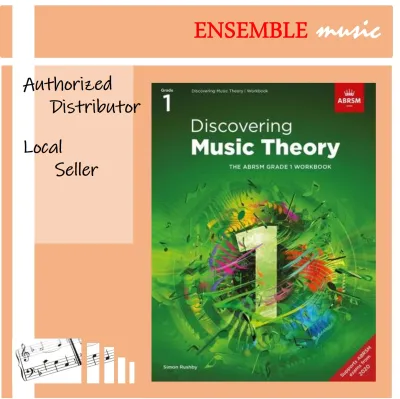
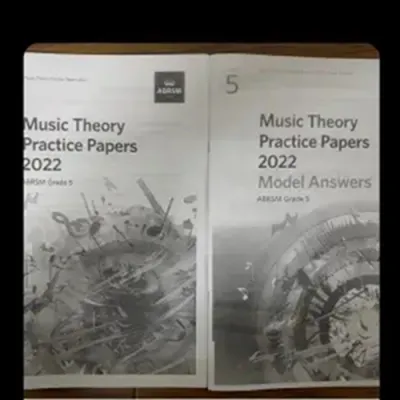
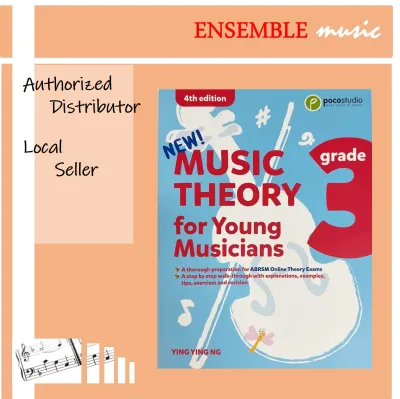
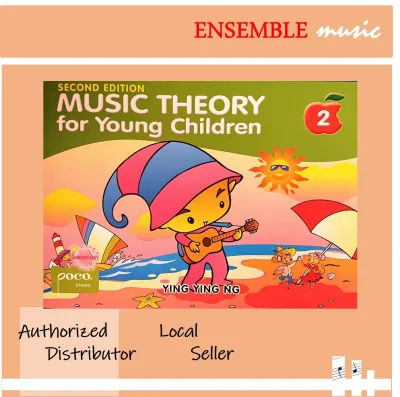
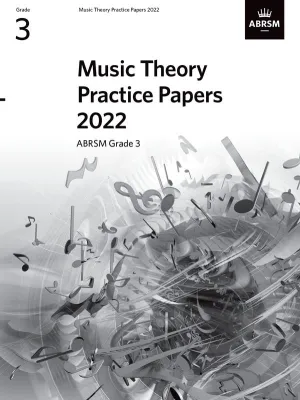
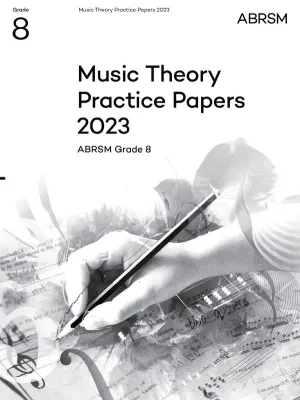
Prices are valid at publication and may change. Please refer to the product page for the latest price.
It is also crucial to distinguish between general modern music theory and classical-specific theory. Modern theory books often prioritize chord symbols, jazz scales, and pop song structures, which are highly useful but differ significantly from classical conventions. Classical theory focuses heavily on part-writing, counterpoint, and the specific rules of the common practice period (roughly 1600 to 1900). Understanding this distinction ensures you do not spend time learning jazz chord extensions when your goal is to analyze a Bach fugue or a Beethoven sonata.
Core Features of an Effective Classical Theory Book
An effective classical music theory book must ground its lessons in real-world music rather than abstract, invented exercises. Look for books that feature musical examples drawn directly from the classical repertoire, such as excerpts from Mozart, Bach, or Schubert. Seeing how a theoretical concept like a ‘perfect authentic cadence’ or a ‘passing tone’ is actually used by historical composers makes the material much easier to internalize. It also helps you develop score-reading skills that translate directly to the music you listen to or perform.

The pedagogical progression of the book should be logical, systematic, and gradual. A well-structured textbook will begin with the absolute fundamentals: pitches, clefs, accidentals, and basic rhythmic notation. From there, it should naturally progress to intervals, major and minor scales, and key signatures. Only after these building blocks are firmly established should the book introduce triads, seventh chords, and the principles of diatonic harmony and voice leading. If a book jumps too quickly from basic scales to complex four-part writing, it indicates a lack of developmental scaffolding.
Practical application is essential for retaining theoretical knowledge, which makes the inclusion of exercises a critical feature. A good theory book should function as a workbook or have a companion workbook available, allowing you to write out notes, identify intervals, and analyze short passages. Crucially, verify whether the book includes an answer key or offers one for separate purchase. For self-study, an answer key is indispensable; without it, you have no way of knowing if you are reinforcing correct habits or repeating mistakes.
Additionally, modern classical theory books often feature supplementary digital resources that can greatly enhance your learning experience. These may include companion websites with audio recordings of the musical examples, interactive ear-training drills, or downloadable worksheets. Being able to hear the examples as you read them is incredibly beneficial, especially for beginners who cannot yet hear notation in their heads. When shopping, check the book’s description to see if these digital tools are included in the purchase price or require an additional subscription.
Comparing Pedagogical Approaches to Classical Theory
Keyboard-Harmony and Practical Application
The keyboard-harmony approach is a traditional and highly effective method of learning classical music theory. This pedagogy requires you to physically play chords, progressions, and voice-leading exercises on a piano or keyboard. By translating abstract rules into physical finger patterns and immediate acoustic feedback, you develop a spatial and tactile understanding of music. It demystifies complex concepts like chord inversions and voice leading because you can physically see and feel the distances between notes on the keyboard.
To benefit from this approach, you must have regular access to a piano or a digital keyboard. You do not need to be a virtuoso pianist, but you should be willing to learn basic keyboard geography and simple fingerings. This method is particularly powerful for aspiring composers, conductors, and serious instrumentalists, as the keyboard serves as a visual map of the entire musical staff. It bridges the gap between the theoretical rules written on paper and the physical reality of sound production, making the learning process much more intuitive.
Analytical and Score-Based Study
If you do not play the piano or prefer a more conceptual approach, an analytical and score-based study method may be more suitable. This approach focuses heavily on reading full musical scores, identifying structural forms, and understanding the historical context behind theoretical rules. Instead of writing out four-part harmony exercises, you will spend your time analyzing how composers structured their pieces, used key changes for dramatic effect, and wove different melodic lines together.
This method is highly accessible for non-keyboardists, such as singers, wind players, or general classical music enthusiasts. It emphasizes the ‘why’ behind the music rather than just the ‘how to write it’ mechanics. You will learn to recognize standard classical forms like sonata-allegro, theme and variations, and rondo, which directly enhances your active listening skills. By focusing on counterpoint and historical style, this approach helps you appreciate the intellectual depth of classical compositions without requiring advanced instrumental proficiency.
Pre-Purchase Checks for Editions and Formats
Before finalizing your purchase of a music theory book, there are several practical checks you should perform to ensure you get the right edition and format. First, carefully read the publisher’s description and any available table of contents to verify the prerequisites. Some books are designed specifically for university-level music majors and assume a high level of prior musical training, while others are tailored for absolute beginners or self-taught hobbyists. Choosing a book that matches your current skill level will save you time, money, and frustration.
The physical format of the book is another critical consideration that affects usability. For music theory, physical workbooks are generally superior to standard e-books because they allow you to write directly on the musical staves. Drawing clefs, notes, and Roman numerals by hand reinforces muscle memory and cognitive retention in a way that typing cannot replicate. If you prefer a digital format, ensure you have a tablet and a stylus that allow you to write directly onto the digital pages, and check that the e-book format supports high-resolution rendering of musical scores.
You must also pay close attention to the specific edition of the book you are buying. Many popular music theory textbooks are updated regularly, and older editions may have different page numbering, altered exercises, or outdated digital access codes. If you are following a specific curriculum or studying with a teacher, verify which edition is required. Additionally, if you are purchasing a secondhand copy, be aware that any included digital access codes for online audio or companion websites may have already been redeemed or expired, which could limit your access to essential learning materials.
Finally, verify the availability of answer keys and supplementary materials before making your purchase. Some publishers restrict the sale of answer keys to registered instructors, leaving self-taught students without a reliable way to check their work. Look for books that explicitly state the answer key is included in the back of the book or is available for public purchase. If you are budgeting for your studies, factor in the cost of these companion workbooks and answer keys, which are often sold separately from the main textbook. A complete set can range from S$40 to over S$150, so verifying what is included in your purchase is essential for managing your budget.
Frequently Asked Questions (FAQ)
Do I need to know how to play the piano to study classical music theory?
While knowing how to play the piano is highly advantageous for studying classical music theory, it is not an absolute requirement. The piano keyboard is traditionally used as a visual aid because it clearly displays the linear relationship between pitches and allows you to play multiple notes simultaneously. However, if you play a melodic instrument like the violin or flute, or if you are a singer, you can still master classical theory. You can use digital tools, such as notation software or virtual keyboard apps, to hear chords and voice leading without needing physical piano skills.
Is it better to buy a comprehensive textbook or a series of smaller workbooks?
The choice between a comprehensive textbook and a series of smaller workbooks depends on your study habits and learning style. A comprehensive textbook serves as an excellent long-term reference guide, offering deep explanations, historical context, and detailed analyses of complex forms. However, these textbooks can be expensive and overwhelming for absolute beginners. A graded series of smaller workbooks offers a more structured, bite-sized approach to learning, with clear milestones and abundant practice exercises. For self-taught beginners, starting with a graded workbook series is often more manageable, while a comprehensive textbook is ideal for those seeking a deep, academic understanding.
Community discussion
Share your experience or ask a question. Comments are reviewed before publication.