
Primary 4 is a significant milestone in the Singapore primary school journey, serving as the bridge to the high-stakes Primary School Leaving Examination (PSLE) preparation cycle that begins in Primary 5. As subjects like Mathematics, Science, English, and Mother Tongue become more conceptually demanding, parents often turn to past year paper compilations to help their children build confidence and exam stamina. However, navigating the vast array of assessment books and exam bundles available in the market can be challenging. Finding the right compilation requires looking beyond flashy covers and understanding how a resource aligns with your child’s specific learning needs and the current Ministry of Education (MOE) syllabus. Rather than searching for a single, universal “best” book, the goal is to identify high-quality practice materials that offer clear explanations, accurate formatting, and targeted practice. This guide outlines the essential criteria, formats, and verification steps to help you make an informed decision for your child’s exam preparation.
Key Criteria for Evaluating P4 Past Year Paper Bundles
One of the most critical factors to evaluate when choosing a P4 past year paper bundle is the quality of the answer key. A simple list of final answers or multiple-choice options provides very little educational value for a student who has made a mistake. High-quality compilations feature comprehensive, step-by-step worked solutions that explain the underlying logic behind each answer. For Mathematics, this means showing the exact model drawing steps or heuristic methods required to solve complex word problems. For Science, the solutions should highlight key scientific terms and explain how to structure open-ended answers using the claim-evidence-reasoning framework. Having access to these detailed pathways allows parents and home tutors to pinpoint exactly where a student’s understanding broke down, turning a grading session into a constructive learning opportunity.
Beyond basic solutions, premium exam preparation bundles often include examiner’s notes, common mistake highlights, and marking rubrics. These additions are incredibly valuable for Primary 4 students, who frequently lose marks not from a lack of conceptual knowledge, but from careless errors or a misunderstanding of what the question demands. For instance, a good compilation will point out that students often forget to write down units of measurement (such as grams or centimeters) in their final Math answers, or fail to reference specific experimental variables in Science questions. By studying these examiner notes, students learn to anticipate common pitfalls and develop a more meticulous approach to reading and answering exam questions.
Products mentioned in this guide
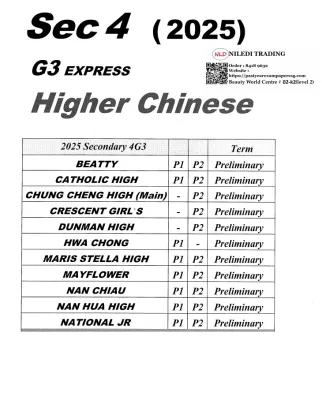
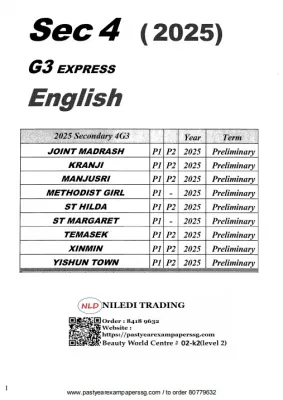
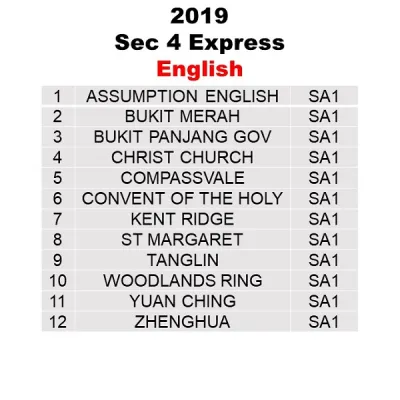
Prices are valid at publication and may change. Please refer to the product page for the latest price.
The physical layout and formatting of the practice papers also play a significant role in a student’s revision experience. Primary 4 students are still developing their spatial organization and handwriting neatness under timed conditions. Compilations that cram multiple questions onto a single page with tiny fonts and minimal blank space can cause unnecessary visual fatigue and frustration. When evaluating a bundle, look for books that replicate the actual exam format, featuring clear, readable typography and generous margins. Adequate working space is particularly crucial for Mathematics and Science papers, where students need room to sketch diagrams, write out equations, and draft structured explanations without their work becoming illegible.
Finally, consider whether the compilation organizes questions topically or presents them as full, timed mock papers. Topical categorization is highly beneficial during the earlier semesters of the school year, as it allows students to focus on mastering individual units—such as decimals, fractions, or the life cycles of plants—immediately after they are taught in class. On the other hand, full mock exam papers are essential for the final weeks leading up to the school’s year-end assessments. These full sets help students build the mental endurance required to sit for a complete paper and teach them how to manage their time effectively across different sections. A balanced preparation strategy often involves starting with topical bundles and transitioning to full mock papers as the exam period approaches.
Comparing Common Compilation Formats and Publisher Styles
When browsing educational bookstores in Singapore, you will generally encounter two main types of past year paper compilations: school-specific exam papers and publisher-curated practice bundles. School-specific compilations consist of actual past exam papers sourced from various primary schools across the country. These papers are highly sought after because they expose students to a wide variety of testing styles, question difficulties, and school-specific academic cultures. Practicing with papers from different schools helps students adapt to unfamiliar phrasing and prepares them for the unexpected challenges they might face in their own school’s assessments.

However, school-specific compilations come with distinct limitations that parents must consider. Because these papers are compiled from external sources, the quality of the answer keys can vary significantly. Some bundles only provide basic answer sheets without any worked solutions, while others may contain handwritten answers that are difficult to read or contain unverified errors. Furthermore, the difficulty level of papers from highly competitive schools can sometimes be disproportionately high, which might discourage a student who is still working on mastering foundational concepts.
In contrast, publisher-curated bundles are written and structured by professional educational writers, curriculum specialists, or former teachers. These books are designed to simulate the standard exam experience while maintaining a consistent level of quality and formatting throughout. The primary advantage of publisher-curated materials is the reliability of their content. The questions are carefully proofread, the diagrams are clearly drawn, and the answer keys are exceptionally detailed, often featuring multiple methods of solving a single problem. This makes them an excellent choice for structured, independent study at home.
The choice between topical practice books and full-year mock sets should be guided by your child’s current academic standing and the time of year. Topical practice books act as excellent diagnostic tools throughout the terms. If a school diagnostic test reveals that a student is struggling with a specific concept, such as area and perimeter, a topical book allows for immediate, concentrated practice to correct those specific gaps. Conversely, full-year mock sets are designed to replicate the exact conditions of the school hall. They force students to switch rapidly between different topics, testing their retrieval memory and helping them practice pacing so they do not spend too much time on a single difficult question.
In recent years, publishers have increasingly integrated digital resources into their physical paper bundles. Some modern compilations feature QR codes printed next to challenging questions, which students or parents can scan to access video tutorials, step-by-step explanations, or additional online quizzes. Other bundles include access codes to online learning portals that offer automated grading for multiple-choice sections and track the student’s performance over time. While these digital features add interactive value and can make revision more engaging, they should complement rather than replace the physical writing practice that is essential for paper-based school exams.
How to Verify Syllabus Alignment and Edition Accuracy
Ensuring that your P4 past year paper compilations align perfectly with the current Ministry of Education (MOE) syllabus is paramount. The primary school curriculum in Singapore is dynamic, with periodic updates designed to refine learning outcomes and introduce modern pedagogical approaches. If you accidentally purchase a compilation based on an outdated syllabus, your child may waste valuable time practicing topics that have been removed, or worse, miss out on new question formats that are now actively tested. For example, changes in the Science syllabus often shift the focus away from simple recall toward practical application and experimental design, making older papers less relevant.
To verify syllabus alignment, start by examining the book’s cover and copyright page. Reputable publishers will clearly print labels such as “Aligned with the Latest MOE Syllabus” or indicate the specific year the curriculum framework was implemented. Do not rely solely on the publication year printed on the cover, as some older books are simply reprinted with new cover designs without any updates to the internal content. Instead, open the book and check the copyright page for the edition number and the actual year of revision. Cross-referencing the table of contents with your child’s school textbooks or the official MOE syllabus guidelines online is a reliable way to confirm that the topics match.
Another effective verification method is to look closely at the style of the questions, particularly in Mathematics and Science. In P4 Mathematics, ensure that the problem sums reflect current heuristic modeling expectations and do not include obsolete mathematical terms or overly complex calculations that are no longer part of the primary curriculum. In Science, check that the open-ended questions require students to explain phenomena using scientific concepts rather than just stating facts. If a compilation features a high volume of simple, one-word-answer recall questions, it is likely based on an older curriculum model and will not adequately prepare your child for the analytical demands of modern school exams.
Parents should also be highly cautious of unbranded, photocopied, or unofficial past year paper compilations. These materials are frequently sold through informal channels or unauthorized online listings. While they may appear to be a cost-effective option, they often carry significant risks. Unofficial compilations are notorious for containing low-quality scans where diagrams, graphs, and tables are blurry or completely illegible—a major issue for Science and Math papers where visual data is critical. Furthermore, these bootleg copies rarely undergo professional proofreading, leading to frequent typographical errors, missing pages, and incorrect answer keys that can severely confuse and frustrate a student during their revision.
Purchasing Channels and Pre-Checkout Verification
To guarantee that you are purchasing genuine, high-quality, and syllabus-compliant P4 past year paper compilations, it is best to source them through established local bookstores and authorized educational distributors in Singapore. Physical retail bookstores allow you to flip through the pages to personally inspect the print quality, layout, and answer keys before making a purchase. If you prefer the convenience of online shopping, look for the official e-stores of well-known educational publishers or reputable local book retailers. Purchasing from these authorized channels ensures that you receive complete, professionally printed books and protects you from counterfeit materials.
Before finalizing your purchase, whether at a physical cashier or an online checkout cart, take a moment to perform a thorough verification of the items. It is surprisingly easy to accidentally select the wrong book, especially since publishers often use highly similar cover designs and color schemes across different subjects and primary levels. Double-check that the subject listed on the cover matches your child’s needs—whether it is Mathematics, Science, English, or Mother Tongue. Confirm that the level is explicitly marked as “Primary 4” or “P4” rather than Primary 3 or Primary 5. Finally, verify the publication or edition year to ensure you are getting the most up-to-date version available.
Be particularly wary of unauthorized third-party sellers operating on general online marketplaces or social media platforms. These sellers often list digital PDF downloads or poorly bound photocopies of past year papers at suspiciously low prices. Purchasing these materials not only violates copyright laws but also deprives you of the essential physical format that students need to practice realistic exam writing. Furthermore, these digital files are often incomplete, missing crucial answer booklets, or containing outdated editions that do not align with the current school curriculum. Investing in genuine, physical compilations from authorized sources is always the safest and most effective choice for your child’s education.
Frequently Asked Questions (FAQ)
Are school-specific past year papers better than general publisher compilations?
Whether school-specific papers are better depends entirely on your child’s current academic proficiency and learning goals. School-specific papers are highly beneficial for students who have already mastered the foundational concepts of the P4 syllabus and need exposure to a wider variety of challenging, non-routine questions. These papers help build critical thinking skills and prepare students for the rigorous standards of top-performing schools. However, for students who are still struggling with core concepts or who experience exam anxiety, these papers can be overwhelming and counterproductive. For these students, publisher-curated compilations are generally a better choice. They offer a more structured, progressive learning path with consistent formatting and highly detailed, step-by-step worked solutions that make independent home revision much more manageable and less stressful.
How many past year papers should a P4 student complete before the final exam?
When planning an exam preparation schedule for a Primary 4 student, it is vital to prioritize quality of practice over sheer quantity. There is no single, universally recommended number of papers to complete, as every student’s learning pace and stamina are different. A highly effective approach is to have your child complete between 3 to 5 full papers under realistic, timed exam conditions in the weeks leading up to the assessment. This helps them get used to the pacing and builds the physical endurance needed for the actual exam. More importantly, the focus must be on the thorough review of mistakes. Spending time analyzing why an answer was incorrect, correcting the underlying conceptual misunderstanding, and re-attempting the question a few days later is infinitely more valuable than rushing through dozens of papers without addressing recurring errors.
Community discussion
Share your experience or ask a question. Comments are reviewed before publication.