
Choosing a silent guitar in Singapore requires balancing space-saving design, quiet practice capabilities, and reliable local support. For beginners living in high-density housing, these instruments offer a practical way to build skills without disturbing neighbors. The ideal brand should provide a stable frame, intuitive onboard electronics, and comfortable playability right out of the box.
Evaluating a silent guitar involves looking closely at how the instrument is constructed and how its electronic components translate string vibrations into a high-quality headphone signal. Because a silent guitar lacks a traditional hollow body, you rely entirely on its internal preamp to produce a satisfying tone. Selecting a reputable brand ensures that these electronic components are durable enough to withstand Singapore’s humid climate while delivering a consistent learning experience.
Why a Silent Guitar Might Be Your Best First Instrument
Living in a high-density urban environment like Singapore often means sharing walls with neighbors in HDB flats or condominiums. Traditional acoustic guitars, while beautiful, can easily project sound through concrete walls and open windows, leading to potential noise complaints. A silent guitar solves this issue by stripping away the resonant acoustic body, leaving only a skeletal frame that produces minimal ambient sound when unplugged.
Products mentioned in this guide
![Yamaha SLG200N Classical Electric Silent Guitar Nylon Strings SRT Pickup Preamp Detachable [LIMITED STOCK]](https://img.lazcdn.com/g/p/3606f5fed2fac16ee11268e41dad2991.jpg_400x400q80.jpg_.webp)

![Donner HUSH-I PRO Acoustic Electric Travel Guitar Silent Package Steel Strings HUSH I [LIMITED STOCK]](https://img.lazcdn.com/g/p/8526e64bdb4c61a0cf82a7038c9706fb.jpg_400x400q80.jpg_.webp)
![Donner HUSH-C Acoustic Electric Travel Guitar Silent Package Nylon Strings HUSH C [LIMITED STOCK]](https://img.lazcdn.com/g/p/dcbad7af14928ba95ca9b041c54fb660.png_400x400q80.png_.webp)

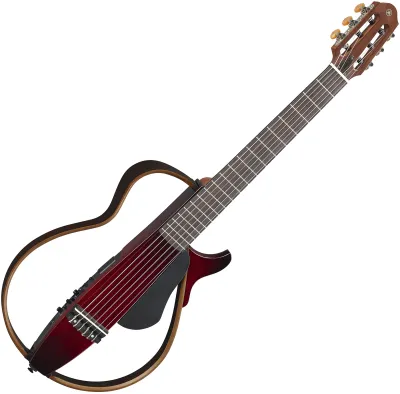
![Yamaha SLG200S SLG200N Acoustic Classical Electric Silent Guitar SRT Pickup Preamp Steel Nylon Strings Detachable [Limited Stock]](https://img.lazcdn.com/g/p/167de1488e90f7c0001010cb42793134.jpg_400x400q80.jpg_.webp)

Prices are valid at publication and may change. Please refer to the product page for the latest price.
This near-silent operation allows you to practice at any hour of the day or night without hesitation. Beginners often feel self-conscious when first learning chords, strumming patterns, or fingerpicking techniques. Wearing headphones plugs you directly into your own sound, creating a private learning space where you can make mistakes, repeat difficult passages, and build confidence without anyone else listening.
Portability is another significant advantage for modern players. Without a bulky wooden body, silent guitars are exceptionally lightweight and often feature detachable or folding frame sections. This compact footprint makes them easy to store in small bedrooms, pack into a gig bag for public transport commutes on the MRT, or take along for weekend staycations and travel.
Core Features to Evaluate in Beginner-Friendly Brands
When comparing different brands, the neck profile and scale length should be your first considerations. A beginner-friendly neck should feel comfortable in your hand, typically featuring a modern profile that does not require excessive hand strength to fret notes cleanly. Ensure the scale length matches standard acoustic or electric guitars so that the muscle memory you develop transfers seamlessly to traditional instruments later on.

Onboard electronics form the heart of any silent guitar. Look for brands that integrate high-quality preamps with straightforward equalization controls, such as dedicated bass and treble knobs. A built-in tuner is highly convenient for beginners, saving you from fumbling with external clip-on devices. The headphone output must deliver a clean, hiss-free signal, ideally with an auxiliary input so you can play along with backing tracks from your phone.
Power versatility prevents unexpected interruptions to your practice sessions. Reliable brands usually offer dual power options, allowing the guitar to run on standard batteries or an external AC power adapter. Look for models that feature a clear low-battery indicator light, giving you ample warning before the sound begins to distort or cut out completely.
Physical durability is especially critical for instruments with modular designs. Examine the frame attachment points and folding mechanisms to ensure they are made from robust materials like reinforced composites or solid hardwoods. A loose or rattling frame not only distracts from your playing but can also alter your posture and hand positioning over time.
Acoustic-Style vs. Electric-Style Silent Guitars
Silent guitars generally fall into two distinct categories based on the type of playing experience they emulate. Your choice between an acoustic-style and an electric-style model will dictate the physical feel of the strings, the width of the neck, and the overall tonal character delivered to your headphones.
Nylon and Steel-String Acoustic Models
Acoustic-style silent guitars are designed to replicate the feel of classical or folk instruments. Nylon-string models feature wider fingerboards and lower string tension, which can be gentler on beginner fingertips during long practice sessions. These are highly suited for classical, flamenco, or gentle fingerstyle arrangements.
Steel-string acoustic models offer a narrower neck and higher string tension, delivering the bright, crisp projection associated with folk and pop music. These models typically utilize under-saddle piezo pickups to capture the physical vibration of the strings. Because piezo pickups can sometimes sound harsh or thin, premium beginner brands often include digital acoustic resonance modeling to simulate the warm body reflections of a traditional wooden guitar.
Electric-Style Silent Models
Electric-style silent guitars cater to players who want to explore rock, jazz, or modern blues. These instruments feature magnetic pickups mounted directly under the strings, similar to a standard solid-body electric guitar. The neck is usually thinner, and the string action is set lower, making it easier to press down on the frets.
These models offer excellent compatibility with external effects pedals, multi-effects processors, and standard electric guitar amplifiers. If your musical goals involve learning lead guitar solos, using distortion, or experimenting with ambient delay and reverb, an electric-style silent model provides the necessary electronic foundation and string response.
How to Assess Brand Reliability and Long-Term Value
Investing in a silent guitar means trusting both the physical woodwork and the internal electronic circuitry. Established musical instrument brands invest heavily in quality control, ensuring that the solder joints, input jacks, and potentiometers can withstand daily use and high humidity. In contrast, generic labels found on online marketplaces often cut corners on shielding, resulting in persistent background hums.
Before making a purchase, verify the manufacturer’s warranty terms and check for authorized service centers located in Singapore. Having a local physical location to address potential electronic issues or neck adjustments saves you from expensive international shipping fees. Brands with a dedicated local distributor can quickly source proprietary replacement parts if a frame latch breaks or a preamp knob fails.
Take time to read verified user reviews, paying close attention to long-term durability feedback. Look for comments regarding how well the neck resists warping in tropical climates and whether the headphone jack remains tight after hundreds of plug-in cycles. A well-constructed instrument from a recognized brand will also hold its resale value much better should you decide to upgrade in the future.
Pre-Purchase Checklist for Online and In-Store Buying
To ensure a smooth buying experience, use this practical checklist whether you are ordering online or visiting a local music showroom in Singapore:
- Verify the Exact Model Number: Double-check whether the model is a nylon-string or steel-string version, as their physical frames often look identical in photos.
- Check Included Accessories: Confirm if the purchase includes essential items such as a custom-fitted gig bag, a power adapter, a truss rod adjustment wrench, and a pair of starter headphones.
- Confirm Power Adapter Compatibility: Ensure the included AC adapter matches Singapore's Type G (three-pin) wall sockets and operates safely on a 230V/50Hz electrical supply.
- Identify Jack Sizes: Check if the headphone output is a standard 3.5mm mini-jack or a larger 6.35mm (1/4-inch) jack so you can obtain the correct adapter for your headphones.
- Inspect the Return Policy: When purchasing from local e-commerce platforms, ensure the seller is an authorized dealer and offers a clear return policy for transit damage or electronic defects.
- Test the Physical Frame (In-Store): Assemble and disassemble the frame yourself to check for smooth operation, tight tolerances, and comfortable body contact points.
- Listen for Electronic Noise (In-Store): Plug in your own headphones, turn the volume and EQ knobs fully, and listen for any crackling sounds, loose connections, or excessive background hiss.
Frequently Asked Questions (FAQ)
Do I need a special amplifier to use a silent guitar?
You do not need an amplifier to use a silent guitar, as they are primarily designed for direct headphone monitoring. The onboard preamp boosts the signal sufficiently to power standard consumer headphones or earbuds directly from the guitar’s output jack. If you do wish to perform or share your music with others, you can connect the guitar’s line-out jack to a standard acoustic amplifier, a portable PA system, or an external audio interface for recording.
Can I change the strings on a silent guitar myself?
Yes, you can change the strings on a silent guitar yourself using standard acoustic, classical, or electric guitar strings depending on your specific model. The restringing process is very similar to a traditional guitar, though you should consult the manufacturer’s manual to understand the exact routing path through the bridge and tuning pegs. Because silent guitars lack a traditional bridge pin setup, some models utilize a slot-loading system or require ball-end strings to secure them properly.

Community discussion
Share your experience or ask a question. Comments are reviewed before publication.