
Starting to learn the piano is an exciting milestone, but selecting your first instrument can feel overwhelming given the sheer variety of options on the market. For beginners in Singapore, finding the right 88-key electric piano requires balancing authentic playing feel, space constraints in typical residential layouts, and budget. A full-size keyboard with weighted keys is the foundational standard recommended by music educators worldwide, ensuring that you develop the correct finger strength and technique from your very first lesson. By focusing on key action, sound generation, and practical connectivity, you can secure a reliable instrument that supports your musical growth for years to come without unnecessary expense.
Why 88 Keys and Weighted Action Matter for Beginners
A standard acoustic piano has 88 keys. While smaller keyboards with 61 or 76 keys are highly portable, they quickly limit a student’s progress. Classical compositions, contemporary pop arrangements, and standard grading syllabus pieces frequently utilize the extreme upper and lower registers. Starting on a smaller keyboard forces students to transpose octaves or skip notes entirely, disrupting the development of spatial awareness across the keyboard.
The mechanism behind the keys is even more critical than the count. Synth-action keys use simple springs, offering almost no resistance, while semi-weighted keys add light weights but still lack the mechanical complexity of an acoustic instrument. True weighted hammer action replicates the physical hammers of an acoustic piano. When you press a key on a weighted digital piano, you are pushing against a mechanical lever that simulates the inertia of a physical hammer striking a string.
Products mentioned in this guide
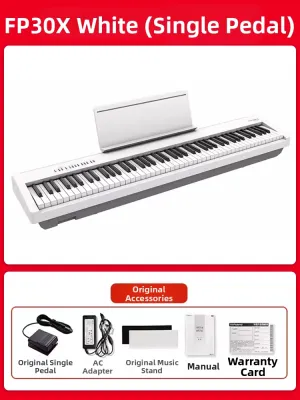
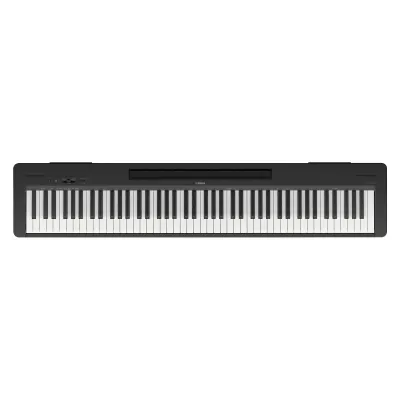
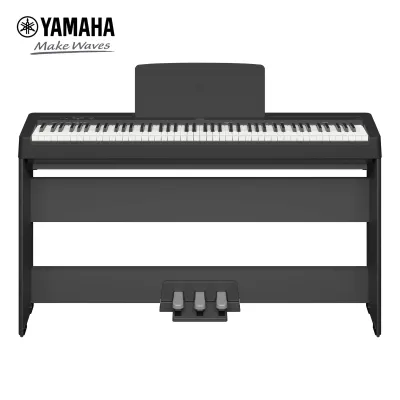
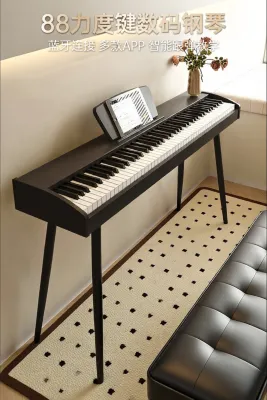
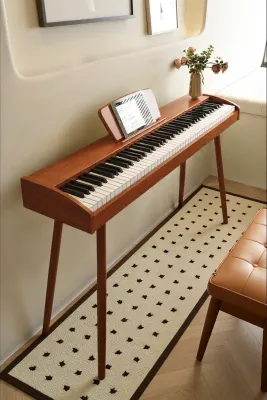
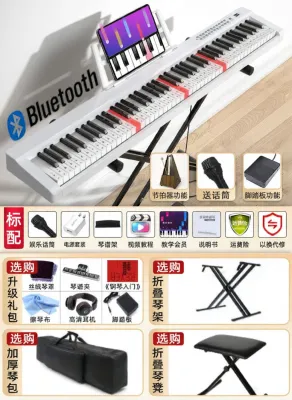
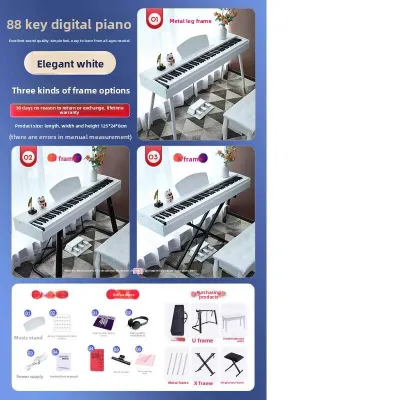
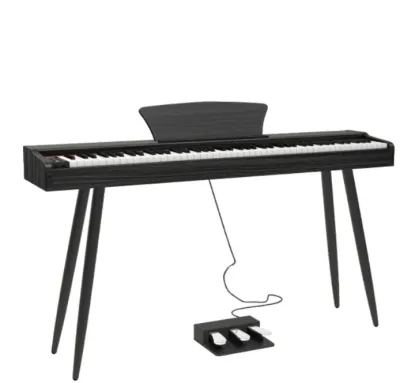
Prices are valid at publication and may change. Please refer to the product page for the latest price.
Many entry-level digital pianos feature graded or progressive hammer action. This design mimics an acoustic piano’s natural characteristic where the keys in the lower bass register feel heavier to press than the keys in the higher treble register. Developing finger strength on a graded keyboard prevents the formation of bad habits, such as flat-fingered playing or excessive wrist tension. It also ensures a seamless transition when performing on an acoustic piano during lessons, exams, or recitals.
Core Specifications to Compare Across Models
Digital pianos do not produce sound mechanically; instead, they trigger recorded audio files of high-end acoustic grand pianos. The quality of the sound engine determines how realistic these samples sound. Look for multi-layered sampling, where different recordings are triggered depending on how hard you strike the key. Speaker placement also plays a vital role. Models with upward-firing or dual-way speakers project sound more naturally toward your ears, creating an immersive acoustic field.

Polyphony refers to the maximum number of individual notes or voices the piano can produce simultaneously. When you play a chord with the sustain pedal pressed, each note continues to ring out alongside its harmonics. If your instrument has low polyphony, older notes will be abruptly cut off to make room for new ones. For beginners, a minimum of 64-note polyphony is acceptable, but 128-note or 192-note polyphony is highly recommended to accommodate complex classical pieces and layered sounds without note drop-off.
Built-in learning features can significantly enhance your daily practice sessions. A built-in metronome is essential for developing a steady sense of rhythm and timing. Recording functions allow you to record your playing and listen back objectively to identify uneven passages or timing errors. Additionally, modern digital pianos often feature USB or Bluetooth connectivity, allowing you to link the instrument to interactive learning apps, digital sheet music readers, and music production software on tablets or computers.
Space, Setup, and Connectivity Considerations
In Singapore, where residential space is often at a premium, the physical footprint of your instrument is a major consideration. Digital pianos generally fall into two categories: portable slab-style pianos and fixed console-style cabinets. Slab-style pianos are compact, lightweight, and can be stored away or placed on a folding stand when not in use. Console-style pianos feature integrated wooden cabinets and pedals, offering a more traditional look and superior stability, though they occupy a permanent footprint in your living room or bedroom.
Silent practice is a crucial feature for apartment living, allowing you to practice at any hour without disturbing family members or neighbors. Ensure the piano has at least one, preferably two, headphone jacks so a teacher and student can listen simultaneously. Standard 1/4-inch or 3.5mm jacks are common; check which adapter your headphones require. Bluetooth MIDI and audio connectivity simplify wireless integration with smart devices, while a USB-to-Host port allows direct connection to a computer.
A stable stand is vital for proper playing technique. Flimsy single-braced X-stands tend to wobble during energetic playing, which can ruin your posture and concentration. Double-braced X-stands, Z-stands, or dedicated wooden furniture stands offer much better stability. For pedals, many entry-level pianos include a basic plastic footswitch sustain pedal, which tends to slide around on tiled or vinyl floors. Upgrading to a heavy, metal, piano-style sustain pedal or a dedicated three-pedal board provides a much more authentic pedaling experience.
How to Build Your Shortlist of Beginner-Friendly Models
When starting your search, focus on entry-level series from established, reputable musical instrument manufacturers. These brands have spent decades refining their key actions and sound sampling technologies. Look into series such as Yamaha’s P-series, Roland’s FP-series, Casio’s Privia and Casiotone lines, and Korg’s B or L series. Each of these lineups offers reliable entry-level options designed specifically for home practice.
Set a realistic budget before shopping. In Singapore, entry-level 88-key weighted digital pianos typically range from S$500 to S$1,500. If your budget is tight, prioritize the quality of the key action over extra features like hundreds of built-in synth sounds, rhythm accompaniments, or Bluetooth audio. A basic instrument with an excellent weighted feel will serve a beginner far better than a feature-rich keyboard with springy, unweighted keys.
To help organize your research, compile a comparison matrix of the models you are considering. Focus on objective specifications rather than subjective marketing terms.
| Specification Category | Entry-Level Standard | Mid-Range Standard | What to Verify |
|---|---|---|---|
| Key Action | Weighted Hammer Action | Graded/Progressive Hammer Action | Check for physical resistance and key return speed |
| Polyphony | 64 Notes | 128 to 192 Notes | Ensure sustain pedal usage does not cause note drop-off |
| Sound Engine | Stereo Sampling | Multi-layered/Physical Modeling | Listen for natural decay and resonance |
| Connectivity | USB-to-Host, Headphone Jack | Bluetooth MIDI/Audio, Dual Headphone Jacks | Verify compatibility with your tablet or computer |
| Form Factor | Portable Slab (approx. 10-15 kg) | Console Cabinet (approx. 30-50 kg) | Measure your available floor space before purchasing |
Purchasing Checks and Post-Delivery Verification
Before finalizing your purchase, verify the warranty terms and the availability of local service centers in Singapore. Authorized distributors typically offer a 1-year to 3-year local warranty covering parts and labor. Avoid parallel imports that lack local warranty coverage, as shipping a heavy digital piano overseas for repairs is prohibitively expensive. Confirm the retailer’s return policy in case the instrument arrives with manufacturing defects.
If you are testing models in a physical showroom, perform a systematic check of the instrument. Play every single key from the lowest bass to the highest treble at different volume levels to ensure the volume response is consistent and there are no clicking or clacking mechanical noises. Test the responsiveness of the sustain pedal, checking for smooth transition rather than an abrupt on/off switch. Listen to the speakers at high volume to check for cabinet vibration or speaker distortion.
Once your piano is delivered, carefully inspect the packaging for any signs of transit damage. Unbox the instrument and verify that all included accessories—such as the music rest, power adapter, sustain pedal, and user manual—are present. Assemble the stand securely and test the piano immediately. Check for any firmware updates on the manufacturer’s official website, as updating the instrument’s software can resolve minor bugs and improve connectivity with external devices.
Frequently Asked Questions (FAQ)
Do I need an acoustic piano instead of an electric one to start learning?
No, a high-quality 88-key weighted digital piano is an excellent and highly practical choice for beginners. Acoustic pianos require regular tuning, which can be challenging to maintain in Singapore’s humid climate, occupy a large permanent space, and cannot be played silently. A digital piano eliminates tuning costs, fits easily into smaller rooms, and allows for headphone practice. While advanced classical pianists eventually require the complex mechanical nuances of an acoustic grand piano, a weighted digital piano is more than sufficient for the first several years of learning.
How long will a beginner 88-key electric piano last before needing an upgrade?
A well-maintained digital piano from a reputable brand can easily last five to ten years mechanically. However, a student’s musical progression may prompt an upgrade sooner. Typically, a beginner model will comfortably support a student from the initial stages up to intermediate levels, roughly equivalent to Grade 5 in standard graded exams. Beyond this point, the complex pedaling techniques, rapid key repetitions, and extreme dynamic expressions required by advanced repertoire may warrant an upgrade to an intermediate or professional digital piano with more advanced key actions and sound engines.
Can I use a standard keyboard stand and bench, or do I need specific accessories?
While you can use generic accessories, stability and ergonomics are critical for preventing physical strain. Avoid lightweight, single-braced X-stands, which can wobble under the weight of an 88-key weighted keyboard and disrupt your playing. Opt for a sturdy double-braced X-stand, a Z-stand, or the manufacturer’s matching wooden stand. For the bench, an adjustable-height bench is highly recommended over a fixed-height chair. Proper posture requires your elbows to be slightly above the keyboard level, which is difficult to achieve without an adjustable seat, especially for growing children.
Community discussion
Share your experience or ask a question. Comments are reviewed before publication.