
Choosing the right Chinese dictionary is a critical step in language acquisition, as a tool that is too basic will limit your progress, while one that is too advanced can cause frustration. Whether you are evaluating dedicated hardware like a Besta Chinese dictionary, exploring mobile applications, or considering traditional print volumes, the ideal choice depends entirely on your current Mandarin proficiency, study environment, and learning goals. By understanding the specific features required at each stage of your language journey, you can make an informed investment that supports your long-term academic or professional development.
The effectiveness of a dictionary relies heavily on how well its interface and database match your cognitive load. A beginner needs immediate phonetic guidance and visual stroke guides, whereas an advanced scholar requires deep etymological roots and subtle semantic distinctions. Selecting the wrong format can lead to inefficient study sessions, where more time is spent navigating the tool than absorbing the language. This guide breaks down how to match dictionary formats to your skill level and outlines the essential features to verify before making a purchase.
Matching Dictionary Formats to Your Learning Stage
Beginners require tools that demystify the visual complexity of Chinese characters while reinforcing phonetic foundations. At this stage, the priority is establishing the link between the written character, its pinyin romanisation, and its spoken sound. A suitable dictionary for a beginner must feature clear pinyin support with tone marks, step-by-step stroke order animations, and basic audio pronunciation. Character decomposition is also highly beneficial, as it breaks down complex characters into their radical and phonetic components, helping learners recognise patterns and build a foundation for character memorisation.
Products mentioned in this guide
Prices are valid at publication and may change. Please refer to the product page for the latest price.
Intermediate learners need to transition from simple word-to-word translation to understanding contextual usage and sentence structure. At this level, vocabulary expansion accelerates, and the focus shifts to how words function within sentences. An intermediate-grade dictionary must provide robust contextual example sentences, clear grammar notes indicating parts of speech, and measure word (classifier) associations. Offline access becomes increasingly important during this stage to facilitate uninterrupted study sessions in environments without reliable internet connectivity, such as classrooms or transit systems.
Advanced learners require a deep, nuanced understanding of the language to navigate literary texts, classical Chinese (wenyanwen), and professional documents. For these users, standard bilingual definitions are often insufficient. An advanced dictionary should offer comprehensive monolingual definitions, historical etymologies, idiom (chengyu) origins, and dialect support where relevant. Furthermore, advanced study demands precise synonym differentiation, helping the learner understand the subtle differences between closely related terms, such as distinguishing when to use “改善” (gǎishàn) versus “改进” (gǎijìn).
Evaluating your current proficiency level prevents the common mistake of purchasing an overly complex tool that hinders daily study. If you are preparing for standardized exams, your dictionary needs to align with specific vocabulary lists, whereas conversational learners might prioritize rapid voice search and colloquial phrasebooks. Matching the dictionary’s database complexity to your actual reading and writing tasks ensures that the tool remains an asset rather than a source of cognitive fatigue.
Evaluating Besta and Other Dedicated Electronic Dictionaries
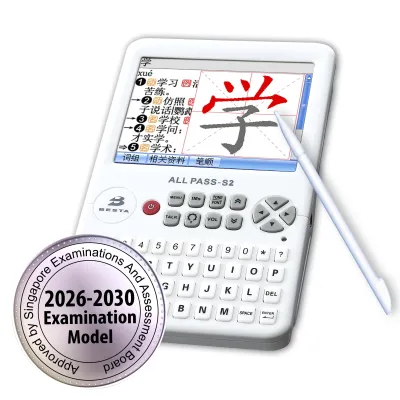
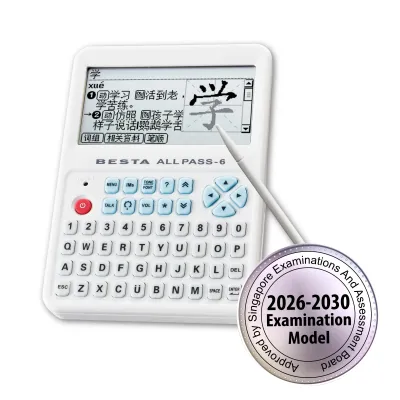
Dedicated electronic dictionaries, such as those manufactured by Besta, occupy a unique niche in language learning, particularly within structured academic environments. Unlike multifunctional smartphones or tablets, a dedicated electronic dictionary provides a distraction-free learning environment. There are no social media notifications, incoming messages, or web-browsing temptations to interrupt a study session. This singular focus is highly valued by educators and parents, and it is a primary reason why specific models of electronic dictionaries are officially permitted in school examination halls in Singapore, where mobile phones are strictly banned.

When evaluating a dedicated electronic dictionary, the quality of the built-in lexicons is the most critical factor. High-quality devices license authoritative databases from reputable publishers, such as the Oxford Chinese Dictionary or the Contemporary Chinese Dictionary. Beyond the database, you must verify the accuracy of the optical character recognition (OCR) scanning and the responsiveness of the handwriting input interface. Because Chinese characters can be difficult to look up if you do not know the pronunciation, a highly forgiving handwriting recognition system that can interpret slightly incorrect stroke orders is essential for looking up unknown characters quickly.
Hardware longevity and manufacturer support are equally important considerations before committing to a purchase. Prospective buyers should check the availability of firmware updates, which ensure the device’s operating system remains stable and compatible with any downloadable content. It is also wise to verify the manufacturer’s warranty terms and the availability of local customer service centers to handle potential hardware repairs. Finally, ensure the device supports regional language settings, allowing you to toggle the system interface between English and Chinese depending on your comfort level.
While the initial cost of a dedicated electronic dictionary is higher than that of most mobile apps, the investment can be justified by its durability and specialized utility. These devices are engineered specifically for language input, often featuring physical keyboards that facilitate faster typing than virtual screens. For students embarking on a multi-year secondary or tertiary Chinese curriculum, a robust dedicated device can serve as a reliable companion throughout their academic career without the recurring subscription fees associated with premium mobile applications.
Essential Features to Verify Before Purchasing
Before purchasing any Chinese dictionary, whether physical, digital, or hardware-based, there are several core technical and linguistic features you must verify. First among these is the ability to toggle seamlessly between Simplified and Traditional characters. Depending on your geographical location and study focus, you may need to read Simplified characters (standard in Singapore and Mainland China) or Traditional characters (used in Taiwan, Hong Kong, and many classical texts). A dictionary that displays both formats side-by-side, or allows instant toggling, ensures you are prepared for any reading material.
Search Method      | Primary Use Case                  | Key Benefit
-------------------|-----------------------------------|-----------------------------------
Radical Lookup     | Reading printed books/signs       | No prior knowledge of pinyin needed
Pinyin Input       | Typing known words                | Fastest method for active learners
Voice Recognition  | Conversational practice           | Verifies pronunciation accuracy
Camera/OCR Scan    | Rapid reading of long texts       | Eliminates manual character entry
The diversity of search methods supported by the dictionary directly impacts its usability in real-world scenarios. While pinyin input is the standard for words you already know how to pronounce, you will inevitably encounter unfamiliar characters. In these instances, a robust radical lookup system is indispensable for manual searches. For digital formats, real-time camera scanning (OCR) and voice recognition add immense value, allowing you to scan printed text on the go or practice your spoken pronunciation to see if the device correctly identifies your tones.
Audio pronunciation quality is another critical feature that varies widely across different dictionary platforms. Lower-end digital dictionaries and free apps often rely on synthesized text-to-speech (TTS) engines, which can sound robotic and occasionally struggle with tone sandhi (the phonetic change of tones in context) or heteronyms (characters with multiple pronunciations depending on meaning). Higher-quality dictionaries utilize high-fidelity recordings of native speakers, providing natural intonation and clear articulation that help learners develop accurate listening and speaking skills.
For hardware-based dictionaries, physical design and usability factors must not be overlooked. Consider the battery life of the device; models that use standard rechargeable lithium-ion batteries are generally more convenient than those requiring frequent replacement of AAA batteries. Screen readability is also paramount, especially when studying under the fluorescent lights of a classroom or library. Look for screens with adjustable backlighting or anti-glare coatings. Finally, assess the build durability; a sturdy clamshell design protects the screen and keyboard from being crushed inside a heavy school bag.
Comparing Print, Electronic, and App Dictionaries
To finalize your purchasing decision, it is helpful to compare the trade-offs of the three primary dictionary mediums: traditional print books, dedicated electronic devices, and mobile applications. Each medium has distinct advantages and limitations regarding portability, focus, cost, and content updates.
| Feature | Print Books | Dedicated Electronic Devices | Mobile Applications |
|---|---|---|---|
| Portability | Low (heavy and bulky) | High (compact, lightweight) | Extremely High (always on your phone) |
| Focus | High (no digital distractions) | High (no notifications or apps) | Low (prone to phone distractions) |
| Cost Structure | One-time purchase (low to moderate) | One-time purchase (moderate to high) | Free, one-time, or recurring subscription |
| Update Frequency | None (requires buying new editions) | Infrequent (firmware updates only) | Frequent (regular database and UI updates) |
| Search Speed | Slow (manual page turning) | Fast (keyboard/handwriting/OCR) | Fast (touchscreen/camera/voice) |
Many successful language learners adopt a hybrid strategy, combining different mediums to suit different study contexts. For example, you might use a mobile dictionary app on your smartphone for quick, on-the-go lookups during your daily commute, where portability is the highest priority. However, when sitting down for a deep, structured study session at home or in a library, you might switch to a physical dictionary or a dedicated electronic device to eliminate the constant temptation of digital notifications and maintain deep cognitive focus.
Deciding whether a dedicated electronic device justifies its upfront cost—which can range from S$100 to over S$300 depending on the model and features—comes down to your specific academic constraints and learning habits. If you are a student in Singapore preparing for national examinations where digital devices with internet access are strictly prohibited, an approved dedicated electronic dictionary is an essential investment. For casual or adult learners who have the self-discipline to manage phone distractions, a high-quality mobile app with a one-time premium upgrade may offer the best balance of features and cost-effectiveness.
Ultimately, the best dictionary is the one that fits seamlessly into your daily routine and matches your current linguistic needs. By carefully assessing your proficiency level, verifying essential technical features, and choosing the medium that aligns with your study environment, you can acquire a powerful tool that accelerates your path to Mandarin fluency.
Frequently Asked Questions (FAQ)
Do I need a dedicated electronic dictionary if I already have a smartphone?
While smartphones offer unparalleled convenience and access to excellent dictionary apps, they also present significant challenges for serious language study. The constant influx of social media notifications, messages, and emails can severely disrupt your focus, breaking the cognitive flow required to memorize complex characters. Dedicated electronic dictionaries eliminate these distractions entirely, creating a focused environment that is highly conducive to deep learning.
Additionally, dedicated hardware is often required for students sitting for official examinations, as smartphones are banned in exam halls due to security and cheating concerns. From a financial perspective, while many smartphone apps are free, premium databases often require ongoing monthly or annual subscriptions. A dedicated electronic dictionary represents a one-time hardware investment that can last for many years, making it a highly cost-effective choice for long-term students.
How do I know if a dictionary supports my specific textbook or exam syllabus?
To ensure your dictionary aligns with your academic goals, you should check the product specifications or software details for built-in vocabulary lists. Many reputable electronic dictionaries and premium apps include pre-loaded word lists for standardized Chinese proficiency tests, such as the Hanyu Shuiping Kaoshi (HSK), or local school curricula, such as the vocabulary lists approved by the Ministry of Education in Singapore.
Furthermore, look for dictionaries that offer custom user-list features. These allow you to bookmark specific characters, group them into custom folders matching your textbook chapters, and export them for flashcard review. If you are preparing for a specific exam, verify whether the dictionary’s search function allows you to filter search results to display only words within your target syllabus level, which helps keep your study sessions highly targeted and efficient.

Community discussion
Share your experience or ask a question. Comments are reviewed before publication.