
Starting a daily Bible reading habit can feel overwhelming due to the sheer volume of translations, editions, and formats available. For a beginner, the most suitable Bible is one that balances readability with your personal goals, helping you build a consistent routine without feeling discouraged by complex language or dense academic notes. Choosing an edition that matches your daily routine ensures that your devotional time remains a source of personal growth rather than a chore.
Assess Your Daily Reading Goals and Habits
Before looking at specific editions, take a moment to evaluate how much time you can realistically dedicate to reading each day. A successful habit relies on consistency rather than volume, so starting with just ten to fifteen minutes a day is often more sustainable than committing to an hour. Consider whether you prefer to read a single chapter slowly or cover larger sections of text in one sitting.
Your primary spiritual or personal growth objective will also dictate the type of Bible you need. Some readers approach the text seeking deep historical and theological understanding, wanting to know the ancient context behind every passage. Others look for daily emotional reflection, comfort, or practical guidance that they can immediately apply to modern relationships, work, and personal decisions.
Products mentioned in this guide
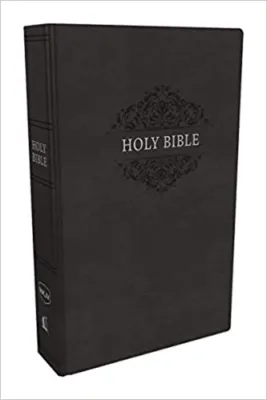
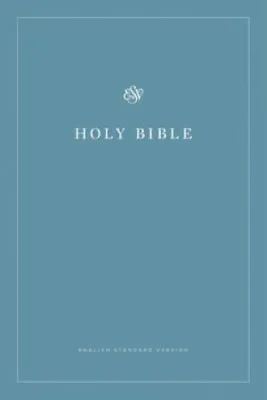


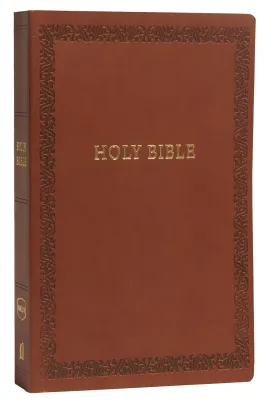
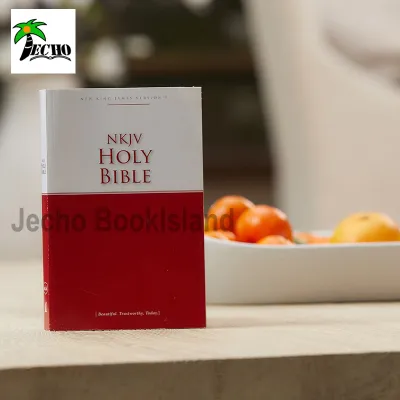
Prices are valid at publication and may change. Please refer to the product page for the latest price.
Finally, consider your comfort level with older literary styles and historical references. If you find ancient phrasing or unfamiliar cultural customs confusing, you will likely benefit from an edition that includes explanatory notes or modern reflections. If you prefer to form your own impressions of the text without external commentary, a simpler layout will suit you better.
Match Your Goals to the Right Bible Edition
Once you understand your personal goals, you can match them to a specific Bible edition designed to support that style of reading. Bible publishers organize editions into distinct categories, each serving a different purpose during your quiet time.

Standard or text-only Bibles present the scripture exactly as translated, without additional commentary, daily devotionals, or study notes. This format is excellent for uninterrupted reading, allowing you to focus entirely on the narrative flow and develop your own comprehension habits. Without footnotes or sidebars competing for your attention, you can engage directly with the text, though you may occasionally need to look up unfamiliar terms on your own.
Devotional Bibles are specifically designed to foster daily reflection and emotional connection. These editions insert short, guided readings, prayers, or modern reflections alongside the biblical text, often arranged in a 365-day format. They are ideal if you want a structured, encouraging prompt each day to help you internalize the spiritual themes of the passages.
Application Bibles bridge the gap between ancient scripture and modern daily life. Instead of focusing purely on historical facts, the notes in an application Bible explain how the teachings relate to practical decisions, family dynamics, stress management, and personal ethics today. This is highly suitable for readers who want actionable insights they can carry into their daily routines.
Study Bibles are comprehensive reference tools packed with historical, cultural, and theological commentary, maps, and word studies. While incredibly valuable for deep research, they can easily overwhelm an absolute beginner. The sheer volume of notes on a single page can sometimes dwarf the actual scripture, making it difficult to maintain a smooth reading flow during a brief morning devotional.
Choose a Translation That Fits Your Reading Level
Selecting the right translation is just as important as choosing the right edition, as the language style directly impacts how easily you can absorb the text. Bible translations exist on a spectrum ranging from word-for-word accuracy to thought-for-thought readability.
Word-for-word translations, also known as formal equivalence, prioritize matching the original Greek, Hebrew, and Aramaic source texts as closely as possible. While highly accurate for detailed study, they can sometimes result in stiff sentence structures or archaic phrasing that feels unnatural to read. Thought-for-thought translations, or dynamic equivalence, focus on conveying the original meaning and ideas in modern, natural language. These translations prioritize flow and comprehension, making them highly accessible for daily reading.
For beginners, popular translations offer different balances along this spectrum. The English Standard Version (ESV) leans toward formal equivalence but maintains a literary, poetic flow that many readers appreciate. The New International Version (NIV) sits comfortably in the middle, balancing accuracy with clear, contemporary language. The New Living Translation (NLT) is a thought-for-thought translation that uses modern vocabulary and straightforward sentence structures, making it exceptionally easy to read and understand during a quick daily devotional.
To find your preference, check sample pages or online previews of different translations before purchasing. Read a familiar passage in two or three different versions to see which language style feels most natural and engaging to you.
Select the Right Format and Physical Features
The physical design of your Bible plays a significant role in how comfortable and sustainable your daily reading habit becomes. Visual fatigue and physical discomfort can create subtle friction that discourages you from opening the book regularly.
Pay close attention to font size, line spacing, and paragraph formatting. Many standard Bibles use very small print to keep the book compact, which can strain your eyes during extended reading sessions. Look for large-print or comfort-print editions, which offer better spacing and readability. Additionally, consider whether you prefer a single-column layout, which reads like a standard book, or a traditional double-column layout.
The quality of the materials also affects usability and longevity. Bibles are traditionally printed on very thin paper to manage their thickness, but thin pages can suffer from ghosting, where the text on the reverse side shines through. If you plan to use highlighters or write notes in the margins, look for editions with thicker, premium paper to prevent ink bleed-through. Durable bindings, such as Smyth-sewn covers, allow the Bible to lay flat on a desk or lap, making reading and note-taking much easier.
Finally, decide between a physical book and a digital app. A physical Bible offers a tactile, screen-free experience that minimizes digital distractions like notifications, helping you stay focused during your devotional time. On the other hand, digital apps offer unmatched portability, adjustable font sizes, and built-in reading plans that track your progress automatically. Many readers find success by using a physical copy at home and a digital app when traveling or commuting.
Frequently Asked Questions (FAQ)
Do I need to buy a study Bible if I am just starting out?
No, you do not need a study Bible to begin a daily reading habit. While study Bibles are excellent resources, their extensive historical notes, cross-references, and theological debates can easily distract or overwhelm a beginner. Starting with a simpler devotional or application Bible allows you to build a consistent, reflective habit first. You can always transition to a study Bible later as your interest in academic context grows.
How can I stick to a daily Bible reading plan as a beginner?
The key to consistency is starting small and integrating the habit into your existing routine. Instead of trying to read multiple chapters a day, commit to reading just one passage or spending five to ten minutes with the text each morning. Pair your reading with an established habit, such as drinking your morning coffee or winding down before bed. Using a structured beginner plan, such as one focusing on the New Testament or a specific theme, can also provide helpful direction.
Is it better to read a physical Bible or use a Bible app for daily devotionals?
Both formats have distinct advantages, and the best choice depends on your personal lifestyle. A physical Bible is ideal for deep focus, as it removes the temptation to check messages or browse social media during your quiet time. It also allows for tactile note-taking and highlighting. A Bible app is highly convenient for busy schedules, offering portability, audio versions for your commute, and automated reminders to help you stay on track.
Community discussion
Share your experience or ask a question. Comments are reviewed before publication.