
Selecting your first acoustic guitar is a foundational step in your musical journey, and Bromo guitars have become a notable option for beginners seeking a balance of playability and value. To find the model that most appropriately suits your needs in Singapore, you must look beyond aesthetics and focus on how the instrument’s physical dimensions, construction materials, and setup align with your body size and learning goals. Making an informed decision requires understanding how different specifications translate to comfort during long practice sessions.
For a beginner, the most suitable guitar is one that does not cause physical strain and remains structurally stable under local environmental conditions. By evaluating key factors such as body shape, scale length, neck profile, and tonewood stability, you can select an instrument that supports your progress rather than hindering it. This guide outlines the essential specifications, playability checks, and maintenance practices necessary to choose and care for a Bromo guitar in Singapore.
Understanding Bromo Guitar Specifications for Beginners
When browsing the Bromo catalog, the first specification to consider is the body shape, as it directly dictates how the guitar rests against your body and how much physical effort is required to reach over the lower bout. The Dreadnought shape is a traditional favorite known for its robust volume and deep bass projection, but its large, boxy frame can feel cumbersome for younger players, individuals with smaller builds, or anyone who prefers practicing while seated on a low chair. If comfort is your primary concern, look toward Auditorium or Orchestra Model (OM) shapes, which feature a narrower waist and a shallower body depth that allows the instrument to sit lower on your lap, bringing your fretting hand closer to your body. For those who travel frequently or have a very compact frame, a Parlor or travel-sized guitar offers the ultimate in portability and ease of handling, though it naturally sacrifices some bass response and overall volume.
Products mentioned in this guide

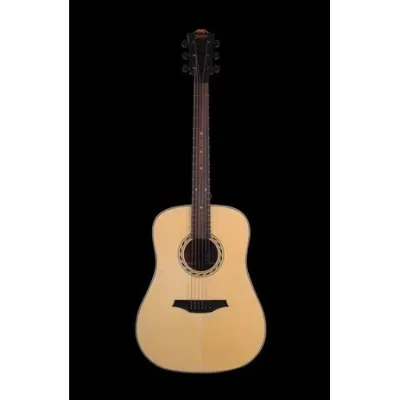
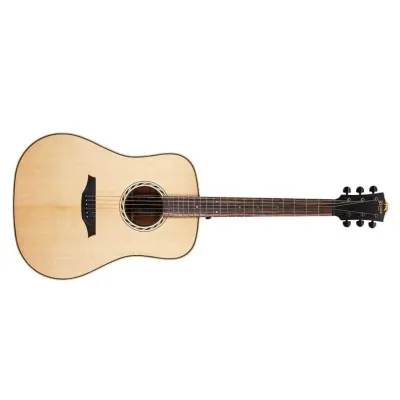
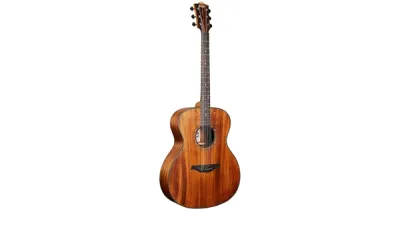
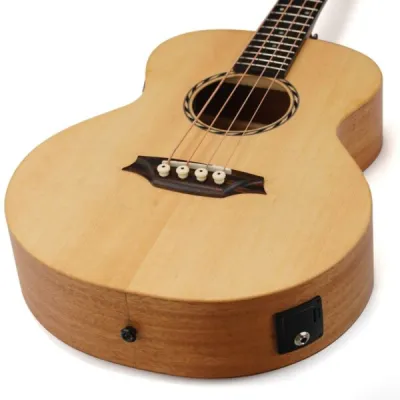
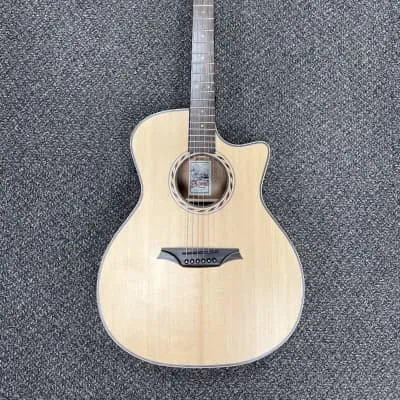
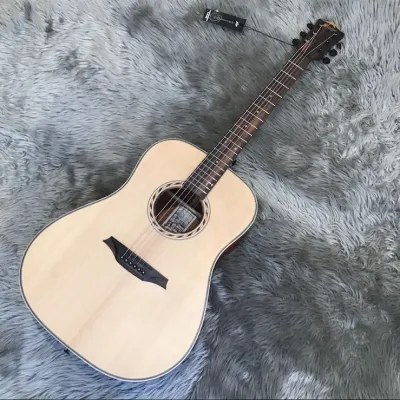
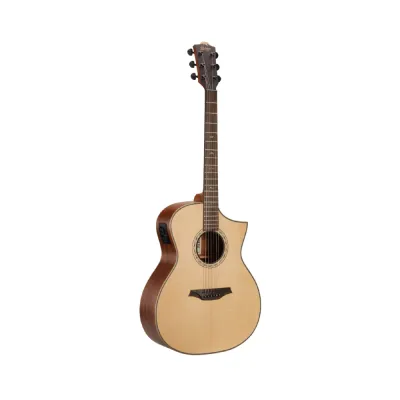
Prices are valid at publication and may change. Please refer to the product page for the latest price.
Understanding the tonewood specifications listed on the manufacturer’s spec sheet is equally critical for predicting both the durability of the instrument and how its sound will evolve. Acoustic guitars generally feature either a solid wood top or a laminated top, paired with laminated back and sides. A solid top, typically made of spruce or cedar, consists of a single piece of natural wood that vibrates freely, producing a richer, more resonant tone that actually improves and matures over years of playing—a process known as “opening up.” Conversely, laminated tops are constructed from multiple thin layers of wood glued together, which limits their vibrational freedom and results in a more consistent, albeit less complex, sound. However, laminated construction offers strong structural stability and resistance to cracking, making it highly practical for beginners who may not yet have dedicated climate-control setups.
Fretting comfort is largely determined by the scale length and nut width of the guitar, two measurements that should be verified before purchase. The scale length—the distance between the nut and the saddle—influences string tension; a shorter scale length (typically under 25 inches) requires less tension to bring the strings up to pitch, making them softer to press down for unconditioned beginner fingers. The nut width determines the spacing of the strings at the first fret; a standard nut width of approximately 43 millimeters is generally comfortable for most beginners, as it allows for clean chord transitions without requiring excessive finger stretch. If you have smaller hands, avoiding wider nut widths, such as those found on traditional classical guitars, will help prevent early hand fatigue and strain during your initial months of practice.
Key Playability Features to Check Before Buying
Before finalizing your purchase, performing a hands-on inspection of the guitar’s playability is essential to ensure you do not end up with an instrument that is frustratingly difficult to play. The most critical factor to assess is the “action,” which refers to the height of the strings above the fretboard. If the action is too high, you will have to exert excessive finger pressure to fret notes clearly, leading to rapid hand fatigue and soreness; if it is too low, the strings will vibrate against the frets, causing an undesirable buzzing sound. You can visually check the neck relief by holding the guitar like a rifle and looking down the edge of the fretboard from the headstock to the body; the neck should have a very slight, almost imperceptible upward curve rather than being completely flat or bowed backward.

The shape of the neck profile and the treatment of the fretboard edges play a significant role in how comfortable the guitar feels in your hand during extended practice sessions. A slim “C-shaped” neck profile is highly recommended for beginners, as it fits naturally into the curve of the palm and allows your thumb to rest comfortably on the back of the neck for proper fretting leverage. Additionally, run your thumb and index finger along the top and bottom edges of the fretboard to check for rolled edges. Fretboards with rolled edges have slightly rounded corners, which prevents the sharp wooden edge from digging into your hand when you slide up and down the neck or grip barre chords.
Tuning stability and intonation are the final playability components to verify during an in-store trial. Turn each tuning machine slowly to ensure the gears operate smoothly without any sticking, slipping, or sudden jumps in pitch, which can indicate poor-quality hardware. Once the guitar is tuned to pitch, check the basic intonation by playing an open string and then fretting that same string at the twelfth fret; the pitch at the twelfth fret should be exactly one octave higher and register as accurately in tune on an electronic tuner. If the fretted note is significantly sharp or flat compared to the open note, the guitar’s intonation is off, which will cause chords to sound out of tune as you play higher up the neck.
Evaluating Value and Build Quality
Evaluating the build quality of a Bromo guitar requires a close visual and tactile inspection of the instrument’s construction details, which serve as reliable indicators of overall craftsmanship. Examine the joints where the neck meets the body and where the bridge is glued to the soundboard; there should be no visible gaps, hairline cracks, or excessive glue squeeze-out, as these flaws can compromise structural integrity over time. Run your fingers gently along the sides of the neck to check for “sprouting frets,” which occur when the wooden fretboard shrinks and leaves the sharp metal ends of the frets protruding. Smooth, well-finished fret ends are a hallmark of careful manufacturing and prevent painful scratches during play.
When calculating your total initial investment, it is wise to look at what is included in the purchase and factor in potential post-purchase adjustment costs. Many beginner guitars are sold as bundles that include essential accessories such as a padded gig bag, a clip-on tuner, a strap, and spare picks. While these bundles offer great convenience, you should inspect the quality of the gig bag to ensure it provides sufficient padding to protect your instrument during transport. Furthermore, you should always budget an additional S$50 to S$100 for a professional setup by a local luthier, as even well-made factory guitars often require minor adjustments to the truss rod, nut slots, and saddle height to achieve optimal playability for a beginner’s hand strength.
Deciding between a solid top and a fully laminated model is a primary value consideration that depends on your long-term commitment and budget. A solid-top guitar generally carries a higher initial price tag but offers superior tonal depth, projection, and the ability to improve in sound quality as the wood ages, making it a highly rewarding choice if you plan to stick with the instrument for several years. On the other hand, a fully laminated guitar is more budget-friendly and highly durable, making it a practical, low-stress option for casual players or those who want to test their interest in the instrument without a significant financial commitment. Weighing these factors carefully will help you choose a model that provides a reliable return on your investment.
Where to Buy and Verify Authenticity in Singapore
To ensure you receive a genuine Bromo guitar backed by a valid manufacturer’s warranty, it is highly recommended to purchase from authorized local music dealers or their official online storefronts in Singapore. Buying from unauthorized third-party sellers on general online marketplaces or gray-market importers carries the risk of acquiring counterfeit instruments, B-stock items with hidden structural defects, or guitars that have been stored in poor environmental conditions. Authorized dealers maintain direct relationships with the manufacturer, ensuring that the instruments are shipped, stored, and handled according to strict quality standards before they reach your hands.
When purchasing your guitar, always request and verify the official local warranty card and clarify the dealer’s specific return and exchange policies. A legitimate warranty typically covers manufacturing defects, such as structural wood splitting, bridge separation, or neck warping, for a period of one year from the date of purchase. Be sure to ask the sales representative about the exact procedure for claiming warranty service, as having a reliable local service center makes resolving any unexpected issues straightforward and stress-free. Avoid sellers who offer vague warranty terms or refuse to provide a formal purchase receipt.
One of the greatest advantages of purchasing from an established physical music shop in Singapore is the opportunity to receive a complimentary initial setup or post-purchase adjustments. Many dedicated guitar shops employ in-house technicians who will inspect the instrument, adjust the action, and install fresh strings to your preferred gauge before you leave the store. This personalized service ensures that your new Bromo guitar is in peak playing condition from day one, saving you the immediate expense of a professional setup and giving you a reliable point of contact for future maintenance needs.
Frequently Asked Questions (FAQ)
Do I need to change the strings on a new Bromo guitar immediately?
You do not necessarily need to change the strings on a new Bromo guitar immediately, as they are typically fitted with standard light-gauge factory strings that are highly adequate for your first few weeks of practice. However, because guitars often spend weeks or months in transit and storage before reaching the retail shelf, the factory-installed strings may have accumulated moisture and oils, leading to minor oxidation or a slightly dull tone. If you notice that the strings feel rough to the touch, exhibit visible dark spots of rust, or struggle to hold their tuning even after repeated adjustments, installing a fresh set of high-quality coated strings will immediately improve both the playability and the acoustic resonance of your instrument.
How should I store my guitar in Singapore's humid climate?
Singapore’s consistently high relative humidity, which often hovers around 80% or higher, poses a significant risk to acoustic guitars by causing the wood to swell, the bridge to lift, and the action to rise. To protect your Bromo guitar, store it inside a high-quality padded gig bag or a hard case when not in use, rather than leaving it exposed on an open stand. Place two-way humidity control packs or silica gel packets inside the case to absorb excess moisture and maintain a stable internal environment. Additionally, always keep the cased instrument away from direct sunlight, open windows, and the direct path of air-conditioning vents, as rapid fluctuations in temperature and humidity can cause the wood to warp or crack.

Community discussion
Share your experience or ask a question. Comments are reviewed before publication.