
Choosing your first digital piano can feel overwhelming, especially when balancing budget, features, and space constraints. For many aspiring musicians, the Casio Compact Digital Piano (CDP) series represents a highly practical entry point into the world of weighted-key instruments. These pianos are engineered to bridge the gap between basic, unweighted keyboards and bulky acoustic uprights, making them a popular choice for home practice.
Selecting the right CDP model requires understanding how specific technical specifications align with your personal learning goals. The ideal choice depends on whether you prefer a streamlined, distraction-free instrument that replicates a traditional piano or a versatile keyboard loaded with diverse sounds and learning tools. By focusing on essential features rather than unnecessary upgrades, you can secure a high-quality instrument that supports your musical journey for years to come.
Understanding the Casio CDP Series for Beginners
The Casio CDP series is specifically designed to deliver the fundamental elements of an acoustic piano in a highly portable and affordable package. Unlike synthesizer keyboards or basic arranger workstations that feature soft, springy keys, every model in the CDP lineup is equipped with a fully weighted 88-key keyboard. This design ensures that beginners develop the proper finger strength, hand posture, and articulation from their very first lesson.
Products mentioned in this guide
![Casio CDP-S360 Digital Piano [FREE BENCH] Portable 88 Weighted Keys Instrument for Beginners](https://img.lazcdn.com/g/p/0df154e46f8f59780663ee1b7ed17e13.jpg_400x400q80.jpg_.webp)
![Casio CDP-S160 Digital Piano [FREE BENCH] Portable 88 Weighted Keys Instrument for Beginners](https://img.lazcdn.com/g/p/b40c0a5d1400f3afb2c14a886464b0ef.jpg_400x400q80.jpg_.webp)
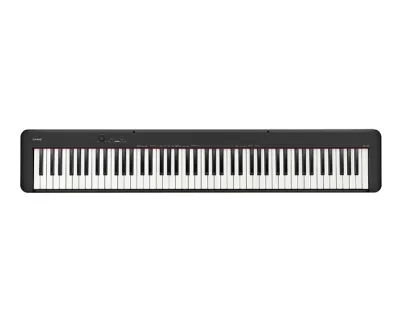
Prices are valid at publication and may change. Please refer to the product page for the latest price.
In Singapore, where residential space is often at a premium, the physical footprint of an instrument is a critical consideration. Traditional acoustic pianos require a dedicated wall, regular tuning to combat the tropical humidity, and a permanent location due to their immense weight. A CDP digital piano addresses these challenges by offering an exceptionally slim profile, often measuring less than 30 centimeters in depth. This compact design allows the instrument to fit comfortably into tight corners of HDB flats, study rooms, or shared bedrooms without disrupting the flow of the living space.
Furthermore, the lightweight nature of these instruments—typically weighing around 10 to 11 kilograms—means they can be easily moved by a single person or stored away when not in use. Despite this compact form factor, the series preserves the full 88-key layout. This standard size is essential for beginners because standard piano methods, classical repertoire, and modern pop arrangements are written for a full-range keyboard. Starting on a smaller keyboard eventually forces students to relearn spatial awareness and hand positioning once they transition to a standard instrument.
Key Specifications to Verify for Beginner Needs
Before purchasing a Casio CDP model, it is vital to verify several core technical specifications on the manufacturer’s official product sheet to ensure it supports long-term skill development.

Keyboard Action
The physical feel of the keys is the most critical factor in piano education. You should look for models specifying a “Scaled Hammer Action” or “Scaled Hammer Action Keyboard II.” This technology uses actual physical hammers inside the chassis rather than springs to create resistance. The term “scaled” or “graded” means the keys in the lower bass register feel heavier to press than those in the higher treble register, precisely mimicking the physical characteristics of an acoustic grand piano. Verifying this specification ensures you do not accidentally purchase a semi-weighted or unweighted keyboard, which can hinder the development of proper finger dynamics.
Polyphony
Polyphony refers to the maximum number of individual notes or voices the digital piano’s sound engine can produce simultaneously. When you play a chord while holding down the sustain pedal, every note continues to ring out, consuming the instrument’s polyphony capacity. For a beginner, a minimum baseline of 64-note polyphony is highly recommended. If you choose a model with lower polyphony, you may experience “note dropout,” where older notes are abruptly cut off to make room for newly played notes. As your repertoire becomes more complex and your pedal technique improves, higher polyphony (such as 128 notes) provides a smoother, more seamless acoustic experience.
Touch Response
To play with emotion and expression, your digital piano must respond to how hard or soft you strike the keys. This feature, known as touch response or velocity sensitivity, alters both the volume and the tonal character of the sound based on your key strike. When verifying specifications, confirm that the model offers multiple levels of touch sensitivity (typically light, medium, heavy, or off). This allows you to customize the keyboard’s responsiveness to match your physical finger strength as it develops over time.
Connectivity Options
Modern digital pianos offer excellent educational advantages through digital connectivity. Ensure the model you select features a USB Type-B port, often labeled as “USB-to-Host.” This port allows you to connect the piano directly to a computer, tablet, or smartphone using a standard USB cable. This connection is essential for sending MIDI data to interactive learning software, notation programs, and digital audio workstations. Additionally, verify the presence of a standard headphone output (3.5mm or 6.3mm jack). Silent practice is invaluable for beginners who wish to practice late at night or repeat difficult passages without causing noise disturbances in close-quarters residential estates.
How to Compare Different Casio CDP Tiers
The Casio CDP lineup is generally structured into two distinct functional tiers: pure piano models and multi-functional creative models. Understanding these categories prevents you from paying for features you do not need or, conversely, missing out on tools that could keep you motivated.
Basic vs. Advanced Tiers
Entry-level models in the CDP series focus almost exclusively on delivering a high-quality acoustic piano experience. These models typically feature a streamlined interface with very few buttons, offering a small selection of essential tones (such as grand pianos, electric pianos, organs, and strings). They are ideal for students who want a distraction-free environment dedicated solely to classical training or traditional piano practice. In Singapore, entry-level CDP models typically sit within a budget-friendly price band of approximately S$500 to S$700, making them highly accessible for families testing the waters of music education.
In contrast, the advanced models in the series serve as hybrid instruments, combining a weighted hammer-action keyboard with the creative features of an arranger keyboard. These models offer hundreds of built-in tones, automatic accompaniment rhythms, built-in metronomes with complex time signatures, and sometimes pitch bend wheels for synth sounds. These advanced models generally range from S$800 to S$1,100. If you or your child are interested in modern genres, improvisation, songwriting, or playing along with a backing band, investing in an advanced-tier model provides a much wider creative canvas.
Form Factor and Suffix Variations
When browsing different models, you will frequently notice letters like ‘S’ in the model name (e.g., CDP-S). The ‘S’ stands for “Slim,” indicating Casio’s ultra-compact chassis design. While these slim models are incredibly space-saving and portable, they introduce a physical trade-off regarding speaker size. Because the cabinet is highly compressed, the built-in speakers are smaller and have lower output wattage (often 8 watts per channel). While this is perfectly adequate for home practice in a quiet room, players seeking a deeper, more resonant bass response may need to use external amplification or high-quality headphones. Always check the speaker output specifications on the product label to ensure they meet your listening expectations.
Included Accessories and Bundles
Before finalizing your purchase, verify exactly what is included in the standard retail box. A basic purchase typically includes the keyboard unit, a plastic music rest, a basic power adapter, and a simple square sustain switch (like the SP-3). This basic pedal can slide around easily on smooth tile or laminate flooring.
Many retailers offer bundled packages that include a dedicated wooden stand (such as the CS-46P) and an upgraded three-pedal unit (such as the SP-34). If you plan to set up the piano as a permanent piece of furniture in your home, purchasing the matching wooden stand upfront provides superior stability compared to generic metal folding stands. Conversely, if you need to transport the piano for lessons or gigs, opting for a lightweight, portable folding stand and a portable sustain pedal is the more practical route.
Setting Up Your Practice Space in Singapore
Creating an ergonomic, safe, and acoustically friendly practice environment is crucial for maintaining consistent practice habits and protecting your investment.
Stand Selection and Ergonomics
The height and stability of your piano stand directly affect your playing posture. A stand that is too high or too low can cause tension in your shoulders, wrists, and lower back, potentially leading to repetitive strain injuries.
- X-Stands: These are highly portable and budget-friendly, but their scissor-like design can restrict your knee room, forcing you to sit too far back from the keys. They can also wobble slightly during energetic playing.
- Z-Stands: These offer excellent stability and plenty of legroom, making them a highly functional option for adjustable setups.
- Proprietary Wooden Stands: These bolt directly into the chassis of the piano, offering the highest level of stability and positioning the keyboard at the precise standard height of an acoustic piano. If your budget and space permit, a matching wooden stand is highly recommended for a dedicated home practice corner.
Acoustic Considerations and Headphone Selection
To make the most of silent practice in shared apartments, you must pair your digital piano with the right headphones. Standard consumer earphones or noise-canceling headphones designed for mobile phones often have built-in microphones or high-impedance wiring that can degrade sound quality or cause low volume when connected to a digital piano. Look for open-back or closed-back studio monitoring headphones with a low impedance rating (ideally 32 ohms or lower). Low-impedance headphones are easily driven by the piano’s internal amplifier, ensuring a rich, clear, and spacious stereo image of the grand piano sound without requiring an external headphone amplifier.
Power and Climate Management
In Singapore, the standard domestic voltage is 230V at 50Hz. Always verify that the power adapter supplied with your instrument is rated for this voltage and carries the appropriate safety marks. Before connecting any external power source, verify that the adapter’s input specifications match Singapore’s household voltage to prevent electrical damage to the internal sound board.
Our tropical climate presents unique challenges for electronic musical instruments. High relative humidity can cause internal metal contacts to corrode, while dust can settle into the key action, causing keys to stick or squeak. To protect your instrument:
- Avoid placing the digital piano directly under or adjacent to an air-conditioning vent, as rapid temperature shifts can cause condensation to form inside the cabinet.
- Keep the piano away from windows where it is exposed to direct sunlight, which can warp the plastic keys and degrade the outer casing.
- Use a fitted fabric dust cover when the instrument is not in use to keep dust and pet hair out of the key mechanisms.
Frequently Asked Questions (FAQ)
Do I need a three-pedal unit as a beginner?
For the first one to two years of learning, a single sustain pedal (also known as the damper pedal) is all you will need. The sustain pedal is responsible for letting notes ring out after you release the keys, which is fundamental to almost all intermediate piano music. The other two pedals—the soft pedal (una corda) and the sostenuto pedal—are rarely used in beginner methods. You only need to invest in a three-pedal unit when you begin studying advanced classical repertoire that explicitly calls for these specialized techniques.
Can I use a Casio CDP piano with online learning apps?
Yes, you can connect your Casio CDP piano to most popular interactive learning applications. By connecting a USB cable from the piano’s USB-to-Host port to your tablet or computer, the app can detect exactly which notes you play in real-time to provide instant feedback. Before purchasing, check the app’s official documentation to confirm compatibility with standard MIDI controllers. If you are using a newer model that supports Bluetooth MIDI adapters, verify if the adapter is compatible with your specific device and operating system.
Is a 61-key keyboard enough instead of the 88-key CDP?
While a 61-key keyboard is lighter and less expensive, it is generally insufficient for serious piano study. Most 61-key instruments feature unweighted, spring-action keys that do not build the finger strength required to play an acoustic piano. Additionally, you will quickly run out of keys when attempting to play classical pieces or modern pop arrangements that utilize the lower bass or upper treble registers. Choosing an 88-key CDP model ensures your instrument remains suitable as your skills progress into intermediate and advanced levels.
Community discussion
Share your experience or ask a question. Comments are reviewed before publication.