
Choosing the right cello stand requires balancing your instrument’s physical dimensions with your daily playing environment. A well-matched stand keeps your cello secure and accessible, encouraging more frequent practice while preventing accidental tips or scratches. To find the ideal option, you must evaluate the stand’s size compatibility, stability features, material safety, and portability.
Match the Stand to Your Cello Size and Weight
Cello sizes vary significantly, ranging from full-size 4/4 instruments down to fractional sizes like 3/4, 1/2, or smaller student models. Before purchasing a stand, check the manufacturer’s specifications to ensure it accommodates your cello’s specific fraction. Many stands feature adjustable arms or neck cradles that can be tailored to different body lengths and widths. If you are buying a stand for a growing student, an adjustable model ensures you will not need to purchase a new stand with every instrument transition.
The weight of a cello, combined with its endpin, requires a stand with a robust weight capacity. Verify that the stand’s rated limit comfortably exceeds the weight of your instrument to prevent structural sagging or tipping. A heavy-duty stand is especially important if you practice with the endpin fully extended, as this shifts the center of gravity. A stand with a low center of gravity and a wide footprint will help counteract any top-heavy imbalance.
Products mentioned in this guide
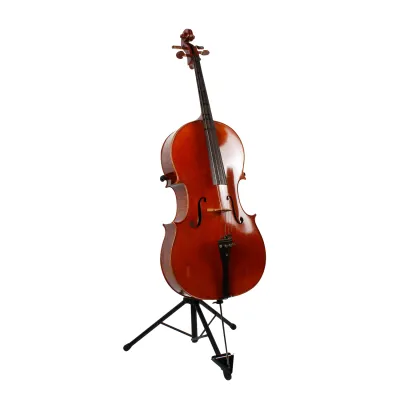
Prices are valid at publication and may change. Please refer to the product page for the latest price.
Standard A-frame stands support the bottom of the cello ribs and are highly stable, but they may require you to retract the endpin completely before resting the instrument. Other specialized designs feature a suspended cradle or a dedicated slot that allows you to keep the endpin extended. Choose a style that matches your preferred workflow during practice sessions, as constantly adjusting the endpin can become tedious during short breaks.
Choose a Design That Fits Your Practice Environment
Your primary playing location dictates the best stand design for your needs. For a dedicated home practice space, a permanent or semi-permanent stand with a wide, heavy base offers maximum stability. These stands occupy more floor space but provide peace of mind, especially in households with pets, young children, or high foot traffic. Having a permanent spot for your cello also makes it easier to pick up and play at a moment’s notice.

In crowded studio or orchestral settings, floor space is often limited. A low-profile stand or a compact peg-style stand can fit neatly into tight seating arrangements without obstructing neighboring musicians or music stands. These designs prioritize a smaller footprint while keeping the instrument upright and within arm’s reach. They allow you to safely set your instrument down during rehearsal breaks without cluttering the stage.
For live stage performances, visual aesthetics and quick-adjust mechanisms become crucial. You may want a sleek, minimalist stand that blends into the background under stage lights rather than drawing attention away from your performance. Look for models that allow you to lift the cello out quickly and quietly during performance transitions without fumbling with complex locking straps or noisy metal latches.
Evaluate Stability, Materials, and Floor Protection
The frame material of a stand directly influences its durability, weight, and overall stability. Steel frames offer excellent stability and resistance to bending, making them ideal for stationary use in busy environments. Aluminum stands are lighter and easier to carry, though they may feel less grounded in drafty areas. Wooden stands provide a classic aesthetic that complements the natural wood of the instrument, but they require careful handling to avoid scratches and may be more sensitive to humidity changes.
Contact points are critical because your cello’s varnish is highly sensitive to chemical reactions and physical abrasion. Ensure that any part of the stand touching the wood is covered with non-abrasive padding, such as specially formulated rubber or dense foam. Avoid cheap plastics or low-grade foam that can degrade over time or leach chemicals onto the delicate varnish, which can cause permanent discoloration or stickiness.
The base feet of the stand must protect your flooring while preventing the stand from sliding. Look for non-slip, non-marking rubber feet that grip hard surfaces like tile, laminate, or polished wood without leaving dark streaks. If you practice on carpet, ensure the feet are wide enough to distribute the weight evenly, preventing deep indentations and keeping the stand perfectly level.
Decide on Portability and Storage Features
If you frequently travel for lessons, rehearsals, or gigs, portability is a key consideration. Look for a folding cello stand that collapses into a compact shape, fitting easily into a gig bag pocket or a car trunk. The folding mechanism should operate smoothly and lock securely into place when open, ensuring the stand does not accidentally collapse while supporting your instrument.
There is often a trade-off between ultra-lightweight travel stands and heavy-duty stationary models. Lightweight stands are highly convenient for transport but may offer less wind resistance or stability on uneven outdoor surfaces. Assess your typical travel destinations to decide whether convenience outweighs maximum stability, and consider keeping a heavier stand at home while using a lighter one for travel.
Some portable stands come with dedicated carry bags or integrated shoulder straps. These accessories protect the stand from scratches during transit and make it easier to carry alongside your cello case and music stand. If a bag is not included, check the folded dimensions of the stand to ensure you can find a compatible third-party pouch or case that fits your existing gear setup.
Use This Final Checklist Before You Buy
Before finalizing your purchase, review the manufacturer’s detailed specifications for maximum height and weight limits to confirm compatibility with your cello. This step is particularly important if you play a non-standard or historic instrument with unique proportions, or if you use specialized accessories like an ergonomic endpin.
Set a realistic budget in S$ based on your required material durability and portability features. While basic utility stands are widely available, investing a bit more in high-quality padding and a sturdier frame can prevent costly repairs to your instrument down the road. Think of the stand as an insurance policy for your cello.
Finally, confirm the retailer’s return policy before checking out. Even with careful measurements, you may find that the stand’s cradle shape or neck support does not align perfectly with your cello’s ribs or endpin setup. A flexible return policy allows you to test the fit safely at home and exchange the stand if it does not provide the secure fit your instrument requires.
Frequently Asked Questions (FAQ)
Can I use a guitar stand for my cello?
No, you should not use a standard guitar stand for a cello. Cellos are significantly wider, deeper, and heavier than guitars, meaning they will not fit securely in a guitar stand’s narrow cradle. Using an incorrect stand risks improper weight distribution, which can cause the instrument to fall or put dangerous pressure on the neck and pegbox. Always use a stand specifically designed for the unique dimensions of a cello.
Do I need a stand with a bow holder?
An integrated bow holder is a highly convenient feature, but it is not strictly necessary. It keeps your bow off the floor and away from music stands where it could be stepped on or knocked over. However, ensure the bow holder does not compromise the stand’s balance or make it top-heavy when the cello is removed. If your stand does not have one, you can also use a separate bow clip or case.
Community discussion
Share your experience or ask a question. Comments are reviewed before publication.