
Selecting the right Chinese calligraphy practice book depends entirely on matching the book’s instructional design, grid layout, and script style to your current level of muscle memory and brush control. A book that is too advanced will lead to frustration, while one that is too basic will stall your progress. By evaluating your current skills and understanding key book features, you can choose a practice guide that systematically builds your technique.
Identify Your Current Calligraphy Skill Level
Accurately assessing your skill level before purchasing a book prevents the common pitfall of buying materials that are either too frustrating or too simple. Many learners make the mistake of purchasing beautiful classical rubbings because they are inspired by the art, only to find that they cannot replicate the strokes without a structured guide. Starting with a book that matches your current physical control ensures steady, encouraging progress.
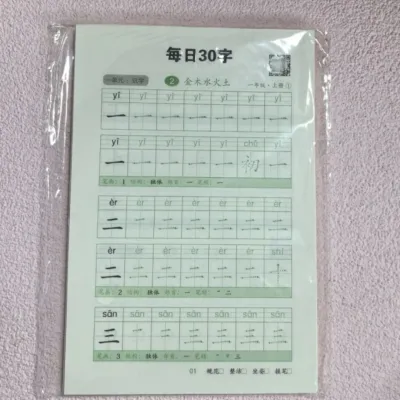
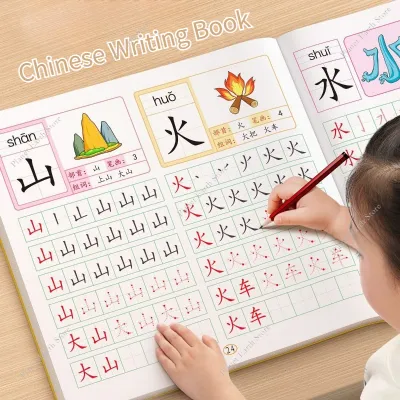
You are a complete beginner if you struggle with basic stroke order, cannot maintain consistent character proportions without a highly structured grid, or have never held a traditional ink brush or brush pen. At this stage, your hand-eye coordination is still adapting to the unique pressure and angle required for Chinese characters. You need explicit visual guides, directional arrows, and highly structured grids to build foundational muscle memory.
Products mentioned in this guide


Prices are valid at publication and may change. Please refer to the product page for the latest price.
You have reached the intermediate stage when you can write basic characters with correct stroke order and recognizable forms, but your characters lack structural balance, fluid transitions, and consistent spacing. You no longer need to trace characters, but you still rely on grids to keep your writing aligned. Your focus shifts from executing individual strokes to understanding how different components of a character fit together harmoniously.
Advanced practitioners have mastered basic character structures and can write fluidly without relying on grids. At this level, your goal is to transition from mechanical accuracy to artistic expression, studying classical styles and historical masterworks. You are ready to explore specialized scripts, analyze the subtle nuances of historical brushwork, and develop a personal artistic voice through freehand writing.
Key Features to Evaluate in Any Practice Book
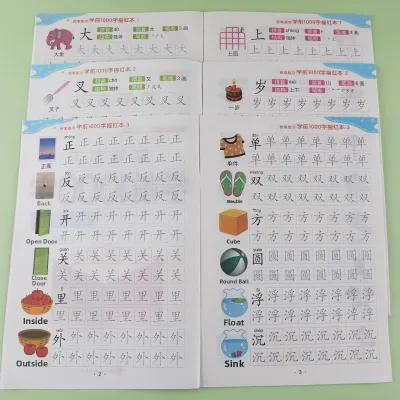
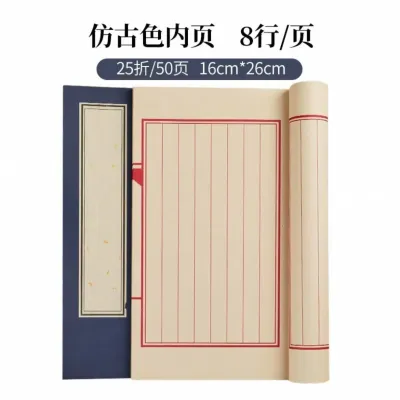
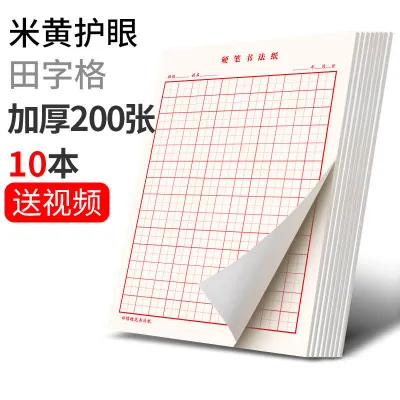
The layout of the practice grid dictates how you learn to balance characters. Rice grids, which feature diagonal, horizontal, and vertical guidelines, offer the highest level of structural support, making them ideal for beginners analyzing stroke placement. Field grids divide the square into four equal quadrants, providing a moderate level of guidance for intermediate writers. Cross grids offer a single vertical and horizontal line, while blank columns are reserved for advanced practice where you must rely entirely on internal spatial awareness.

The paper used in a practice book must match your writing instrument. Traditional liquid ink requires highly absorbent paper, but standard practice books often use treated paper to prevent ink bleed. If you use water-based brush pens or felt-tip calligraphy pens, look for thick, smooth, non-absorbent paper that prevents feathering. For traditional brush and ink practice, look for books featuring specialized water-writing paper, which allows you to practice using plain water that evaporates, leaving the page clean for reuse.
Paper weight is typically measured in grams per square meter. For calligraphy practice, standard copy paper is often too thin and smooth, causing ink to pool or bleed through to the next page. Look for practice books that use paper with a weight of at least eighty grams per square meter, or those specifically labeled as calligraphy-grade paper. This thickness provides the necessary resistance and absorption to capture the subtle variations of your brush strokes.
The physical construction of the book directly impacts your practice experience. Standard perfect-bound books tend to snap shut, forcing you to hold the pages down with one hand while trying to write with the other. Prioritize lay-flat bindings, spiral-bound editions, or loose-leaf sheets that sit completely flat on your desk. This ensures an unobstructed, comfortable writing posture, which is essential for maintaining steady brush control during long practice sessions.
Practice books vary widely in their educational content. Some books offer only blank grids with a single reference character at the top of the page, while others provide comprehensive stroke-by-stroke breakdowns, directional arrows indicating brush pressure, and detailed explanations of common structural mistakes. Choose a book that matches your need for guidance, ensuring you do not buy a book of blank grids when you still need step-by-step instruction.
Choosing the Right Book Type for Beginners
For those just starting their calligraphy journey, the primary goal is to build muscle memory and master basic stroke mechanics. Look for practice books dedicated exclusively to regular script, which is the foundation of all Chinese calligraphy. These books should feature clear, step-by-step stroke breakdowns, showing exactly where a stroke begins, how the brush pressure changes, and where it ends.
Tracing exercises, often referred to as tracing over red characters, are incredibly beneficial for beginners. These pages feature faint red or grey outlines of characters that you write directly over, allowing your hand to feel the correct path, speed, and pressure of the brush without the pressure of empty space. This direct physical feedback is crucial for training your hand to execute complex curves and sharp angles.
Ensure the book you choose begins with dedicated drills for basic strokes and radicals before introducing full characters. Mastering the horizontal stroke, vertical stroke, dot, and hook individually makes writing complete characters far less intimidating. A good beginner book will dedicate several pages to these fundamental elements, reinforcing the building blocks of the script.
A well-structured beginner book also helps build confidence by breaking down complex characters into manageable steps. When you can see that a highly complex character is simply a combination of three or four basic radicals you have already practiced, the learning process becomes much less intimidating. This systematic approach prevents cognitive overload and keeps your practice sessions focused and productive.
Avoid books that jump straight into complex poems, cursive scripts, or ungridded blank pages. Cursive and semi-cursive styles require a deep understanding of regular script structure; attempting them too early will lead to messy, unstructured habits. Stick to highly structured, regular script books with large grids until your hand can consistently reproduce basic shapes.
Selecting the Right Book Type for Intermediate Learners
As an intermediate learner, your focus shifts from individual strokes to the overall structure and flow of the character. Look for books that emphasize structural analysis, showing how radicals are proportioned relative to the rest of the character. These books often feature diagrams illustrating the balance of space, the alignment of central axes, and the relationship between tight and loose components.
At this stage, you can begin exploring semi-cursive script, which introduces fluid connections between strokes. Look for practice books that provide side-by-side comparisons of regular script and semi-cursive script, helping you understand how formal strokes are simplified and linked together. This comparative study deepens your appreciation of character evolution and transitions your writing from rigid to fluid.
Composition and spacing exercises become increasingly important as you progress. Look for books that transition from single-character practice to full sentences and vertical columns. These exercises teach you how to maintain consistent character sizes, manage the spacing between characters, and create a balanced overall layout on the page.
Intermediate practice books also introduce the concept of writing rhythm and speed. Unlike the slow, deliberate strokes of a beginner, intermediate writing requires a balance of slow, controlled movements and swift, decisive strokes. Look for books that explain how to transition smoothly between strokes, as this fluid movement is what gives semi-cursive script its characteristic energy and elegance.
Your practice method should also transition from direct tracing to copying by observation. Choose books with smaller grids that encourage you to look at a reference character and replicate it independently in an adjacent blank grid. This refines your visual analysis skills, forcing you to judge proportions and angles mentally rather than relying on physical outlines.
Finding Advanced Copybooks and Classical Rubbings
Advanced practitioners should move away from modern, simplified practice books and focus on classical stele rubbings and historical masterworks. These historical documents, preserved through stone carvings and ink rubbings, represent the pinnacle of calligraphy. Practicing from these sources connects you directly with the techniques of historical masters, offering a level of depth and character variation that modern fonts cannot replicate.
Depending on your artistic interests, you can explore specialized script categories such as cursive script, clerical script, or seal script. Each of these styles has its own unique rules of structure, brush movement, and aesthetic philosophy. Advanced copybooks focusing on these scripts will help you diversify your skills and develop a more versatile artistic range.
It is also helpful to understand the difference between stone steles and paper manuscripts when choosing advanced copybooks. Stone steles feature characters carved into stone, which were later copied using ink rubbings; these characters tend to have sharp, angular, and powerful structures. Paper manuscripts, written directly with ink and brush, showcase the fluid, continuous movement of the brush and the natural variation of ink density. Exploring both types allows you to experience different aesthetic philosophies.
When selecting classical rubbings, prioritize high-resolution, unaltered reproductions. The best books preserve the natural wear, ink bleed, and brush textures of the original stone or paper. These fine details are critical for advanced study, as they reveal how the master applied pressure, lifted the brush, and managed ink flow.
Look for editions that include analytical commentary from modern scholars. These commentaries provide invaluable context, explaining the historical background of the piece, the specific brush techniques used, and the evolution of the character forms. Understanding the historical context behind a masterpiece adds a layer of intellectual depth to your physical practice.
Pre-Purchase Checks for Editions and Formats
Before purchasing any practice book, verify whether it features traditional or simplified characters. Traditional characters are essential if you wish to study classical calligraphy and historical rubbings, as almost all historical masterworks are written in this format. Simplified characters are highly practical if your primary goal is modern daily handwriting or academic study in regions where simplified script is standard.
Check the instructional language of the book to ensure it matches your language proficiency. Many high-quality calligraphy books are published entirely in Chinese. While visual diagrams are universally understood, having English explanations or bilingual guides can significantly speed up your learning process, especially when studying complex structural rules and historical context.
Consider the physical format that best fits your lifestyle and practice space. Standard paper books are excellent for dedicated desk practice, while spiral-bound editions offer superior lay-flat convenience. If you prefer a highly customizable approach, digital downloads allow you to print specific practice sheets on your preferred paper type as many times as you need, making it a highly cost-effective option.
Finally, pay close attention to the reputation of the publisher. High-quality printing is essential for calligraphy books, as blurry lines or low-contrast reproductions can obscure critical stroke details. Look for publishers specializing in art, education, or classical literature, as they are more likely to maintain the high printing standards required for accurate visual study.
Frequently Asked Questions (FAQ)
Do I need a specific brush pen for my practice book?
Yes, your writing instrument must match the scale and paper type of your practice book. If your book features large grids, you will need a medium or large brush pen to fill the space correctly; using a fine-tip pen in a large grid makes it difficult to judge proportions. Conversely, small grids require a fine-tip brush pen to prevent the strokes from merging into an illegible blot. Additionally, ensure the paper is thick enough to handle the ink flow of your specific pen. If you are practicing in Singapore’s humid climate, keep in mind that highly absorbent paper can absorb moisture from the air, causing ink to bleed more easily. Using water-writing books with a water-filled brush pen is an excellent, mess-free alternative that bypasses paper absorbency issues entirely.
Should I start with traditional or simplified characters?
Your choice should align with your long-term learning goals and cultural interests. If your primary goal is to appreciate classical Chinese art, read historical texts, or master traditional brush calligraphy, you should start with traditional characters, as the vast majority of historical copybooks and masterworks are written in this script. Traditional characters also preserve the original structural balance and radical meanings, which can make the logic behind character construction easier to grasp. However, if you are learning calligraphy to improve your everyday handwriting, communicate in modern business environments, or support school curriculum requirements, starting with simplified characters is highly practical. Many modern practice books offer excellent foundational courses in simplified regular script, ensuring you build strong brush habits regardless of the character set you choose.
Community discussion
Share your experience or ask a question. Comments are reviewed before publication.