
Selecting the ideal Chinese dictionary requires matching the book’s structural design with your current vocabulary size and learning objectives. A beginner needs immediate phonetic support and clear English translations, whereas an advanced student requires monolingual definitions to build native-like fluency. By evaluating your current proficiency level, understanding key dictionary features, and choosing between print and digital formats, you can acquire a highly effective learning tool that accelerates your Mandarin studies.
Identifying Your Mandarin Proficiency Level
To choose the right reference book, you must first accurately assess your current language skills. Beginners typically recognize fewer than 500 characters and rely heavily on Pinyin, the Romanized spelling of Chinese characters, to read and pronounce words. At this stage, your primary goal is building a foundational vocabulary and understanding basic sentence structures, meaning you need a dictionary that prioritizes phonetic guides and simple translations.
Intermediate learners generally recognize between 500 and 2,500 characters, allowing them to read simple texts with occasional assistance. If you are at this level, you are likely transitioning away from constant Pinyin support and need to understand how words function in context. Your dictionary must help you distinguish between similar terms and explain how words change meaning when combined with other characters.
Products mentioned in this guide
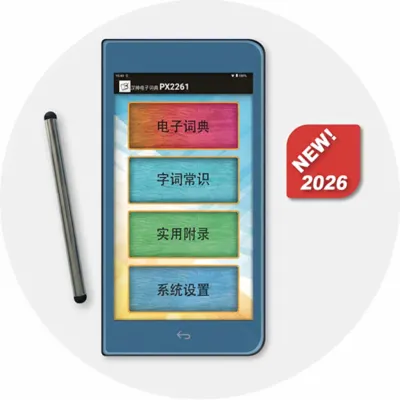
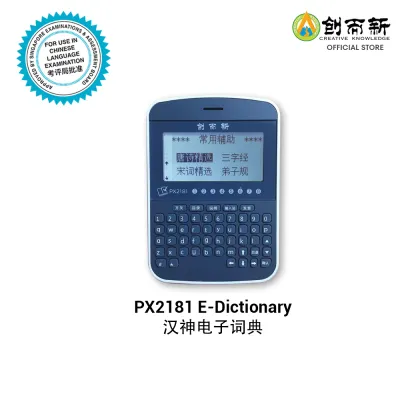
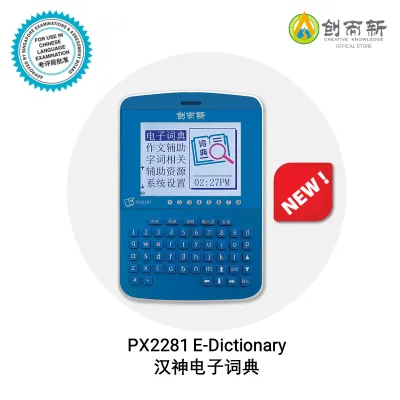
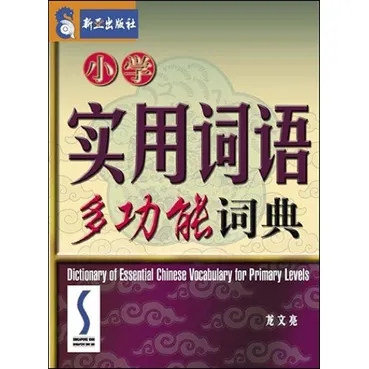
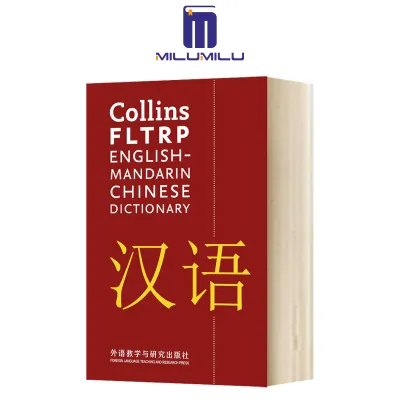
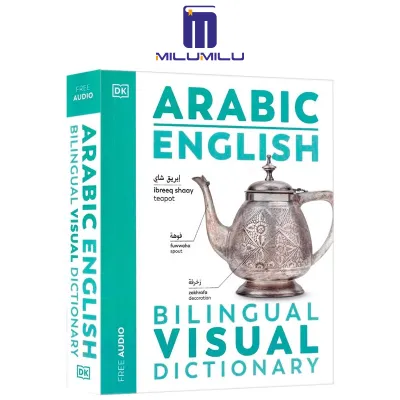
Prices are valid at publication and may change. Please refer to the product page for the latest price.
Advanced learners recognize upwards of 2,500 characters and can navigate native materials like newspapers, literature, and professional documents. At this stage, you require deep linguistic insights, including classical roots, idiomatic expressions, and subtle stylistic differences. A basic dictionary will only slow you down, as it lacks the depth needed for sophisticated reading and writing.
Standardized Mandarin proficiency exams offer excellent benchmarks for estimating your vocabulary size. For instance, matching your current exam preparation level, such as the Hanyu Shuiping Kaoshi (HSK) or the Test of Chinese as a Foreign Language (TOCFL), to a dictionary’s target vocabulary size ensures you do not buy a tool that is either too simple or too complex.
Choosing a dictionary that is too basic will quickly stall your progress, as it won’t explain the subtle differences between synonyms or provide natural example sentences. Conversely, diving into a highly advanced dictionary too early can lead to cognitive overload, where definitions contain even more unfamiliar characters, causing frustration and slowing down your study sessions.
Essential Features to Evaluate in a Chinese Dictionary
A high-quality dictionary must feature clear pronunciation guides, typically using Pinyin, though some regional resources may use Zhuyin. For print editions, a robust radical index and stroke-count guide are non-negotiable, allowing you to locate unfamiliar characters systematically. These structural tools form the backbone of independent character lookup.

Look closely at how definitions are structured within the entries. The best dictionaries do not just list direct translations; they provide natural example sentences, common collocations, and specific grammatical markers. These elements show you how to use the word correctly in your own writing and speech, preventing common errors in sentence construction.
You must verify whether the dictionary supports simplified characters, traditional characters, or both. Simplified characters are standard in mainland China and Singapore, while traditional characters are used in Taiwan and Hong Kong. Align this choice with your specific curriculum or the region where you plan to use your language skills to avoid confusion.
Recommended Dictionary Types by Proficiency Level
As your Mandarin skills grow, your relationship with reference books must evolve. Beginners require a bridge between their native language and Chinese, while advanced learners must eventually immerse themselves entirely in the target language to think and express themselves naturally.
This progression means moving from highly visual, bilingual resources to comprehensive translation volumes, and finally to monolingual dictionaries designed for native speakers. Upgrading your dictionary at key milestones ensures your study tools always match your cognitive capacity and learning speed.
Beginner: Bilingual and Pinyin-Focused Dictionaries
For those starting their Mandarin journey, a bilingual English-Chinese and Chinese-English dictionary is indispensable. These books should feature large, legible fonts to help you clearly see the individual strokes of complex characters, accompanied by Pinyin directly alongside or above the characters.
Many excellent beginner dictionaries incorporate visual elements, such as illustrations for common nouns, and step-by-step stroke order diagrams. Understanding stroke order is not just for calligraphy; it is a fundamental skill that helps you write characters legibly and look them up efficiently in traditional indexes.
While these beginner tools are highly accessible, they have clear limitations. Their definitions are often simplified to single-word equivalents, which can lead to errors when you try to construct complex sentences. They rarely cover the deep cultural nuances or formal registers of the language, meaning you will eventually outgrow them.
Intermediate: Comprehensive Bilingual Dictionaries
As an intermediate learner, you need a dictionary that goes beyond simple one-to-one translations. Comprehensive bilingual dictionaries offer multiple definitions for a single character or compound word, showing how its meaning shifts across different contexts and parts of speech.
At this stage, distinguishing between words with similar English translations is crucial. Look for dictionaries that include dedicated usage notes, synonym comparisons, and clear indicators of formal versus informal registers to prevent awkward phrasing in your spoken and written Mandarin.
Language is dynamic, and Mandarin evolves rapidly with technology and social trends. It is essential to check the publication date or edition of an intermediate dictionary to ensure it includes contemporary vocabulary, modern idioms, and relevant digital terminology rather than obsolete historical terms.
Advanced: Monolingual and Specialized Dictionaries
To achieve true fluency, advanced learners must transition to monolingual dictionaries. By reading definitions written entirely in Chinese, you force your brain to stop translating back and forth into English, which builds a faster, more intuitive grasp of the language.
Advanced study often requires specialized reference books. These include dedicated dictionaries for Chinese idioms, which explain the historical stories and classical origins behind these four-character phrases, as well as specialized volumes for classical Chinese literature or professional fields like business and law.
It is important to note that monolingual dictionaries require a high level of dedication and a strong foundational vocabulary. If you attempt to use them too early, you may find yourself in an endless loop of looking up words within the definitions themselves, which can severely disrupt your reading flow.
Print vs. Digital Formats: Which Suits Your Study Routine?
Physical print dictionaries offer a tactile experience that many learners find highly beneficial for memory retention. Flipping through pages reduces screen fatigue, eliminates digital distractions like social media notifications, and allows you to stumble upon related words organically as you browse.
On the other hand, digital dictionary applications offer unmatched speed and convenience. They feature powerful search functions, including handwriting recognition and optical character recognition via your device’s camera, alongside instant audio pronunciations recorded by native speakers.
When choosing a digital format, verify its offline capabilities so you can study without an internet connection. Additionally, check the compatibility with your specific devices and review any subscription models or one-time purchase fees to ensure the app fits your long-term budget and study routine.
Pre-Purchase Checklist for Language Learning Books
Before finalizing your purchase, double-check that the dictionary aligns perfectly with your current learning materials. Ensure the primary character set matches your coursework, and confirm that the explanatory language is one you are fully comfortable reading.
Investigate the publisher’s reputation in the field of language education. Opt for recent editions from established academic presses, as these are more likely to have undergone rigorous editorial review, ensuring accurate pinyin tone marks, correct stroke orders, and relevant modern vocabulary.
Finally, compare prices and availability across reputable online bookstores and local educational suppliers in Singapore. Prices typically range from affordable pocket editions to premium academic volumes, so checking local stockists can help you find the best value in S$ while avoiding high international shipping fees.
Frequently Asked Questions (FAQ)
Do I need both an English-Chinese and a Chinese-English dictionary?
For most learners, a combined bilingual dictionary that features both English-to-Chinese and Chinese-to-English sections in a single volume is highly sufficient and cost-effective. These combined books allow you to look up words whether you are translating from your native language or trying to decipher a new Chinese character.
However, if you are pursuing advanced translation work, academic research, or professional writing, separate volumes may become necessary. Individual, dedicated dictionaries for each direction are often much larger and contain more exhaustive lists of technical terms, literary references, and specialized collocations than a combined volume can accommodate.
How do I look up a character if I do not know its pinyin?
If you encounter a printed character and do not know its pronunciation, you can use the traditional radical index found in almost all print dictionaries. This method involves identifying the character’s primary component, counting its remaining strokes, and locating it within the corresponding section of the index.
For a faster alternative, digital dictionaries and mobile applications offer highly efficient lookup methods. You can use handwriting input to draw the character directly on your touchscreen, or use your smartphone’s camera to scan the text, allowing the software to identify the character and display its definition instantly.

Community discussion
Share your experience or ask a question. Comments are reviewed before publication.