
Starting to learn Mandarin can feel overwhelming due to the thousands of unique characters, distinct tones, and unfamiliar grammatical structures. A high-quality Chinese flashcard set serves as one of the most effective tools to build a strong vocabulary foundation from scratch. By breaking down complex characters into manageable, bite-sized pieces of information, flashcards help you transition from passive recognition to active recall.
However, not all flashcard decks are created equal, and choosing an inaccurate set can lead to frustrating errors and wasted study time. To find the perfect deck, you must evaluate your specific learning goals, choose between physical and digital formats, and verify that the cards include essential linguistic features like precise Pinyin, stroke order guides, and contextual examples.
Define Your Mandarin Learning Goals
Before purchasing any flashcard set, you must clearly define what you want to achieve with your Mandarin studies. Beginners often fall into the trap of buying a generic vocabulary deck, only to find that the words do not align with their immediate needs.
Products mentioned in this guide
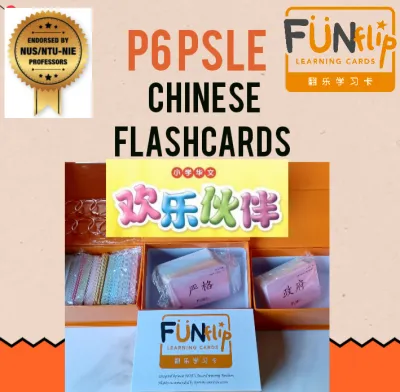
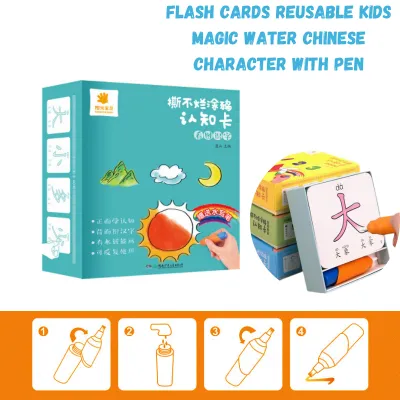
![[SG Stock] Learning 1280 Words Chinese Characters 识字大王 1280字 CHI](https://img.lazcdn.com/g/p/bbb48fe15d36b90f9be449562bdd804e.jpg_400x400q80.jpg_.webp)
Prices are valid at publication and may change. Please refer to the product page for the latest price.
If your primary objective is to pass an official proficiency exam, such as the Hanyu Shuiping Kaoshi (HSK), you should look for flashcards specifically mapped to the HSK 1 and HSK 2 syllabus. These standardized lists focus on high-frequency vocabulary and grammar structures required for academic and professional certification.
Conversely, if you are learning Mandarin for daily conversational survival, travel, or social integration, a thematic flashcard deck is far more practical. These sets group words by real-world scenarios, such as ordering food at a local hawker centre, asking for directions, or shopping. For those living or working in Singapore, conversational fluency often requires mastering practical terms used in daily transactions rather than the academic vocabulary found in standard exam prep.
You also need to decide whether your focus is on passive recognition or active production. Passive recognition means being able to read a character or understand it when spoken, which is excellent for reading signs, menus, or text messages. Active production involves being able to write the character from memory or pronounce it correctly in conversation. If active production is your goal, you will need flashcards that emphasize stroke order and pronunciation guides, allowing you to practice writing and speaking during every review session.
Physical vs. Digital Flashcards: Choosing Your Format
The debate between physical paper flashcards and digital applications comes down to your personal study habits, lifestyle, and how you retain information. Both formats offer distinct advantages, and the right choice depends on where and how you plan to study.

Some learners thrive on the tactile feedback of physical cards, while others require the convenience and algorithmic efficiency of a mobile app. Consider your daily routine when making this decision. If you have a dedicated study desk at home and prefer screen-free learning blocks, physical cards can provide a highly focused, distraction-free environment. On the other hand, if you plan to study during your daily commute on the MRT or during quick breaks at work, a digital app that lives on your smartphone is highly portable and always accessible.
When to Choose Physical Chinese Flashcards
Physical Chinese flashcards are highly recommended for learners who retain information best through tactile interaction. The physical act of holding a card, flipping it over, and physically tracing the character strokes with your finger or a pen creates strong cognitive pathways that digital screens cannot replicate. This hands-on approach is particularly beneficial for mastering Chinese characters, where muscle memory plays a massive role in handwriting retention.
Traditional paper cards are also ideal if you want to minimize screen time and avoid the constant barrage of digital distractions. When you study with a physical deck, you are not tempted by incoming messages, social media notifications, or email alerts.
When shopping for a physical set, always check the product specifications for paper quality and card size. Look for cards printed on thick, heavy-duty cardstock (ideally 300 gsm or higher) with a matte or laminated finish to prevent tearing and smudging over time. The cards should be large enough to display the character clearly without crowding the Pinyin and English translations. Additionally, consider whether the set comes with a storage box, sorting dividers, or a binding ring to keep your cards organized as your vocabulary grows.
When to Choose Digital Flashcard Apps
Digital flashcard apps are the ultimate tool for busy, on-the-go learners who need to maximize short pockets of free time throughout the day. One of the greatest advantages of digital decks is the integration of high-quality audio. Hearing a native speaker pronounce a word at the exact moment you reveal the card is invaluable for mastering Mandarin’s four tones, helping you avoid developing a flat or incorrect accent.
Furthermore, digital platforms utilize Spaced Repetition Systems (SRS). These algorithms track your performance and automatically schedule reviews for each card right before you are likely to forget it. This eliminates the administrative work of sorting cards manually and ensures you spend your time focusing on difficult words rather than reviewing terms you already know well.
Before committing to a digital platform or purchasing a premium deck, verify its device compatibility and offline access capabilities. Ensure the app runs smoothly on your specific smartphone or tablet operating system and allows you to download decks for offline study, which is essential for maintaining a consistent routine when internet access is spotty. Be sure to check the subscription model as well; some apps require a one-time purchase, while others charge recurring monthly fees or offer free basic tiers with paid upgrades.
Essential Features for Beginner Mandarin Flashcards
To ensure your chosen flashcard set is an effective learning tool, you must look for several critical linguistic and design features. First and foremost, every beginner card must display Pinyin—the official romanization system for Chinese characters—complete with accurate tone marks. Mandarin is a tonal language where a change in pitch completely alters the meaning of a word. Some modern flashcard designs use tone color-coding, where characters are colored based on their tone (for example, red for first tone, orange for second tone). This visual reinforcement helps your brain associate the character with its correct pitch much faster.
Second, look for stroke order diagrams on the cards. Chinese characters are written in a specific sequence of strokes, and learning the correct order from day one is vital. Correct stroke order ensures your characters look balanced, helps you write faster, and is essential if you eventually transition to writing with a traditional brush or calligraphy pen. Without these diagrams, beginners often draw characters incorrectly, leading to bad habits that are incredibly difficult to break later on.
Third, verify that the flashcards provide access to native speaker audio pronunciation. If you are using physical cards, this is often achieved via a companion app or QR codes printed on each card that link to audio files. Avoid sets that rely solely on phonetic English approximations, as these cannot accurately convey the nuances of Mandarin pronunciation.
Finally, the best flashcards do not present vocabulary words in complete isolation. Look for decks that include example sentences, common collocations, and contextual clues on the back of the card. Seeing how a word is used in a natural sentence helps you understand its grammatical function and real-world application, making it much easier to transition from memorizing vocabulary to speaking coherent sentences.
How to Evaluate and Select a Flashcard Product
With hundreds of Chinese flashcard products available on online marketplaces and in local bookstores, you need a structured verification process to assess quality before spending your money. Start by checking the deck’s alignment with recognized educational standards. For beginners, a deck that explicitly states it covers the official HSK 1 and HSK 2 vocabulary, or matches the curriculum of established language schools, guarantees that you are learning highly relevant, structured content.
Next, carefully examine sample cards or preview screenshots. Pay close attention to layout clarity and font legibility. The Chinese characters should be printed in a clean, standard typeface (such as Kaiti or Songti) that clearly shows individual brush strokes and radical components. Avoid stylized, overly calligraphic, or cursive fonts, which can confuse beginners who are still learning to recognize basic shapes. The Pinyin should be positioned clearly above or below the character, with a font size large enough to read without straining.
You should also verify the credibility of the publisher or developer. Look for products created by established educational institutions, university presses, or reputable language learning brands with a proven track record in Chinese pedagogy.
Lastly, read user feedback and reviews on independent forums or retail sites, specifically looking for comments regarding error rates. Chinese learning materials can occasionally suffer from typos in Pinyin tone marks or incorrect English translations. Check if other buyers have complained about low-quality audio recordings, flimsy paper stock, or software bugs in digital apps. Investing a few minutes in checking these details can save you from the frustration of learning incorrect pronunciation or dealing with a poorly designed product.
Best Practices for Flashcard Study Routines
Acquiring a new language requires consistency and active engagement; simply flipping through cards passively will not yield long-term results. To maximize your retention, you must integrate your chosen flashcards into a structured, active study routine.
If you are using physical cards, you can implement spaced repetition manually using the Leitner system. This involves setting up five box compartments: new cards start in Box 1, and every time you get a card right, it moves to the next box. If you get a card wrong, it goes back to Box 1. Cards in Box 1 are reviewed daily, while cards in higher boxes are reviewed less frequently, such as every three days, weekly, or bi-weekly.
Always combine your flashcard reviews with active recall techniques. Instead of just looking at the character and immediately flipping the card to read the answer, force your brain to retrieve the meaning, Pinyin, and tone first. Speak the word aloud clearly, paying close attention to your pitch. If you are practicing writing, keep a notebook or a small whiteboard handy to trace the character using the correct stroke order before checking the back of the card.
To prevent cognitive overload and burnout, set realistic daily limits for introducing new cards. It is highly recommended for beginners to start with just 5 to 10 new words per day. While this may seem like a small number, the cumulative effect of daily reviews builds up rapidly. If you introduce too many new cards too quickly, your daily review backlog will soon become unmanageable, leading to frustration and fatigue. Keep your study sessions short, focused, and consistent—ten minutes of high-quality daily practice is far more effective than a two-hour cram session once a week.
Frequently Asked Questions (FAQ)
Should beginners focus on simplified or traditional characters?
Your choice between simplified and traditional characters should align with your geographic, professional, and personal goals. Simplified characters are the official standard in Mainland China and Singapore, making them highly practical for daily life, business, and media consumption in these regions. Traditional characters are used in Taiwan, Hong Kong, and many overseas Chinese communities, and they preserve the historical, artistic, and radical structures of the written language.
If you plan to travel, work, or study in Singapore or Mainland China, starting with simplified characters is generally the most practical path. However, if your interest lies in classical Chinese literature, calligraphy, or connecting with communities in Taiwan, traditional characters are the appropriate choice. Many digital flashcard apps allow you to toggle between both formats, which is an excellent feature if you want to keep your options open.
How many new flashcards should a beginner learn per day?
For most beginners, learning 5 to 10 new flashcards per day is the ideal sweet spot for sustainable progress. This pace allows you to build a vocabulary of 150 to 300 words within a month without overwhelming your memory. Remember that for every new card you introduce, you also inherit a growing pile of reviews for the coming days.
If you find yourself struggling to recall previously learned words or spending more than 15 to 20 minutes on daily reviews, you should temporarily stop adding new cards. Focus entirely on clearing your existing review backlog until your retention rate improves, then gradually resume adding new vocabulary at a pace that fits your daily schedule and cognitive comfort.

Community discussion
Share your experience or ask a question. Comments are reviewed before publication.