
Selecting the right Chinese flashcards is a foundational decision that directly shapes your Mandarin learning trajectory. Because Chinese is an orthographically deep language—where the written characters do not directly reveal their pronunciation—flashcards serve as an essential bridge between visual recognition, phonetic recall, and contextual comprehension. However, a set designed for a beginner learning basic pictographs will frustrate an adult preparing for business negotiations, just as a dense, text-heavy exam preparation deck will overwhelm an absolute beginner. To find the ideal set, you must evaluate how the cards present characters, the level of contextual support they offer, and how well they align with your specific cognitive load limits and learning goals.
Assess Your Current Mandarin Proficiency
Before browsing online marketplaces or visiting local bookstores in Singapore, you must accurately diagnose your current proficiency level. Mandarin learners generally fall into three broad categories: absolute beginners, conversational learners, and advanced or exam-focused students. Absolute beginners are starting from zero, focusing on mastering pinyin (the romanized spelling system), the four basic tones, and fundamental stroke orders. Conversational learners can recognize a few hundred characters and understand basic sentence structures, but they struggle with reading fluency and vocabulary depth. Advanced learners are working toward professional fluency or preparing for standardized exams, requiring a deep grasp of formal written expressions, synonyms, and complex grammatical patterns.
Evaluating your current character recognition versus your reading comprehension is a critical step in this self-assessment. You might be able to recognize fifty individual characters when presented in isolation, but finding those same characters embedded in a paragraph of text can feel entirely different. Reading comprehension requires syntactic processing—understanding how characters combine to form multi-character words and how those words function within a sentence. If you can recognize characters but cannot understand simple sentences, your flashcard focus must shift from isolated vocabulary to contextual usage.
Products mentioned in this guide
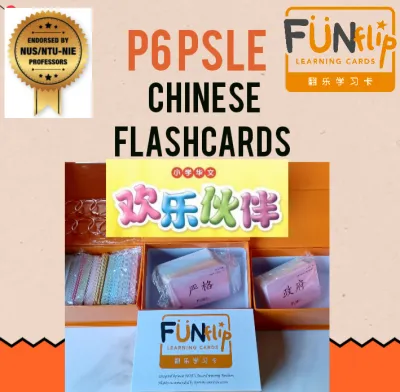
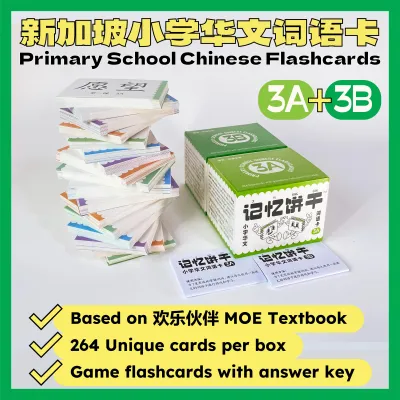
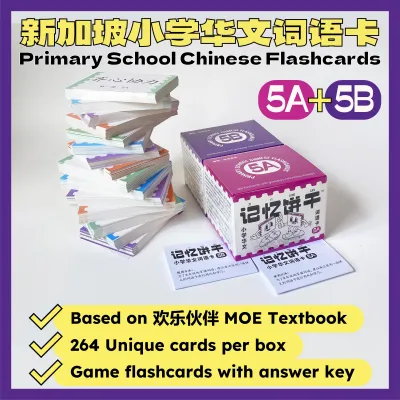
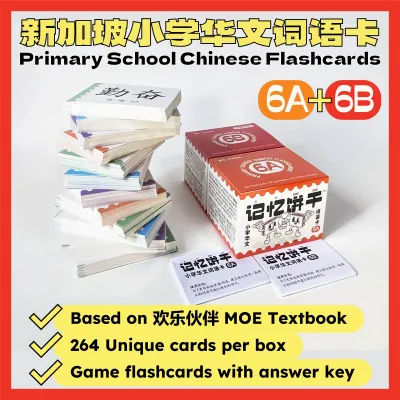
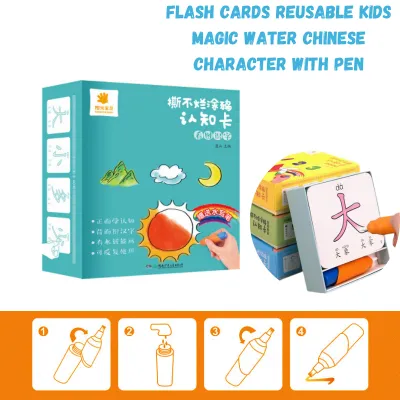
![[SG Stock] Learning 1280 Words Chinese Characters 识字大王 1280字 CHI](https://img.lazcdn.com/g/p/bbb48fe15d36b90f9be449562bdd804e.jpg_400x400q80.jpg_.webp)
Prices are valid at publication and may change. Please refer to the product page for the latest price.
To determine your starting point, perform a quick self-check of your current skills. Ask yourself the following questions:
- Can you reliably identify the four tones of Mandarin and write basic characters using the correct stroke order? If not, your focus should be on basic strokes and radical-based cards.
- Do you know the most common one hundred high-frequency characters, and can you read them without relying on pinyin? If yes, you are ready to transition to conversational, compound-word cards.
- Are you studying for a specific standardized exam, such as the Hanyu Shuiping Kaoshi (HSK), and do you need to master precise, syllabus-aligned vocabulary? If so, your cards must match the exact level and guidelines of that framework.
Key Features to Evaluate in Chinese Flashcard Sets
An effective Chinese flashcard set is much more than a piece of cardboard with a character on one side and an English translation on the other. The anatomical design of the card determines how efficiently your brain processes and retains the information. First, examine the character presentation. The card must clearly display either Simplified Chinese (used in mainland China and Singapore) or Traditional Chinese (used in Taiwan and Hong Kong), depending on your target region. For beginners, the inclusion of stroke order diagrams is non-negotiable, as writing characters correctly reinforces muscle memory and helps you recognize hand-written or stylized fonts. Additionally, look for cards that break characters down into their constituent radicals, which are the building blocks of the language that often hint at a character’s meaning or pronunciation.

Contextual learning features are equally vital for long-term retention. While pinyin and English translations are necessary crutches for beginners, their placement on the card matters immensely. If pinyin is printed directly above or below the Chinese character on the front of the card, your eyes will naturally gravitate toward the familiar Latin alphabet, bypassing the character entirely and stalling your reading progress. The most effective cards place pinyin and English translations strictly on the reverse side, forcing your brain to attempt character recognition first. Furthermore, look for cards that include common word combinations (collocations) and example sentences, which demonstrate how a character’s meaning shifts depending on its context.
Sensory aids can significantly accelerate the memorization process, especially for visual and auditory learners. Color-coding is a highly effective tool for mastering Mandarin tones; for instance, a set might use red for the first tone, orange for the second, green for the third, and blue for the fourth. This visual association helps you recall the correct tone even when you cannot remember the exact spelling of the word. Audio integration, such as printed QR codes that link to native-speaker pronunciations or companion mobile applications, is also invaluable for ensuring you do not internalize incorrect pronunciation habits. Finally, visual mnemonics—illustrations that connect the shape of a character to its meaning—are excellent for beginners, though they become less practical as you transition to abstract, advanced vocabulary.
Match Flashcard Types to Your Learning Stage
Aligning the density and context of your flashcards with your cognitive load is essential for maintaining study momentum. Cognitive load refers to the amount of working memory your brain uses to process new information. If a flashcard contains too many unfamiliar elements at once—such as a new character, an intricate stroke diagram, a complex grammar point, and a long example sentence—your brain becomes overloaded, and retention drops. Conversely, if a card is too simple for your level, you will experience boredom and fail to build functional reading skills.
Beginner Level: Character Recognition and Basic Vocabulary
For those at the beginning of their Mandarin journey, the primary goal is to build a solid foundation of character recognition and basic vocabulary. At this stage, you should prioritize flashcard sets that emphasize stroke order, basic radicals, and high-frequency survival words. Learning the correct stroke order is not just about neatness; it establishes a systematic way of writing that makes complex characters much easier to memorize and recall. Radicals are equally important, as they serve as semantic anchors; for example, knowing that the “water” radical appears in words related to liquids allows you to make educated guesses about unfamiliar characters.
Look for beginner sets that feature large, clear fonts and plenty of white space to minimize visual distraction. Visual mnemonics are highly beneficial here, as they transform abstract lines into recognizable pictures, making the initial phase of memorization feel intuitive and engaging. However, you should actively avoid sets that include overly complex example sentences or advanced grammar explanations on the back of the card. At the beginner level, these extra details act as cognitive noise, distracting you from the primary task of linking a single character to its sound and basic meaning.
Intermediate Level: Contextual Usage and Reading Fluency
Once you have mastered basic character recognition, your learning goals must shift toward contextual usage and reading fluency. Intermediate learners often face the “intermediate plateau,” where they know many individual characters but struggle to read actual texts or hold natural conversations. To break through this stage, prioritize flashcard sets that include full example sentences and common word combinations. In Mandarin, characters rarely stand alone; they combine to form multi-character words, and understanding these collocations is the key to sounding natural.
Look for graded reader-style flashcards or sets that organize vocabulary into thematic clusters, such as travel, dining, or business. This thematic arrangement helps your brain build semantic networks, making it easier to retrieve related words during a conversation. At this stage, you should also check for minimal pinyin reliance. Choose cards that relegate pinyin to the back of the card or use a very small font, forcing you to rely entirely on character-only recognition. This transition is crucial for developing the reading speed and automaticity required for real-world literacy.
Advanced and Exam Prep: Nuanced Vocabulary and Formal Writing
Advanced learners and those preparing for standardized exams require a highly structured, precise approach to vocabulary acquisition. If you are studying for exams like the HSK, your flashcards must align perfectly with the official vocabulary lists and testing frameworks. These sets should offer precise, nuanced definitions that distinguish between close synonyms, as higher-level exams frequently test your ability to choose the correct word in subtle contexts.
Ensure your advanced flashcard sets include synonyms, antonyms, and formal written expressions, which are common in newspapers, literature, and professional settings. Advanced Mandarin relies heavily on four-character idiomatic expressions (chengyu) and formal grammar patterns that do not appear in casual conversation. Your flashcards should clearly highlight these structures, providing detailed explanations of their grammatical functions and register. By focusing on these sophisticated elements, you can transition from basic communication to professional-level fluency.
Physical Cards vs. Digital Flashcard Apps
One of the most common debates among language learners is whether to use physical flashcards or digital flashcard applications. Physical cards offer distinct tactile benefits and promote screen-free focus, which is increasingly valuable in our highly digital lives. The physical act of holding a card, flipping it over, and sorting it into different piles engages multiple senses, which can enhance memory consolidation. Furthermore, physical cards allow you to use the Leitner system—a highly effective manual spaced repetition method where cards are moved between different compartments based on how well you know them. This tactile interaction provides a clear, satisfying sense of progress that digital screens often fail to replicate.
On the other hand, digital flashcard apps offer unmatched portability and algorithmic efficiency. These apps utilize automated Spaced Repetition System (SRS) algorithms to schedule reviews at the precise moment a memory is about to fade, maximizing study efficiency. They also allow you to carry thousands of cards in your pocket, making it easy to study during short commutes or quick breaks throughout the day. Many digital decks also feature instant audio playback, search functions, and the ability to easily customize cards with your own notes and images.
For many learners, a hybrid approach offers the best of both worlds. You can use physical cards for dedicated, focused study sessions at home, enjoying the screen-free environment and tactile feedback. Meanwhile, you can use a companion digital app to review the same vocabulary while on the go. When choosing physical cards, look for publishers that offer companion audio apps or QR codes on the cards, allowing you to easily integrate native-speaker audio into your physical study routine. Ultimately, the ideal format depends on your lifestyle, study habits, and personal preferences.
What to Verify Before Buying Chinese Flashcards
Before finalizing your purchase of a Chinese flashcard set, there are several critical factors you must verify to ensure you are investing in a high-quality, accurate learning tool. First, check the publication year of the set, especially if you are preparing for standardized exams. Language testing frameworks undergo periodic updates; for example, the transition from the older HSK system to the newer HSK 3.0 standards introduced significant changes to the vocabulary lists and level distributions. Buying an outdated set could mean studying words that are no longer relevant to your exam goals.
Next, verify the specific Chinese variant and regional audio accents included with the set. If you are planning to live, work, or study in Taiwan, you will want a set that features Traditional Chinese characters and uses standard Taiwanese Mandarin pronunciation. Conversely, if your focus is on mainland China or Singapore, Simplified Chinese and standard Putonghua pronunciation are the appropriate choices. Check the product specifications or publisher details to ensure the audio guides or companion apps feature clear, native-speaker accents without heavy regional dialects that could confuse your listening practice.
Finalizing your purchase requires careful selection of your retail source. To avoid low-quality bootlegs, poorly translated editions, or cards with printing errors, suggest purchasing from established online bookstores, specialized language learning shops, or official publisher sites in Singapore. High-quality educational publishers invest heavily in professional editing and proofreading, ensuring that the characters, pinyin, and English translations are entirely accurate. Investing S$20 to S$50 in a well-produced, durable set from a reputable source will save you from the frustration of learning incorrect stroke orders or inaccurate definitions.
Frequently Asked Questions (FAQ)
Do I need separate flashcards for Traditional and Simplified Chinese?
As a general rule, it is highly recommended to focus on one writing script first, based on your specific geographic, professional, or personal goals. Trying to learn both Simplified and Traditional characters simultaneously as a beginner can lead to cognitive overload and confusion, as many characters look completely different despite sharing the same pronunciation and meaning. Once you reach an intermediate or advanced level of fluency in one script, transitioning to the other becomes much easier, as you can leverage your existing vocabulary and contextual knowledge. While some advanced flashcard sets display both scripts on the same card, beginners should stick to a single, dedicated script to build a strong, clear foundation.
How many flashcards should I study per day?
When starting a new flashcard routine, it is crucial to prioritize consistency over volume to prevent burnout. A manageable starting point for most learners is introducing five to ten new cards per day, while dedicating the majority of your study time to reviewing older cards. The key to long-term retention is the spacing effect; reviewing a card multiple times over several days or weeks is far more effective than cramming fifty cards in a single session. As your memory improves and you become familiar with the radical system, you can gradually increase your daily intake, but always ensure that your review pile remains manageable and does not become an overwhelming chore.
Are picture-based flashcards better for adult learners?
Picture-based flashcards and visual mnemonics are highly effective for adult beginners because they leverage dual-coding theory, which states that combining visual and verbal information creates stronger memory traces. For abstract Chinese characters, having a visual anchor that connects the character’s shape to its meaning can significantly speed up the initial memorization process. However, as you progress to intermediate and advanced levels, you must gradually transition to text-heavy, context-based cards. Advanced vocabulary often involves abstract concepts, formal grammar, and nuanced synonyms that cannot be easily represented by a simple illustration, requiring you to rely on example sentences and collocations for true fluency.

Community discussion
Share your experience or ask a question. Comments are reviewed before publication.