
Finding the right concert ukulele bag requires matching the physical dimensions of your instrument with the internal measurements of the bag, while balancing your daily transport needs. A bag that is too tight puts dangerous pressure on the tuning pegs and neck, while an overly loose bag allows the instrument to slide around, risking structural damage during transit. By taking precise measurements of your instrument and understanding how different bag styles distribute weight and protection, you can secure a fit that preserves your instrument’s setup and finish.
Measure Your Concert Ukulele Accurately
To find a bag that offers reliable protection, you must establish the exact physical baseline of your instrument. Relying solely on the generic “concert” label can lead to a poor fit, as manufacturing standards vary across brands. Some concert ukuleles feature longer headstocks, wider bodies, or deeper sides that require more space than a standard template provides. Using a soft sewing tape measure or a flexible ruler will allow you to capture the contours of your instrument accurately without scratching the finish.
Begin by measuring the total length of the ukulele. Lay the instrument flat and measure from the very top of the headstock down to the bottom edge of the body. If your ukulele has a strap button installed on the bottom block, include this protrusion in your measurement, as it can add up to half an inch of length and cause zipper strain if overlooked.
Products mentioned in this guide
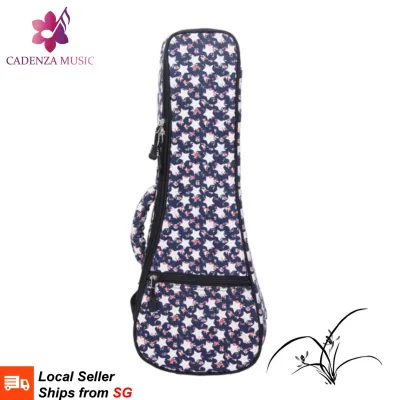
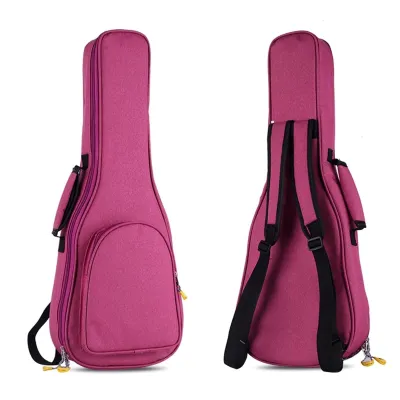
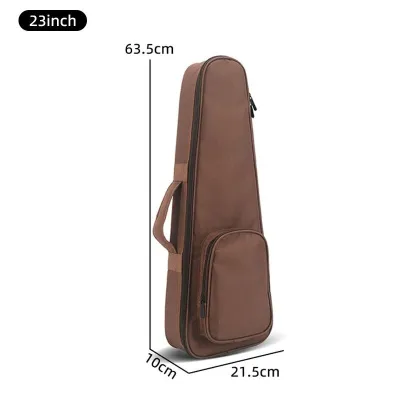
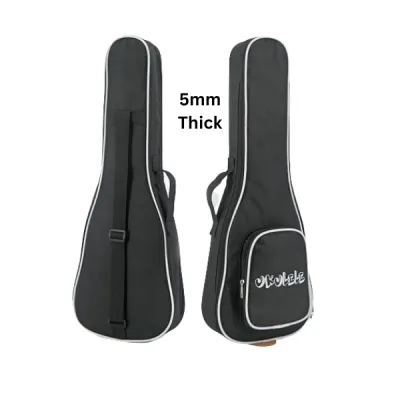
![TMW Ukulele Bag Soprano Concert Tenor 21 24 26 Inch Padded Non-Padded Durable Lightweight Accessories [LIMITED STOCK]](https://img.lazcdn.com/g/p/e90aa04e52be6081bb59361ef099b06e.jpg_400x400q80.jpg_.webp)
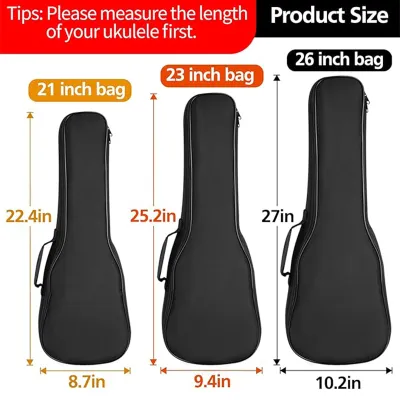
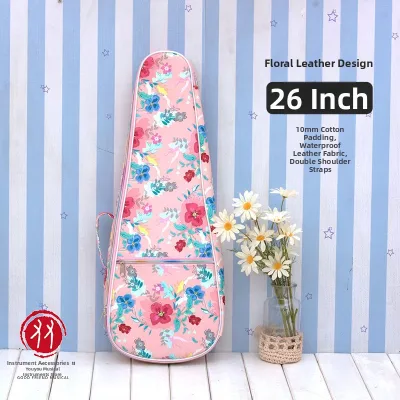
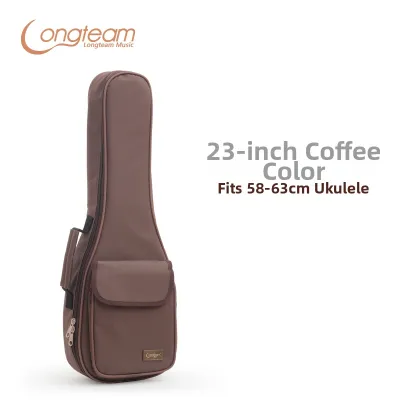
Prices are valid at publication and may change. Please refer to the product page for the latest price.
Next, measure the width of the body at its widest points. This requires two measurements: the lower bout (the wider bottom half of the body) and the upper bout (the narrower section near the neck joint). Measure straight across these areas from edge to edge. If you own a pineapple-shaped concert ukulele, which lacks a defined waist, your body width will be relatively uniform, requiring a bag with a more generous interior volume.
Finally, measure the body depth. Place the tape measure against the side of the ukulele and measure from the backboard to the front soundboard. If your instrument has an arched back or a tall bridge and saddle setup, measure the total thickness from the highest point of the bridge to the back of the body. Additionally, account for external hardware such as side-mounted preamps, input jacks, or oversized tuning pegs, as these components add bulk that must be accommodated by the bag’s interior dimensions. Record all these measurements in both inches and centimeters to easily cross-reference them with manufacturer specification sheets.
Understand Bag Dimensions and Fit Types
When browsing for a concert ukulele bag, it is crucial to distinguish between internal and external dimensions. Product listings often display external dimensions prominently to indicate shipping sizes or storage footprints. However, these numbers include the thickness of the outer padding, accessory pockets, and handles. To ensure your instrument actually fits inside, always locate the internal dimensions, which represent the actual usable space available for the ukulele. A bag with thick 20mm padding will have an internal length that is significantly shorter than its external length.

The level of protection and mobility you require will dictate the style of bag you choose. There are three primary categories of bags available on the market:
- Lightweight Gig Bags: These bags typically feature minimal padding, ranging from 2mm to 5mm, or may even be unpadded dust covers. They are highly flexible, easy to fold, and lightweight, making them excellent for home storage or quick trips in a personal vehicle. However, they offer virtually no protection against drops, sharp impacts, or structural crushing.
- Padded Gig Bags: Considered the industry standard for daily use, these bags feature 10mm to 25mm of high-density foam padding. They offer a semi-rigid structure that helps the bag hold its shape, providing excellent protection against everyday bumps, minor drops, and temperature fluctuations. They almost always include adjustable backpack straps for hands-free commuting.
- Semi-Hard Cases (Polyfoam Cases): These cases combine the lightweight portability of a gig bag with the structural rigidity of a hard case. They utilize a dense, molded expanded polystyrene (EPS) foam core covered by a durable nylon fabric exterior. This design offers enhanced impact resistance and crush protection, making them ideal for crowded public transit or travel.
Remember that generic size categories are not standardized. A bag labeled as a “concert bag” by one accessory manufacturer might be tailored to a slim-line model, making it too tight for a traditional deep-bodied concert ukulele. Always prioritize the exact numerical measurements provided in the product specifications over the marketing labels.
Evaluate Padding, Materials, and Protection Needs
The structural integrity of a concert ukulele bag depends heavily on the quality of its padding and construction materials. When evaluating padding, look for high-density foam rather than soft, open-cell sponge foam. High-density foam absorbs shock much more effectively and does not compress easily under the weight of the instrument or external pressure. Pay close attention to the padding thickness around the neck and headstock areas, as these are the most vulnerable parts of a ukulele during a fall.
A high-quality bag should feature a dedicated neck support system. This usually consists of a raised, padded block that cradles the neck, accompanied by a hook-and-loop strap to secure the instrument in place. This system prevents the ukulele from shifting vertically or horizontally inside the bag, ensuring that the headstock remains suspended and does not absorb the force of a direct impact if the bag is dropped upright.
The interior lining material is another critical factor in preserving your instrument’s condition. Look for soft, non-abrasive linings such as microfiber, velvet, flannel, or brushed nylon. Rough, unlined nylon interiors can act like fine sandpaper, gradually wearing down satin finishes or scratching high-gloss lacquers over time, especially at contact points like the bridge, headstock, and body edges.
For the exterior, prioritize durable, weather-resistant fabrics. High-denier polyester, such as 600D or 900D nylon, offers excellent resistance to tears, abrasions, and water penetration. Reinforced stitching at high-stress areas, such as the shoulder strap attachments and carry handles, is essential for long-term durability. Additionally, look for bags equipped with rubberized feet or bumpers on the bottom and sides; these protect the fabric from wearing out when you set the bag down on rough concrete or wet ground.
Check Storage and Accessory Compatibility
A practical concert ukulele bag must accommodate your essential accessories without compromising the safety of the instrument itself. Before making a purchase, list the items you plan to carry on a daily basis, such as a digital clip-on tuner, a capo, spare strings, a cleaning cloth, a strap, and perhaps a small notebook or chord chart. If you play an acoustic-electric ukulele, you may also need to carry an instrument cable and spare batteries.
Examine the design and placement of the accessory pockets. Highly functional pockets feature a gusseted design, meaning they have dedicated side panels that allow them to expand outward when filled. Flat, non-gusseted pockets will expand inward when stuffed with bulky items like tuners or cables. This inward expansion presses directly against the delicate wooden soundboard of your ukulele, creating localized pressure points that can warp the wood, damage the finish, or even crack the top under sudden impact.
Internal storage compartments require careful inspection as well. Some bags feature small zippered pockets inside the main compartment, often located behind the neck area. Ensure that these internal pockets do not have exposed metal zipper teeth or metal pulls that could come into direct contact with the ukulele’s neck or headstock, as these will inevitably cause scratches during transit.
To maintain the structural balance of the bag, avoid overstuffing the pockets. Carrying excessively heavy items, such as large tablet computers or thick songbooks, in the front pocket can make the bag front-heavy. This imbalance increases the risk of the bag tipping forward and falling flat on its face when stood upright, putting unnecessary stress on the bridge and soundboard of your instrument.
Verify the Fit Before Finalizing Your Purchase
Once you have selected a bag that matches your measurements, performing a physical fit check is the final step to ensure your concert ukulele is fully protected. When you place the instrument inside the bag for the first time, pay close attention to how it settles into the padding. The ukulele should slide in smoothly without requiring you to stretch the sides of the bag or force the zipper closed around the lower bout.
Conduct a lateral movement check by gently tilting the closed bag from side to side. You should not feel the instrument sliding freely or shifting weight significantly inside. If the ukulele moves more than an inch in any direction, the bag is too loose, which reduces the effectiveness of the padding during an impact. If you must use an oversized bag, you can temporarily fill the empty space with a folded microfiber cleaning cloth, but finding a closer-fitting bag is always the most secure long-term solution.
Next, verify the headstock clearance. The top of the headstock and the tuning pegs should not press tightly against the top zipper or the end of the bag. There should be a small buffer zone of space or thick padding to ensure that if the bag is dropped on its end, the impact force is absorbed by the bag’s outer shell and padding rather than being transmitted directly down the neck of the ukulele. Additionally, ensure the tuning pegs are not twisted or turned out of alignment by the sides of the bag, as constant pressure on the pegs can loosen the gears over time.
Finally, test the zippers and seams. Slowly pull the zippers around the entire perimeter of the bag. The zipper sliders should glide smoothly without catching on the interior lining or binding around the curves of the body. Look for bags that feature an interior zipper guard—a padded flap of fabric that runs along the inside of the zipper track. This guard acts as a protective barrier, preventing the metal or plastic zipper teeth from rubbing against the wood and scratching the finish of your concert ukulele.
Frequently Asked Questions (FAQ)
Can I use a soprano ukulele bag for a concert ukulele?
No, you cannot safely use a soprano ukulele bag for a concert ukulele. A concert ukulele is physically larger than a soprano model, typically measuring about 23 inches in total length compared to the soprano’s 21 inches. The body of a concert ukulele is also wider and deeper. Attempting to force a concert ukulele into a soprano bag will put extreme tension on the neck and headstock, bend or damage the tuning pegs, and likely split the seams or break the zippers of the bag, leaving your instrument unprotected.
Is a hard case better than a padded gig bag for a concert ukulele?
Neither option is universally ideal; the right choice depends on your specific travel habits and protection needs. A hard case, constructed from wood, fiberglass, or ABS plastic, offers a maximum level of crush resistance and environmental sealing, making it the ideal choice for air travel, stacking in car trunks, or long-term storage in areas with fluctuating humidity. However, hard cases are heavier and lack the convenient backpack straps found on padded gig bags. A high-quality padded gig bag is much lighter, easier to carry on public transit or while cycling, and provides more than enough impact protection for daily commutes to lessons, rehearsals, and local gigs.
Community discussion
Share your experience or ask a question. Comments are reviewed before publication.