
Finding the right replacement pickups requires a systematic approach that balances your musical goals with your instrument’s physical and electrical specifications. Upgrading your guitar with DiMarzio pickups can transform its voice, but the ideal choice depends on matching the pickup’s output, frequency response, and physical dimensions to your specific guitar build and playing style. By evaluating your current setup’s limitations and comparing them against official technical specifications, you can select a model that delivers the precise clarity, sustain, or grit your music demands.
Identify Your Tone Goals and Playing Style
Before browsing any product catalogs, you must diagnose the specific shortcomings of your current guitar tone. Many players seek an upgrade because their existing pickups sound muddy in the low frequencies, harsh and piercing in the high register, or simply lack the output necessary to drive an amplifier into natural saturation. Identifying these specific pain points allows you to target pickups designed to correct these imbalances, rather than choosing a model based solely on artist associations or general popularity.
Your primary musical genres will largely dictate your tonal targets. For example, modern metal and progressive rock players typically require high-output pickups that maintain tight, articulate low-end tracking under heavy distortion. Conversely, blues, jazz, and classic rock players often prioritize dynamic range, touch sensitivity, and vintage-voiced clean tones that respond organically to changes in picking volume. Defining these stylistic requirements helps narrow your search to specific output categories and EQ profiles.
Products mentioned in this guide



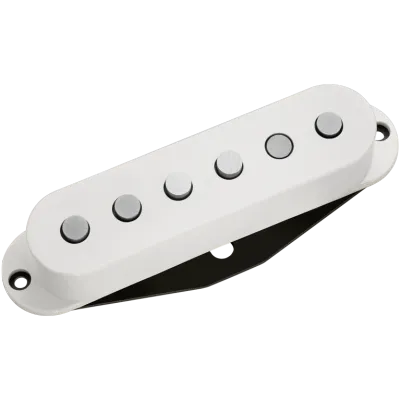
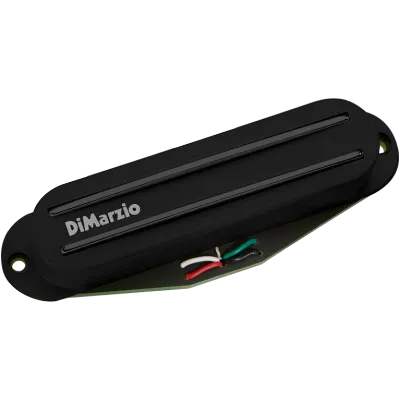
Prices are valid at publication and may change. Please refer to the product page for the latest price.
You must also consider the fundamental operational differences between active and passive pickup designs. Passive pickups, which make up the vast majority of the DiMarzio catalog, rely on physical wire wraps and magnets to generate a signal, offering a highly dynamic, organic response that interacts closely with your amplifier’s input stage. Active pickups utilize battery-powered internal preamps to deliver high output with extremely low noise and a compressed, consistent dynamic profile. Understanding these trade-offs ensures you select a system that aligns with your playing dynamics and maintenance preferences.
Establishing this clear baseline of your tonal goals prevents common purchasing mistakes. Instead of searching for a generic “good” sound, you can look for specific technical attributes, such as a boosted midrange to cut through a band mix or a scooped EQ profile to provide clarity in a dark-sounding instrument. This analytical approach ensures your new pickups solve your actual performance challenges.
Match Pickup Specifications to Your Guitar Build
Physical compatibility is the first critical gatekeeper when selecting new pickups. You must verify the routing dimensions of your guitar’s pickup cavities and the specific mounting formats required. Standard humbuckers, traditional single-coils, soapbars, and direct-mount configurations all have distinct physical footprints and mounting hardware. Measuring your existing cavities and checking the manufacturer’s physical dimension sheets prevents the frustration of purchasing a pickup that physically cannot fit into your guitar without invasive woodwork.

The acoustic properties of your guitar’s tonewoods and construction also play a role in how a pickup will ultimately sound. While pickups have the most significant impact on your amplified tone, pairing a bright-sounding pickup with an inherently bright guitar can result in an unpleasantly harsh high-end response. Conversely, installing a dark, mid-heavy pickup in a warm, resonant instrument can lead to a muddy, indistinct sound. Evaluating your guitar’s unplugged acoustic character helps you choose a pickup with an EQ profile that complements, rather than exaggerates, those natural tendencies.
String alignment is another vital technical detail that dictates your choice of pickup model. Guitars equipped with tremolo systems, such as Floyd Rose bridges, or wide-spaced hardtail bridges require wider pole piece spacing, often referred to as F-spacing. Standard-spaced pickups are designed for traditional fixed bridges with narrower string spreads. Measuring the distance between your high and low E strings directly over the pickup position ensures the magnetic poles align correctly under each string, preventing volume drop-offs on the outer strings.
Finally, take note of any physical constraints within the guitar cavity itself. Some high-output humbuckers or active-format pickups feature deeper baseplates or taller coils that require more vertical clearance than a standard shallow cavity provides. Additionally, choosing between covered and uncovered pickups can affect fitment, as metal covers add slight width and height to the pickup body. Verifying these physical limits beforehand protects your instrument from unnecessary modifications.
Select DiMarzio Models by Output and Voicing
DiMarzio categorizes its extensive lineup primarily by output level and voicing, allowing you to target models engineered for your specific application. High-output models are designed to push your amplifier’s front end harder, making them highly suitable for heavy rock and metal genres where tight low-end tracking and aggressive harmonic response are essential. These pickups typically utilize ceramic magnets to maintain clarity and definition even under extreme levels of high-gain distortion.
For players seeking a more expressive, touch-sensitive performance, medium and low-output models offer a wider dynamic range and a more vintage-inspired voicing. These pickups often employ Alnico magnets, which deliver a warmer, softer attack and a sweeter high-end response. Medium-output models are highly versatile, providing enough power to drive an overdrive pedal while retaining the clean headroom and subtle nuances needed for blues, fusion, and classic rock styles.
If you play a guitar configured for single-coil pickups but struggle with 60-cycle hum, noiseless single-coil formats offer a practical solution. These designs utilize stacked coils or specialized hum-canceling technology to eliminate background noise while preserving the bright, glassy treble response and visual aesthetics of a traditional single-coil. This allows you to perform under high-gain or venue lighting conditions without the distracting hum associated with vintage single-coil designs.
To make an informed decision, always consult the manufacturer’s official tone charts, EQ graphs, and specification sheets rather than relying on subjective online reviews. These official resources provide standardized ratings for bass, midrange, treble, and millivolt output, allowing you to compare different models objectively. By analyzing these technical specifications, you can accurately predict how a specific model will interact with your guitar’s natural voice and your amplification setup.
Verify Electrical Compatibility and Installation Limits
Before finalizing your purchase, you must ensure your guitar’s electrical harness is compatible with your chosen pickups. The resistance value of your volume and tone potentiometers directly influences your guitar’s high-frequency response. Standard single-coil pickups typically pair with 250k ohm potentiometers to smooth out harsh treble, while humbuckers generally require 500k ohm potentiometers to prevent a muddy, muffled sound. Upgrading your pickups may necessitate swapping these internal components to achieve the intended frequency response.
If you are considering active pickup systems or models with onboard active preamps, you must verify that your guitar has sufficient internal cavity space to house a nine-volt battery. Many traditional guitars lack a dedicated battery compartment, requiring you to either modify the instrument’s body or fit the battery tightly inside the existing control cavity. Ensuring you have a viable power solution is a prerequisite for any active electronics installation.
Integrating a new pickup into an instrument that retains its original, mixed-brand pickups requires careful attention to phase and magnetic polarity. Different manufacturers use varying color codes for their wiring and may wind their coils in opposite directions. If two active pickups are out of phase with each other, selecting the middle switch position will result in a thin, hollow, and quiet tone. Verifying the wiring schematics and polarity alignment protocols of both brands is essential for a successful mixed installation.
While basic pickup installation is a common DIY project, you should recognize when a scenario exceeds your technical comfort level. Complex wiring configurations, such as coil-splitting, series-parallel switching, or routing a guitar body for a different pickup shape, require specialized tools and soldering expertise. If you encounter unexpected wiring conflicts, shallow cavities, or structural alignment issues, halt the installation and consult a professional luthier or qualified technician to prevent permanent damage to your instrument.
Frequently Asked Questions (FAQ)
Can I mix DiMarzio pickups with other brands in the same guitar?
Yes, you can combine different pickup brands in a single guitar, but you must verify their magnetic polarity and coil winding direction before soldering. Because different manufacturers do not follow a universal standard for wire color coding or magnetic orientation, installing them without adjustment can lead to an out-of-phase middle position, characterized by a thin, weak sound. To prevent this, compare the wiring diagrams of both brands to identify the correct hot and ground connections. Additionally, ensure the output levels of the mixed pickups are relatively balanced to avoid drastic volume drops when switching between positions.
Do I need to change my potentiometers when upgrading to high-output models?
You do not always need to change your potentiometers, but you should verify their resistance values to ensure they match your new pickup’s specifications. High-output humbuckers generally perform best with 500k ohm potentiometers, which preserve the pickup’s high-frequency clarity and provide a smooth volume taper. If your guitar currently uses 250k ohm potentiometers—common in single-coil configurations—installing a high-output humbucker without upgrading the pots may result in a dark, muddy tone with a loss of treble detail. Always check the manufacturer’s recommended circuit specifications for your specific model before completing the installation.

Community discussion
Share your experience or ask a question. Comments are reviewed before publication.