
Choosing the right drum machine for electronic dance music (EDM) production in Singapore requires balancing tactile workflow, sound generation capabilities, and studio space. While software plugins offer infinite flexibility, hardware drum machines provide a physical connection to your rhythms that can inspire new creative directions. The ideal choice depends on whether you prefer sculpting sounds from scratch using analog synthesis, manipulating pre-recorded samples, or combining both in a hybrid system. Additionally, your choice must align with your existing setup, whether you want a standalone unit that operates independently of a computer or a dedicated controller that integrates deeply with your digital audio workstation (DAW).
Understanding Drum Machine Workflows for EDM
When selecting a drum machine, the core sound architecture determines your sonic palette. Sample-based machines play back pre-recorded audio files, making them highly versatile for genres like house and techno that rely on classic acoustic or digital drum hits. Analog synthesis machines generate sounds using physical circuitry, offering a warm, organic tone and real-time control over parameters like pitch, decay, and snap, which is excellent for heavy kick drums and crisp hi-hats. Hybrid architectures combine both, letting you layer a punchy analog transient with a textured digital sample to create complex, modern EDM sounds.
Another critical decision is choosing between a standalone groovebox and a MIDI controller. Standalone grooveboxes contain their own sound engines, sequencers, and audio outputs, allowing you to produce entire tracks without looking at a computer screen. This is highly beneficial for reducing screen fatigue and creating a focused production environment. MIDI controllers, on the other hand, require a computer connection to function, acting as physical interfaces for software instruments. While controllers are generally more affordable and offer unlimited sound libraries, they lack the portability and independent processing power of standalone hardware.
Products mentioned in this guide
![Alesis Nitro Pro 8-Piece Electronic Drums Kit for Beginners to Advanced Players with Bluetooth [LIMITED STOCK]](https://img.lazcdn.com/g/p/fba2c7c3ade9763f9c88e42370eb61a5.png_400x400q80.png_.webp)
![AROMA TDX-18SC Electronic Drum Kit [AROMA TDX18SC Digital Drum]](https://img.lazcdn.com/g/p/f3eb7bc4d0fcaf4316f92647395675b8.jpg_400x400q80.jpg_.webp)
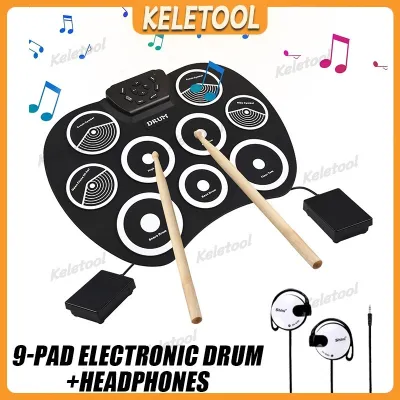
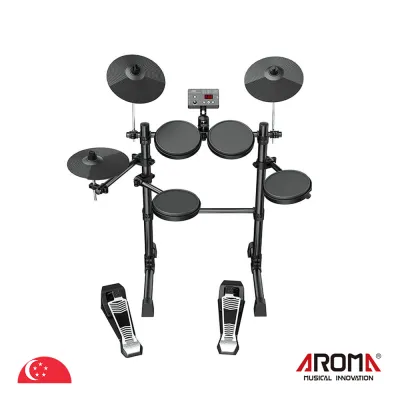
Prices are valid at publication and may change. Please refer to the product page for the latest price.
Your interaction with the machine also depends on the input interface. Step sequencers use a grid of buttons (typically 16 steps) to program rhythms visually, which is the traditional method for building precise, driving EDM beats. This workflow is highly analytical and perfect for programming intricate hi-hat patterns or steady four-on-the-floor kick drums. Real-time performance pads, usually velocity-sensitive, cater to producers who prefer to play their rhythms live, capturing human micro-timing and natural velocity variations. Many modern machines offer both workflows, but you should prioritize the interface that matches your natural rhythmic instincts.
Key Features to Evaluate for Electronic Dance Music
EDM relies heavily on dynamic, polished sounds, making the capabilities of the internal sound engine paramount. Look for multi-timbral support, which determines how many different drum sounds or tracks the machine can play simultaneously. Sample manipulation features, such as pitch shifting, start-point modulation, and envelope shaping, are crucial for transforming basic samples into unique sonic signatures. Built-in effects are equally important; onboard compression helps glue your drum bus together, while distortion or saturation adds warmth and grit to make your beats cut through a dense mix.

The sequencer is the brain of the drum machine, and its depth dictates how complex your rhythms can be. For EDM, a basic 16-step sequencer can quickly feel repetitive. Look for machines that support longer patterns, such as 64 steps, and pattern chaining to build complex song structures. Polyrhythm support allows different tracks to run at different step lengths, creating evolving, hypnotic rhythms. Advanced features like probability (the chance of a step triggering) and parameter locks (recording specific knob movements to individual steps) add organic movement and variation to your patterns.
Your drum machine must communicate seamlessly with the rest of your studio. Standard 5-pin MIDI input and output are essential for syncing with external synthesizers and hardware sequencers. USB audio and MIDI integration allows you to send individual drum tracks directly into your DAW over a single USB cable, simplifying the multi-track recording process. If you plan to expand into modular synthesis or Eurorack gear, look for control voltage (CV) and Gate outputs, which allow the drum machine to send analog trigger signals to external modules.
Matching Drum Machines to Your Production Stage
If you are just starting your EDM production journey, prioritize intuitive interfaces with minimal menu diving. A steep learning curve can stall your creative momentum. Look for entry-level machines that offer straightforward step sequencing, clear visual feedback, and seamless DAW integration. Built-in speakers can be a convenient feature for casual, portable jam sessions, though they are not suitable for critical mixing. At this stage, your goal is to learn the fundamentals of rhythm programming and sound design without being overwhelmed by complex sub-menus.
As your skills progress, you will likely demand deeper sound-shaping capabilities and advanced performance features. Intermediate producers should look for machines that offer extensive modulation matrices, multi-effects engines, and robust pattern-chaining options. Live performance features, such as mute groups, fill triggers, and real-time loop manipulation, are highly valuable if you plan to transition your studio tracks into a live set or DJ hybrid performance. These machines act as the centerpiece of your hardware setup, coordinating multiple external instruments.
In Singapore, where home studios are often set up in compact apartments or shared bedrooms, physical footprint is a major consideration. Compact desktop modules save valuable desk space and are easy to pack away when not in use. However, they may sacrifice physical knobs and sliders, requiring more menu navigation. Full-sized workstations offer hands-on control but require a dedicated studio desk. Budget-wise, entry-level hardware drum machines in the local market typically start around S$300 to S$600, while mid-range and professional workstations can range from S$800 to well over S$2,000. When planning your budget, remember to account for necessary accessories like audio cables, stands, and dust covers. Additionally, Singapore’s high relative humidity means you should invest in a dust cover or a dry cabinet to protect sensitive faders and rotary encoders from moisture damage over time.
Pre-Purchase Verification and Setup Checks
Before finalizing your purchase, verify that the drum machine’s companion software, drivers, and firmware are fully compatible with your computer’s operating system and your preferred DAW. Check the manufacturer’s official support pages for any known compatibility issues, especially if you are running the latest OS updates. Some machines offer dedicated plugin editors that run directly inside your DAW, which can significantly streamline your workflow if supported.
Assess your current audio interface and mixer setup. If you choose a drum machine with multiple physical audio outputs, which is ideal for processing individual drum hits through external hardware or recording them onto separate tracks in your DAW, ensure your audio interface has enough spare input channels to accommodate them. If your interface is limited to two inputs, you will have to rely on the drum machine’s internal stereo mix or use USB audio streaming, provided the hardware supports multi-channel audio over USB.
When purchasing electronic music gear from online marketplaces or international retailers, pay close attention to power requirements and regional warranties. Singapore operates on a 230V, 50Hz electrical system and uses Type G three-pin power plugs. Ensure the drum machine comes with a compatible power supply or a universal adapter. Furthermore, check if the warranty is valid locally. Buying from an authorized local distributor in Singapore often provides peace of mind and easier access to repairs or replacements compared to importing gear from overseas, where return shipping costs can be prohibitive.
Frequently Asked Questions (FAQ)
Do I need a hardware drum machine if I already use software plugins?
You do not strictly need hardware, as modern software plugins are incredibly powerful, flexible, and cost-effective. However, hardware drum machines offer a tactile, hands-on workflow that can accelerate your beat-making process and reduce screen fatigue. Physical knobs, pads, and dedicated buttons encourage happy accidents and real-time improvisation that are difficult to replicate with a mouse and keyboard. Additionally, hardware offloads the processing power from your computer’s CPU, which can prevent audio dropouts during complex production sessions.
Can I use acoustic drum samples on an electronic drum machine?
Yes, provided the drum machine supports sample importing. To use acoustic drum samples, you must verify that the device has internal storage or an SD card slot, and check its supported audio file formats, which are typically 16-bit or 24-bit WAV files at 44.1kHz. Some machines also impose limits on total sample memory or individual sample length. Once loaded, you can use the machine’s built-in filters, envelopes, and effects to shape the acoustic samples, blending them with electronic elements to create unique hybrid drum kits.
Community discussion
Share your experience or ask a question. Comments are reviewed before publication.