
Selecting the right English dictionary is not about finding the book with the most words, but matching your vocabulary size and language goals. If a dictionary is too advanced, its definitions will contain words you also have to look up, creating an endless loop of frustration. Conversely, a dictionary that is too simple will fail to explain the subtle nuances needed for professional writing or academic success. By evaluating your current reading comfort, understanding the distinct categories of dictionaries, and checking key structural features, you can select a tool that accelerates your language journey.
Identify Your Current English Proficiency Level
To find the perfect lexical companion, you must first establish an honest baseline of your current language skills. Start by observing your daily reading habits. When you open an English-language news article, novel, or professional report, how often do you pause to guess a word’s meaning? If you grasp the general message but stumble on specific verbs or adjectives, your passive vocabulary is strong, but your active usage needs support.
There is a critical difference between passive word recognition and active, nuanced application. Recognizing a word like “mitigate” when reading is a passive skill. Knowing how to naturally pair it with nouns—such as “mitigate risks”—and using it correctly in your own speech or writing represents active mastery. If your goal is simply to read, your dictionary needs are different than if you are writing essays or preparing business presentations.
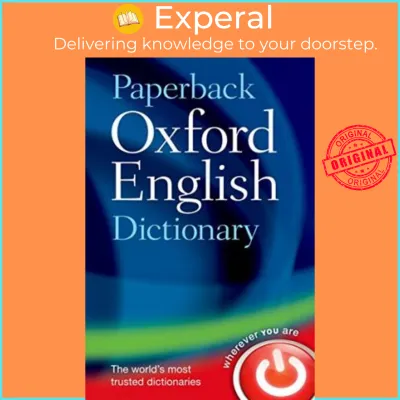
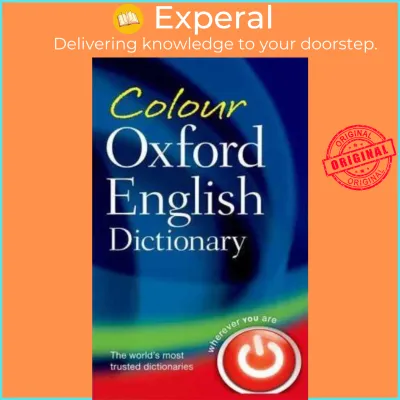
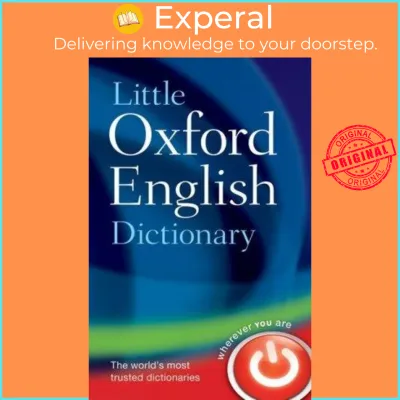
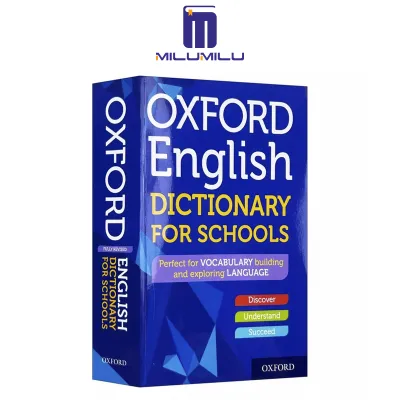
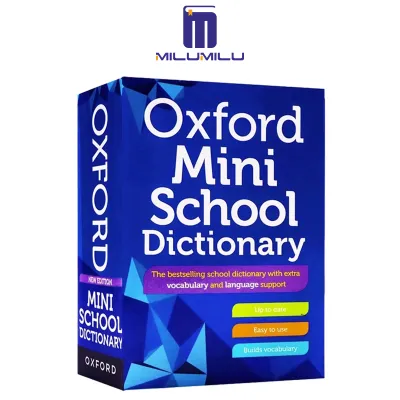
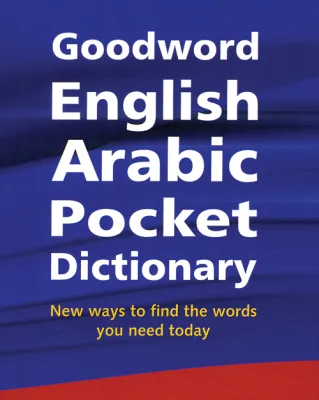
Products mentioned in this guide
![[Singapore seller] OXFORD ENGLISH-ENGLISH-MALAY DICTIONARY THIRD EDITION](https://img.lazcdn.com/g/p/c49b3bd4b64b5bdc796d3983e91dd67d.jpg_400x400q80.jpg_.webp)
Prices are valid at publication and may change. Please refer to the product page for the latest price.
To standardize this self-assessment, it is helpful to align your skills with recognized language frameworks, such as the Common European Framework of Reference for Languages (CEFR). Beginners (A1 to A2) typically rely on basic survival vocabulary and direct translations. Intermediate learners (B1 to B2) can navigate everyday conversations but struggle with complex idioms. Advanced and proficient users (C1 to C2) express themselves fluently and require a dictionary that explains subtle differences between near-synonyms.
Match Your Skills to the Right Dictionary Type
Once you have mapped your proficiency level, you can match your skills to the corresponding dictionary category. Each type is engineered with a specific user profile in mind, balancing definition complexity against the depth of linguistic information provided.

For beginners and elementary learners, bilingual dictionaries and basic learner’s editions are indispensable. These resources bridge the gap to English by providing direct translations alongside simplified definitions. At this stage, your primary goal is to build a foundational vocabulary of high-frequency words. A bilingual dictionary prevents cognitive overload, allowing you to quickly verify a word’s core meaning without getting lost in complex explanations.
As you transition to the intermediate stage, monolingual learner’s dictionaries become the most effective tool for growth. These dictionaries are written entirely in English but use a restricted vocabulary to explain terms. They focus heavily on high-frequency words, common collocations, and clear, practical example sentences. Using a monolingual dictionary at this level forces you to think in English, breaking the habit of mental translation.
Advanced learners require advanced learner’s dictionaries, which offer a sophisticated balance of accessibility and depth. These editions go beyond basic definitions to explore nuanced meanings, register, idioms, and academic vocabulary. They provide extensive grammatical patterns, prepositions that must follow specific verbs, and detailed usage notes. This type is ideal for university students, professionals, and those preparing for high-level proficiency exams.
For proficient speakers and native writers, collegiate or unabridged dictionaries are the gold standard. These reference works are designed for exhaustive linguistic exploration rather than language learning. They contain hundreds of thousands of entries, including rare, archaic, and highly technical terms. Instead of simplified explanations, they offer precise, academic definitions, detailed etymologies, and historical citations showing how usage has evolved.
Choosing a dictionary that does not align with your current level can severely hinder your progress. An intermediate student using a native-speaker collegiate dictionary will often find the definitions more confusing than the target words themselves. Conversely, an advanced student relying on a basic learner’s dictionary will miss out on the stylistic variations and precise collocations necessary to produce natural-sounding prose.
Essential Features to Verify Before Purchasing
Before purchasing a physical dictionary or subscribing to a digital application, you must verify several functional and structural elements. The first feature to check is the defining vocabulary. Reputable learner’s dictionaries restrict their definitions to a core list of 2,000 to 3,000 common words. Without a controlled defining vocabulary, intermediate and advanced learners may find the definitions themselves too difficult to comprehend.
Next, examine the quality of the contextual support. A great dictionary does not just define a word; it shows it in action. Look for entries that include abundant example sentences, clear grammatical labels, and highlighted collocations. For digital formats, verify the presence of high-quality audio pronunciations. Having access to both British and American audio pronunciations is highly beneficial, especially if you are preparing for international environments.
You must also weigh the format that best suits your lifestyle. Physical dictionaries offer a tactile, distraction-free reading experience that can enhance cognitive retention. However, they are heavy and lack search speed. Digital apps and online databases offer instant search capabilities, hyperlinked cross-references, and offline access. If you choose a digital version, ensure it offers a robust offline mode so you can study without relying on an active internet connection.
Finally, check the publication date or the update frequency of the resource. Language is dynamic, with new words, shifting definitions, and modern slang entering the lexicon constantly. For print editions, look for recent publication dates or updated editions. For digital apps, check the developer’s update history on your preferred app store to ensure the lexical database is regularly maintained.
Signs It Is Time to Upgrade Your Dictionary
Your relationship with your dictionary should evolve as your language skills mature. Staying with a basic or bilingual dictionary for too long can stunt your progress, while jumping to an advanced collegiate dictionary too early can cause unnecessary frustration. Recognizing the observable signals of outgrowing your current tool is essential for continuous improvement.
One of the clearest signs that you need an upgrade is when you frequently encounter words in your daily reading that are simply not listed in your dictionary. Alternatively, you might find the word, but the simplified definition fails to explain the specific, nuanced context. If you find yourself looking up a word and still feeling confused about how to use it correctly, your current dictionary is likely lacking the necessary grammatical and collocational support.
Another critical milestone is the transition from bilingual to monolingual dictionaries. If you are still relying on direct translations at the intermediate level, you may find yourself speaking or writing in a stiff, unnatural manner. Moving to an all-English dictionary forces your brain to process concepts directly in English, which is key to achieving fluency.
Lastly, adjust your dictionary choices when your personal or professional goals change. If you are transitioning from general English study to preparing for standardized exams like IELTS or TOEFL, or if you are entering a specialized professional field such as law, medicine, or finance, your general dictionary will no longer suffice. Upgrading to an advanced learner’s dictionary or a specialized subject-matter dictionary will provide the precise terminology required.
Frequently Asked Questions (FAQ)
Is it better to use a physical dictionary or a digital app?
The choice depends entirely on your study environment and learning habits. Physical dictionaries are excellent for deep, focused study sessions because they eliminate digital distractions and allow for tactile learning. Digital apps, on the other hand, excel in portability, speed, and multimedia features, such as instant audio pronunciations. For most modern learners, a hybrid approach works best: keeping a comprehensive print edition on your study desk and a reliable, offline-capable app on your mobile device.
Should I rely on a bilingual dictionary if I am an intermediate learner?
While bilingual dictionaries are highly useful for beginners to quickly grasp concrete nouns, intermediate learners should actively reduce their reliance on them. Continuing to use direct translations can lead to literal, unnatural phrasing because languages rarely map to each other perfectly. At the intermediate stage, use a bilingual dictionary only as a safety net for highly complex terms. For your primary study, transition to a monolingual intermediate learner’s dictionary to build immersive language processing habits.
How often should I update my digital English dictionary?
Digital dictionaries should ideally be updated automatically through your device’s app store, but you should verify that the underlying database is refreshed at least once a year. Lexicographers constantly add new vocabulary, update definitions to reflect modern cultural shifts, and remove obsolete terms. If you are using a subscription-based digital dictionary, ensure your subscription is active to maintain access to the latest lexical releases.

Community discussion
Share your experience or ask a question. Comments are reviewed before publication.