
To choose the right dictionary, you must evaluate your current vocabulary size and your specific language goals. A mismatch can stall your progress: a dictionary that is too advanced will leave you frustrated by definitions that require their own lookups, while one that is too simple will fail to provide the nuanced synonyms and collocations you need for academic or professional writing. Selecting the best english dictionaries requires balancing your current language proficiency with the depth of linguistic detail you actually need.
By matching your dictionary to your specific learning stage, you can streamline your study habits and build confidence. Whether you are preparing for local school exams or drafting professional reports, the right tool acts as a bridge to higher fluency.
How to Assess Your Current English Proficiency Level
Before purchasing a new dictionary, accurately diagnosing your current skills prevents wasted money and academic frustration. The Common European Framework of Reference for Languages (CEFR) provides a reliable baseline, dividing proficiency into six levels from A1 (absolute beginner) to C2 (fully proficient).
Products mentioned in this guide
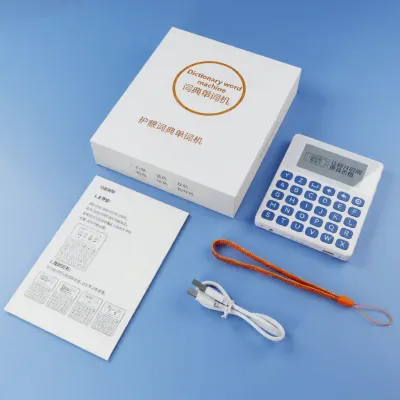
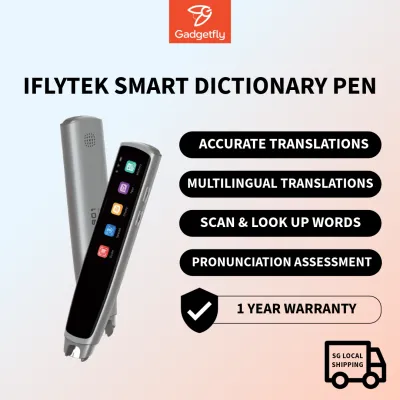
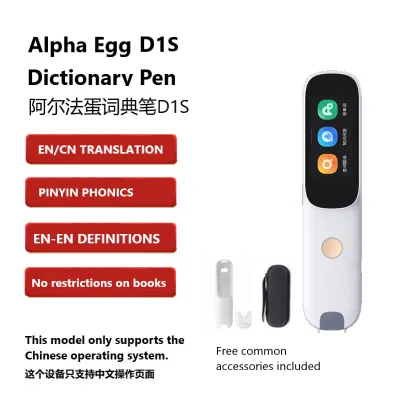
Prices are valid at publication and may change. Please refer to the product page for the latest price.
To evaluate your reading comprehension, observe how you interact with everyday texts. If you can read local news publications like The Straits Times or popular young adult novels without constantly pausing to look up basic verbs, you are likely operating at a B1 or B2 level. If you can navigate complex academic papers, legal documents, or highly literary prose smoothly, you have reached the C1 or C2 bracket. Conversely, if simple stories or basic instructions require frequent translation, you are working within the A1 to A2 range.
Another critical signal is your vocabulary depth. Take note of the types of words that cause you to stumble. Are you struggling with everyday phrasal verbs like “bring up” or “run into”? This suggests a need for foundational vocabulary support. If you understand general meanings but struggle to find precise synonyms, academic collocations, or subtle idiomatic expressions for your writing, your focus has shifted to advanced production.
To pinpoint your exact stage, take a standardized online placement test from an established institution like the British Council or Cambridge. Alternatively, look at the reading materials required for your current educational or professional level. If you are a student in Singapore, matching your dictionary to the demands of your Ministry of Education (MOE) syllabus—such as the transition from primary school vocabulary to the analytical reading required for the O-Level or A-Level exams—provides a practical, real-world benchmark for your needs.
Matching English Dictionaries to Your Learning Stage
Not all english dictionaries are compiled in the same way. They differ fundamentally in their defining vocabulary—the specific, limited set of words lexicographers use to write the definitions—and the depth of grammatical guidance they offer. Selecting the correct type ensures that the explanations are as easy to understand as the target words themselves.

Beginner to Pre-Intermediate: Learner’s Dictionaries
Learner’s dictionaries are engineered specifically for A1 to B1 students who are building their foundational vocabulary. The primary defining feature of these dictionaries is a strictly controlled defining vocabulary, usually restricted to the 2,000 to 3,000 most common words in the English language. This ensures that when you look up an unfamiliar word, the definition does not contain even more confusing vocabulary.
In addition to simplified definitions, these dictionaries provide clear phonetic transcriptions using the International Phonetic Alphabet (IPA) to help you master pronunciation. They also feature straightforward grammar codes (such as identifying transitive versus intransitive verbs) and abundant, highly practical example sentences. By focusing on essential meanings and basic usage, learner’s dictionaries prevent cognitive overload, allowing you to build confidence and establish a strong linguistic foundation without feeling overwhelmed.
Intermediate to Upper-Intermediate: Collegiate and Intermediate Dictionaries
As you transition to the B1 and B2 levels, your language needs expand. This stage is typical for secondary school students and intermediate adult learners who are consuming native media, reading standard literature, and attempting to express complex ideas. Intermediate and collegiate dictionaries bridge the gap between basic comprehension and native-level fluency.
These tools feature a significantly larger defining vocabulary and offer extensive coverage of idioms, phrasal verbs, and common collocations. Collegiate dictionaries, in particular, introduce detailed etymologies that explain word origins, comprehensive usage notes that warn against common errors, and synonym studies. These features help you understand the subtle differences between closely related words, which is essential for improving your writing accuracy and academic performance.
Advanced to Proficient: Advanced Learner’s and Native Dictionaries
For C1 and C2 learners, university students, and working professionals, standard dictionaries are often insufficient. At this stage, you must choose between two distinct specialized tools: advanced learner’s dictionaries and native speaker dictionaries. Advanced learner’s dictionaries focus heavily on production, offering exhaustive guides on complex collocations, academic writing patterns, and intricate grammatical structures to help non-native speakers write with native-like precision.
In contrast, native speaker dictionaries (such as standard desk or unabridged volumes) are designed for those who already possess an intuitive grasp of the language. They offer exhaustive definitions, historical usage timelines, rare or archaic words, and highly specific technical terminology. If you are a lower-level learner, you should avoid native dictionaries; their complex defining vocabulary and lack of simple, learner-focused example sentences can easily cause frustration and hinder your vocabulary development.
Choosing the Right Format: Print, Digital, and Apps
Deciding on the medium of your dictionary is just as important as choosing the right level. Your choice should align with your daily study habits, budget, and learning environment.
Print dictionaries remain highly valued for focused, distraction-free study. Without the constant interruption of digital notifications, you can immerse yourself fully in your reading. Furthermore, physical books encourage serendipitous discovery; as you flip through the pages, your eyes will naturally catch nearby words, expanding your vocabulary in ways digital searches cannot replicate. When purchasing a print edition, check the physical size, weight, and publication year. Older print volumes, which you might find in local bookstores for S$15 to S$30, may lack modern technological terms, contemporary slang, or updated usage guidelines.
Digital dictionaries and mobile apps offer unmatched convenience and portability. They provide instant search capabilities, interactive flashcards, and high-quality audio pronunciations, which are incredibly helpful for mastering correct word stress and accents.
Before purchasing a digital version or a premium app subscription—which can range from S$5 to S$50 annually—you must run through a pre-purchase verification checklist:
- Device Compatibility: Verify that the software is fully compatible with your specific smartphone, tablet, or e-reader operating system.
- Offline Access: Ensure the app allows you to download the full database for offline use, which is vital if you study on your daily commute or in areas with limited internet access.
- Subscription Models: Check whether the price is a one-time purchase or a recurring subscription, and evaluate the long-term cost.
- Content Completeness: Verify whether the digital version contains the full, unabridged content of the print edition, or if it is an abridged version that omits crucial collocations and usage notes. Never assume an edition's contents based solely on its digital cover or title.
- Regional Restrictions: Confirm that the app is available and fully functional within the Singapore App Store or Google Play Store, as some licensed databases have strict regional account requirements.
Signs It Is Time to Upgrade or Change Your Dictionary
Your relationship with your dictionary is not static. As your language skills evolve, your tools must change to reflect your growth. Recognizing the signs that your current reference book is no longer serving you is key to maintaining steady progress.
- Signal 1: Missing Words. If you frequently encounter words in your novels, news articles, or academic papers that are simply not listed in your dictionary, your current tool's wordlist is too small. This is a clear indication that your reading input has outgrown your reference material, and you need to upgrade to a collegiate or advanced dictionary.
- Signal 2: Incomprehensible Definitions. If looking up a word leads you to a definition containing several other words you do not understand, your dictionary is too advanced. This creates a frustrating cycle of endless lookups. Do not hesitate to step down to an intermediate or basic learner's dictionary to rebuild your confidence and consolidate your core vocabulary.
- Signal 3: Lack of Context for Writing. If you understand the meaning of a word but struggle to use it naturally in a sentence, your dictionary is failing you. Writing requires knowing which prepositions and collocations pair with a word. If these are missing, supplement your current tool with an advanced learner’s dictionary or a dedicated collocations dictionary.
You do not always need to discard your old dictionaries when you upgrade. A practical approach is to keep a basic or intermediate dictionary on your desk for quick, low-effort lookups, while investing in a comprehensive digital app or advanced print volume for intensive writing, editing, and deep reading tasks.
Frequently Asked Questions (FAQ)
Choosing the right linguistic tool can raise several practical questions. Here are answers to some of the most common queries.
Can I use a native speaker dictionary if I am an intermediate learner?
While it is possible, it is generally not recommended. Native dictionaries are written for individuals who already have an intuitive grasp of English grammar and a vast vocabulary. The definitions in these books often use complex, literary, or archaic language that can overwhelm an intermediate learner. To build your skills efficiently and avoid frustration, stick to intermediate or advanced learner’s dictionaries. These resources are specifically designed to explain complex concepts using accessible, high-frequency language until you reach a solid C1 proficiency level.
Are free online dictionaries as good as paid apps or print versions?
Free online dictionaries are excellent for quick, everyday lookups when you only need a basic definition. However, paid apps and high-quality print editions offer significant advantages for serious language learners. Paid resources typically provide completely ad-free study environments, reliable offline access, highly curated example sentences, comprehensive collocation guides, and specialized study tools. Because they are compiled by professional lexicographers and undergo rigorous editorial reviews, they ensure you receive accurate, authoritative information that free, ad-supported websites may lack.
Community discussion
Share your experience or ask a question. Comments are reviewed before publication.