
A guitar represents both a financial investment and an artistic voice, making its protection during transit paramount. While hard cases offer maximum structural defense, they are often heavy and cumbersome for daily travel. A high-quality gig bag provides the ideal compromise, combining lightweight portability with robust protection. Finding the perfect gig bag requires evaluating several critical factors, including precise sizing, padding density, exterior weather resistance, and ergonomic carrying features. By understanding these key specifications, you can select a bag that keeps your instrument safe from physical impacts and environmental hazards.
How to Match the Gig Bag Size to Your Guitar's Body Shape
When shopping for a gig bag, the most common mistake is relying solely on external dimensions. External measurements only tell you how much space the bag occupies in your room or car trunk; they do not reflect the actual space available for your instrument. You must focus on the manufacturer’s listed internal dimensions, which account for the thickness of the padding and any internal structural elements. A bag with thick padding will have a much smaller interior capacity than its exterior silhouette suggests, making accurate internal measurements the only reliable metric for a proper fit.
Guitar body shapes vary dramatically across different styles, requiring highly specific bag geometries. Acoustic guitars, such as dreadnoughts or jumbo models, feature wide lower bouts and deep bodies that demand deep, wide-profile bags. Conversely, classical guitars have smaller bodies but wider, flatter necks that may not fit comfortably into narrow acoustic bags designed for steel-string models. Electric guitars are typically much thinner but come in highly diverse shapes, from standard double-cutaways to offset bodies like Jazzmasters or angular designs like Flying Vs, which require specialized contours to prevent the instrument from shifting.
Products mentioned in this guide
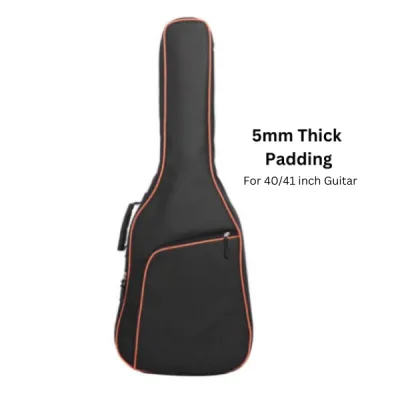

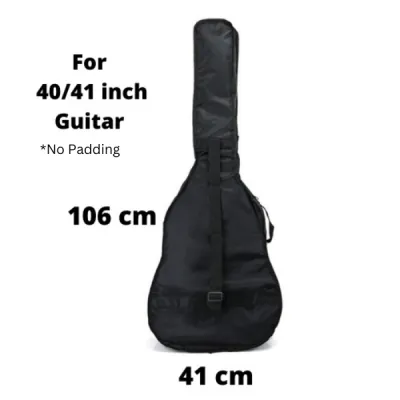
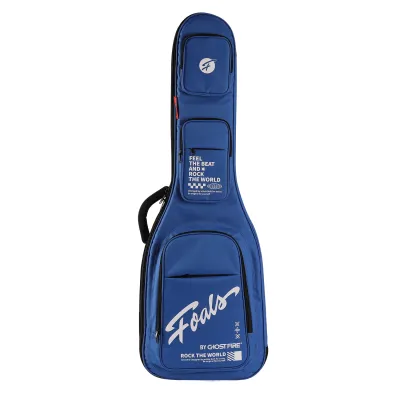

Prices are valid at publication and may change. Please refer to the product page for the latest price.
To find a bag that matches your instrument perfectly, you should measure your guitar manually rather than relying on generic size labels. Use a flexible measuring tape to record the total length from the top of the headstock to the bottom strap button. Next, measure the width of the lower bout, which is the widest part of the body, followed by the upper bout and the overall body depth. Compare these exact measurements against the internal specifications of the gig bag, allowing a small buffer of about one to two centimeters for a snug but unforced fit.
Using a gig bag that does not match your guitar’s dimensions introduces serious risks of physical damage. If the bag is too large, the guitar will slide around inside during transport, causing friction wear on the finish and putting sudden, damaging tension on the neck if the bag is dropped. If the bag is too small, you will have to stretch the material to close the zippers, which exerts constant, hazardous pressure on the bridge, tuning pegs, and delicate headstock joint, increasing the risk of a structural fracture.
What to Look for in Padding and Internal Protection
The primary defense against impacts is the internal padding, which varies significantly in material quality and density. Many entry-level gig bags utilize low-density open-cell polyurethane foam, commonly referred to as sponge. This material compresses easily under minimal pressure, offering virtually no protection against sharp knocks or drops. For reliable protection, look for bags constructed with high-density closed-cell foam, such as polyethylene or ethylene-vinyl acetate (EVA), or rigid expanded polystyrene (EPS) inserts. These materials absorb and disperse impact energy far more effectively and retain their shape over years of use.

A quality gig bag must feature targeted reinforcement at the instrument’s most vulnerable stress points. The headstock is particularly fragile, as the tension of the strings makes the neck joint susceptible to snapping during a forward or backward fall. The bridge and the bottom strap button (endpin) are also high-risk areas; a drop on the bottom of the bag can force the strap button directly into the guitar’s body, causing severe wood splitting. Look for bags that incorporate heavy-duty, abrasion-resistant linings or rigid plastic panels in these specific zones to prevent the hardware from wearing through the fabric.
Internal stabilization features are just as critical as the padding thickness itself. A high-quality bag should include a dedicated, padded neck cradle that elevates the neck and keeps it aligned, reducing stress on the headstock joint. This cradle is typically paired with an adjustable Velcro security strap that locks the neck in place, preventing any lateral or vertical movement. Additionally, look for a thick, padded bumper at the bottom of the bag with a cutout slot designed specifically to accommodate the bottom strap button, ensuring the guitar’s weight rests on the padded frame rather than the metal pin.
When evaluating padding, always verify the manufacturer’s specifications rather than relying on visual inspection alone. A bag can look thick and bulky from the outside while containing cheap, soft foam that offers little actual protection. Check for explicit listings of padding thickness, which typically range from 15mm for basic travel to 30mm or more for professional-grade protection. If you are shopping in person, perform a simple compression test by pinching the padding between your thumb and forefinger; if you can easily feel your fingers meeting through the foam, the density is insufficient for serious travel.
Evaluating Exterior Durability and Weather Resistance
The exterior fabric of a gig bag determines its resistance to tears, punctures, and daily wear. Manufacturers measure fabric durability using the denier rating, which indicates the linear mass density of the threads. Standard gig bags often use 600D (denier) polyester or nylon, which provides decent protection for light travel. For frequent commuters or touring musicians, upgrading to 1200D or 1680D ballistic nylon offers exceptional durability, as these tightly woven fabrics are highly resistant to abrasions, scuffs, and accidental punctures from sharp objects.
Weather resistance is a crucial consideration, particularly for musicians navigating humid climates or sudden tropical downpours, such as those common in Singapore. High humidity can warp wood and corrode metal components, while a sudden rainstorm can ruin an instrument if water penetrates the bag. Look for exterior fabrics treated with water-repellent polyurethane (PU) or durable water repellent (DWR) coatings. Additionally, high-end bags often feature water-resistant zippers with rubberized seals, or they may include a dedicated, stowable rain cover that can be quickly pulled over the bag during a storm.
The durability of a gig bag is often defined by its hardware and structural stitching. Inspect the zippers closely, as they are the most common failure point on any soft case; look for heavy-duty, oversized zippers (such as YKK size 10) with solid metal pulls that slide smoothly without catching. The seams at high-stress areas, such as where the shoulder straps and handles attach, should feature reinforced double or box-stitching. Finally, check the bottom of the bag for a thick, rubberized, or molded PVC skid plate, which protects the fabric from wearing out when you place the bag upright on rough concrete or wet ground.
Furthermore, the internal climate inside the bag matters. In tropical environments, rapid temperature and humidity fluctuations—such as moving from an air-conditioned studio or MRT carriage into warm, humid outdoor air—can cause condensation to form on your guitar. A well-sealed exterior combined with dense internal padding acts as an insulating barrier, slowing down these environmental shifts and protecting your guitar’s wood and finish from sudden expansion or contraction.
Assessing Carrying Comfort and Accessory Storage
Transporting a guitar across long distances requires ergonomic features that protect your body from strain. Look for wide, contoured backpack straps that distribute the weight of the instrument evenly across your shoulders rather than cutting into your collarbones. The straps should feature thick, high-density padding and breathable mesh lining to promote airflow, which is essential for staying comfortable during warm commutes. Adjustable chest (sternum) and waist straps are also highly beneficial, as they stabilize the bag against your body, preventing it from swaying side to side as you walk.
The handles on a gig bag must be robust and comfortable, as you will frequently use them to lift and maneuver the instrument in tight spaces. A high-quality bag should feature a heavily padded side handle that is securely anchored to the internal frame or heavy-duty webbing, ensuring it can support the weight of the guitar without tearing. Additionally, a secondary grab handle located on the back or front of the bag (often called a subway handle) is incredibly useful for holding the bag vertically when standing in crowded spaces like buses or trains.
Ample accessory storage is a major convenience, but the pocket design must be evaluated carefully to ensure instrument safety. Look for external pockets that expand outward, away from the guitar, rather than compressing inward. If a pocket lacks its own depth, packing it with bulky items like thick instrument cables, power supplies, or heavy music books will press directly against the face of the guitar, potentially scratching the finish or putting localized pressure on the bridge and strings. Specialized compartments with dedicated organizers help keep your gear organized without compromising the main compartment’s space.
Internal storage design is another detail that separates premium gig bags from basic models. High-quality bags often feature soft, scratch-resistant linings, such as micro-fleece or brushed polyester, which protect delicate lacquer finishes from abrasion. Look for dedicated internal pouches or zippered compartments to store small, hard accessories like metal capos, tuning keys, or hex wrenches. Keeping these items isolated ensures they cannot break loose during transit and slide around inside the main compartment, where they could easily gouge your guitar’s wood or scratch the pickups.
How to Test the Fit and Verify Protection Before Use
Once you have selected a gig bag, it is vital to perform a thorough physical inspection and fit test before committing to regular use. Begin by placing your guitar carefully inside the main compartment and securing any internal neck cradles or body straps. Gently close the zippers; they should glide smoothly around the curves of the bag without requiring you to pull or stretch the fabric. If you have to force the zipper closed, or if the fabric tightens uncomfortably over the bridge or headstock, the bag is too small and will exert dangerous pressure on your instrument.
Next, perform a gentle shake test to verify that the internal stabilization features are functioning correctly. Lift the zipped bag a few inches off a soft surface, such as a bed or sofa, and gently tilt it from side to side and up and down. You should not feel or hear the guitar sliding, shifting, or rattling inside the bag. If the instrument moves freely, the internal compartment is too spacious, or the neck strap is not securing the neck tightly enough, which can lead to impact damage if the bag is dropped.
Finally, put the gig bag on your back to evaluate its balance and ergonomic fit. Adjust the shoulder straps so the bag sits comfortably against your spine, ensuring the weight is distributed evenly across both shoulders without pulling you backward. Pay close attention to the height of the headstock; it should not extend so high above your head that it constantly strikes doorframes, nor should it dig into the back of your neck. If the bag passes these tests comfortably, it is ready for travel; if you notice excessive shifting or physical discomfort, consult the manufacturer or retailer to explore alternative sizes or models.
Frequently Asked Questions (FAQ)
Can I use an acoustic gig bag for an electric guitar?
While an electric guitar will physically fit inside a larger acoustic gig bag, doing so is highly discouraged due to the significant risk of damage. Acoustic bags are designed with much deeper bodies and wider dimensions to accommodate acoustic instruments. When you place a thin, heavy electric guitar inside, the excess space allows the instrument to slide around freely during transit. This movement can cause the headstock to repeatedly strike the sides of the bag, leading to broken tuning pegs, bent pickup selectors, or even a fractured neck joint.
Is a gig bag enough protection for flying with a guitar?
A standard gig bag does not provide sufficient protection for flying if your instrument must be checked as cargo. The extreme physical impacts, pressure changes, and temperature fluctuations in a commercial aircraft’s cargo hold require a heavy-duty, ATA-approved flight case with a rigid exterior shell. However, if you plan to bring your guitar into the cabin as carry-on baggage, a premium, heavily padded gig bag can be an excellent choice, provided you verify your airline’s specific carry-on policies and cabin space availability beforehand.
Community discussion
Share your experience or ask a question. Comments are reviewed before publication.