
To choose the correct gig bag size for your acoustic or electric guitar, you must measure your instrument’s physical dimensions—specifically its overall length, lower bout width, and body depth—and compare them directly to the bag’s internal dimensions. Relying on generic marketing labels like “standard” or “universal” often leads to a poor fit, which can compromise your guitar’s safety during transport. Taking the time to measure your instrument ensures it remains secure and protected, whether you are commuting or storing it at home.
Why a Properly Fitted Gig Bag Matters
A gig bag is one of the most critical investments you can make for your instrument. Whether you are commuting on the MRT in Singapore or loading gear into a vehicle for a rehearsal, your guitar is constantly exposed to movement, temperature shifts, and potential impacts. A properly fitted gig bag acts as a protective shield, but an ill-fitting one can actually introduce new risks to your guitar’s structural integrity.
When a gig bag is too loose, your guitar is free to slide and shift inside the main compartment. This internal movement is dangerous. During sudden stops or quick movements, the guitar acts like a slide hammer inside the bag. This shifting can lead to neck whiplash, where the neck flexes rapidly under its own weight, or it can cause the headstock to strike the top of the bag, potentially snapping the delicate wood. The lack of a snug fit means the padding cannot do its job of absorbing and distributing impact forces.
Products mentioned in this guide
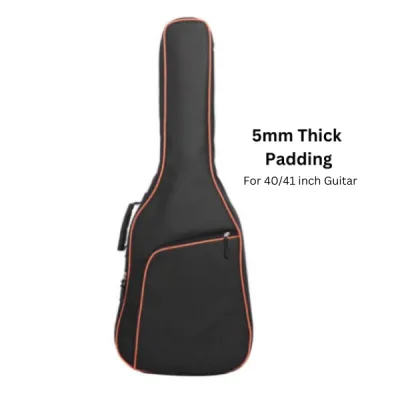
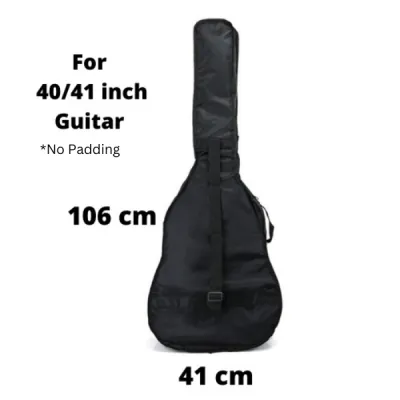

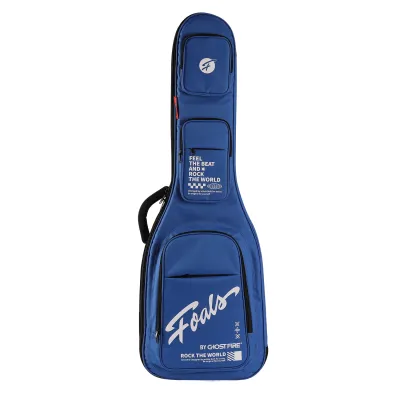

Prices are valid at publication and may change. Please refer to the product page for the latest price.
Conversely, a bag that is too tight presents a different set of hazards. When you have to force a guitar into a bag, the zippers are placed under immense, constant tension. This stress can cause the zipper teeth to separate or fail unexpectedly, which could cause the bag to burst open and drop your guitar onto the pavement. Furthermore, a tight fit exerts continuous physical pressure on the bridge, the delicate tuning pegs, and the vulnerable neck joint. This constant pressure can throw the instrument out of tune, strip the gears inside your tuning machines, or even cause hairline fractures in the wood over time.
Ultimately, a gig bag’s primary protective function relies on restricting internal movement while avoiding structural pressure points. The ideal bag should comfortably cradle the instrument, keeping it suspended and secure without compressing any of its delicate components.
How to Measure Your Guitar for a Gig Bag
To find a bag that fits your guitar perfectly, you must take physical measurements of your instrument. Relying on online spec sheets is risky because manufacturers often measure guitars differently, and aftermarket modifications—such as upgraded bridges, strap locks, or different tuning keys—can alter your guitar’s dimensions. Grab a flexible tape measure and place your guitar on a flat, padded surface to begin.

Essential Measurements to Take
To ensure a secure fit, you need to record three main dimensions:
- Overall Length: Measure in a straight line from the absolute top of the headstock down to the bottom edge of the lower bout. If your guitar has a strap button installed on the bottom, make sure your tape measure extends past it. That small metal button adds length and will press directly against the bottom padding of the bag.
- Lower Bout Width: This is the widest horizontal part of the guitar's body, located on the lower half. Measure across this section from edge to edge. If the gig bag is too narrow here, you will not be able to zip it shut, or the zipper teeth will rub against the guitar's finish, causing scratches.
- Body Depth: Measure the thickest part of the guitar body. For electric guitars, this is usually straightforward. For acoustic guitars, however, you must measure from the back of the body to the top of the bridge and saddle. Do not simply measure the side rim; the bridge, saddle, and strings protrude significantly and require vertical clearance inside the bag.
Accounting for Hardware and Accessories
Many guitarists forget to account for the accessories they leave on their instruments during transport. If you use strap locks, they can add an extra centimeter or two to the overall length and width of the guitar. If you prefer to leave a thick leather or padded strap attached to your guitar, it will occupy a significant amount of internal volume, requiring a slightly deeper bag.
Additionally, consider any unique hardware on your instrument. Guitars with extended tuning pegs, a non-detachable tremolo arm (whammy bar), or oversized control knobs require careful measurement. If you have a Bigsby tailpiece or a tremolo arm that does not fold completely flat, you must measure the total depth of the guitar with these components in their resting positions. Failing to account for these items can result in a bag that presses down on the tremolo arm, putting constant, unwanted tension on your bridge and strings while the bag is zipped.
Decoding Gig Bag Dimensions and Specifications
Once you have your guitar’s exact measurements, you are ready to compare them to manufacturer size charts. Navigating these specifications can be confusing, especially with the wide variety of brands available in the music retail market. Understanding how to read these charts will prevent the hassle of returning an ill-fitting bag.
The most critical distinction to make is between internal dimensions and external dimensions. External dimensions include the thick foam padding, outer accessory pockets, and backpack strap attachments. While external dimensions are useful for determining if the bag will fit in your car boot or a storage locker, they do not tell you if your guitar will fit inside. Always look for the internal dimensions, as these represent the actual space available for your instrument.
Before making your final purchase, always verify device and instrument compatibility by double-checking your guitar’s specific model specifications against the bag’s internal dimensions. Additionally, ensure you are buying from an authorized brand dealer or an established local music retailer. Purchasing from authorized sources guarantees that you receive genuine materials, reliable zipper construction, and full warranty coverage, protecting your investment from counterfeit or substandard products.
You should also be wary of generic marketing labels. Terms like “Standard Acoustic,” “Universal Electric,” or “Classical Bag” are highly subjective and vary between brands. A “Standard Acoustic” bag designed for a dreadnought will be far too loose for a parlor guitar, while a “Universal Electric” bag may not accommodate an offset guitar like a Jazzmaster or an extended-scale 7-string baritone.
Always cross-reference your physical guitar measurements with the manufacturer’s specific internal dimension chart. As a rule of thumb, look for a gig bag that offers about 1 to 2 centimeters of clearance beyond your guitar’s measurements. This small buffer allows you to slide the instrument in and out easily without forcing the zippers, while still ensuring a snug, secure fit once zipped shut.
Matching the Bag to Your Guitar Type and Body Shape
Different guitar silhouettes require distinct bag profiles. Buying a generic “one-size-fits-all” bag often leads to poor protection and premature wear on the bag itself.
Sizing for Acoustic Guitar Shapes
Acoustic guitars vary wildly in physical volume and body shape, meaning they require highly specific bags.
- Dreadnought and Jumbo Guitars: These large-bodied instruments require deep, wide bags. A jumbo acoustic, with its massive lower bout, will simply not fit into a standard dreadnought bag. Ensure the bag's lower bout width and depth specifications specifically accommodate these larger body shapes.
- Concert, Grand Auditorium, and Parlor Guitars: These smaller profiles need narrower, shorter bags. If you place a parlor guitar into a dreadnought bag, the instrument will slide around during transport. This movement can cause the guitar to slide downward, putting undue pressure on the headstock as it strikes the top of the bag when carried vertically.
- Classical Guitars: Classical guitars have unique proportions. While their bodies are often smaller than dreadnoughts, their necks are wider and flatter, and their headstocks are slotted. A standard steel-string acoustic bag may be too long and loose, while an electric bag is far too shallow. Look for dedicated classical guitar gig bags that respect these wider neck profiles and shorter body lengths.
Sizing for Electric Guitar Shapes
Electric guitars present their own set of sizing challenges.
- Standard Double-Cutaway and Single-Cutaway Shapes: Guitars like Stratocasters or Telecasters generally fit into standard electric gig bags. However, single-cutaway models like Les Pauls often have angled headstocks and heavier, thicker bodies. They require a bag with a dedicated neck angle clearance and robust neck support to prevent the headstock from touching the back of the bag.
- Extreme Offset and Extended-Scale Models: If you play an asymmetrical offset guitar like a Jaguar or Jazzmaster, or an extreme shape like a Flying V, Explorer, or a multi-scale 7-string baritone, standard rectangular or teardrop bags will not work. These instruments require specialized gig bags with custom internal cutaways or extra-long dimensions to accommodate the extended scale length and unique body horns. Some premium bags offer adjustable internal foam blocks that can be repositioned to cradle asymmetrical body shapes securely.
Verifying the Fit and Protection Features
Once you have selected a gig bag and placed your guitar inside, you must verify the fit before taking it out on the road.
Start with the “shake test.” Zip the guitar fully inside the bag, lift it by the main handle, and gently move or tilt it from side to side. You should not feel or hear the instrument sliding or shifting inside. If you feel the body sliding back and forth, the bag is too large, and you need to add internal padding or swap it for a smaller size.
Next, open the bag and inspect the neck support. A high-quality gig bag should feature a padded neck cradle or a Velcro neck block. This block suspends the neck, keeping the headstock elevated so it does not make direct contact with the back or top of the bag. This suspension is critical for preventing headstock whiplash during an accidental drop.
Finally, check the padding thickness at critical impact zones. The base of the body (where the strap button rests) and the top of the headstock should have extra-thick foam or rubber bumpers. Ensure that the zippers have a protective fabric guard or lining on the inside. Without this guard, the metal zipper teeth can rub directly against your guitar’s finish, causing unsightly scratches and wear over time.
Frequently Asked Questions (FAQ)
Can I use an acoustic gig bag for an electric guitar?
It is generally not recommended to use an acoustic gig bag for an electric guitar. Acoustic bags are designed with much greater depth to accommodate hollow bodies. If you place a slim, heavy electric guitar inside, the instrument will have too much room to shift around. This lack of restriction increases the risk of damage during transit. Furthermore, the weight distribution of an electric guitar is different, which can cause the acoustic bag to sag or hang awkwardly on your shoulders, making it uncomfortable and unsafe to carry.
Should I size up if I want to put my hard case inside the gig bag?
No, you should not attempt to put a hard case inside a gig bag. Gig bags are specifically engineered to cradle the bare instrument directly. Attempting to fit a hard case inside a gig bag would require a massive, specialized, and incredibly bulky bag. This setup defeats the entire lightweight, portable purpose of using a gig bag in the first place and puts immense structural stress on the bag’s seams and zippers, leading to premature failure.
Do I need to measure the headstock width separately?
Yes, measuring headstock width is highly recommended if your guitar has a wide, angled, or 3+3 tuner configuration (such as a traditional acoustic or a Les Paul style electric). While overall length is the primary metric, a wide headstock with prominent tuning pegs can press tightly against the sides of a narrow bag. This pressure can put friction on the tuning pegs, constantly turning them out of tune, or worse, put lateral stress on the headstock joint. Ensure the bag has sufficient width at the top to clear your tuners comfortably.
Community discussion
Share your experience or ask a question. Comments are reviewed before publication.