
A beginner guitarist needs a guitar stool that supports correct posture, keeps the body relaxed, and prevents long-term strain during practice. Unlike standard household furniture, a dedicated guitar stool provides the specific height, stability, and freedom of movement required to hold and play the instrument comfortably. Selecting the right stool involves balancing adjustability, stability, and comfort based on your individual body mechanics and playing habits, rather than simply picking any available seat.
When selecting your first stool, you should focus on three primary pillars: height adjustability to align your body, a stable base to prevent tipping, and a seat design that does not restrict your arms or the guitar body. Balancing these features against your physical space and budget ensures your practice sessions remain productive and pain-free.
Essential Features to Evaluate in a Guitar Stool
Evaluating a guitar stool requires looking past basic aesthetics to analyze how the seat interacts with your body and your instrument. The ideal stool acts as an extension of your playing posture, keeping your spine aligned and your hands free to navigate the fretboard.
Products mentioned in this guide
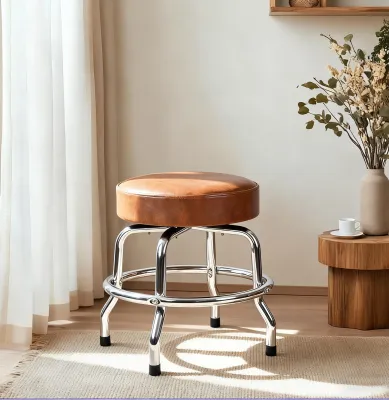
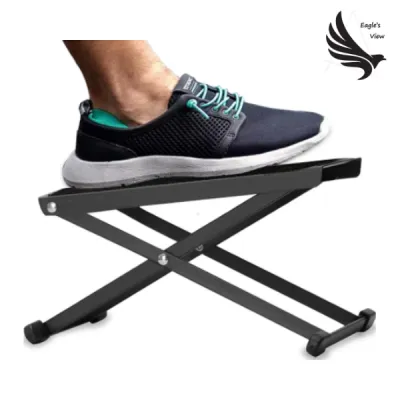
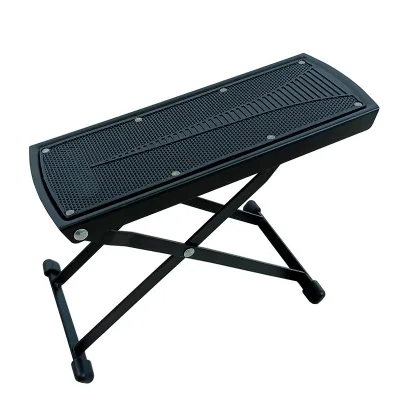
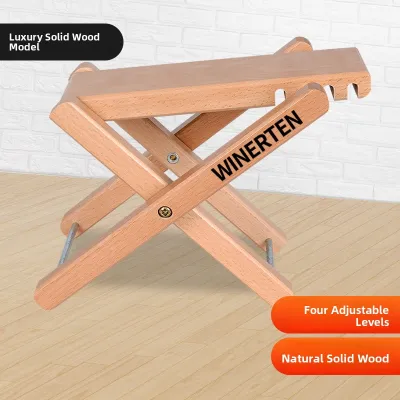
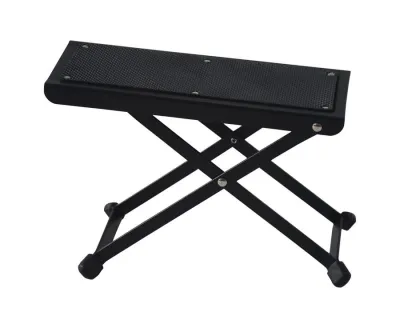
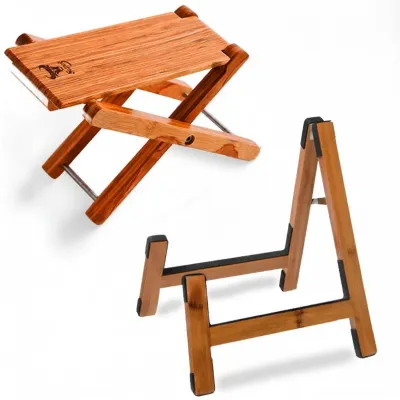


Prices are valid at publication and may change. Please refer to the product page for the latest price.
To find the right fit, you must evaluate a core matrix of specifications: height adjustability, base stability, seat cushioning, and integrated footrests. Each of these features directly impacts how long you can practice comfortably without developing physical fatigue.
Height Adjustability and Ergonomic Alignment
The height of your guitar stool dictates your entire playing posture. When sitting, your thighs should be parallel to the floor or angled slightly downward, allowing your feet to rest flat on the ground. This position stabilizes your pelvis and keeps your lower back in a neutral, supported curve.
If the stool is too high, your feet will dangle, placing excessive pressure on the back of your thighs and straining your lower back. Conversely, a stool that is too low forces your knees upward, compressing your hip joints and making it difficult to balance the guitar on your lap.
To achieve proper ergonomic alignment, check that your forearms can remain parallel to the floor when reaching for the strings, and your wrists can stay relatively straight. This alignment minimizes tension in your tendons and reduces the risk of repetitive strain injuries during long practice sessions.
Before purchasing, always measure your personal inseam and compare it against the manufacturer’s specified minimum and maximum height ranges. Do not assume a standard stool will fit; physical dimensions vary widely, and verifying these specifications is the only way to guarantee a proper fit.
Look closely at the adjustment mechanisms used to change the height. Hydraulic or pneumatic lifts offer quick, continuous adjustments with the pull of a lever, making them highly convenient if multiple people use the stool. Threaded metal shafts provide excellent durability but require spinning the seat to adjust, while manual pin-lock systems offer fixed, highly secure increments that will not slip over time.
Base Stability and Build Materials
A guitar stool must remain completely stable while you shift your weight, lean forward, or reach for accessories like pedals and tuners. A wide, sturdy base is essential to prevent the stool from tipping or wobbling, which can disrupt your concentration and pose a safety hazard.
Look for stools featuring a tripod or four-legged base design. Tripod bases are highly common in musical gear because they adapt well to slightly uneven floors, while four-legged bases often provide a broader footprint for maximum stability.
Frame materials play a critical role in structural rigidity and long-term durability. Heavy-duty steel tubing is the standard for professional-grade stools, offering excellent resistance to bending and warping under regular use. Aluminum frames are lighter and easier to transport, though they may feel slightly less grounded if the tubing is thin.
Rather than assuming quality based on the material name alone, always check the manufacturer’s stated weight capacity label. A higher weight rating generally indicates more robust joints, thicker metal walls, and more secure welding.
Verify that the feet of the stool are capped with high-quality, non-slip rubber or soft plastic tips. These tips prevent the stool from sliding during active playing and protect your flooring from scratches and scuffs.
Seat Cushioning and Surface Design
The design of the seat itself determines how comfortable you will remain during extended practice sessions. While a plush, heavily cushioned seat might feel inviting at first, it often lacks the structural support needed for proper posture.
Over time, extremely soft foam compresses completely, leaving you sitting on the hard frame beneath and causing pressure points. High-density foam is a much better choice for guitarists, as it retains its shape, distributes your weight evenly, and supports your sit bones over hours of use.
Consider the surface material of the seat, focusing on durability, breathability, and grip. Vinyl and synthetic leather are highly popular because they are easy to wipe clean and resist wear, though they can become warm and slippery in humid climates. Fabric seats offer better breathability and a more secure grip to prevent you from sliding, but they require more effort to clean if spilled on.
The shape of the seat is equally important. Round, bicycle-style (saddle), or rectangular seats are the most common configurations. Saddle seats are highly favored by many guitarists because they contour to the thighs, reducing pressure on the hamstrings and allowing for a wider, more natural leg stance.
Avoid stools with high, rigid backrests or wide armrests. A backless design or a very low-profile lumbar support is ideal, as it ensures your shoulders, elbows, and the body of the guitar have complete freedom of movement without bumping into the chair.
Footrests and Portability Considerations
An integrated footrest is a highly valuable feature for guitarists, particularly those practicing classical styles or using a footstool to elevate the neck of the instrument. A built-in foot ring or adjustable foot bar allows you to rest one or both feet at a comfortable height, relieving tension in your lower back and thighs.
When evaluating footrests, check if they are height-adjustable or fixed. Adjustable footrests allow you to customize the angle of your legs to match your specific playing style, while fixed rings provide a reliable, uniform resting point around the entire base of the stool.
Portability is another key factor if you plan to take your stool to lessons, rehearsals, or gigs. Many guitar stools feature folding frames that collapse flat for easy transport and storage.
If you choose a folding model, pay close attention to the locking mechanisms. Look for spring-loaded pins, heavy-duty bolts, or safety collars that lock the frame securely in the open position. A folding stool must feel just as rigid and wobble-free when deployed as a non-folding, permanent studio stool.
Weight is a trade-off here; a heavier steel stool will offer superior stability but will be more cumbersome to carry, whereas a lightweight aluminum folding stool is highly portable but may require more care to avoid tipping on uneven surfaces.
Adapting Your Choice to Your Practice Environment
Your physical practice space should heavily influence the type of guitar stool you select. If you live in a compact apartment or share a living space, a large, non-folding studio throne might take up too much valuable floor space. In these scenarios, a collapsible folding stool that can be tucked away in a closet or behind a door when not in use is highly practical.

Consider the type of flooring in your practice area. Hardwood, laminate, and tiled floors require soft, non-marking rubber feet to prevent scratches and eliminate slipping. If your practice space is carpeted, ensure the stool’s feet have a wide enough surface area so they do not sink deeply or damage the carpet fibers. Using a small, dense protective mat under your stool can safeguard your floors and provide a consistent, level surface.
In many home setups, a guitar stool must serve multiple purposes, such as doubling as a desk chair or extra seating for guests. If you plan to use the stool for non-musical tasks, look for a model with a slightly wider seat and a removable or low-profile backrest. This allows you to enjoy general comfort during daily tasks while maintaining the ability to remove or bypass the backrest when it is time to pick up your guitar.
Common Mistakes to Avoid When Buying Your First Stool
One of the most common mistakes beginners make is attempting to practice on standard household furniture, such as dining chairs, sofas, or standard office chairs. Office chairs with fixed armrests are particularly problematic, as they constantly collide with the body of the guitar, forcing you to sit forward on the edge of the seat or hold the instrument at an awkward, straining angle.
Another frequent error is prioritizing visual style or low prices over ergonomic functionality. A sleek, vintage-style bar stool might look excellent in your room, but if it lacks height adjustability and proper cushioning, it will quickly lead to discomfort and shorter practice sessions.
When purchasing a guitar stool from an online marketplace, always verify the return policy and assembly requirements before finalizing your order. Whether you are looking at a budget-friendly option or investing up to S$150 in a heavy-duty model, checking the specifications and return terms ensures your investment is protected. Because physical comfort is highly subjective, you need the flexibility to return or exchange the stool if the height range or seat firmness does not suit your body mechanics once assembled.
Take the time to read through the assembly instructions and ensure you have the necessary tools, as a poorly assembled stool with loose bolts will quickly become unstable and unsafe to use.
Frequently Asked Questions (FAQ)
Can I just use a regular chair or office chair for guitar practice?
While you can technically practice on any seat, regular chairs and office chairs present significant ergonomic challenges. Fixed armrests restrict your elbow movement and force you to hold the guitar away from your body, leading to shoulder and wrist strain. Deep, plush sofa cushions cause your pelvis to tilt backward, rounding your spine and putting immense pressure on your lower back. A dedicated guitar stool keeps your arms completely free and supports an upright, active posture that makes playing much easier and safer.
Do I need a backrest on my guitar stool?
A backrest is not strictly necessary for guitar practice, as proper playing posture relies on active core engagement and a slight forward lean. High backrests can actually get in the way of your guitar’s body or restrict your shoulder movement. However, a low-profile, adjustable lumbar support can be beneficial for resting your back during breaks between songs or long tuning sessions. If you prefer having a backrest, look for a model where it is removable or small enough not to interfere with your instrument.
Community discussion
Share your experience or ask a question. Comments are reviewed before publication.